I am a fan of Trevor Noah. Who isn’t? Well, maybe Donald Trump.
Anyway, I read his book Born a Crime this week. Not sure how I managed it, being a teacher in a pandemic era, but I did, mostly out of sheer desperation. I needed an escape from the never-ending prep.
So, Trevor…well, I had high expectations coming into this reading. I mean, the man is hilarious and incredibly clever, so why wouldn’t I? Verdict? He did not disappoint.
Trevor (and I only use his first name, because I follow him so closely, I feel like I know him) is masterful in his ability to coherently weave a narrative. There is none of the frou-frou that many an author might succumb to. He tells it like it is and then…next chapter.
This book is organized into chapters that bounce around a bit chronologically, but make sense through the larger narrative of the life-telling that Trevor engages in. Perhaps the two things that stood out to me the most were his no-bs bit and his raw account of life growing up in South Africa. I mean you’ve heard the word “apartheid” bandied about right? I have too. I know about apartheid, mostly that it was bad and that Nelson Mandela had something to do with it going out of style (I wax sarcastic here), but Trevor shocks the conscience in his “Meh, that’s just the way it was” kind-of way. He does not lament the suffering he encountered, or the injustices heaved upon his people, the black people, the coloured people of South Africa. No, he merely presents the facts, saves the commentary for a few high-adrenaline moments and then ping-pongs back and forth between philosophical and really real.
Why should you read this book? Because, you have no excuse not to. It paints a stark picture of racism, of colonialism and of white privilege at the cost of black lives. You should read it because everyone has a moral responsibility to educate themselves about that which they know nothing of, but that which they must know of because it affects society and their neighbour.
If you are a teacher reading this, your students should read this book too. There is a version of the book that is adapted for young readers as well. If your students are grade 7 and up, this is a book that is both badass, because Trevor gets up to real badass sh*t, and painfully relevant. I mean, toss out the To Kill a Mockingbirds and the Great Gatsbys (both really good books if you’re asking), because their time is done. It’s time we allow our students to see themselves in the books they read. It’s time we properly educate them about what goes on in other countries so when they encounter differences, they choose to understand, not differentiate.
Read Born a Crime, and then maybe drop a comment with your take on it?
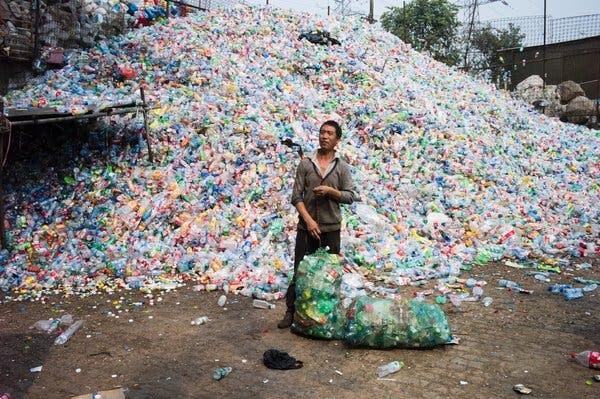
Have you ever wondered where all your plastic ends up when you are done with it? Does it go to factories where they carefully recycle it all? Actually, a lot of it ends up in countries across the world, developing regions where people sort through it just to make a meagre living.
Recently, Canada was under fire for dumping our garbage, unlawfully it is important to note, in the Philippines. Kudos to the Philippines’ government for standing up to us. The garbage will be making its way back home.
Why does this happen? Why do big developed and thriving Western nations think they can”export” their unwanted items in countries where people are poor and can be exploited?
The documentary film Plastic China provides an in-depth look into the consequences of plastic dumping overseas.
Teachers, this film is available on Amazon Prime, but you can take a look at the trailer here:
Eleven-year-old Yu Jie works with her family to sort through plastic waste to make plastic pellets that can be sold for money. They work for $5-6 each day to eke out a living. The children in Yu Jie’s household cannot go to school because their parents cannot afford it. Of course, there are a lot of other factors that drive their poverty, but this film takes a critical look at the human cost of plastic waste.
China has recently come out and said it will be heavily reducing the import of plastic waste from developed countries, but does this mean that poor people will no longer be exploited to toil in harsh and unforgiving conditions with their young for a chance at a better life?
As students watch this film, have them take down notes and you may use the following questions to get them thinking critically about what they have seen.
What things surprised you about the film?
What were some things that were not quite clear?
Why do you think developed nations want to export their plastic waste?
What are some harmful effects of large plastic piles on the environment?
What are some harmful effects of plastic dumps on people? Which ones does the film mention?
How does being a plastic waste sorter perpetuate the cycle of poverty for a lot of people in developing nations? What were some examples you noted from the film?
How does the life of a plastic waster sorter specifically affect young children in the film?
ACTIVITIES TO FURTHER EXPLORE THIS TOPIC:
1. The Impact of Plastic Export Presentation:
Have your students explore the impact of plastic export on developing nations. Below are some resources they can use to get started. They may complete a digital presentation to showcase their findings on the same and do this in either groups, or individually.
Like Yu Jie in the film, have students research stories about how individuals and families in developing countries are impacted by plastic waste dumping. They will need to provide a series of 5-10 images that showcase the impact of plastic dumping on that person’s life. They will need to create these images (drawing, painting, photography etc.) based on the stories they read. Have them provide labels indicating the names, ages and countries of the people being profiled and a brief description of their circumstances.
Students can do a gallery walk to present their ideas and should be encouraged to interact with each other’s presentations by asking questions.
Again, readers and teachers, your feedback is welcomed. Feel free to drop a line in the comments below. As well, I am still accepting suggestions for this 31-Day Social Justice Education Project, so you can send me an e-mail at 31daysocialjusticeedproject@gmail.com with any ideas you have for social justice issues in your part of the world. Please visit my introductory post about this project for details on the same. Don’t forget to connect with me on Instagram @creativeteachingbybd. If you would like to join in the conversation on Instagram, feel free to use #31daysocialjusticeedproject. Be back tomorrow!
We have fast become a society of excess. If we look at the way people lived their lives in decades past (up until about the 1950s), the excess was not really in style. Our ancestors lived through wars and made do with what they had. They were inventive in their solutions to survive. With the evolution of technology and the improvements in mass production, companies around the world have gone unchecked in what they produce, how they produce it and where it all ends up. They have helped create a society that is wanton in its consideration of the environment and each other.
Today we will take a look at how our life of excess is destroying our environment, by focusing on “fast fashion”.
I gave myself a pat on the back a little while ago for not buying new clothes for nearly 6 months. I am not a fashionista, and in general, the idea of excess bothers me, but I thought I was being disciplined with a view to live on less with this buying hiatus. Wrong. I went on a retail therapy trip shortly after this pat on the back, and bought a bunch of new clothes I did not need. Did they make me happy? Yes, momentarily so, but then I learned about clothes and where they end up, and now all I can desperately think is: Can I return these new clothes, please?
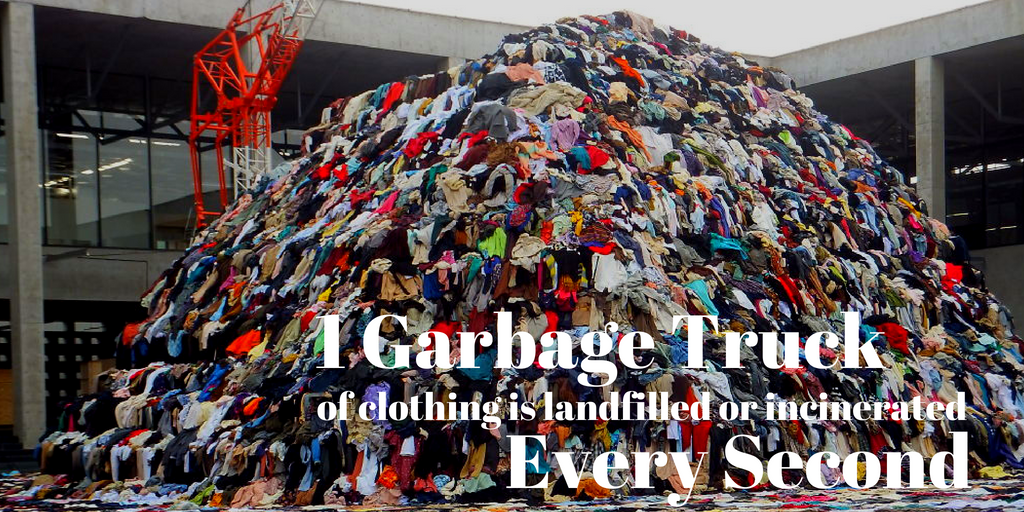
In a world where there is a lot of weight put on appearance, and an ever-increasing pressure to look a certain way so we can belong to cliques and attain certain levels of status, we spend a lot of money on clothes. That is one thing really, but what happens when our direct overconsumption of clothing contributes to an environmental crisis: non-degradable textile waste in landfills? This is where we land today, and elementary teachers, I know I have posted a lot of educational material geared towards the secondary level, but the resources listed here can definitely be used for your students as well.
Before students watch the video below, ask them these questions:
Where do you think your used clothes go after you have no more need for them?
What do you think “Fast Fashion” means?
*Encourage students to share their stories of clothing swaps, donations, recycling etc.
Then, watch this 22 min. and 23 sec. segment of CBC’s Marketplace. Marketplace is a great series by CBC that takes an investigative look into some of the critical aspects of our lives, and this segment really makes you question your “need” to consume fashion.
Consider the following questions in a class discussion to further critical thinking:
How many new clothes do you buy in a year? (Students can create individual graphs for a math lesson and do a compare and contrast with their peers).
Where does your family/do you put all your used clothes?
Why do our clothes end up in landfills?
Why can these clothes not be recycling like paper or certain kinds of plastic?
What do you think will happen if we continue to dump all our used clothing in landfills? What can happen to the environment?
Are companies, like H&M, lying to us when they tell us that all our used clothing will be recycled?
What do clothing companies who take our used clothing really do with them?
Then, show students the following video:
This video, a follow-up to the one above, is also compiled by CBC’s Marketplace and talks about clothes from Canada that end up in Kenya, and how they are dealt with there. Ask students the following questions after they watch the short 6 min, and 59 sec. video:
Why do you think Canada sends all our used clothing to countries like Kenya?
Do the people in Kenya get our used clothing for free? Should they? Why or Why not?
Do you think this helps the people in Kenya? Why/Why not?
What are some other ways we can manage all the used clothing we no longer need?
Next, show students this video of clothing waste and how it is managed in Vancouver, Canada:
Use the following discussion questions to get students to think about the video critically:
Does it surprise you that some women in the United Kingdom use each of their clothing pieces about 7 times only? How many times do you use your clothing pieces on average?
Can mixed-material clothing items be recycled? Why or why not? What do they contain? Where do they end up?
What are some of the solutions that this video discusses?
What is “circular fashion”?
Would you be willing to buy all your clothing from used clothing stores? Why or why not?
ACTIVITIES TO FURTHER EXPLORE THIS TOPIC:
1. How Can We Help? Informational Documentaries
In my research, I found out that the city of Markham in Ontario (on the border with the city of Toronto) was the first city in North America to ban the disposal of textile waste at the curb. How incredible an idea is this? Well, these guys went a bit further and now they have implemented a textile recycling program where environmental conscientiousness is at the forefront.
Ask students to compile a list of 7 ways in which they can stop the negative impact of fast fashion on the environment.
Ask them to describe each solution using words, pictures, graphs, video clips etc. to create a mini-documentary on these solutions. Have them work in groups and encourage them to be as creative as possible.
When students are finished compiling information for their documentaries and creating them, organize a screening of these documentaries. Have students introduce their documentary to the class before each screening.
As an extension, you might want to organize an assembly for the entire school, with the aim of creating awareness, and feature some of the best documentaries created. Students might even have information booths set up where they talk with other students about their solutions and brainstorm ways in which they can implement some of these strategies together.
Finally, show students the following video about students in Ontario schools for some inspiration (stop the video at 5:11):
2. Additional ideas for how to take this information further:
Partner with your school’s Eco-Team to create posters and/or information sessions informing students of the impact of fast fashion.
Organize a Clothing “Shwap” (as seen in the video above)
Research ways that different governments around the world, and here in Canada are helping to tackle this problem, and have students suggest additional solutions for their governments to consider.
Have students organize a “Silent Photo Exhibit” where they showcase the impact of fast fashion on the planet, various countries around the world and people in general, using still single-frame photography.
There is so much you can do with the videos here, readers and teachers. Circulate these videos, and find ways to reuse old clothing. My personal goal over the next few weeks is to comb through my wardrobe and sort my clothing into a donation pile (after carefully researching a sustainable recycling program in Ontario where I can donate my clothes: Markham’s program is looking good!) and a repurposing pile (where I find new ways to use the clothing I already have). I will also strive to not buy any new clothing for the next year, or more if I can manage it. Wish me luck.
If you have any ideas for suggestions you would like to contribute to this 31-Day Social Justice Education Project, please send me an e-mail at 31daysocialjusticeedproject@gmail.com. It doesn’t matter where you are in the world, I would love to hear from you and highlight the stories of your lives. Please visit my introductory post about this project for details on the same. Don’t forget to connect with me on Instagram @creativeteachingbybd. As well, if you would like to join in the conversation on Instagram, feel free to use #31daysocialjusticeedproject. See you soon!
It is nearly 11 p.m. today as I frantically type out this very important post. Family priorities trumped my ability to publish this post earlier in the day, but this one needs to be written, so here I am.
In my previous two posts about water, I talked about bottled water as a specific example of corporate power and greed, trumping basic human rights. I also talked about the privatization of water by these corporate powers, as they sat back and watched communities across the world lose access to a basic human right. Today, I go further. I hone in on a problem here at home. A problem that is a growing blemish on our identity as Canadians. And yes, this blemish is multi-faceted and cannot be covered in a single post. I am aware, and I will dive into the other aspects of this issue as these 31 days wear on.
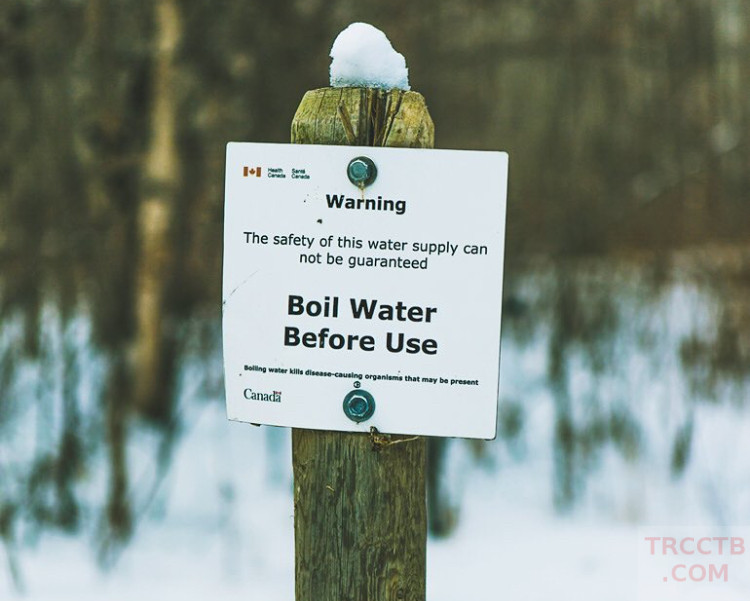
Most of us in developed countries (and thriving cities) have access to clean and safe drinking water, as well as ample water for our washing needs, so perhaps we don’t really care that people in other parts of the world don’t have access to this same human right. I live in one of Canada’s biggest cities, and by extension, one of its wealthier cities, so it comes as no surprise that my access to water is directly related to this privilege. My Indigenous brothers and sisters in various parts of Canada do not enjoy this same privilege. Their crime? They do not command the same power and affluence. They are easily overlooked. This is wrong. And we: you and I, all of us who have enjoyed safe access to clean water all our lives, should give a damn. So we’re starting now what we should have begun a long time ago. We are educating ourselves and our young people.
In Canada, our Indigenous brothers and sisters live their daily lives without access to clean drinking water. And they are not the only (native) communities in various countries who do not have this access. Some of you are familiar with the water crisis in Flint, Michigan. This story is one of very few that got told and managed to punctuate our collective ignorance on the issue. The Indigenous communities of Canada deserve to have their voices heard, and they can only have it heard if more of us unite with them and shout together.
I am going to go back to the beginning. Human beings need water to survive, this is fact. About 60% of our body is made up of water and we cannot survive more than 3 days without water. So, why do we not treat water with the respect it is due? Why do we waste it? Is it because we have always had it, so we do not understand its true value? People around the world who do not have such ready access must appreciate it a lot more. And I will go right to the people who appreciate it most: The Indigenous Peoples. Here in Canada, we refer to the first inhabitants of the land as the Indigenous Peoples. In other parts of the world, they have different names. It doesn’t matter. They are the first ones who knew the land. They are the ones we need to turn to in order to understand the importance of our natural resources and how to begin the painstaking process of reversing the damage greed has done.
Readers, and teachers, I would encourage you to watch the following episode of Future History. There is material out there that deals with the water crisis suffered by various communities, but this 21 min. and 45 sec. documentary explores our human relationship with water, and this is important for us to understand as we begin taking action to protect it.
This episode begins with the phrase, Niibi Bimaadiziwin in Anishinaabe, which means “Water is life”. As Sarain Fox says, “This [protecting water] is everyone’s responsibility.” The episode talks about living in balance with nature, the fact that we rely on nature for our survival so we must be humble, we must take action and we must save our water sources from pollution by corporations that are only interested in their own bottom line.
Teachers, I am going to keep this one short on activities because there is more to come on Indigenous Peoples as part of this 31-Day Social Justice Education Project. Still, the following are some ways in which students can engage with this short documentary and explore the water crisis in Indigenous communities, as well as our relationship with this necessary resource.
ACTIVITIES TO FURTHER EXPLORE THIS TOPIC:
1. Compose a Reflection
Encourage students to compose a reflection that helps answer the question:
Why is water important to me?
This can be in written form, a drawing, a short video, whatever way your students feel they are most comfortable reflecting.
Ask students to consider what role water plays in their daily lives. Ask them to think critically about how it is necessary for the survival of various species. History teachers, you might also want to mention the role of water in migration over the course of history.
Next, have students consider this key question:
Should everyone have the same access to water that I have?
After having researched communities around the world that do not have the same access to water that we do here in developed countries (as I suggested in my previous post on water) force students to activate their empathy skills as they put themselves in the shoes of another.
2. Indigenous Communities Water Access Report
Have students work in groups to research various Indigenous communities that do not have access to safe drinking water. Indigenous communities like those on Georgina Island, as the documentary describes, are a good place to begin, so students can understand what this looks like. The following are some resources that students can use as a starting point. Again, remind them to think critically about what is written and why. The resources below are a place to start; they are not an exhaustive list (and for my international readers, my apologies, these are solely Canadian resources).
Knowledge is useless without activation. Have students work in groups or individually to come up with ways in which they can help improve access to safe water for all people in their communities. They might want to look specifically at an Indigenous community to better focus their solutions, or they might want to think about initiatives that begin at school but have broader applications. Have students come up with a list of solutions, at least 5 and write a short “how-to” on each. Ask them to present these to the class in the form of a persuasive brochure (physical or digital), complete with pictures, graphs etc.
Once all groups have presented, have the class discuss some of the better solutions that were presented.
Note these down and then have students vote, as a class, on the best solution.
Take that solution, and see if your students can follow through on it.
Readers, as always, your feedback is welcomed – let me know about your experience with this topic, or your thoughts on the short documentary. Teachers, please share what worked and what did not work if you try these suggestions. If your class goes on to implement one of their solutions, I would love to hear from you as you begin the journey. It would be an honour to help you and your students through the process in any way that I can.
As well, I am still accepting suggestions for this 31-Day Social Justice Education Project, so you can send me an e-mail at 31daysocialjusticeedproject@gmail.com with any ideas you have for social justice issues in your part of the world. Please visit my introductory post about this project for details on the same. Don’t forget to connect with me on Instagram @creativeteachingbybd. If you would like to join in the conversation on Instagram, feel free to use #31daysocialjusticeedproject. Be back tomorrow!
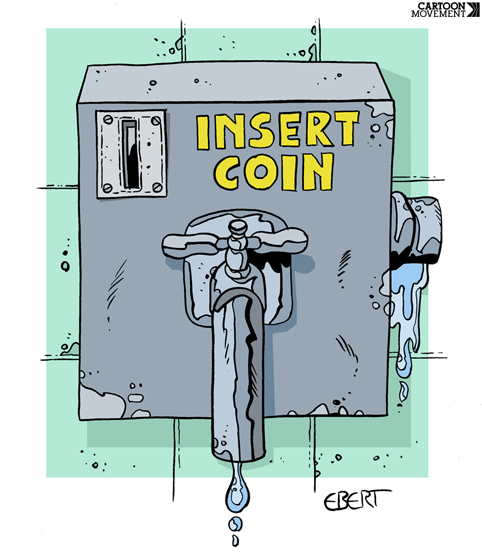
In a closer look at water today (in the second chapter of the Water Series), we tackle the question of privatization. There are people firmly against the privatization of what we hold as a basic human right and necessity for survival, and then there are those in the opposing camp who see the merit of privatization. This is not a black and white issue. In some regions (countries, towns, cities) of the world, privatization works and people benefit from it, but in other areas, privatization is driven by the bottom line, and this is where privatization can be a detriment to the access to water.
First, it would be worthwhile to consider the meaning of “privatization”. Teachers, you can elicit organic responses from students in a diagnostic discussion. List words and phrases that students use to describe this concept on the board/screen. Privatization, in a nutshell, is to make something private. To take control of something and call it your own, whether you are an individual or a large corporation. Privatization is the opposite of making public. What happens when a basic human necessity like water, is no longer publicly-controlled and publicly-accessible? Sometimes, people suffer, and sometimes, the environment suffers.
Let’s begin then. As in yesterday’s post, this is a short (3 min. and 36 sec.) video about the story of water titled, The Story of Water. Again, this viewpoint is one of several that people hold about the privatization of water. This is meant to work as a starting point in this conversation, and to help students make up their own minds. As always, please remind your students of bias and the value of motive in the sharing of a viewpoint.
Some questions to further critical thinking and discussion around this issue can include:
Why might private corporations want control of water systems?
How might the privatization of water systems affect citizens?
What factors might help to determine whether the privatization of water has a positive or negative impact on communities? Might it impact some communities in different ways than others?
What can the public do to retain control of its water systems?
Should water remain a publicly-control element? Why or why not?
ACTIVITIES TO FURTHER EXPLORE THIS TOPIC:
1. Write a Research Paper:
Students can write research papers individually, in pairs or in groups that answer the question: Should water remain a publicly-control element? Why or why not? Teachers, it depends on what kind of evaluation you are looking for, and how exactly you want your students to interact with the material (Depending on what subject you teach, you might want students to incorporate charts, graphs and diagrams into this research paper). Personally, I would group students together to have them complete this research paper. Students should use the discussion questions listed above to help them formulate their thoughts and construct an argument around this issue.
Some resources that students can begin with, as they seek to answer this question are provided below. This is not an exhaustive list, but a place to start. Students should check in with you about the resources they choose, so you can help them better determine credibility and analyze for bias.
2. Complete a Report on the Privatization of Water:
Again, students can do this individually, in pairs or in groups. There are three components to this report:
a. Mapping out Privatization of Water in the World:
For this part, students must research 10 different countries in the world where the privatization of water is a social justice issue. They must use a map of the world to showcase these countries. They can colour-code these countries to indicate which ones benefit from the privatization of water systems, and which ones do not. For example, countries in red could indicate those that suffer as a result of privatization and those in blue can indicate countries that benefit from them.
This activity has a multi-pronged effect:
It allows students to expand their knowledge of world geography
It showcases the impact of access/lack of access to water for their brothers and sisters around the world
It allows students to critically question the way we manage our natural resources and how we consider equity in this process.
b. How Privatization? Why Privatization?
Next, looking at their map, have students write a short paragraph on what their findings say about the privatization of water in these various regions in the world. They must answer two fundamental questions in this process: 1) How does the region conduct and manage its privatization (i.e., what does the process of privatization look like?) and 2) Why does it work or not work?
c. Pros and Cons of Privatization
Lastly, students must compile a list of at least 5 pros and 5 cons regarding the privatization of water. Five is a healthy number here, but use your discretion to determine what is reasonable for you and your students, teachers.
Finally, students can choose what medium they would like to use to present the various components of this report. Encourage creativity and diversity in their reports (if you see several groups doing the same countries, encourage them to explore other ones). Below are some methods that students might want to explore to prepare this report (Please note that there are paid and free aspects of these options; students, unless they choose otherwise, should be advised to use the free versions).
Make a video using software of their choice. E.g., Powtoon
This concludes Day 3 of the 31-Day Social Justice Education Project! Tomorrow we will take a closer look at the water crisis in our world, in the final chapter of the Water Series.
As always, your feedback is welcomed and much appreciated. Also, don’t forget to send me an e-mail at 31daysocialjusticeedproject@gmail.com with any suggestions you have for social justice issues in your part of the world. Please visit my introductory post about this project for details on the same. Don’t forget to connect with me on Instagram @creativeteachingbybd. If you would like to join in the conversation on Instagram, feel free to use #31daysocialjusticeedproject. Be back tomorrow!
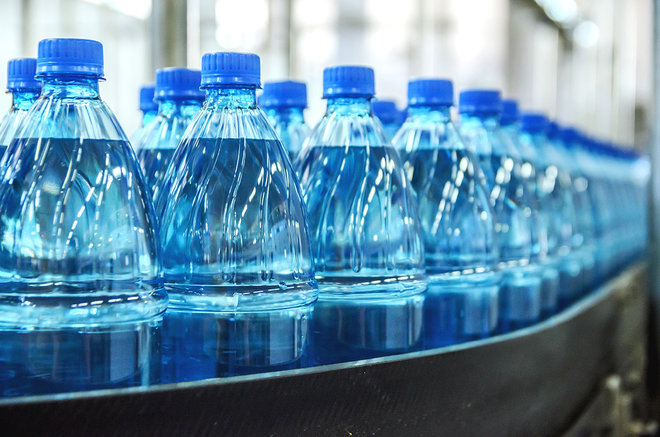
This is the first in a series of posts about water. This one will explore whether bottled water is a safer alternative that some claim it to be, or whether the entire system is a cash-grab that is killing the environment.
Water is a basic human right. Right? So why do so many of us across the world pay so much for this basic human right? Today, we will explore ways in which private corporations have usurped control over this basic necessity of life, and what we as citizens across the world can do to stop this. Some of the resources to educate about bottled water are from the United States, some from Canada. Regardless, a lot of the facts discussed can be applied across the planet.
What happens when a basic human necessity like water is held hostage in plastic bottles controlled by private corporations? People suffer, the environment suffers. Let’s explore how this happens by first taking a look at the bottled water industry. Now, don’t get me wrong, in many parts of the world, drinking public tap water is unsafe for people, and can even prove fatal. However, in many other regions of the world, public tap water is safe, free (or less expensive) and environmentally-friendly.
Teachers, you can begin by showing your students this video on The Story of Bottled Water, published in 2010. While this 8 min. and 4 sec. video was created nearly a decade ago, the facts are still relevant today and can be used as a great starting point for the discussion around this one aspect of the privatization of water.
Critical questions that this video explores, and focal points for class discussions:
Where does bottled water come from?
How does advertising play a role in the increased purchase and use of bottled water?
Who benefits from the purchase of bottled water?
Who suffers as a result of an increase in the purchase of bottled water?
What does the production of bottled water cost the environment?
Are there any health risks associated with drinking bottled water? What are they?
What are some of the moral and ethical implications of bottled water?
Encourage students to take point-form notes as they watch the video, and then put them in groups to explore some of the questions above. You can then bring groups together for a larger class discussion and consolidation of ideas.
ACTIVITIES TO FURTHER EXPLORE THIS TOPIC:
1. Flow Chart of Manufacturing Bottled Water with Critical Analysis Response:
In groups, have students create a visual representation of the process of manufacturing bottled water. They can use a medium of their choice (Prezi, Padlet, Google Slides, a poster, a skit etc.) to showcase the process by which bottled water is produced.
Critical-Analysis Piece: As part of this presentation, have students answer this question for each stage of their water production process: Whom/What does this stage of the process affect, and how?
2. Organize a Debate:
Teachers, whether you teach Law, English, Religion, Social Sciences, General Science or Geography, a debate on this topic can push your students to think for themselves while researching more about this area. You can use the following question for a debate: Is Bottled Water a Necessity? Why or why not?
Teachers, below are PDFs I have created to help you facilitate this debate:
Here are some resources students can explore when preparing for this debate. Make sure to advise students about bias in articles. That is, have them question the writer’s motivations before they accept the argument being presented. These resources can be used as a starting point, and by no means are the be-all and end-all in the debate about bottled water.
I hope this helps begin a discussion about the necessity of bottled water in our world today, especially given the huge environmental impact of the same. As always, readers (and fellow teachers), please get in touch with any feedback; I would love to hear from you! Please follow me on Instagram for additional lesson ideas @creativeteachingbybd
With this segment on water, I wrap up Day 2 of the 31-Day Social Justice Education Project! See you tomorrow!
I watched the U.S. Democratic Presidential Debate last night. As Canadians, what happens down South affects us, but more importantly, this debate pointed to some holes in the moral fibre of our society today; a lot of social justice issues came up: healthcare for all, better education, better universal wages for struggling individuals, corporate greed. And that is where I will begin today. The ethics of dairy, specifically, the role of corporate greed in all of this.
Except, I begin with an unlikely item in the circles of corporate greed. Milk. I recently watched a documentary titled, The Milk System (Teachers, this documentary is available on Netflix). Milk is touted as an essential in our diets. It is a critical source of calcium; it is instrumental in the proper formation and then the maintenance of strong bones and teeth. Or is that what dairy businesses tell you because they want you to buy their milk products? Have ads from the 50s and 60s pervaded our present consciousness to create this “fact” that milk is a superfood? Yes, there are scientific studies that advocate the nutritious benefits of milk, but the nutrition of milk is not under fire here. It is the ethics of milk production. What are the costs, and do they outweigh the benefits?
Reasons why your students should watch The Milk System documentary:
Standing at 1 hour and 30 minutes in length, this documentary is a look at milk from various angles of the production to consumption process.
It looks at the lives of dairy farmers in Europe and other parts of the world, examining in detail the hardships they face and the never-ending battle they fight with dairy factories.
It takes a hard look at corporate milk giants further along the production process who take advantage of the desperation of these farmers, working the families, the land and the animals beyond their God-given abilities.
It provides a glimpse into the marketing of milk, and how as a society we have been, and continue to be lied to.
It maneuvers through an in-depth look into the brutality with which the animals in question are being dealt.
And, it provides an insight into the milk imprint on the environment, and how we as consumers can make a difference.
Concepts this post covers, and those students can explore, through guided and inquiry-based learning of this documentary:
The socioeconomic struggles faced by farmers
The mental health crisis affecting farmers and their families
The toll on the environment as a result of demanding increased milk production
The dairy factories’ culpability in the various crises faced by farmers, animals and the environment along the way
The marketing of milk and how this affects our lives
ACTIVITIES TO TEACH THIS CONCEPT:
1. K-W-L Chart
Teachers, before you begin a screening of this documentary for an English, Nutrition, Social Sciences, Law or Religion class in high school (really anywhere from grades 9 – 12), ask your students to complete a K – W – L Chart. I have provided a standard sample for your use, but you can create any manner of K-W-L charts to suit your creative talents, and the ways in which your students learn best.
*If I may make a suggestion at this point: with a mind to live in an environmentally-responsible way, I would like to propose that you use Google Classroom (or a similar platform) to run your classes. There are various benefits:
You don’t use as much (or any paper) because you post everything online
As teachers, we carry so much marking around, but with an online platform, you just need to carry one device (and this could even be just your phone!) that gives you access to all your students’ online assignments.
And access: you can post from anywhere, and your students can access from anywhere.
With the K-W-L Chart, prompt your students to think of:
What they know about milk, including, its production, marketing, sale and consumption (What I Know)
Ask them to also note down any questions they have (What I Want to Know)
And for the last column, encourage them to keep a running account of what they learn as they learn it (What I Have Learned)
2. Milk Myths and Facts Activity
You can also do a Milk Myths and Facts activity with your class. In the hyperlinked PDF, I have provided a list of comments about milk. You may print these and cut them out for your use. Put your students into groups to complete this task, and have them evaluate each statement to conclude whether it is true or false. Students may NOT do any research as they determine the verity of these statements. Encourage them to call on their own knowledge as they make their assessments. Have these same statements written out on the board in advance. Once groups have determined whether their statement is a myth or a fact, have them share their ideas with the entire class. Have students from other groups chime in with their comments on the statements (as you see fit). For your information, and to facilitate the teaching of these milk myths and facts, please refer to the following websites:
After this activity, have students go back and add to their K-W-L charts.
3. Watch the Documentary The Milk System
As students watch this documentary, have them add to the various columns of their K-W-L chart. Encourage them to make additional notes on their perception and understanding of the documentary.
4. Debrief
When you are done screening the documentary, have an open and informal debriefing session. I have provided The Milk System Documentary Debriefing Questions you can ask students to get them thinking critically about the documentary.
5. The Mental Health Crisis: How Farmers are Affected
Have students read the following articles and watch the following videos to answer the question, “What factors affect the mental health of farmers and why?”
You may choose to have your students write an expository essay on the question, or do a research paper on the same (depending on the level and the subject area you are teaching).
Put students in groups and have them choose 3 milk advertisements from 3 different decades. Below are some exemplars you can use to help get them started. Ads can be either single image posters, a series, or videos. Have students compare and contrast the various messages associated with each advertisement.
In their groups have them create a presentation using a medium of their choice (press, Google Slides, 2D poster etc.) to share their findings with the class. Students can also answer the following question in a 3-paragraph response, as part of this presentation, How do these ads affect the public perception of milk? How has this changed over time?
1960S UK Milk Magazine Advert
7. Researching the Impact of Dairy Farming on the Environment
Students can access scholarly articles to determine the ecological footprint of dairy farming. Teachers, the criteria for this research paper and the evaluation method will largely depend on the level you are teaching and the subject area, which is why I will leave these components to your professional discretion. Should you need help in locating additional material for this assignment, please get in touch. You may start students off by pointing them to these journal article abstracts:
**********
I hope you have found this post helpful, dear readers. Teachers, the ideas and materials provided here may be tweaked according to your preference, and the needs of your students. I would value any feedback you have about the reception of the documentary with your students, and the execution of these activities. Please follow me on Instagram for additional lesson ideas @creativeteachingbybd
This wraps up Day 1 of the 31-Day Social Justice Education Project! See you tomorrow!




 Books 'n' Nooks