I am a fan of Trevor Noah. Who isn’t? Well, maybe Donald Trump.
Anyway, I read his book Born a Crime this week. Not sure how I managed it, being a teacher in a pandemic era, but I did, mostly out of sheer desperation. I needed an escape from the never-ending prep.
So, Trevor…well, I had high expectations coming into this reading. I mean, the man is hilarious and incredibly clever, so why wouldn’t I? Verdict? He did not disappoint.
Trevor (and I only use his first name, because I follow him so closely, I feel like I know him) is masterful in his ability to coherently weave a narrative. There is none of the frou-frou that many an author might succumb to. He tells it like it is and then…next chapter.
This book is organized into chapters that bounce around a bit chronologically, but make sense through the larger narrative of the life-telling that Trevor engages in. Perhaps the two things that stood out to me the most were his no-bs bit and his raw account of life growing up in South Africa. I mean you’ve heard the word “apartheid” bandied about right? I have too. I know about apartheid, mostly that it was bad and that Nelson Mandela had something to do with it going out of style (I wax sarcastic here), but Trevor shocks the conscience in his “Meh, that’s just the way it was” kind-of way. He does not lament the suffering he encountered, or the injustices heaved upon his people, the black people, the coloured people of South Africa. No, he merely presents the facts, saves the commentary for a few high-adrenaline moments and then ping-pongs back and forth between philosophical and really real.
Why should you read this book? Because, you have no excuse not to. It paints a stark picture of racism, of colonialism and of white privilege at the cost of black lives. You should read it because everyone has a moral responsibility to educate themselves about that which they know nothing of, but that which they must know of because it affects society and their neighbour.
If you are a teacher reading this, your students should read this book too. There is a version of the book that is adapted for young readers as well. If your students are grade 7 and up, this is a book that is both badass, because Trevor gets up to real badass sh*t, and painfully relevant. I mean, toss out the To Kill a Mockingbirds and the Great Gatsbys (both really good books if you’re asking), because their time is done. It’s time we allow our students to see themselves in the books they read. It’s time we properly educate them about what goes on in other countries so when they encounter differences, they choose to understand, not differentiate.
Read Born a Crime, and then maybe drop a comment with your take on it?
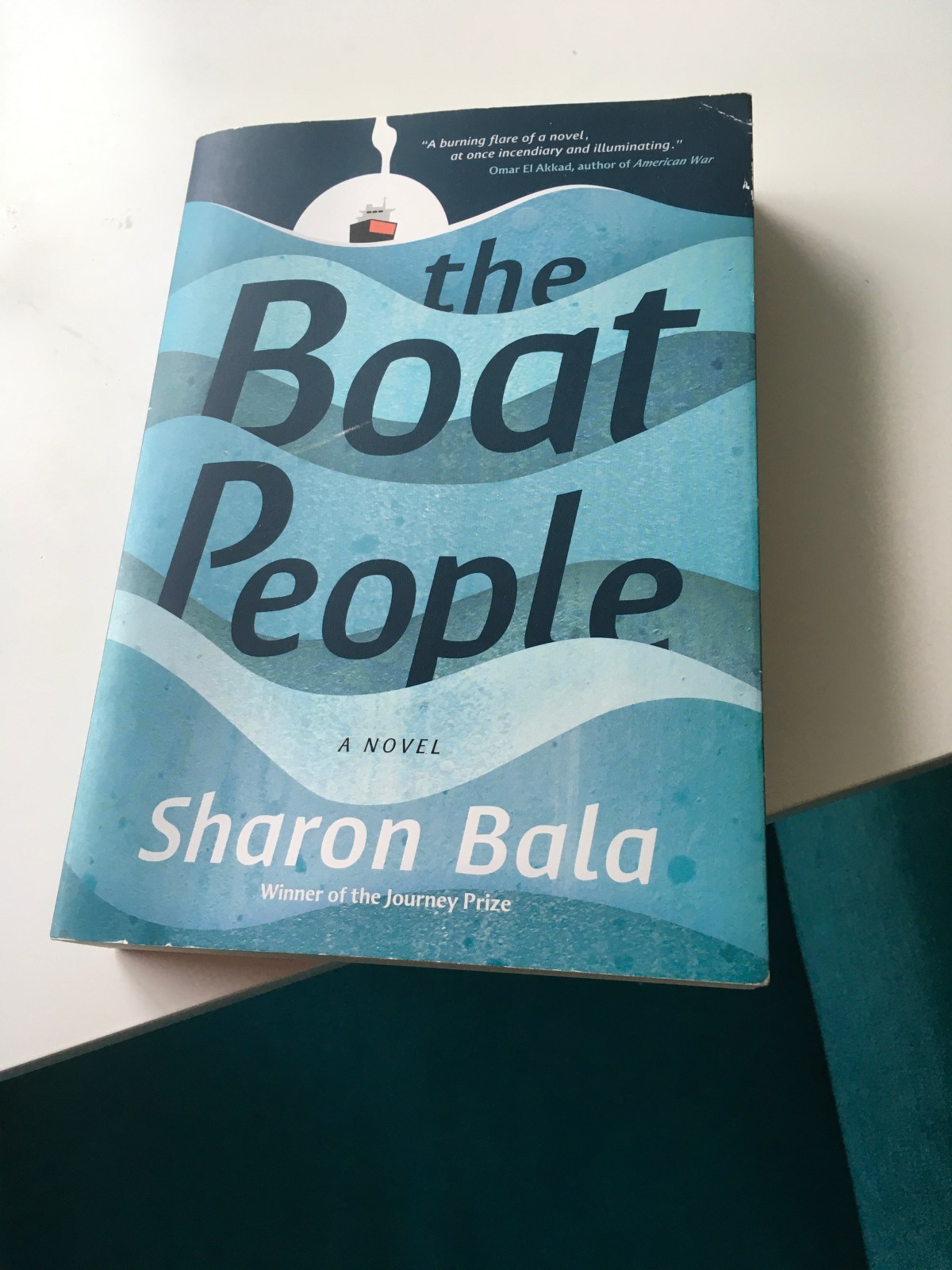
Let me begin by saying that when this book was among the five shortlisted for Canada Reads in 2018, I was ALL in. I bought it and expectantly looked forward to reading it. I wanted to love it two years ago, and I still wanted to love it when I excitedly picked it off my bookshelf a few weeks ago. Except, I did not.
It was not all bad news though, so let me begin with:
What I did enjoy AbOUt this book:
The history. Bala takes a very important moment in history (really only 10 years ago when you think about it) and engraves it into the public conscious with this book. The arrival of a cargo ship full of Sri Lankan asylum seekers on the coast of British Columbia in the summer of 2010, is the perfect backdrop for a narrative that shakes the makeup of what it means to be human and survive in a world dogged by cruelty, personal agendas, the preservation of the status quo and sheer selfishness.
The moral dilemma. Characters present with moral dilemmas in this story, and sometimes, when these conflicts are thoroughly explored, they are gripping, poignant and heart-tugging. They are relatable. Bala takes me on a journey sometimes where I get a privileged insider’s look into the mind of a refugee claimant. Here, the conflicting moral sinews are palpable. I feel them tugging in all directions.
Some characters. The character of Mahindan gripped me from the start. I was ravenous to learn more about him, his history, his thoughts and emotions, his fears and struggles. I also felt drawn to Priya’s Uncle and her father and would have liked to know more about each. Their stories were rife with suffering and moral conundrums and humanity. And these really got me going!
The imagery. Sometimes, Bala surprised me with such vivid imagery that I was sure I was there. I shivered with anxiety as I imagined myself in war-torn Sri Lanka, in a camp with a young child to protect. Her descriptions were always rich, dripping with information about Sri Lankan culture and history and geography.
But then, there were the reasons I could not bring myself to love what I was reading…
What I did not enjoy about this book:
The writing style. Bala is a clever writer, but I am not sure how well this translates to all aspects of her storytelling. Her writing style waxed pedantic sometimes, belaboring points that made me feel like she didn’t trust in her reader to connect the dots. In other places, her writing took on a split-personality, providing piece-meal information, so as a reader I felt I was suspending myself in improbability, and making leaps that lacked some of the logic to work.
Other characters. While there were a handful of characters that I loved in this book, there were other characters that I could not bring myself to care about. Grace Nakamura was one. No matter what she did, and she did precious little, I felt her presence in the novel to be intrusive. It was almost like she was an after-thought. And characters like Priya and Charlika and Mr. Gigowaz, where they could have been critical, they fell apart when their literary mettle was tested. They were too flimsy to hold at the centre. I felt little of substance was present in their construction. Where their voices could have been loud and strong, they were muted and docile, quick to step into the shadows and disappear.
Too many racial injustice tangents. I wish Bala had focused her novel on the Sri Lankan asylum seekers’ stories and not muddied this book with history about the racial injustice towards our Japanese brothers and sisters during World War II in Canada. I felt like, in doing so, each was not allowed to have its own weight, not allowed to showcase the full extent of what the victims suffered. I get that Bala was trying to offer another perspective on our deep-seated conflict with racial prejudice and injustice in Canada, but focusing on one would have done the issue and her story more justice.
Other moral dilemmas. There are other times in this novel when moral dilemmas are presented as trifle. In these scenarios, they fall flat. They feel diminished, and as a reader, I felt disappointed.
The ending. I am sorry, but I hated the ending. I felt cheated, like I had been strung along with my compassion and concern for the character of Mahindan only to be let down by indecision.
For all my whinging as a reader, I would absolutely recommend this book. At the very least, I was able to learn about, understand and appreciate the context of the Sri Lankan Civil War and the struggles of stateless people who flee for a better future with zero certainty and absolute desperation. Which then brings me to my next point.
While I struggled with specific aspects of this book, as a teacher, I would recommend that it be used in schools to teach our young people about the various waves of migration and accompanying racism here in Canada (and there are many such stories). We don’t teach enough literature by Canadian authors, and Sharon Bala deserves a place in this slow-growing canon. This would be a book that allows many minority students in Canada to see themselves in what they are learning in school, thus creating avenues for the construction of their student voices. Its themes are critical to our Canadian social and moral landscape, to our psyche as a multicultural country, to our TRUE education in the acceptance of all. Sitting at 388 pages, this would be a book geared toward Enriched or Advanced Placement elementary classes or high school students. There are discussion questions at the end of the novel that make for interesting dialogue about a lot of the themes within, so using these in an informally-styled book talk is one way to get students excited about this book.
If you read this book yourself or decide to use it in the classroom, drop me a line with your thoughts. If you decide on the latter and need help compiling resources on how to go about using it effectively as a teaching resource, get in touch! Here’s a starter resource that has been made available by curio.ca, a CBC affiliate: https://media.curio.ca/filer_public/f4/a4/f4a4275e-4ebe-4487-b9b6-d71a757bd379/cr18bgboatpeople.pdf
As a Social Science teacher, I am always looking for books that allow me to discover more about, and understand the social sciences in nuanced ways. This becomes particularly helpful when answering questions that my students have about various concepts like: What is the difference between positive and negative punishment? What was Freud thinking when he came up with the Oedipus and Electra complexes (complexi?)? Or, my personal favourite: What are the precise differences between a sociopath and a psychopath, Ms.? Good question, let me look that up…
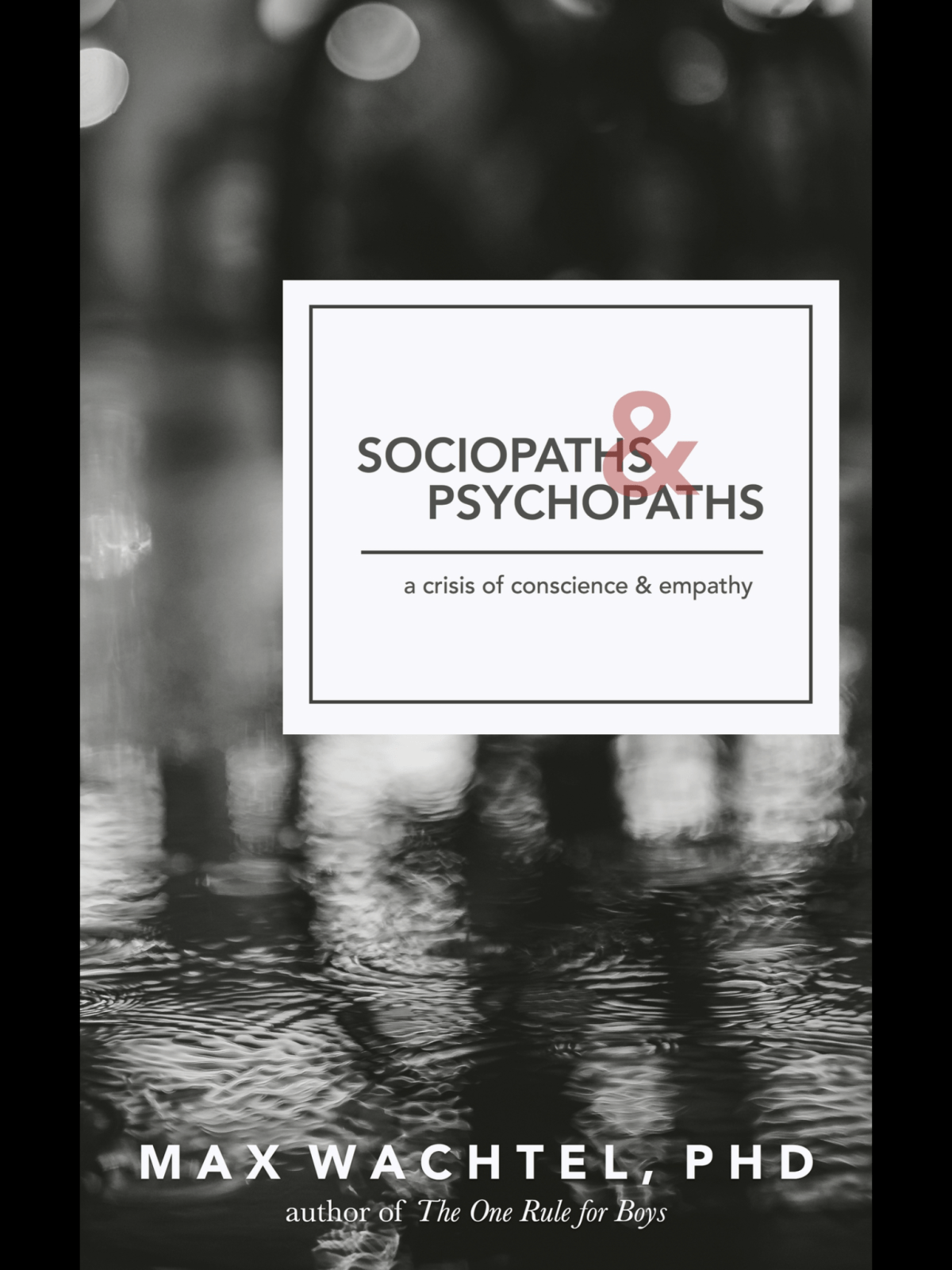
Enter, Dr. Maximillian (Max) Wachtel’s succinct and concise research and analysis on the sociopath and psychopath: a short book titled, Sociopaths & Psychopaths: a crisis of conscience and empathy. A forensic psychologist who has interviewed a plethora of criminals for various court cases, Wachtel makes the research (precious little and none of it in any way definitive) accessible to readers of all strokes. You don’t need to have a PhD in Psychology to understand what he is saying. As a teacher, I appreciated the language he used to break down the most important concepts around this intriguing branch of psychology. Enriched with information from various sources (Wachtel has clearly done ample research, evidenced by the 80+ resources he has cited at the end of his book), Wachtel adds an extra layer of appeal for readers by introducing this subject from different angles, he throws in a bit of philosophy, the law, neuroscience. At turns cheeky, serious and cringingly (is that a word?) funny, Wachtel makes you feel smarter while somehow managing to entertain you (this is like EVERY teacher’s job description; yes I took down some tips!). He covers the amygdala (one of my favourite parts of the brain!), the concept of free will and morality, of having a conscience or being amoral, the DSM-5 (that fancy book that psychologists use as A tool – it is one of many – to diagnose mental disorders in patients), and so much more with such ease. I feel like a bit of an expert on the topic myself, off I go to write a book about it…
In all seriousness, if you are in any way interested in learning more about sociopaths and psychopaths (and don’t pretend you aren’t; I know you’ve binge-watched nearly every show on Netflix with a deranged character as the lead), give this quick and comprehensive read a try. I finished this book in two sittings, in about an hour and a half (I was taking notes for a project I am working on, so it took a bit longer). Fellow Social Science teachers, this book might be of particular interest to you, especially if you decide to do a lesson on Antisocial Personality Disorder (Sociopaths and Psychopaths technically fall into this category). You can also encourage your senior students to read it themselves if they are interested in the topic. Happy reading, and let me know what you think!
I‘ve been cooking more lately, trying all manner of recipes, and with the experimenting has come more confidence. Confidence to try my hand at foods I thought were out of my reach. Curries in particular. That complicated mishmash of flavour and spice (and everything nice). Lately, however, I have found myself dabbling in the odd curry; the Thai, the Indian, and then today, the Goan. A nod to my roots.
Here is my first foray into the food of my people. My momma is a genius at all things food, and growing up, our home was always full of savoury aromas that delighted the nostrils and tastebuds. Even now whenever I visit my parents’, there is nearly always the freshly made pot of Caldine with shrimp or eggs dropped in just for me.
Today I put my brave pants on and tried my hand at a Goan Shrimp Curry. I added bits of myself to the various recipes I saw online and came up with the following. I would like to say before I delve into the machinations of this recipe, that this one is for my mother: Thank you for taking epic risks in the kitchen. Our home has never known what it means to be without good food.
To begin with, there are two parts to this recipe. The first is what I am going to call the heartbeat of the curry. This is where your punch of flavour and colour will come from. The second is your meat and potatoes, the grit of the curry: the shrimp and cauliflower. This recipe, as I have built into this post, offers a whole lot of leeway. I want you to throw away your fear of fecking up a curry, and trust your instincts. Rely on your palette, your nose and your intuition. Experiment, then taste, then fix as you go. Ready? Let’s get to it!
The Ingredients pictured here before I began the process
For the Heartbeat of the Curry:
INGREDIENTS:
1-2 tbsp. coconut oil
2-3 small onions chopped (red, yellow, white – whatever you’ve got on hand will do)
5-6 cloves of garlic minced (Garlic, in general, is wonderful in food, so if you want to add a bit more, go for it!)
A 2-inch long piece of ginger chopped (don’t sweat the width, trust your instincts)
2 large tomatoes chopped (don’t get too technical with your chopping technique, this is going in a blender, so it won’t matter)
Frozen shredded coconut (available at most international food stores – if you live in Toronto, Sunny Food Market is the place to find this. If you can get this fresh, amazing, if you can’t, you can always use canned or powdered coconut milk, but add it later, after the mixture has been blended).
Peanuts (I tossed in a few, maybe 2 tbsp.?, whole, no need to get fancy and even bother peeling them)
2-3 pieces whole Tamarind after leaving to sweat in a half cup of hot water (Can be found at aforementioned Sunny Food Mart, but if you don’t have the actual tamarind, the paste or even some semi-pure version of a tamarind sauce will do – 2 – 3 tbsp. will suffice in this case. The Tamarind adds a complete dimension of sourness to this curry; if you’re not big into sour, ease up on how much you add)
1 tsp. of chilli powder
1 tsp. of coriander powder
1 – 2 tsp. of turmeric powder (stick with your preference here, if you don’t like turmeric, stay closer to 1 tsp.)
PROCEDURE:
Sauté the onions, garlic, ginger in a pot with coconut oil (at medium heat)
Once the onions have wilted a little, add the tomatoes, shredded coconut, tamarind, peanuts, and all manner of aforementioned powders
Cook for about 10 minutes, until the tomatoes start to go limp as well. Take off heat, leave to cool while you begin prepping the shrimp and cauliflower [SEE BELOW].
Once your shrimp and cauliflower are on the heat, pop this heartbeat mixture into a blender and pulse until everything has blended really well. Add a three-quarter cup of water to help it through the pulsing process.
Pour the mixture back into your pot (add as much water as you like; I like this curry more on the thick side, so I didn’t add too much water. Tip: Any water you add, add it to the blender first, so it makes use of all the remnants of your blended mixture, and then add to the pot).
Sau·téed Goodness
Ready to pulse!
All pulsed-up!
For the Grit of the Curry (Shrimp and Cauliflower):
The shrimp coated in flavours before adding to the pan
INGREDIENTS:
20 – 30 medium to large pieces of fresh or frozen shrimp (clean, devein and remove the tails of these. You can choose to go with cooked and cleaned frozen shrimp to save yourself the hassle, but I find the uncooked frozen variety soaks in the flavours of your spices better and renders a juicier finish)
About one-third of a large cauliflower de-floreted and chopped to more or less match the size of the shrimp (You don’t want big chunks of cauliflower and bite-sized shrimp – allow the cauliflower to compliment the shrimp in size and texture)
2-3 cloves of garlic, minced
Salt and pepper to taste
1/2 tsp. turmeric
Half a lemon
1 tsp. mustard seeds
2 small green chillies (or more if you want to kick up the heat; feel free to use red chillies if you like your curries blazing hot)
A handful of curry leaves (if you have them; I didn’t)
1 tbsp. coconut oil (you can use vegetable or olive oil or any kind of oil you prefer here and for the part above, but I had coconut oil on hand and it adds to the flavour)
PROCEDURE:
Place the cleaned shrimp in a bowl, add the salt, pepper and turmeric and mix well. Squeeze the half lemon and mix again.
Sauté the onions, garlic and cauliflower florets in a shallow pan along with the mustard seeds. Once the cauliflower begins turning translucent, add in the shrimp mixture. Watch carefully, you don’t want the shrimp to overcook and become rubbery. Take off the heat when the shrimp is half-cooked and add it to the heartbeat blend in the pot.
Slice the chillies lengthwise in half and drop into the pot.
Add as much salt as you like.
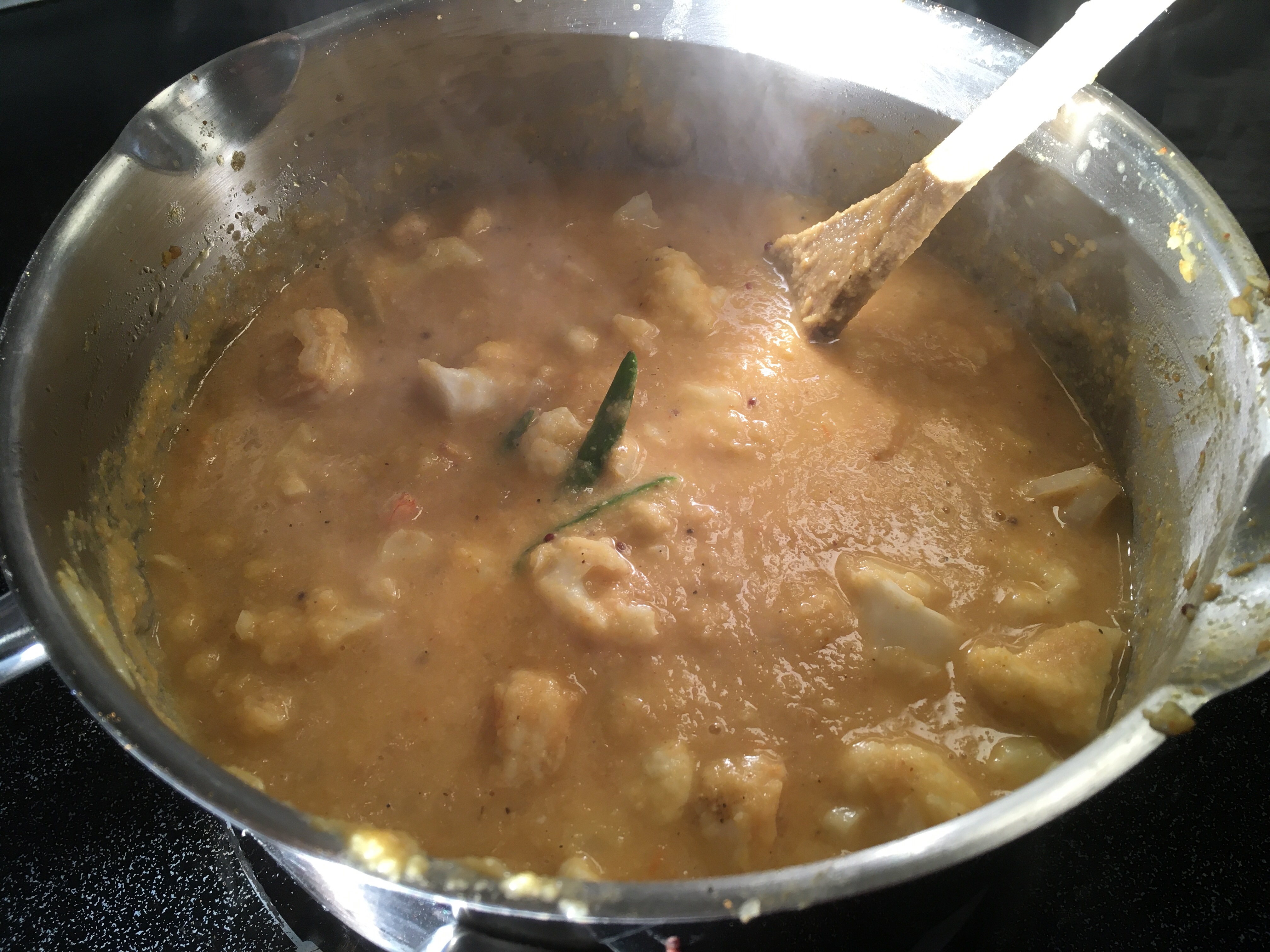
Let boil for about 10 – 15 mins. on low heat.
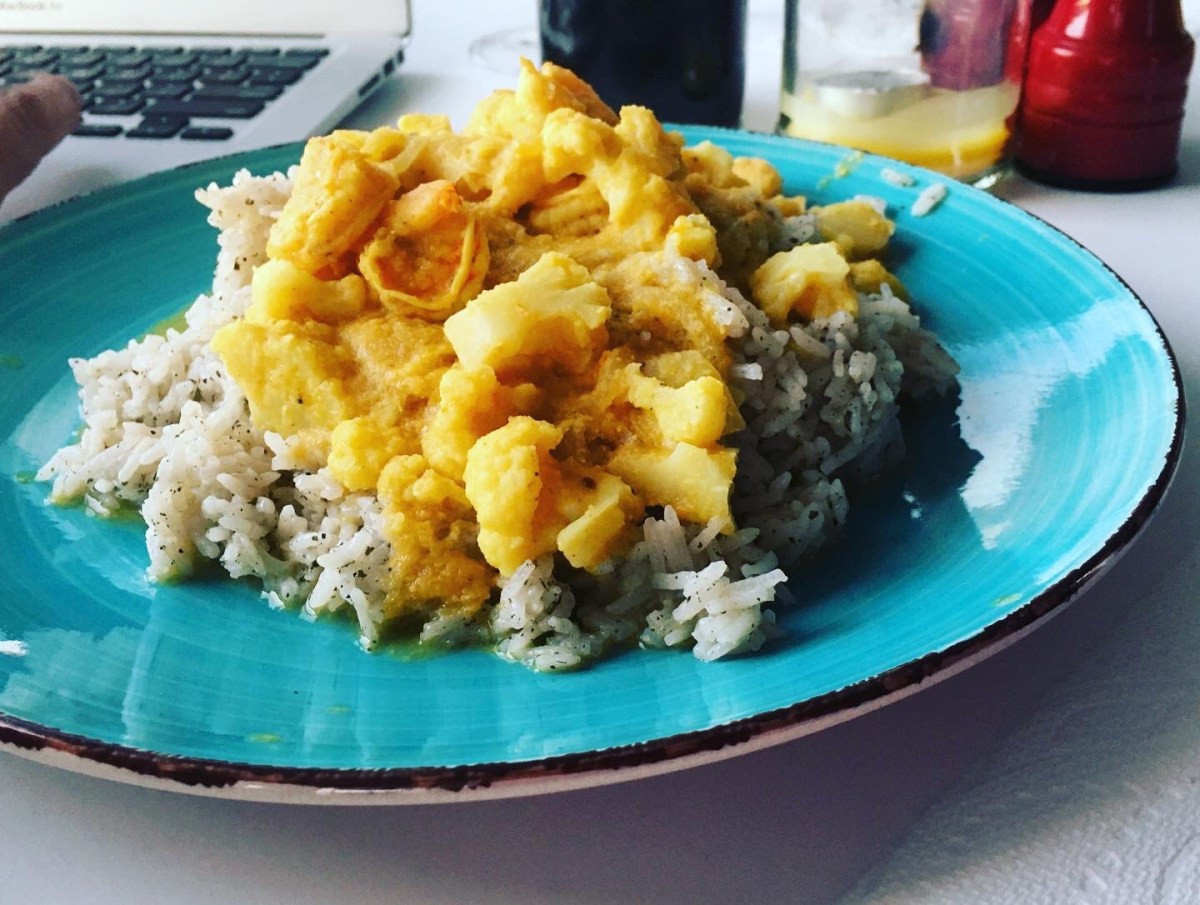
Serve over a bed of fresh rice (any kind you like!). Enjoy!
Cauliflower in pan first.
Shrimp added later, once cauliflower has wilted a bit.
Simmering Pot ready to eat!
There you have it, a Goan Shrimp and Cauliflower Curry. It takes a bit of time (like an hour and a half, mostly because I am a perfectionist and wanted to get this right), but I had some jazz music on, and a glass of wine to make things more fun. If you try this recipe, leave me a comment and let me know how it went. Bon appétit!
This pandemic has gripped Canada, like the rest of the world, in ways that have crippled and terrified many of us. And leadership is critical in a crisis. In a crisis, leadership can galvanize millions towards a positive outcome, leadership can unite and conquer. And sir, that is what you have done.
I am not a homegrown Canadian. I am of the imported variety, the kind one calls an immigrant, and having lived in multiple places over the course of my life, I have always been proud to be able to identify as a Canadian. However, no moment in time has made me more proud than I am right now.
Prime Minister, I know you have faced flack in the not-too-distant past, in the weeks, days and months, leading up to our Federal Elections last year, but most of us Canadians trusted you. And at this time, it is blatantly obvious that we were right to have done so.
No, not every decision you make will be agreed upon by all. It is the supreme challenge of a leader to receive the support of all his/her people. Still, in the last few days since this pandemic crashed into our airspace and came unwelcome to our doorstep, you have stood strong, you have been unfazed, unfazed by criticisms (and some really stupid questions asked by journalists during your daily address to the nation), unfazed by the doomsday tone of this virus, and unfazed by the collective chaos that is breaking around us.
Under your leadership and direction, Canada has emerged in the last 5 years as a no-longer-silent and firm leader of the free world. I am not old enough to call to mind the wisdom of time and the experience of history, but in my life as a Canadian, you are the only leader of this country who has put us back on the world stage as a force to be reckoned with. It is as a result of your no-nonsense and calm-and-collected leadership that our Canadian Olympics committee had the courage and wisdom to be the first to say our Canadian athletes would not be travelling to Tokyo for this summer’s Olympics. It is under your leadership that Canada has emerged as a major player in economics and trade. You have gone head-to-head with the “leader” of our neighbours to the south. You have stood your ground and stood up for us. No, you are not perfect. You have made mistakes, but you are human, and in these uncertain times, Prime Minister, we as Canadians are blessed and proud that you are our leader.
So, drown out the noise and the shouts of people who do not understand, drown out the bursts of stupidity that have been hurled your way, like you have so wisely done. We see you, we see what you are doing, and we feel stronger as a nation because we are led by you. And sir, we’ve got your back.
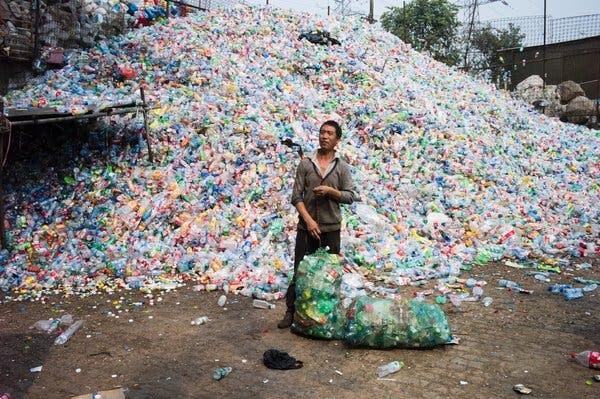
Have you ever wondered where all your plastic ends up when you are done with it? Does it go to factories where they carefully recycle it all? Actually, a lot of it ends up in countries across the world, developing regions where people sort through it just to make a meagre living.
Recently, Canada was under fire for dumping our garbage, unlawfully it is important to note, in the Philippines. Kudos to the Philippines’ government for standing up to us. The garbage will be making its way back home.
Why does this happen? Why do big developed and thriving Western nations think they can”export” their unwanted items in countries where people are poor and can be exploited?
The documentary film Plastic China provides an in-depth look into the consequences of plastic dumping overseas.
Teachers, this film is available on Amazon Prime, but you can take a look at the trailer here:
Eleven-year-old Yu Jie works with her family to sort through plastic waste to make plastic pellets that can be sold for money. They work for $5-6 each day to eke out a living. The children in Yu Jie’s household cannot go to school because their parents cannot afford it. Of course, there are a lot of other factors that drive their poverty, but this film takes a critical look at the human cost of plastic waste.
China has recently come out and said it will be heavily reducing the import of plastic waste from developed countries, but does this mean that poor people will no longer be exploited to toil in harsh and unforgiving conditions with their young for a chance at a better life?
As students watch this film, have them take down notes and you may use the following questions to get them thinking critically about what they have seen.
What things surprised you about the film?
What were some things that were not quite clear?
Why do you think developed nations want to export their plastic waste?
What are some harmful effects of large plastic piles on the environment?
What are some harmful effects of plastic dumps on people? Which ones does the film mention?
How does being a plastic waste sorter perpetuate the cycle of poverty for a lot of people in developing nations? What were some examples you noted from the film?
How does the life of a plastic waster sorter specifically affect young children in the film?
ACTIVITIES TO FURTHER EXPLORE THIS TOPIC:
1. The Impact of Plastic Export Presentation:
Have your students explore the impact of plastic export on developing nations. Below are some resources they can use to get started. They may complete a digital presentation to showcase their findings on the same and do this in either groups, or individually.
Like Yu Jie in the film, have students research stories about how individuals and families in developing countries are impacted by plastic waste dumping. They will need to provide a series of 5-10 images that showcase the impact of plastic dumping on that person’s life. They will need to create these images (drawing, painting, photography etc.) based on the stories they read. Have them provide labels indicating the names, ages and countries of the people being profiled and a brief description of their circumstances.
Students can do a gallery walk to present their ideas and should be encouraged to interact with each other’s presentations by asking questions.
Again, readers and teachers, your feedback is welcomed. Feel free to drop a line in the comments below. As well, I am still accepting suggestions for this 31-Day Social Justice Education Project, so you can send me an e-mail at 31daysocialjusticeedproject@gmail.com with any ideas you have for social justice issues in your part of the world. Please visit my introductory post about this project for details on the same. Don’t forget to connect with me on Instagram @creativeteachingbybd. If you would like to join in the conversation on Instagram, feel free to use #31daysocialjusticeedproject. Be back tomorrow!
We have fast become a society of excess. If we look at the way people lived their lives in decades past (up until about the 1950s), the excess was not really in style. Our ancestors lived through wars and made do with what they had. They were inventive in their solutions to survive. With the evolution of technology and the improvements in mass production, companies around the world have gone unchecked in what they produce, how they produce it and where it all ends up. They have helped create a society that is wanton in its consideration of the environment and each other.
Today we will take a look at how our life of excess is destroying our environment, by focusing on “fast fashion”.
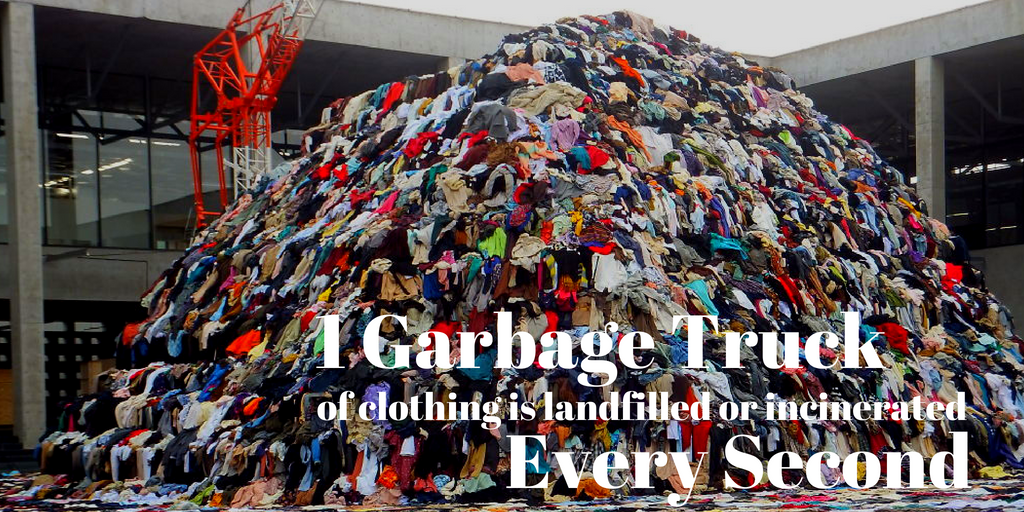
I gave myself a pat on the back a little while ago for not buying new clothes for nearly 6 months. I am not a fashionista, and in general, the idea of excess bothers me, but I thought I was being disciplined with a view to live on less with this buying hiatus. Wrong. I went on a retail therapy trip shortly after this pat on the back, and bought a bunch of new clothes I did not need. Did they make me happy? Yes, momentarily so, but then I learned about clothes and where they end up, and now all I can desperately think is: Can I return these new clothes, please?
In a world where there is a lot of weight put on appearance, and an ever-increasing pressure to look a certain way so we can belong to cliques and attain certain levels of status, we spend a lot of money on clothes. That is one thing really, but what happens when our direct overconsumption of clothing contributes to an environmental crisis: non-degradable textile waste in landfills? This is where we land today, and elementary teachers, I know I have posted a lot of educational material geared towards the secondary level, but the resources listed here can definitely be used for your students as well.
Before students watch the video below, ask them these questions:
Where do you think your used clothes go after you have no more need for them?
What do you think “Fast Fashion” means?
*Encourage students to share their stories of clothing swaps, donations, recycling etc.
Then, watch this 22 min. and 23 sec. segment of CBC’s Marketplace. Marketplace is a great series by CBC that takes an investigative look into some of the critical aspects of our lives, and this segment really makes you question your “need” to consume fashion.
Consider the following questions in a class discussion to further critical thinking:
How many new clothes do you buy in a year? (Students can create individual graphs for a math lesson and do a compare and contrast with their peers).
Where does your family/do you put all your used clothes?
Why do our clothes end up in landfills?
Why can these clothes not be recycling like paper or certain kinds of plastic?
What do you think will happen if we continue to dump all our used clothing in landfills? What can happen to the environment?
Are companies, like H&M, lying to us when they tell us that all our used clothing will be recycled?
What do clothing companies who take our used clothing really do with them?
Then, show students the following video:
This video, a follow-up to the one above, is also compiled by CBC’s Marketplace and talks about clothes from Canada that end up in Kenya, and how they are dealt with there. Ask students the following questions after they watch the short 6 min, and 59 sec. video:
Why do you think Canada sends all our used clothing to countries like Kenya?
Do the people in Kenya get our used clothing for free? Should they? Why or Why not?
Do you think this helps the people in Kenya? Why/Why not?
What are some other ways we can manage all the used clothing we no longer need?
Next, show students this video of clothing waste and how it is managed in Vancouver, Canada:
Use the following discussion questions to get students to think about the video critically:
Does it surprise you that some women in the United Kingdom use each of their clothing pieces about 7 times only? How many times do you use your clothing pieces on average?
Can mixed-material clothing items be recycled? Why or why not? What do they contain? Where do they end up?
What are some of the solutions that this video discusses?
What is “circular fashion”?
Would you be willing to buy all your clothing from used clothing stores? Why or why not?
ACTIVITIES TO FURTHER EXPLORE THIS TOPIC:
1. How Can We Help? Informational Documentaries
In my research, I found out that the city of Markham in Ontario (on the border with the city of Toronto) was the first city in North America to ban the disposal of textile waste at the curb. How incredible an idea is this? Well, these guys went a bit further and now they have implemented a textile recycling program where environmental conscientiousness is at the forefront.
Ask students to compile a list of 7 ways in which they can stop the negative impact of fast fashion on the environment.
Ask them to describe each solution using words, pictures, graphs, video clips etc. to create a mini-documentary on these solutions. Have them work in groups and encourage them to be as creative as possible.
When students are finished compiling information for their documentaries and creating them, organize a screening of these documentaries. Have students introduce their documentary to the class before each screening.
As an extension, you might want to organize an assembly for the entire school, with the aim of creating awareness, and feature some of the best documentaries created. Students might even have information booths set up where they talk with other students about their solutions and brainstorm ways in which they can implement some of these strategies together.
Finally, show students the following video about students in Ontario schools for some inspiration (stop the video at 5:11):
2. Additional ideas for how to take this information further:
Partner with your school’s Eco-Team to create posters and/or information sessions informing students of the impact of fast fashion.
Organize a Clothing “Shwap” (as seen in the video above)
Research ways that different governments around the world, and here in Canada are helping to tackle this problem, and have students suggest additional solutions for their governments to consider.
Have students organize a “Silent Photo Exhibit” where they showcase the impact of fast fashion on the planet, various countries around the world and people in general, using still single-frame photography.
There is so much you can do with the videos here, readers and teachers. Circulate these videos, and find ways to reuse old clothing. My personal goal over the next few weeks is to comb through my wardrobe and sort my clothing into a donation pile (after carefully researching a sustainable recycling program in Ontario where I can donate my clothes: Markham’s program is looking good!) and a repurposing pile (where I find new ways to use the clothing I already have). I will also strive to not buy any new clothing for the next year, or more if I can manage it. Wish me luck.
If you have any ideas for suggestions you would like to contribute to this 31-Day Social Justice Education Project, please send me an e-mail at 31daysocialjusticeedproject@gmail.com. It doesn’t matter where you are in the world, I would love to hear from you and highlight the stories of your lives. Please visit my introductory post about this project for details on the same. Don’t forget to connect with me on Instagram @creativeteachingbybd. As well, if you would like to join in the conversation on Instagram, feel free to use #31daysocialjusticeedproject. See you soon!
It is nearly 11 p.m. today as I frantically type out this very important post. Family priorities trumped my ability to publish this post earlier in the day, but this one needs to be written, so here I am.
In my previous two posts about water, I talked about bottled water as a specific example of corporate power and greed, trumping basic human rights. I also talked about the privatization of water by these corporate powers, as they sat back and watched communities across the world lose access to a basic human right. Today, I go further. I hone in on a problem here at home. A problem that is a growing blemish on our identity as Canadians. And yes, this blemish is multi-faceted and cannot be covered in a single post. I am aware, and I will dive into the other aspects of this issue as these 31 days wear on.
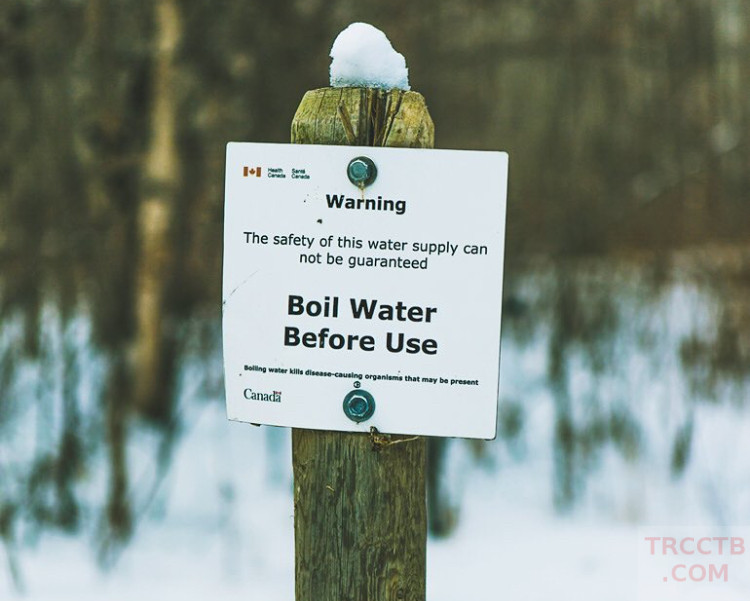
Most of us in developed countries (and thriving cities) have access to clean and safe drinking water, as well as ample water for our washing needs, so perhaps we don’t really care that people in other parts of the world don’t have access to this same human right. I live in one of Canada’s biggest cities, and by extension, one of its wealthier cities, so it comes as no surprise that my access to water is directly related to this privilege. My Indigenous brothers and sisters in various parts of Canada do not enjoy this same privilege. Their crime? They do not command the same power and affluence. They are easily overlooked. This is wrong. And we: you and I, all of us who have enjoyed safe access to clean water all our lives, should give a damn. So we’re starting now what we should have begun a long time ago. We are educating ourselves and our young people.
In Canada, our Indigenous brothers and sisters live their daily lives without access to clean drinking water. And they are not the only (native) communities in various countries who do not have this access. Some of you are familiar with the water crisis in Flint, Michigan. This story is one of very few that got told and managed to punctuate our collective ignorance on the issue. The Indigenous communities of Canada deserve to have their voices heard, and they can only have it heard if more of us unite with them and shout together.
I am going to go back to the beginning. Human beings need water to survive, this is fact. About 60% of our body is made up of water and we cannot survive more than 3 days without water. So, why do we not treat water with the respect it is due? Why do we waste it? Is it because we have always had it, so we do not understand its true value? People around the world who do not have such ready access must appreciate it a lot more. And I will go right to the people who appreciate it most: The Indigenous Peoples. Here in Canada, we refer to the first inhabitants of the land as the Indigenous Peoples. In other parts of the world, they have different names. It doesn’t matter. They are the first ones who knew the land. They are the ones we need to turn to in order to understand the importance of our natural resources and how to begin the painstaking process of reversing the damage greed has done.
Readers, and teachers, I would encourage you to watch the following episode of Future History. There is material out there that deals with the water crisis suffered by various communities, but this 21 min. and 45 sec. documentary explores our human relationship with water, and this is important for us to understand as we begin taking action to protect it.
This episode begins with the phrase, Niibi Bimaadiziwin in Anishinaabe, which means “Water is life”. As Sarain Fox says, “This [protecting water] is everyone’s responsibility.” The episode talks about living in balance with nature, the fact that we rely on nature for our survival so we must be humble, we must take action and we must save our water sources from pollution by corporations that are only interested in their own bottom line.
Teachers, I am going to keep this one short on activities because there is more to come on Indigenous Peoples as part of this 31-Day Social Justice Education Project. Still, the following are some ways in which students can engage with this short documentary and explore the water crisis in Indigenous communities, as well as our relationship with this necessary resource.
ACTIVITIES TO FURTHER EXPLORE THIS TOPIC:
1. Compose a Reflection
Encourage students to compose a reflection that helps answer the question:
Why is water important to me?
This can be in written form, a drawing, a short video, whatever way your students feel they are most comfortable reflecting.
Ask students to consider what role water plays in their daily lives. Ask them to think critically about how it is necessary for the survival of various species. History teachers, you might also want to mention the role of water in migration over the course of history.
Next, have students consider this key question:
Should everyone have the same access to water that I have?
After having researched communities around the world that do not have the same access to water that we do here in developed countries (as I suggested in my previous post on water) force students to activate their empathy skills as they put themselves in the shoes of another.
2. Indigenous Communities Water Access Report
Have students work in groups to research various Indigenous communities that do not have access to safe drinking water. Indigenous communities like those on Georgina Island, as the documentary describes, are a good place to begin, so students can understand what this looks like. The following are some resources that students can use as a starting point. Again, remind them to think critically about what is written and why. The resources below are a place to start; they are not an exhaustive list (and for my international readers, my apologies, these are solely Canadian resources).
Knowledge is useless without activation. Have students work in groups or individually to come up with ways in which they can help improve access to safe water for all people in their communities. They might want to look specifically at an Indigenous community to better focus their solutions, or they might want to think about initiatives that begin at school but have broader applications. Have students come up with a list of solutions, at least 5 and write a short “how-to” on each. Ask them to present these to the class in the form of a persuasive brochure (physical or digital), complete with pictures, graphs etc.
Once all groups have presented, have the class discuss some of the better solutions that were presented.
Note these down and then have students vote, as a class, on the best solution.
Take that solution, and see if your students can follow through on it.
Readers, as always, your feedback is welcomed – let me know about your experience with this topic, or your thoughts on the short documentary. Teachers, please share what worked and what did not work if you try these suggestions. If your class goes on to implement one of their solutions, I would love to hear from you as you begin the journey. It would be an honour to help you and your students through the process in any way that I can.
As well, I am still accepting suggestions for this 31-Day Social Justice Education Project, so you can send me an e-mail at 31daysocialjusticeedproject@gmail.com with any ideas you have for social justice issues in your part of the world. Please visit my introductory post about this project for details on the same. Don’t forget to connect with me on Instagram @creativeteachingbybd. If you would like to join in the conversation on Instagram, feel free to use #31daysocialjusticeedproject. Be back tomorrow!
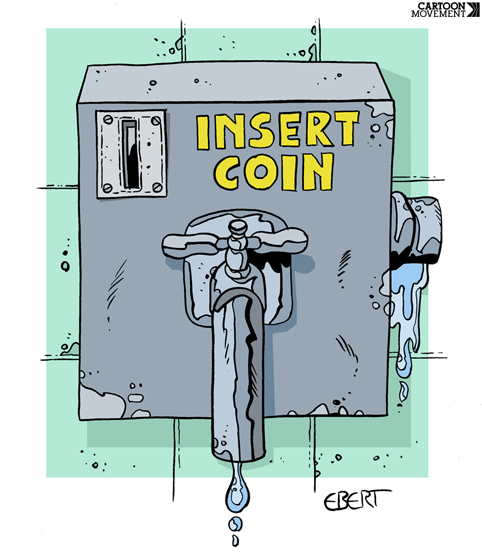
In a closer look at water today (in the second chapter of the Water Series), we tackle the question of privatization. There are people firmly against the privatization of what we hold as a basic human right and necessity for survival, and then there are those in the opposing camp who see the merit of privatization. This is not a black and white issue. In some regions (countries, towns, cities) of the world, privatization works and people benefit from it, but in other areas, privatization is driven by the bottom line, and this is where privatization can be a detriment to the access to water.
First, it would be worthwhile to consider the meaning of “privatization”. Teachers, you can elicit organic responses from students in a diagnostic discussion. List words and phrases that students use to describe this concept on the board/screen. Privatization, in a nutshell, is to make something private. To take control of something and call it your own, whether you are an individual or a large corporation. Privatization is the opposite of making public. What happens when a basic human necessity like water, is no longer publicly-controlled and publicly-accessible? Sometimes, people suffer, and sometimes, the environment suffers.
Let’s begin then. As in yesterday’s post, this is a short (3 min. and 36 sec.) video about the story of water titled, The Story of Water. Again, this viewpoint is one of several that people hold about the privatization of water. This is meant to work as a starting point in this conversation, and to help students make up their own minds. As always, please remind your students of bias and the value of motive in the sharing of a viewpoint.
Some questions to further critical thinking and discussion around this issue can include:
Why might private corporations want control of water systems?
How might the privatization of water systems affect citizens?
What factors might help to determine whether the privatization of water has a positive or negative impact on communities? Might it impact some communities in different ways than others?
What can the public do to retain control of its water systems?
Should water remain a publicly-control element? Why or why not?
ACTIVITIES TO FURTHER EXPLORE THIS TOPIC:
1. Write a Research Paper:
Students can write research papers individually, in pairs or in groups that answer the question: Should water remain a publicly-control element? Why or why not? Teachers, it depends on what kind of evaluation you are looking for, and how exactly you want your students to interact with the material (Depending on what subject you teach, you might want students to incorporate charts, graphs and diagrams into this research paper). Personally, I would group students together to have them complete this research paper. Students should use the discussion questions listed above to help them formulate their thoughts and construct an argument around this issue.
Some resources that students can begin with, as they seek to answer this question are provided below. This is not an exhaustive list, but a place to start. Students should check in with you about the resources they choose, so you can help them better determine credibility and analyze for bias.
2. Complete a Report on the Privatization of Water:
Again, students can do this individually, in pairs or in groups. There are three components to this report:
a. Mapping out Privatization of Water in the World:
For this part, students must research 10 different countries in the world where the privatization of water is a social justice issue. They must use a map of the world to showcase these countries. They can colour-code these countries to indicate which ones benefit from the privatization of water systems, and which ones do not. For example, countries in red could indicate those that suffer as a result of privatization and those in blue can indicate countries that benefit from them.
This activity has a multi-pronged effect:
It allows students to expand their knowledge of world geography
It showcases the impact of access/lack of access to water for their brothers and sisters around the world
It allows students to critically question the way we manage our natural resources and how we consider equity in this process.
b. How Privatization? Why Privatization?
Next, looking at their map, have students write a short paragraph on what their findings say about the privatization of water in these various regions in the world. They must answer two fundamental questions in this process: 1) How does the region conduct and manage its privatization (i.e., what does the process of privatization look like?) and 2) Why does it work or not work?
c. Pros and Cons of Privatization
Lastly, students must compile a list of at least 5 pros and 5 cons regarding the privatization of water. Five is a healthy number here, but use your discretion to determine what is reasonable for you and your students, teachers.
Finally, students can choose what medium they would like to use to present the various components of this report. Encourage creativity and diversity in their reports (if you see several groups doing the same countries, encourage them to explore other ones). Below are some methods that students might want to explore to prepare this report (Please note that there are paid and free aspects of these options; students, unless they choose otherwise, should be advised to use the free versions).
Make a video using software of their choice. E.g., Powtoon
This concludes Day 3 of the 31-Day Social Justice Education Project! Tomorrow we will take a closer look at the water crisis in our world, in the final chapter of the Water Series.
As always, your feedback is welcomed and much appreciated. Also, don’t forget to send me an e-mail at 31daysocialjusticeedproject@gmail.com with any suggestions you have for social justice issues in your part of the world. Please visit my introductory post about this project for details on the same. Don’t forget to connect with me on Instagram @creativeteachingbybd. If you would like to join in the conversation on Instagram, feel free to use #31daysocialjusticeedproject. Be back tomorrow!
This is the first in a series of posts about water. This one will explore whether bottled water is a safer alternative that some claim it to be, or whether the entire system is a cash-grab that is killing the environment.
Water is a basic human right. Right? So why do so many of us across the world pay so much for this basic human right? Today, we will explore ways in which private corporations have usurped control over this basic necessity of life, and what we as citizens across the world can do to stop this. Some of the resources to educate about bottled water are from the United States, some from Canada. Regardless, a lot of the facts discussed can be applied across the planet.
What happens when a basic human necessity like water is held hostage in plastic bottles controlled by private corporations? People suffer, the environment suffers. Let’s explore how this happens by first taking a look at the bottled water industry. Now, don’t get me wrong, in many parts of the world, drinking public tap water is unsafe for people, and can even prove fatal. However, in many other regions of the world, public tap water is safe, free (or less expensive) and environmentally-friendly.
Teachers, you can begin by showing your students this video on The Story of Bottled Water, published in 2010. While this 8 min. and 4 sec. video was created nearly a decade ago, the facts are still relevant today and can be used as a great starting point for the discussion around this one aspect of the privatization of water.
Critical questions that this video explores, and focal points for class discussions:
Where does bottled water come from?
How does advertising play a role in the increased purchase and use of bottled water?
Who benefits from the purchase of bottled water?
Who suffers as a result of an increase in the purchase of bottled water?
What does the production of bottled water cost the environment?
Are there any health risks associated with drinking bottled water? What are they?
What are some of the moral and ethical implications of bottled water?
Encourage students to take point-form notes as they watch the video, and then put them in groups to explore some of the questions above. You can then bring groups together for a larger class discussion and consolidation of ideas.
ACTIVITIES TO FURTHER EXPLORE THIS TOPIC:
1. Flow Chart of Manufacturing Bottled Water with Critical Analysis Response:
In groups, have students create a visual representation of the process of manufacturing bottled water. They can use a medium of their choice (Prezi, Padlet, Google Slides, a poster, a skit etc.) to showcase the process by which bottled water is produced.
Critical-Analysis Piece: As part of this presentation, have students answer this question for each stage of their water production process: Whom/What does this stage of the process affect, and how?
2. Organize a Debate:
Teachers, whether you teach Law, English, Religion, Social Sciences, General Science or Geography, a debate on this topic can push your students to think for themselves while researching more about this area. You can use the following question for a debate: Is Bottled Water a Necessity? Why or why not?
Teachers, below are PDFs I have created to help you facilitate this debate:
Here are some resources students can explore when preparing for this debate. Make sure to advise students about bias in articles. That is, have them question the writer’s motivations before they accept the argument being presented. These resources can be used as a starting point, and by no means are the be-all and end-all in the debate about bottled water.
I hope this helps begin a discussion about the necessity of bottled water in our world today, especially given the huge environmental impact of the same. As always, readers (and fellow teachers), please get in touch with any feedback; I would love to hear from you! Please follow me on Instagram for additional lesson ideas @creativeteachingbybd
With this segment on water, I wrap up Day 2 of the 31-Day Social Justice Education Project! See you tomorrow!





 Books 'n' Nooks