Aaron Becker’s Journey: A True Picture Book

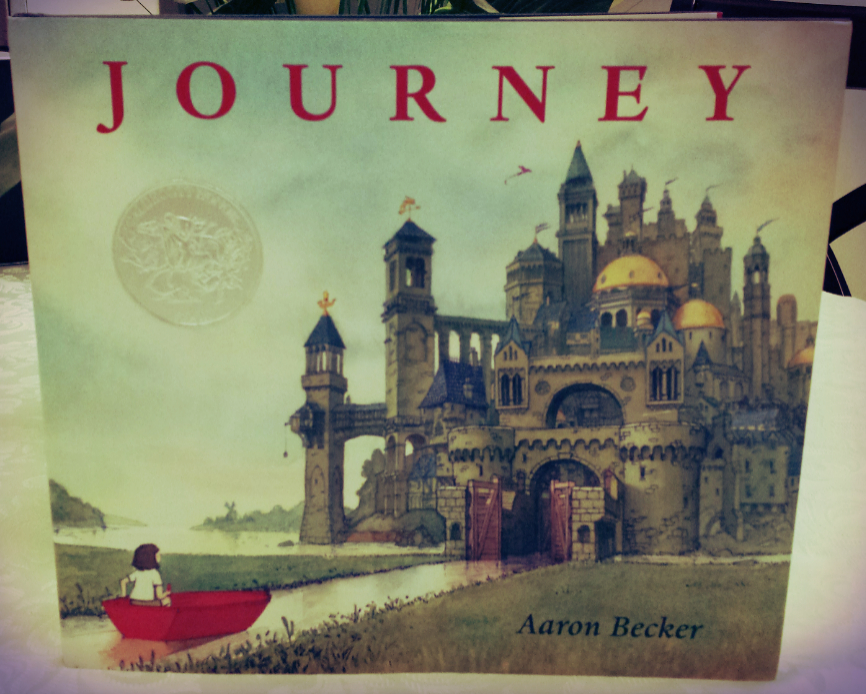
I was first introduced to Aaron Becker’s Journey while doing a teaching placement not too long ago. What I did not realize at first was how versatile this book would become, on not only an age level, but a conceptual and skill-teaching level as well. I have since read it to students at the primary and junior levels, and each time, this book has not failed to create a splash. Becker relinquishes the use of words to tell a story completely in the hands of a child’s imagination. He trusts our young readers, as we must, to make their own meaning out of this heartfelt tale.

I will intentionally not discuss the plot of this book, as I do want to create any skew toward a certain interpretation when the book provides for many. Suffice to say, this book is about a young girl who begins a journey and along the way, discovers much about herself and life.

Juxtaposing grayscale pictures with bold singular colour in the beginning, and then opening wide a world blossoming with colour as the book progresses, Becker unfolds a world that students can envelope themselves in. With magical crayons and castles, boats and hot air balloons, rescue missions and the king’s guards, this book will allow your students to draw the important messages of friendship, selflessness, generosity, imagination and compassion. The sensitively-coloured and poignantly-drawn illustrations provide your students with the opportunity to lose themselves in another world where they can tell you a story as it plays out in the turning  pages. For once, you will not be the one narrating, they will, and they will take much pleasure in making their own tale. The thing I love most about this book is that it allows for a variety of different levels of interpretation that your students can attach themselves to. It prods their critical-thinking and problem-solving skills, it allows them to use language to describe pictures, it helps them with recall and attention to fine detail, and at its best, it provides them with the opportunity to acknowledge the value of a variety of perspectives. It is especially great for those of your students who just do not like reading; a great place to start to show them that books can be fun and instructive, without the burden of a multitude of words.

Teachers, this book is well worth the investment, and a true gem that will prove timeless for your students each year.


©booksnnooks.org All Rights Reserved

Hold onto Your Hat! Olympic Wreaths Just in!

To wrap up our theme of Olympic Games this week (and with the Olympics ending on Sunday), I had my students make Olympic Wreaths in class. I came upon a picture of this online, and found it to be an easy and fun activity that even my staff had fun doing!

Making Olympic Wreaths:

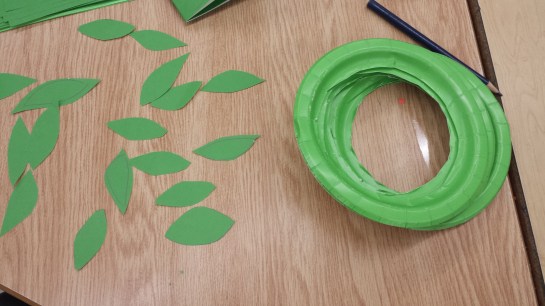
1. You will need sheets of green construction paper, paper plates (white or green) and a pair of scissors. All of these materials can be bought from the Dollar Store.

20160816_101525.jpg

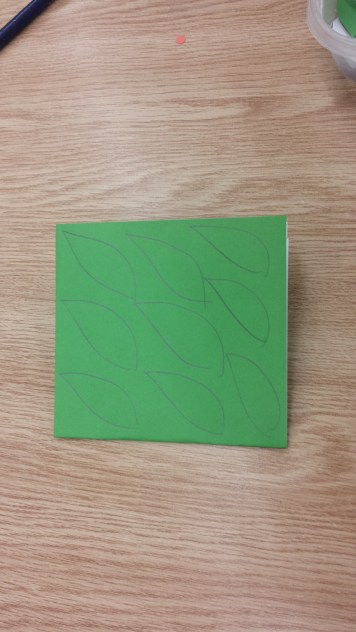
2. Take a sheet of the green construction paper and fold it twice so you end up with a small square.

3. Draw leaves on the green surface of the folded construction paper, filling it up as much as possible.

20160816_101619.jpg

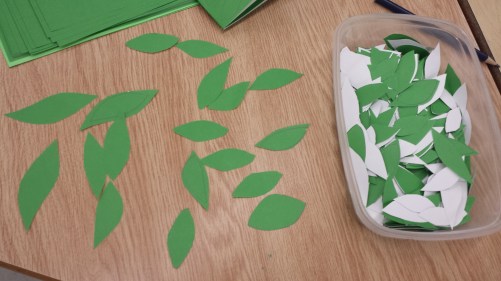
4. Cut out the leaves and store them in a (plastic) container.

20160816_101727.jpg

5. Take your paper plates and cut out the insides. Hold onto these insides for later.

20160816_101737.jpg

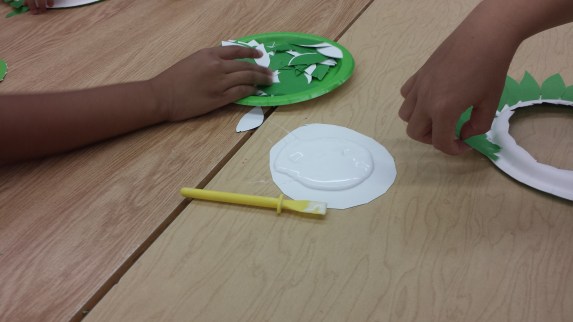
6. Put liquid glue onto the insides of the cut-out paper plates and leave one on each table for students to use.

20160816_112337.jpg

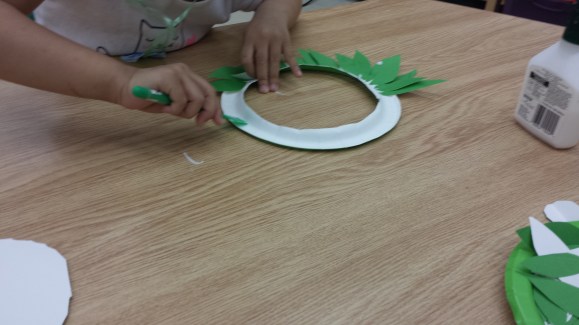
7. If available, use flat-nibbed utensils for spreading (other alternatives: Popsicle sticks or dip leaves directly) the glue onto the plate and gluing the leaves one by one.

20160816_112818.jpg

8. Glue leaves in one direction, or both, alternating every few leaves to achieve desired pattern.

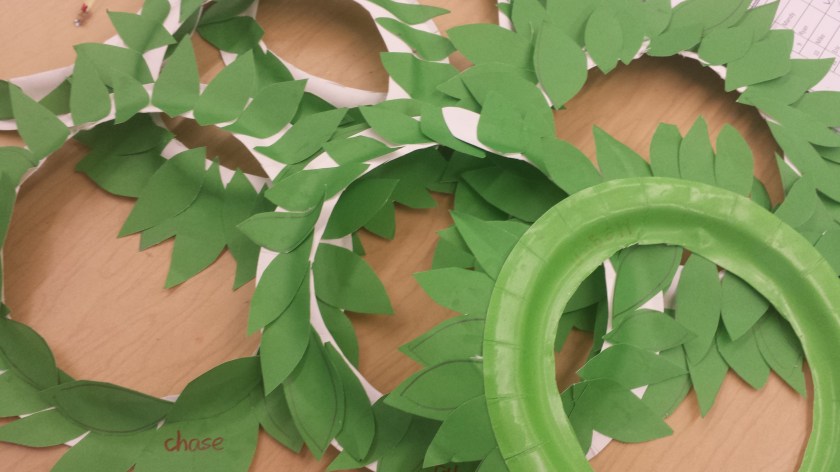
9. When wreaths are ready, make sure to write each student’s name in marker. And, enjoy!

20160816_133303.jpg


©booksnnooks.org All Rights Reserved


Getting Ready for a Field Trip: What You Need to Remember

So, a field trip is coming up and you want everything to go without a hitch. Chances are, it won’t be perfect. There will be problems, but how do you manage the problems to minimize damage?

Organization is key to preparedness. Here are some things worth keeping in mind.

Before the Trip:

  • Emergency Information: Compile all emergency information into one convenient notebook or travel agenda. This can be one you use throughout the year for all field trips. Make sure to take this with you on your trip.
  • Allergies: If you are going somewhere where food is being served, or just outside where the elements might cause triggers for students with allergies, it is important that organizers of the event know which children in your group have allergies, and to what. All the staff in your party should also be aware of the students with allergies. Compile a list with detailed information and give each accompanying staff member a copy.
  • Lunches & Snacks: Make sure students and their parents know this is a trip. Encourage them to pack foods that are easier to carry: light sandwiches and light snacks with easily disposable wrappers are great options. Students should also be encouraged to carry bottled water, especially if trips take place during the hot summer months.
  • Media Release Forms and Waivers: Whatever liability documentation needs to be filled out, make sure it is done prior to the trip.Consider giving out information letters to parents with these forms at least a week in advance of the trip. Make the due date for all forms a couple of days before the trip, to allow for those students who might overshoot the due date.
  • Information for Support Staff: Are all your support staff informed of where you are going? Make sure that all pertinent information is available to each member. Consider compiling a package for each staff member with a map of the place, address and phone number of those in charge, student allergy information or other health concerns, schedule for the day, and any other information that would ensure a smooth and safe field trip. Remember, communicating with those who are helping you on the trip is key.
  • First Aid Kit: This should be prepared ahead of time and one person should be put in charge of it. Perhaps the person who has more experience handling emergency situations should be made responsible. Your usual suspects should feature here: Bandaids, gauze, alcohol wipes, Epipens for students who are too young to carry their own.
  • Identifying Attire: Consider having your students wear T-shirts that identify them all as part of a group. Perhaps your school has a uniform. If this is the case, make sure to remind students to dress to the proper uniform code prior to the day of the trip. If there is no uniform, consider having them wear school mascot T-shirts if these are available, or perhaps contact wristbands or chains.
  • The Safety Talk: Make sure you talk to your students about safety on a trip. Ask them questions about what it means to be safe. Alert them to different situations they might face on this trip, and then how they can protect themselves or a buddy from harm. A Buddy System is a good idea. Establish this ahead of time, with room for accommodations on the day of the trip, should attendance change.

On the Day of the Trip:

  • Supervision Groups: Depending on the students who are attending, establish a staff supervisor for each small group of students. If you have parent volunteers, they should receive the same information as all staff. Typically between 5-8 students per adult is a good number.
  • A Quick Check: Do a quick check before you leave. Do you have the First Aid Kit? Do you have the Emergency Information Notebook? Are all your students accounted for? Do each of them have their backpacks and lunches?
  • Buddy System: In addition to having supervisory groups and counting them all the time, and observing them all the time, making more responsible or older students, in charge of younger ones just means one more pair of eyes is looking out for each student. And that is always a good thing.
  • Cell Phones: Your cell phone should be fully charged for the day, and on Ringer Mode. In case of an emergency, you want to be able to pick up that call right away.
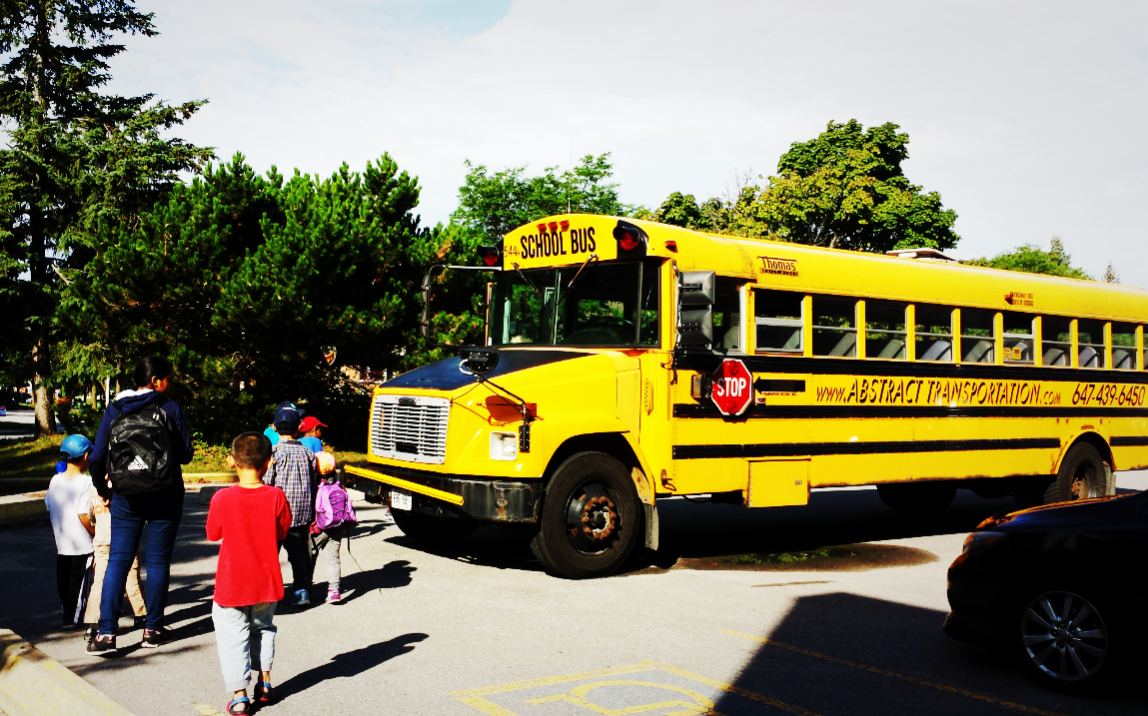
  • Count-count-count: Establish the total number of students attending the trip. Count before you board the bus, count while on the bus, count when you get off the bus. Count your students every chance you get. It only takes a second to lose one of your students, so staying on the ball about this one can be crucial.
  • Observe-observe-observe: Just like counting all the time, watching your students at every turn of the trip is important. You can heave a sigh of relief when they are all safely back at school and in their parents’/guardians’ possession. Until then, they are your responsibility.
  • Washroom Supervision: Always have an adult accompany groups of students to the washroom. The adult can remain outside to monitor students.

Now, while there are many more things you could do to ensure a smooth field trip, these ones are a really good place to start. Remember to stay calm in the event of an emergency. Cooler heads always prevail.

©booksnnooks.org All Rights Reserved

Olympic-Themed Summer Art: Olympic Torches!

Now, whether you’re a teacher of students aged 3-8 at a camp this summer, or a mom of a couple of kids looking for something to get them in the Olympic spirit, why not try making an Olympic Torch?

This simple (I promise!) art activity is really fun to do, and your children/students can make as many as they like.They could even use them in an opening ceremony of your own Olympic Games! This was found while browsing the internet and is by no means an original concept.

Teachers, to begin, you might consider providing some context for this art activity by showing your students a short clip of the lighting of the Olympic Cauldron. I found a quick one on YouTube that does the trick quite well: Lighting of the Olympic Cauldron – Rio, 2016

Once students have viewed this video clip, you can have them share their ideas on what they saw, seguing into the Olympic Torch. You might even provide some background information for some of your older and more interested students. The official Olympic Games website provides this information: Olympic Torch Relay

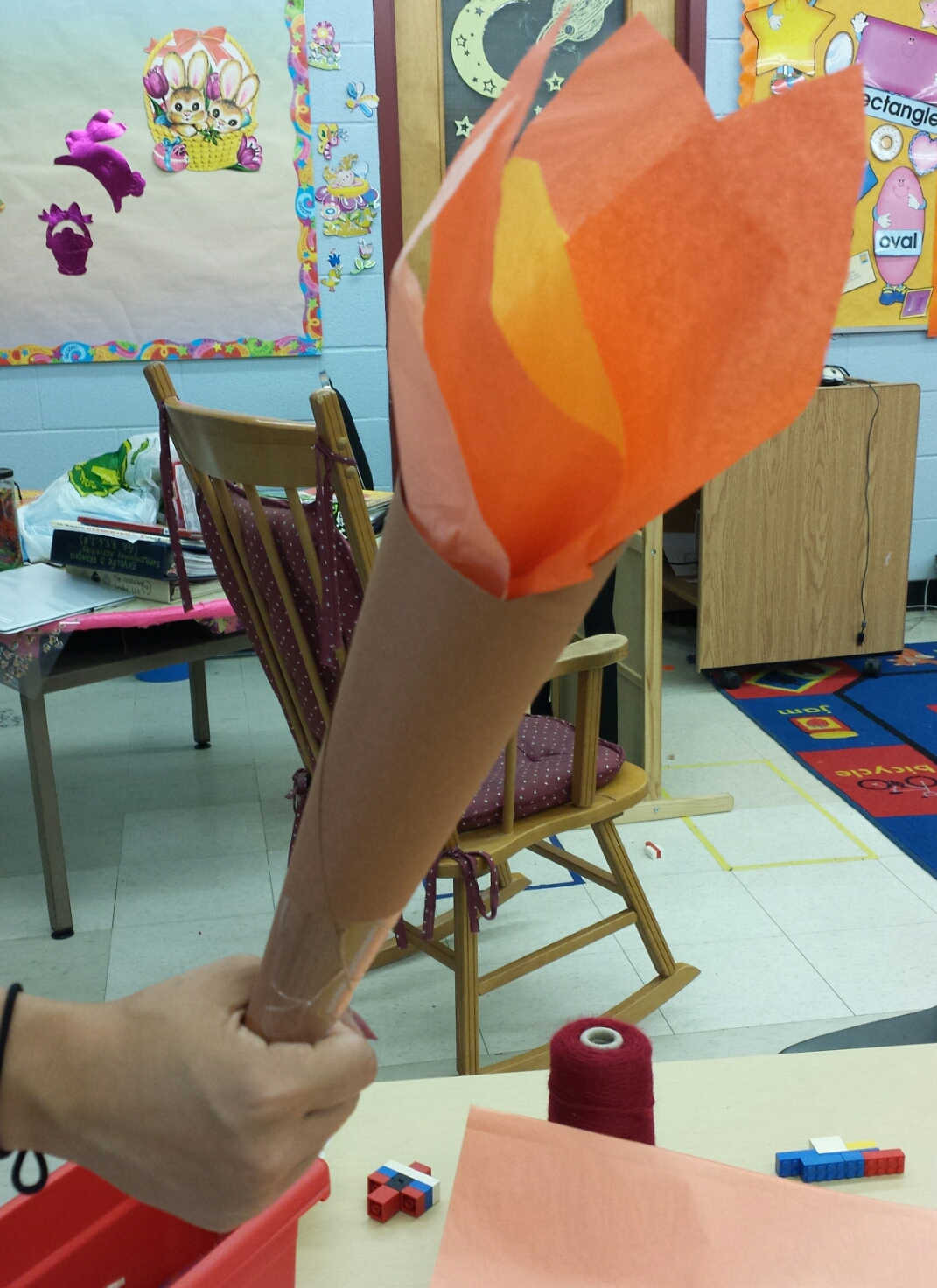
The art activity, as I promised, is quite simple. You need only to cut flame shapes out of tissue paper (light or dark orange, yellow, red), as below:

20160809_191954.png

Next, pull a couple of each colour and twist into something of a “flower” as below. Use tape to secure the twisted bottom portion:

20160809_192314.png

Finally, roll a sheet of brown construction paper into a cone, securing with tape. Then, stick the flame into the cone and make sure to use a bit of tape to stick the bottom of the flame to the inside of the cone.

20160809_192414.png

Et voila! Now gather your torches one and all, and parade around!


©booksnnooks.org All Rights Reserved

Why Inquiry-Based Learning?

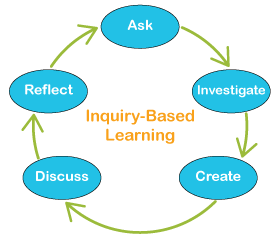
Inquiry-Based Learning is a BIG component of student learning. It begins in Kindergarten and then carries through as much as possible, all through a student’s life. The idea is that when a student is able to engage in activities where they themselves can begin thinking about the problems and solutions to the scenarios inherent in those activities, their learning is more effective.

inquiry based learning blog
Source: Google Images

The above model begins with the child asking him/herself or the teacher a question. An investigation is carried out whereby the child creates a product to explore that question. A discussion is held with a peer during imaginative play or with oneself as the child plays alone, to be able to answer that question. The reflective process then follows right away where the child begins to look at his/her design and refine it if necessary for added understanding.

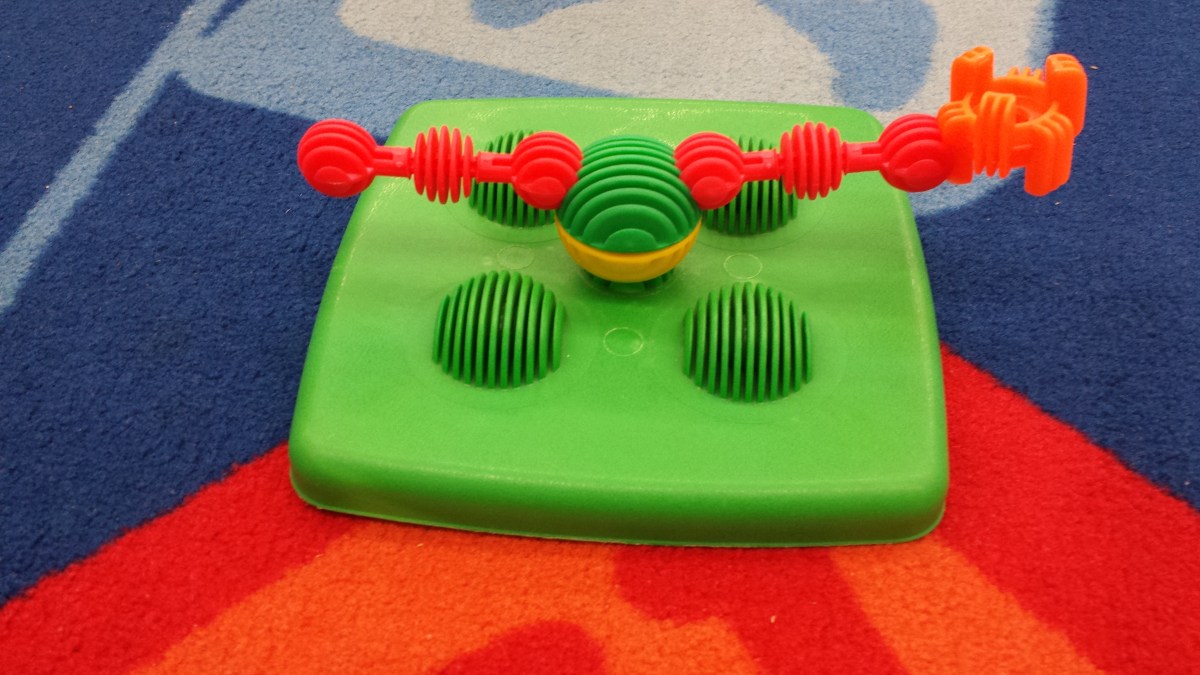
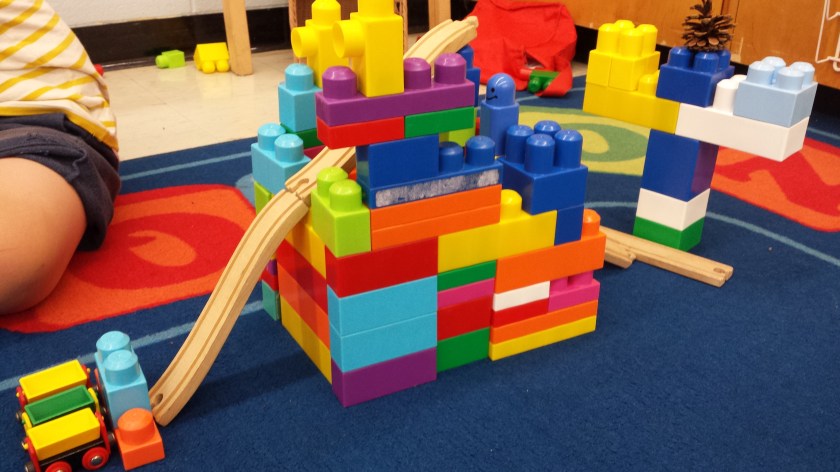
As part of our classes this summer, my teaching partners and I make sure to provide our students with ample time to explore different manipulative toys, such as LEGO and other building materials, to help with our students’ inquiry-based learning. Below are some creations made by our students aged 4-8:

This slideshow requires JavaScript.


20160808_133506.jpg


©booksnnooks.org All Rights Reserved

Championing Graphic Novels for Classroom Teaching

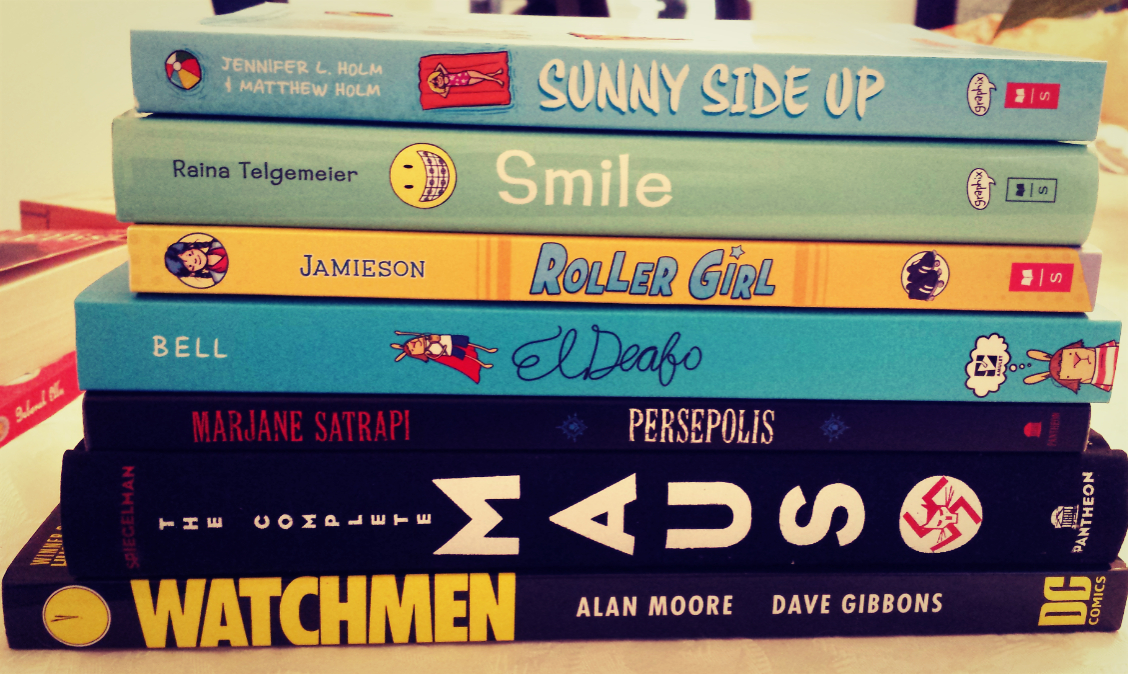
Some of my favourite graphic novels; great for teaching students Grades 4-12

As teachers, we like to revert to the tried-and-true classics when doing Novel Study Units, and teaching our students various bigger life themes. The likes of To Kill a Mockingbird, Inherit the Wind, The Great Gatsby, The Apprenticeship of Duddy Kravitz, Jane Eyre, The Importance of Being Ernest, Brave New World, 1984 and then of course those by the Great Bard, for the intermediate and senior grades. Trust me, I’ve done a good number of these in High School. And then there are the likes of Bridge to Terabithia, Freak the Mighty, Charlotte’s Web, Chronicles of Narnia for the junior grades.

Now, let me pose this question: Have you considered a graphic novel for your Novel Study Unit? I have talked to a lot of teachers, especially in the junior and intermediate grades, and they are incredibly distrusting of the graphic novel. It is viewed by many teachers as a medium of entertainment, and not learning, for their students. Granted, there are graphic novels out there that are created with the sole intent of entertaining, but a lot of incredibly clever graphic artists and writers, collaborate to produce thought-provoking and striking graphic novels.

I would like to make a case for the teaching of graphic novels in grades across the board. I believe they have much value to add to our students’ learning. First of all, graphic novels are not just about the pictures. They are about the relationship between text and image. They are about the meaning in between the panels and the way the characters are drawn and coloured. They are about what is omitted and what is included. They are about meaning and form at their very core. However, they are also incredibly accessible. Graphic novels have the power to engage students who are not willing readers of the traditional text. They have the know-how to capture this audience and potentially turn them into readers. Now, teachers, would that not be a cause for celebration?

Graphic novels further ignite creativity, they inject perspective and then offer other viewpoints contrasting with that first perspective. Art is introduced in an appealing way to students who might not necessarily find themselves drawn to it. The graphic novel has the unbridled power to marry different forms of expression to achieve greater meaning.

Several graphic novels written over the last few years have sought to take big risks and tackle radical topics. Sunny Side Up by the Holm brother and sister duo (Fear not, I shall review this one in time), El Deafo by Cece Bell, Persepolis by Marjane Satrapi, Maus by Art Spiegelman and Smile by Raina Telgemeier (a handful of my favourites) are some of the graphic novels that have burst out onto the scene and made an impact. From tackling big issues of substance abuse to identity and war in Iran, from physical disabilities to World Wars and the struggles of adolescence, these books, and others, have the power to change thinking. They have the power to begin passionate discussion among students. So, teachers, pray tell, do they not deserve a ranking among the greats? Just because they are “newer” and “different” does not make them unworthy of being entered into the canon of literature-teaching tools.

One of my personal favourites is Watchmen by Alan Moore. This masterpiece makes the movie look ridiculous because, within its pages, it houses depth of meaning and form. It catapults the reader into the story and pulls the narrative around that reader-creator relationship.

Graphic novels are not just quick books that you can read on a trip from Toronto to New York City. They are fast becoming vehicles in which to express explosive thought. So teachers, what say you? Give the graphic novel a chance?


©booksnnooks.org All Rights Reserved
 

The Constructivist Approach to Teaching

Recently, I have subtly introduced a perforated silence here on Books ‘n’ Nooks and not so much as intentionally as I would like. The reason is more the commonplace cross of our current world where we are afflicted with a “lack of time”.

Either way, I would like to briefly touch upon an important concept I have become very interested in, and one that I believe seeks to inform and consequently, improve, teaching.

Constructivism can be defined in many ways. One may use the Latin origin to break it down into meaning-inducing fragments of the whole, or one might simply elucidate on the notions that spring into consciousness on mention of the word.

Think for a moment what meaning you might derive from “Constructivism” (Yes, this is the teacher in me calling into action inquiry-based learning).

Constructivism is a way to teach whereby students are allowed agency over their own learning; they are given the opportunity to direct their learning by building new experiences, while simultaneously drawing on their past ones. A teacher’s role in all of this still remains crucial, because unlike the cut-and-dry approach of student-centered learning, the value of an expert, namely the teacher, is honoured. Teachers are tasked with “guiding” the student’s knowledge by providing opportunities for students to discover their worlds and make and build on their own experiences. They are to help students develop and hone their problem-solving, inferencing, critical-thinking and meaning-making skills to achieve a cohesive framework for how to learn.

Students become active and motivated participants in their learning and the teachers act as their guides through this process, functioning as the Yodas of a student’s life.

Now, I could elaborate and confuse you with more complex interpretations of Constructivism, and punctuate this blog heavily with academic jargon, but everyone knows that as teachers, we always appreciate the most accessible methods of learning. So, think of Constructivism as the work of a Scientist or an Artist or a Pioneer. There is a lot of theory, a lot of testing and finally a conclusion, an understanding for how it works. And in the end, isn’t that the crux of life?


©booksnnooks.org All Rights Reserved
“Words Are Not for Hurting”: Teaching Children to Be Kind with Their Words

“I don’t like you.”

“You talk funny.”

“Your hair looks weird.”

These days some children use their words to cause pain. They throw around harsh syllables strung together with absolute thoughtlessness. They are exposed to a barrage of media and other mediums that make them believe it is okay to spit out whatever they wish, without taking any responsibility for the consequences their words may have. They are not taught otherwise, so really, how can we blame them?

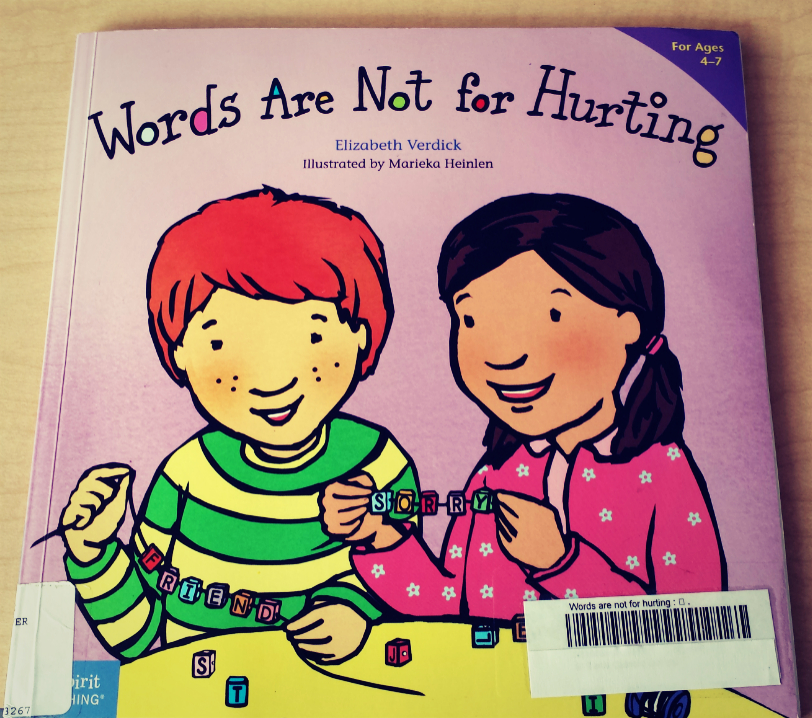
Words Are Not for Hurting by Elizabeth Verdick does a fantastic job of laying down the law around how to use words to help and not hurt. This book is essential in Kindergarten classes and homes of 4 year-olds everywhere. This culture of being rude and unkind willy-nilly is an epidemic that needs to be curbed. As teachers, often we are in very influential positions when it comes to how our students grow up. We can steer them towards being respectful and considerate, generous and tactful. And while it is important for students to learn the basics of Math and Science and Reading, it is more important for them to learn how to be good citizens of the world.

In her book, Verdick systematically charts out how words are formed, with letters, and then maps out what kinds of words there are, then seamlessly seguing into hurtful words versus kind words. She offers scenarios to explore feelings and play out different alternatives to addressing the pain caused by hurtful words. This book makes for a clever read-and-think-aloud. Students will pick up poignant details in the illustrations that display body language and facial expressions showing a range of emotions. They will bounce off ideas and deliver very clever and sensitively-thought-out reflections that will warm your heart, because really, there is goodness in all of us that just needs a firm foundation to build on.

So, add this book to your list of MUST-HAVE read-alouds, if you’re a kindergarten or even higher grade teacher. Sometimes, we all just need a little guidance to be a better version of ourselves.

© booksnnooks.org All Rights Reserved