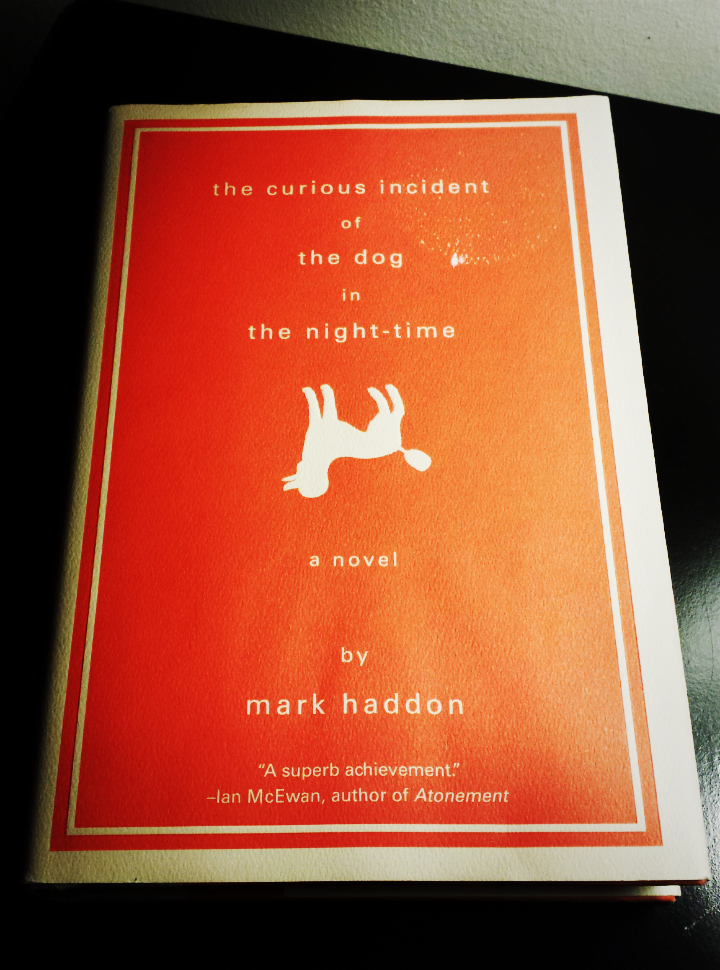
The Curious Incident of the Dog in the Night-time is a charmer!

For those of you who have first-hand experience with Autism Spectrum Disorder and Asperger Syndrome, this book will be a welcome read.

Mark Haddon delves into the mind of an individual with Asperger Syndrome, and this 15-year old displays all the signs of a Savant. The story is charming in that the Savant character of Christopher narrates with such bare-boned honesty and hilarity. Haddon cleverly uses the dual perspectives inherent in journal writing as well as writing a piece of non-fiction to convey the workings of Christopher’s mind. He does so with such clarity that the reader is able to appreciate how people with Asperger and Autism are different from, but also the same as what our society might view as the “norm”.

This book is also a touching tale of family relationships and the hardships that come with dealing with stress, developmental disabilities and mental illness. The characters are painted as real people with a plethora of flaws, but also endearing qualities that allow them to redeem themselves.

What really struck me about this book was Haddon’s ability to capture the concept of emotions in Christopher. Haddon gives physical and literal descriptions of Christopher’s emotional roller coaster ride. This is a sophisticated attempt by Haddon to help his audience understand that people with Autism and Asperger Syndrome are not completely bereft of feeling emotion, even if they are unable to express their emotions in socially-recognizable ways. I also appreciated that Haddon left the interpretation of the physical descriptions to his audience’s intellectual abilities, proving that he is not only a clever writer who is able to convey complex concepts, but one who trusts his readers’ ability to understand those concepts for themselves.

For teachers who are looking for ways to bring components of inclusivity into the classroom, this book is a well-written and easy-to-follow account of what it means to have a developmental disability like Asperger Syndrome. For many students who do not understand the nature of this Syndrome, this is as close to a science class as they can get while having a lot of fun. I would recommend this for junior classes (Grades 4-6) and structure the reading of this as a Book Talk to spark critical-thinking skills and allow for student-directed informal discussions.

Further, in Christopher’s mother, Haddon uses the opportunity to touch on what it means to live with a Mental Illness. While this should not be used as the complete manual for understanding mental illnesses, it is certainly a good place to begin a conversation around this fast-growing illness that is crushing many in our society. Teachers, this book will ignite a lot of very profound conversations in your classroom! If you do decide to use this in the classroom, please get in touch and I will help with ideas for how to implement the same.

Happy Reading!

©booksnnooks.org All Rights Reserved


In Need of a Quick and Easy Remembrance Day Activity?

I was in a crunch for activities to keep my today’s class of grade 2s and 3s occupied, and they were rising on the decibel scale really fast. So, I pulled this tried-and-true solution out of my bag of tricks and got them settled for an entire 30 minutes (I can hear teachers everywhere breathing sighs of relief)!

I wrote the following on the board since tomorrow is Remebrance Day, and handed out lined sheets of paper. I told students to use the letters to make as many words as they could. I made sure to provide examples with the class contributing, packaged it as a challenge of who would find the most words in a half hour, and kicked back.

Then, this happened.

This slideshow requires JavaScript.


I hadn’t thought about this activity too much with regard to its actual ability to teach students a lot, but today, with students taking the initiative to use dictionaries, I realized it provides a myriad of applications. For one, students were writing words and then looking for rhyming words to increase their word count, others learned new words with the help of their dictionaries. Still others saw patterns in the words and built up steadily on them (e.g. an, ran, bran).

This simple activity can be applied any day of the week or just for special occasions. You can also choose to do it once a week to allow your students the chance to stretch their linguistic brains. And this is applicable across the grades because all you have to do is increase or decrease the complexity of the word to adjust for knowledge levels. Yes, fellow teachers, there are those rare moments when teaching is a cinch!


©booksnnooks.org All Rights Reserved

Making Thanksgiving Cards (A How-To for Teachers)

Thanksgiving is around the corner for us here in Canada, and teachers, stepping off my post from yesterday, I decided to do Thanksgiving cards as an art activity with my junior class today. These are really easy to make and students can dedicate these to whomever they wish. Teachers, the dedication process can be a mini-lesson in the writing component of language. You can have them write out rough drafts of their inside greetings, and then peer-edit before they transfer them on as good copies to their cards.

Detailed below are the materials needed, and the process that was followed to make the cards.

Materials:

wp-1475604152875.jpeg

  1. Googly Eyes
  2. Cardstock (I use the Reflections brand that can be found at Michael’s Craft Stores)
  3. Coloured Markers or Sharpies
  4. Scissors and Glue sticks
  5. Turkey and maple leaf templates
  6. Square cut-outs (of appropriate size) of orange, yellow and green cardstock (you can substitute with construction paper if you prefer)

Process: 

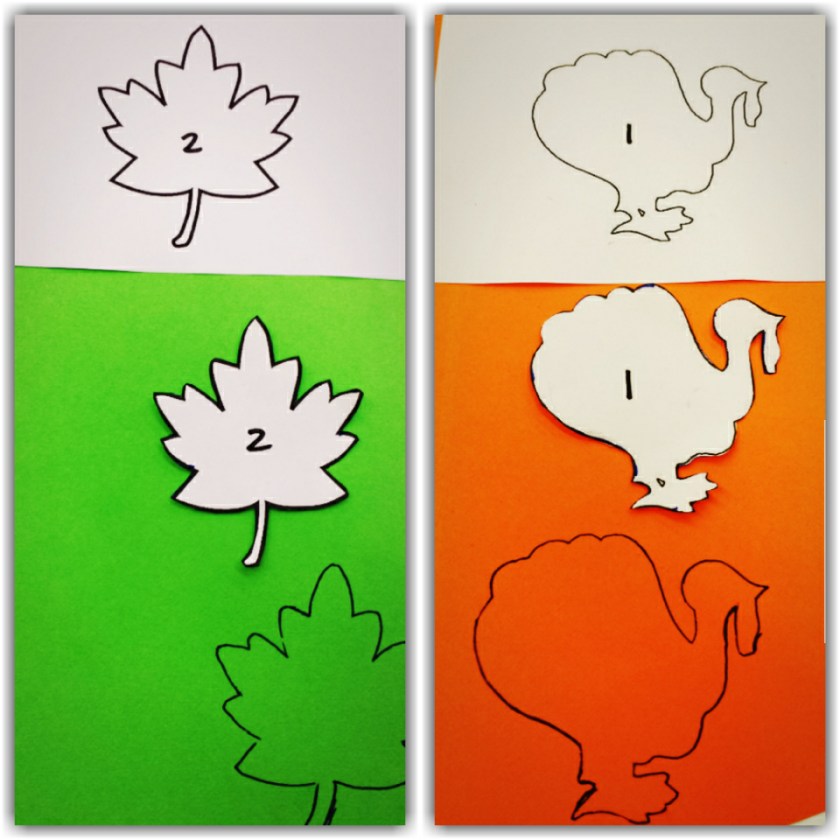
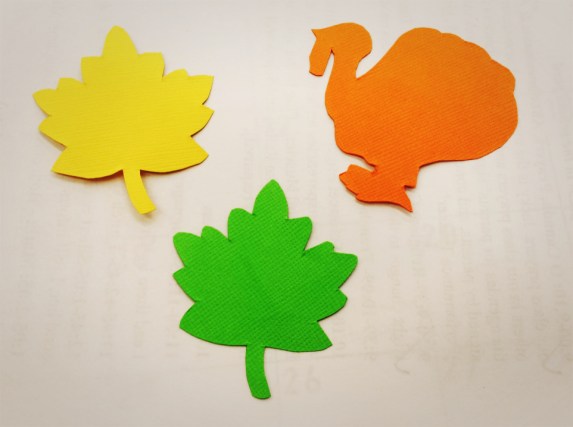
#1 Cut out the turkey and maple leaf templates, using them, trace (onto the side of the coloured paper opposite to the one that will be facing the top when stuck on the card) onto appropriate coloured paper and then cut those out too . Write 1 in the turkey template so your students know they have to cut out only ONE turkey (in orange), and 2 in the maple leaf template so they know they have to cut out TWO maple leaps (yellow and green). Teachers, for those of you who own a Cricut cutting machine, you can pre-cut turkeys and maple leafs for your students. However, the cutting process helps them to be part of the card-making from scratch.

wp-1475604445471.jpeg

wp-1475604239586.jpeg

#2 Once the pieces are cut out, use a dark-coloured marker (black, brown, gold) to draw details onto the maple leaf and turkey cutouts. Add googly eyes and paste all 3 cutouts onto the front face of the card. Use markers to colour in a border and write in HAPPY THANKSGIVING!.

wp-1475604206264.jpeg

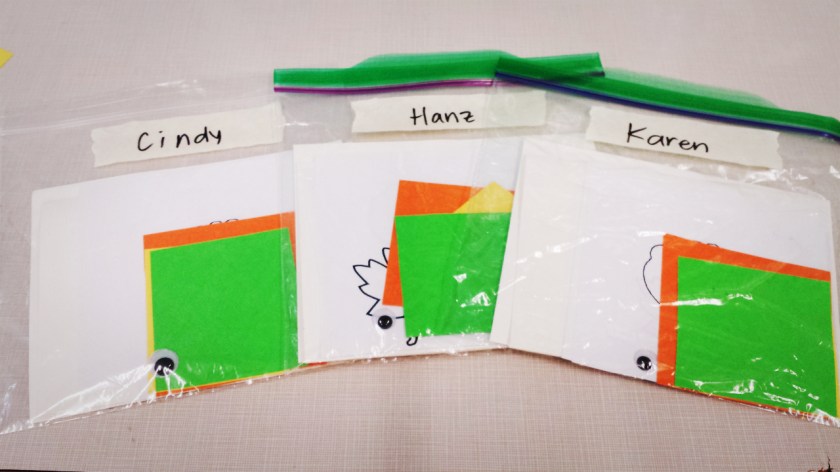
Teachers, if any of your student are away, be sure to make little art packets for them to make their cards when they return:

wp-1475603690530.jpeg

There you have it, a very simple way to get your students into the spirit of Thanksgiving, while fulfilling curriculum expectations (specifically around ART). And on that note, HAPPY THANKSGIVING, CANADA!

©booksnnooks.org All Rights Reserved

Daily Gratitude: Ideas for Teachers

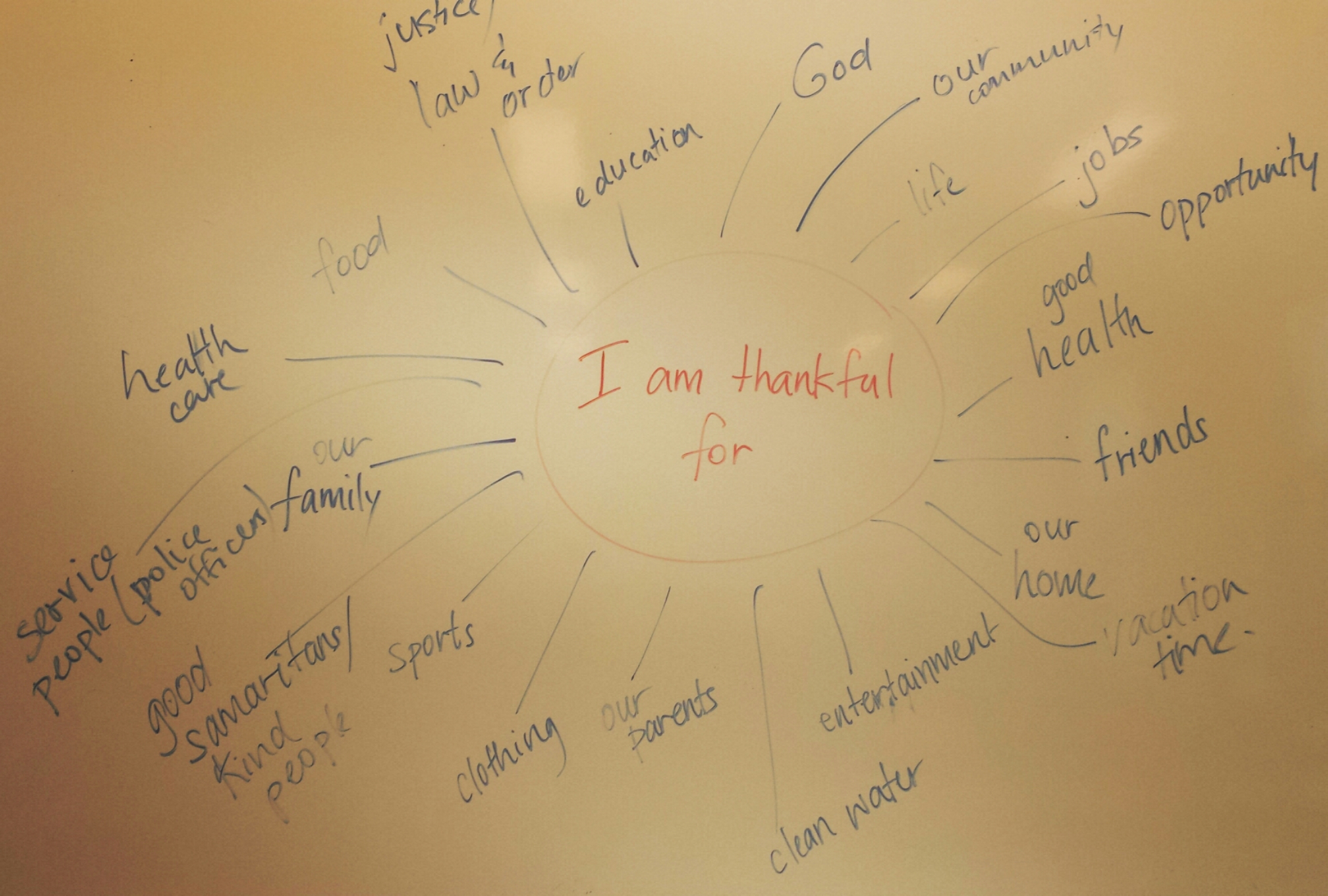
So, this month schools in the Catholic Board celebrate the virtue of Gratitude. Personally, I think it is a good idea to inculcate in our younger generation the concept of being thankful every day, however, having an entire month dedicated to this virtue is a good start. Today, I had the pleasure of leading a junior class to dig deep and find out what they were thankful for. This is what we came up with:

image

Initially, students threw out the tried-and-true: food, family, home, clothing, but then they began to really think about the concept of gratitude, and came up with being thankful for kind people and opportunities in life and our healthcare system(even if it isn’t perfect). This brainstorming session was done to help students prepare for a thanksgiving prayer they were to write. And while this is a great way to get your students thinking about what they are grateful for, it is not the only thing. Below, I have outlined some other ways to carry out activities to promote a spirit of gratitude in your students.

Other Ways to Incorporate the Spirit of Gratitude in Your Class:

#1 The “I am thankful for…” Display Board (Individual)

Set up a display board in one area of your classroom. Give it the title, “I am thankful for…” Each week, as a combined cross-curricular activity of art and writing (appropriate for all grades K-12), have each one of your students draw and colour and then elaborate (in writing – a sentence or just a word for the younger grades) on something they were thankful for that week. This activity can be done on the Friday so students have plenty of time during the week to think about what they can use. Remind students constantly during the week, if opportunities arise where they could be grateful for something, and have them bank these for later. Since artwork will have a weekly turnaround, have students make their own “I am thankful for…” folders (simple cream-coloured duo-tangs that they can decorate for an additional art activity). All work, once it is taken down from the display board, can be added to their individual folders for a keepsake of what they were thankful for that particular year. This could serve as a reminder when things are particularly rough in their lives and they are searching for positivity to get them through.

#2 Thank You Cards (Individual)

These are a practical and thoughtful way to reach out to others in the community and say a special thank you. Once a month (and this could be done in lieu of contributing to the display board idea above one week, if you choose to also do that), have students make THANK YOU cards. Each month they have to choose someone different whom they can say thank you to. Brainstorm with them different people in their lives they should be grateful to (parents, grandparents, siblings, other relatives, janitors, secretaries, principals, teachers, school crossing guard, their family physician, firefighters, police officers etc.). You could also have all the students make THANK YOU cards for different community helpers and then mail the cards to them, or drop them off if they are close enough. This activity also has the added advantage of serving as a dual art and language project and is appropriate for any grade from K to 12.

#3 Thank You Movie (Group Work)

This activity would best be suited for grades 5 and up, and would combine elements of multi-media, language, drama, art and so on. Students can create a movie choosing 5 (or fewer) different people in their lives that they are grateful for. They would then have to act out the roles these people play in their lives (students would have to agree as a group who these people will be – e.g. they would be parents in general and not specifically one student’s parents). They would film their enacting of these people’s roles in their lives and then combine technology elements (use iMovie, MovieMaker or other editing software they might be comfortable with) to add reasons why they are grateful for these people. Remind students to be respectful and thoughtful in their creations. Provide examples by repeating the above brainstorming activity as a class. Give students graphic organizers to record some of the ideas being brainstormed as a class. Allow them creative license to provide whatever twist on this project that they would like. Typically, allowing them a few weeks to put this together would be ideal.

And teachers, really, the sky’s the limit when it comes to teaching your students the virtue of gratitude. Let’s face it, we are educating quite an entitled lot these days, and a little bit of time taken to teach them valuable life lessons, would go a long way.


©booksnnooks.org All Rights Reserved
 

The Deborah Ellis Installments (Part II): My Name is Parvana

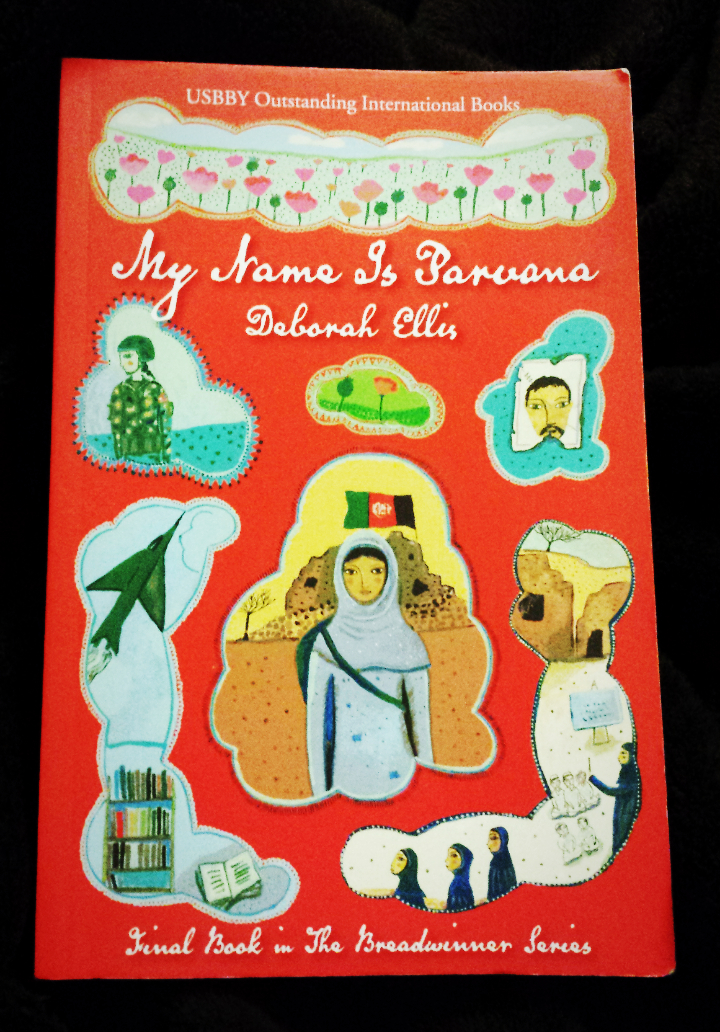
As promised, here is Book#4 in the Breadwinner Series, My Name is Parvana by Deborah Ellis.

In this last book, we meet an older Parvana. She is 15-years old now, and has been through more heartbreaking tragedy. When the story opens, Parvana is in prison. She has been captured by American soldiers, while wandering through a bombed-out school site. As we follow Parvana through her ordeal in prison, the story jumps back into the past to fill in the gaps with what has transpired since we last met her. Ellis does a fantastic job of superimposing the past on the present. Parvana is no longer the feisty young girl with a quick tongue. No, now she holds her tongue to create a deafening silence when questioned by the American soldiers. Over and over and over and over again. Yes, Parvana has matured. And logically so, because she has lost more, and made more difficult and selfless choices. Her innocence is replaced with shrewdness and air-tight resolve. If she was strong when we were first introduced to her, she possess mammoth strength now. If, as readers, we admired her courage and smarts in the beginning, we will love her for these now. Ellis reaches into the soul of Parvana’s character and brings her to life. She makes her feel like a real person. And therein lies a huge portion of Ellis’ talent; her ability to make her characters come to life. It is no wonder we feel a closeness to them. Ellis does a great justice connecting her audience to children around the world who have no voice to fight for themselves. In this series, and finally, in this book, Ellis gives them all a voice. Especially through Parvana’s silence while she is in prison, we see the grace and bravery with which this young girl operates.

Teachers, your students can compare Parvana’s life to their own. They can make connections and then draw contrasts. They also get to understand a bit about how things work in military prisons in areas of war. This book can even be done with older grades (intermediates – 7 & 8) as a stand-alone with a thorough backstory provided. Students can jump into the psychology behind scare tactics and how prisoners are treated in war-torn countries, even if they are innocent, and even if they are children. You can use this as an opportunity to talk about bigger concepts in their basic form, such as different types of governments and their structures, democracy, justice and injustice, the effects of perception on belief. Your students can further see hope and sacrifice at one of their bests through the many sacrifices made by different characters, and the hope kept alive by others.

Teachers, you can also talk about the Canadian Women for Women in Afghanistan Organization and their not-for-profit endeavours to improve the lives of women in war-ridden countries such as Afghanistan. Deborah Ellis is a true genius at her work, and she has the passion to make her work endearing and relatable.

So, even if you don’t actually end up teaching this last book, you yourself will find it a worthwhile read. To say it is an eyeopener would be too much of a cliché.


©booksnnooks.org All Rights Reserved
 

The Deborah Ellis Installments (Part I): The Breadwinner Trilogy

Deborah Ellis is a renowned Canadian author who has written a number of books with a lens to promoting awareness about the plight of marginalized children in war-stricken countries. Her fiction and non-fiction are sensitively crafted to present the reality faced by many of these innocents.

In possibly her most famous books, The Breadwinner series, Ellis paints a picture of the life of women in war-torn Afghanistan. This entire series showcases an especially strong cast of female characters that will leave you feeling like you know them personally. Teachers, having worked in a library for a year, I have seen this series being read with great vigour by junior students. Granted these books might appeal more to your female students because the protagonists are mostly female, I do think there is great value in making it part of your teaching, as it allows your male students to understand and appreciate the hardships faced by many children and women in places like Afghanistan.

There are 4 books in the Breadwinner Series:

The Breadwinner

Parvana’s Journey

Mud City

My Name is Parvana

Today, I will speak to the first 3 as they follow closely in chronological order, and can be taught together over the course of a couple of months, if you so choose.

In The Breadwinner, we meet our leading girl, Parvana. She is bursting with energy and opinions, and is not the kind to bend over backward for anyone. Right away we get the sense that this strong young lady is built to tackle much. And much, she does. She is chosen to be the breadwinner of her family when the Taliban enforces bans on women leaving their home without a male companion. With Parvana’s father imprisoned for no fault of his own, her mother and siblings rely on her ability to dress up as a boy and go out into the market to continue her father’s job. Parvana is sharp and kind. She has a conscience that shines through her stubbornness. We understand as an audience that this is reality for a lot of Aghani girls. And at the young age of 11, Parvana must shoulder a lot of the responsibility if she is to help her family survive. Teachers, your students can view this first book through the lens of how the family structure is impacted by war.

In the second book, Parvana’s Journey, Parvana is reunited with her father, but separated from her mother and the rest of her siblings. The book opens with her at her father’s grave, and goes back at points in time to describe the short journey they took together to find her mother and siblings, before his mind and body gave out. For the remainder of the book, we follow Parvana on a harrowing journey as she must use both her cunning and strength to stay alive. This strong young girl has matured significantly since the last time we saw her, but she retains some of her best qualities, like her compassion. With this compassion, she makes and keeps a handful of friends. Teachers, your students can add to their understanding of the interactions of strangers in a war-torn country, and how the youngest of the population must fight for survival.

In the third book, Mud City, we reconnect with Parvana’s friend, Shauzia, whom we have met in the first book. Shauzia has ended up helping out at a Widow’s Compound on the border with Pakistan, but despite being clever and useful, she wants to venture beyond the grounds of the compound and start her own life. She is convinced that if she can reach the nearest city across the border in Pakistan, Peshawar, she can earn a living and then go on to have her own life and do great things. Shauzia does succeed in getting out of the Widow’s Compound, but life in the big city of Peshawar is not everything she bargained for. There is not much work to be had, and going hungry is just in addition to struggling to stay safe and alive. Teachers, this one will offer a bit of perspective on the internal world of an Afghani child, specifically a girl. It will allow your students to draw connections with their own hopes and ambitions, and those of Afghani children. It will also help them see that despite these hopes and ambitions, the contrasts in circumstances and opportunities is what makes achieving both possibly easier for them, and harder for their Afghani counterparts. This book offers teachings in different perspectives, gratitude and hard work.

Teachers, this entire trilogy is a great way to teach your students a bit of geography when you talk about Afghanistan and its location in the world, with reference to other countries such as Pakistan. Students can make connections to other countries they know of in the region. It can further offer the opportunity to delve into social studies as you discuss the government structure of then Taliban-led Afghanistan, and today’s present government. You can also use this to make comparisons with our own Canadian government, or other relevant governments.

The first three books in the series are great for grades 4-6 and offer a range of cross-curricular opportunities because of their versatility.

Stay tuned for a follow-up post where I will discuss the final book in the series, My Name is Parvana.


©booksnnooks.org All Rights Reserved


Sunny Side Up: A MUST-TEACH for Junior Grades

Dear Teachers,

Now, some of you might have begun to take heed of your students’ growing interest in graphic novels. I wrote a piece on August 3rd, 2016, here, detailing why graphic novels should be used in classroom teaching.

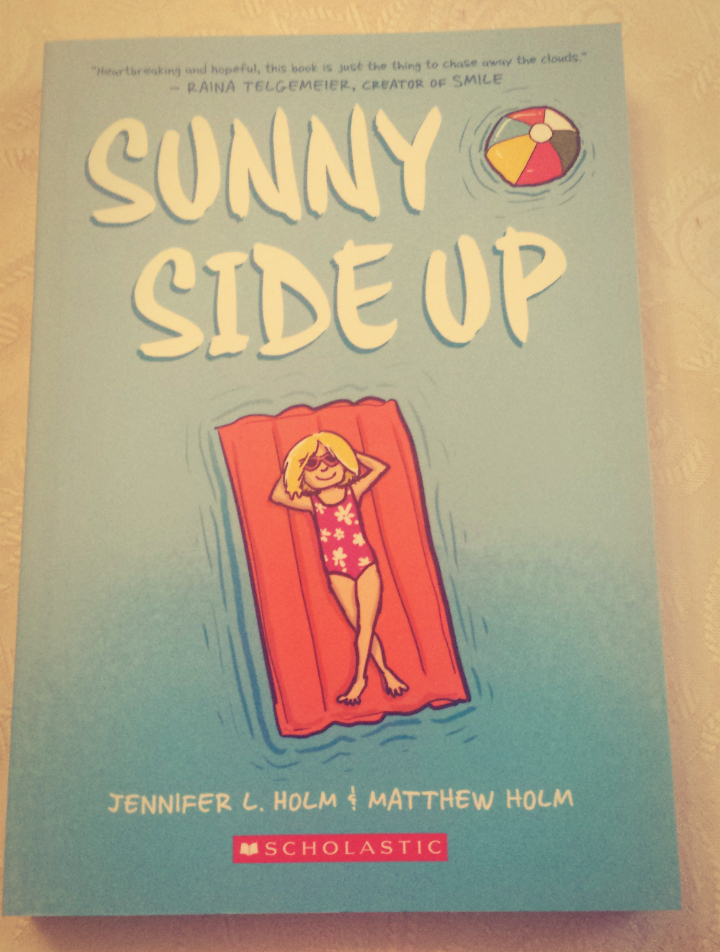
Today, I would like to talk about one of my favourite graphic novels for your junior grades: Sunny Side Up by Jennifer L. Holm & Matthew Holm. This very well-done novel tells the heartfelt tale of 10-year old Sunny Lewin, who goes to spend some of the summer of 1976 with her grandfather in Florida. Young Sunny has been sent away by her parents not as punishment, but as protection and distraction. Sunny’s grandpa lives in a retirement community and his idea of fun is not quite the same as young Sunny’s. Still, Sunny shows great maturity in doing her best to make the most of it. This graphic novel is told with great sensitivity from a child’s perspective. A child who is dealing with a lot in her life. With flashbacks to earlier points in time, little by little the readers become aware that Sunny has been sent to live with her grandfather while her parents help her older brother deal with his substance abuse. With thoughtfully constructed artwork, the Holm brother-and-sister duo showcase the sibling bond shared between Sunny and her older brother and how his substance abuse affects her life. Teachers, this is a great way to get your students talking about an issue that they might either have no awareness of, or be dealing with on a daily basis. Sunny’s resilience throughout the book is a poignant point that deserves discussion. How does a 10-year old learn to navigate these dark corners of life, and often by herself? The story builds on Sunny’s relationship with her grandfather, someone whom she loves very much, and her role at 10-years old as his keeper. Sunny tries to keep her grandfather in check about his smoking problem, and she plays along while he lies to her, until at one dramatic moment in the book, she loses her nerve. Here we see how this young child, with all of her 10 years, has roughed out life to arrive at a juncture where she will no longer tolerate being treated like a child, because as she proves, she has grown up enough to understand how reality works.

Teachers, your students can do various things with this graphic novel because it is so very versatile. You can dip quite easily into the arts and explore language through that lens, while at the same time fulfilling grade-specific expectations across different curriculum.

With a setting ground in the 1970s, your students can chart important moments in history from the 1970s and work their way forward, they can talk about ways in which the artist uses frames and panels and gutters and speech bubbles, and other graphic novel techniques to convey meaning, you can delve into psychology and the background of substance abuse and how it affects the person who is dealing with it, and his/her family. This book is teeming with things to teach your students, and the best part is, it comes in a form that doesn’t pose a hard sell! Your students will be so excited to jump right into the pages, you will only have to say when!

Teachers, if you are looking for resources to start a unit on this book, please visit my Teachers Pay Teachers account: Cross-Curricular Ideas when teaching Sunny Side Up


©booksnnooks.org All Rights Reserved
Back to School: First Day Jitters!

For a lot of us Canadians, school begins next week. And yes, teachers everywhere are hunkering down for 10 months of a lot of work. And it is no far-fetched notion that the first day gives a lot of us returning to school (staff and students alike) the jitters, which is why First Day Jitters by Julie Danneberg is a fantastic book to read to your students K-3.

The author and illustrator, Judy Love, are very clever with the big reveal at the end of the book where we find out that the person with the jitters about her first day at a new school is a grown woman, a full-fledged teacher. This book provides a platform for discussion about your students’ feelings around their first day of school. Questions such as “How do you feel about going to a new school?” “What are some ways that you could help someone who is new?” are a great place to start. These questions can seek to calm down students who are nervous about their first day of school, and help other students who are not, become more empathetic to their experiences. It further raises a lot of other themes such as facing your fears, being confident in yourself, welcoming new people. And it has the added advantage of being funny! Your students will love the illustrations, dear teachers, and they will find it hilarious that their teachers’ feelings are not so different from their own.

Parents, this would also be a great way for you to prepare your little one for his/her first day (back) at school. To know that his/her teachers experience a similar struggle will allow your child to be a bit less worried about what to expect on his/her first day.

I know I tout a lot of books as must-have when I review them, but I usually review books that I think are particularly helpful or poignant. It is no surprise then, that I declare this book an absolute MUST-HAVE!

Happy preparing for the first day of school, dear teachers, students and parents!


©booksnnooks.org All Rights Reserved
 

The Olympic Games: Galvanizing toward Unity

So, I have been thinking about this since the Olympics began last week. I always seem to be particularly moved by the stories and the struggles of the athletes when they start, and specifically patriotic towards my Canada. I realized the Olympics are a great way to unite the people of a country, and even strangers from other lands through the shared experience of watching an athlete through his/her journey. From watching that person struggle and then achieve their greatest dream, or not. There is a common journey that the viewer and the athlete go through at specific moments of these games, and this is what seeks to unite us as fans of the Olympics.

Having found an art activity online, my teaching staff and I decided we would recreate that unity with art for our students.We used the Olympic symbol of the 5 coloured and interlocked rings to teach our students the value of the unifying power of the games.

We painted students’ hands with one of each of the 5 colours of the rings (black, red, yellow, blue and green), and had them put their hand prints onto blank sheets of paper, as below:

Then, we collected our students hand prints in different colours and cut them out separately. This was done for ease of making out final product. We figured that we could have more control over the potential messes that would be caused, if each child did his/her hand print separately.

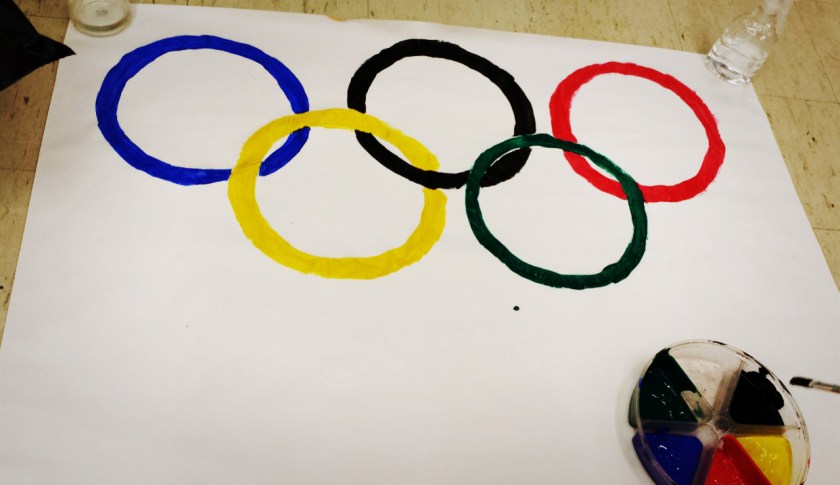
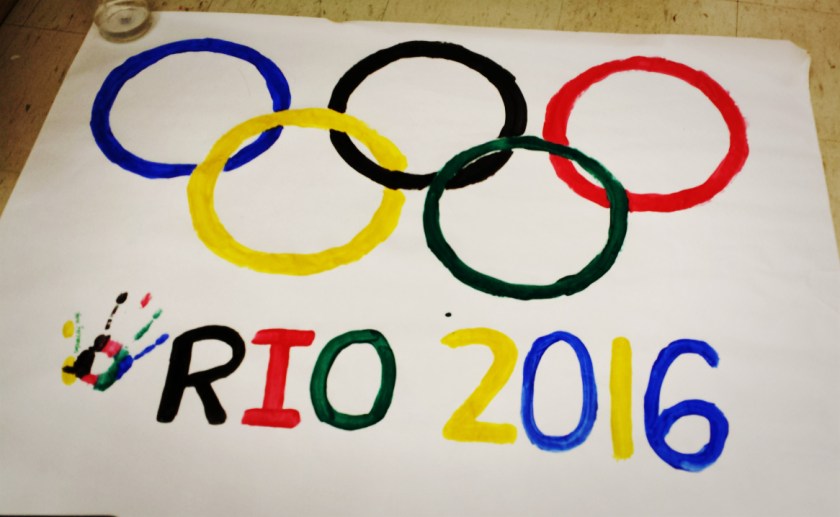
Then, the teaching staff got on our hands and knees and painted a large sheet of white paper, as below. Now, this can also be done on a white sheet, or a large white canvas.

wp-1470952456317.jpeg

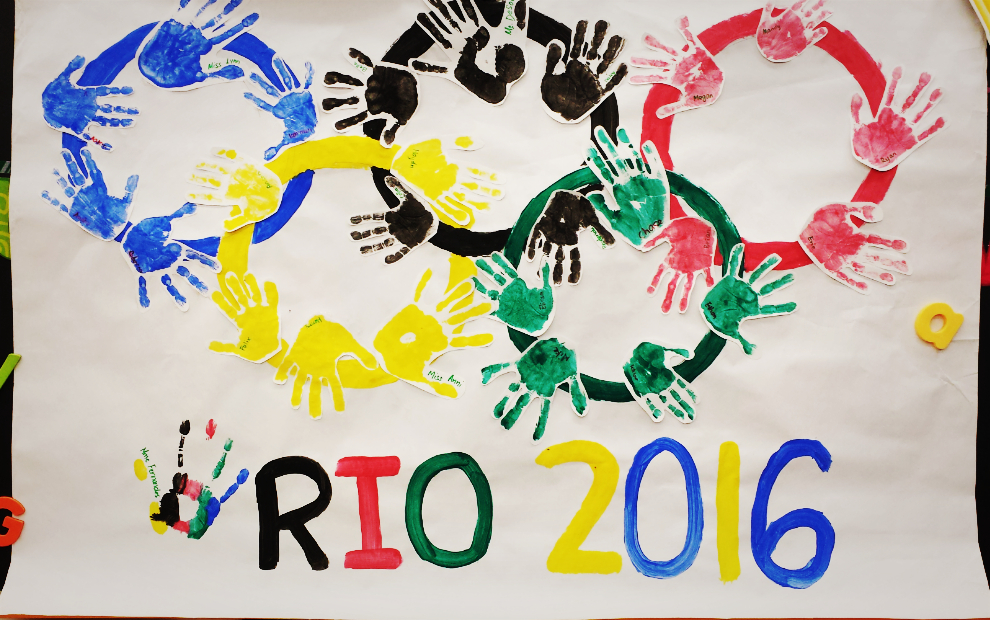
We decided, we, the teaching staff, would also include our hand prints, and since we were an odd number, one of our teachers made a hand print of 5 different colours that was included ahead of “Rio”, below.

wp-1470952500534.jpeg

The final product came together when we glued all the coloured hand prints onto the respective coloured rings.

image

This activity focused on not just the theme of the Olympic Games but a way to show our students the unity inherent in sharing common experiences. A shared experience like living in the same country, speaking the same language and living similar lifestyles despite, (as is the case in Canada) being a very multicultural fabric of people. Over the past week, our students have learned about the different countries participating in the games, and how to identify their respective flags. A tall feat for a lot of our 3 – 5 age range.

And that is the power of these games. Not just to go forth and be the best you can after you have trained and trained for years, but also to galvanize peoples toward a common experience where they can relate to each other, even if it is for a few weeks every 4th summer.


©booksnnooks.org All Rights Reserved