Back to School: First Day Jitters!

For a lot of us Canadians, school begins next week. And yes, teachers everywhere are hunkering down for 10 months of a lot of work. And it is no far-fetched notion that the first day gives a lot of us returning to school (staff and students alike) the jitters, which is why First Day Jitters by Julie Danneberg is a fantastic book to read to your students K-3.

The author and illustrator, Judy Love, are very clever with the big reveal at the end of the book where we find out that the person with the jitters about her first day at a new school is a grown woman, a full-fledged teacher. This book provides a platform for discussion about your students’ feelings around their first day of school. Questions such as “How do you feel about going to a new school?” “What are some ways that you could help someone who is new?” are a great place to start. These questions can seek to calm down students who are nervous about their first day of school, and help other students who are not, become more empathetic to their experiences. It further raises a lot of other themes such as facing your fears, being confident in yourself, welcoming new people. And it has the added advantage of being funny! Your students will love the illustrations, dear teachers, and they will find it hilarious that their teachers’ feelings are not so different from their own.

Parents, this would also be a great way for you to prepare your little one for his/her first day (back) at school. To know that his/her teachers experience a similar struggle will allow your child to be a bit less worried about what to expect on his/her first day.

I know I tout a lot of books as must-have when I review them, but I usually review books that I think are particularly helpful or poignant. It is no surprise then, that I declare this book an absolute MUST-HAVE!

Happy preparing for the first day of school, dear teachers, students and parents!


©booksnnooks.org All Rights Reserved
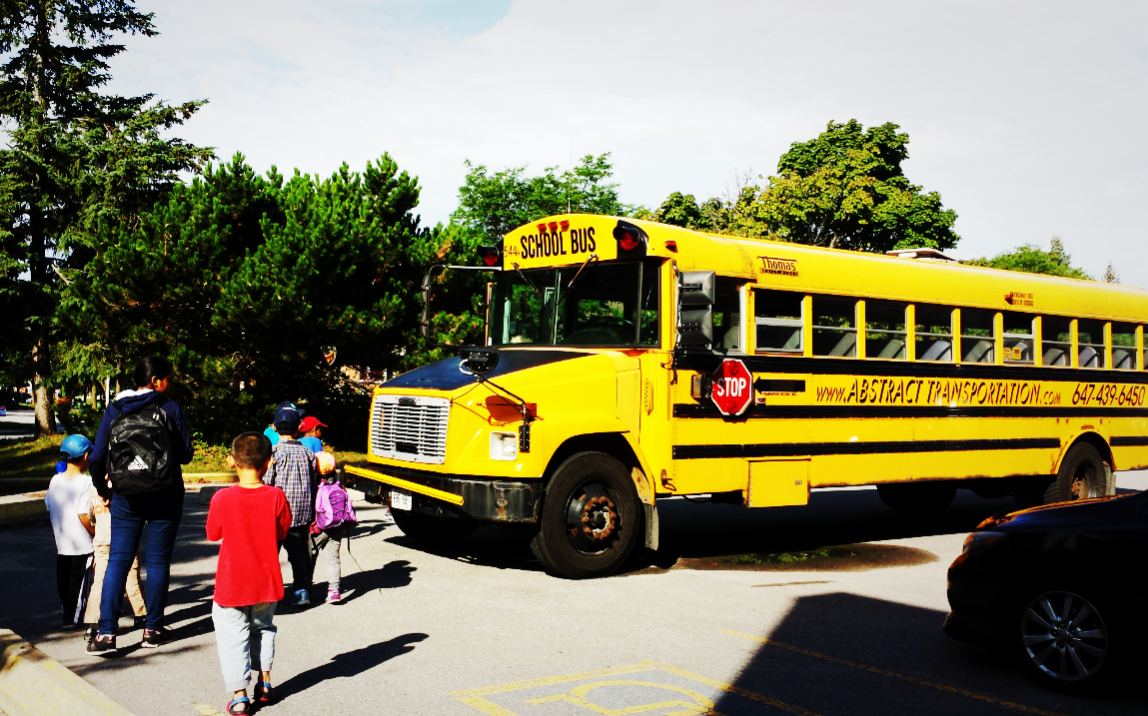
 

Getting Ready for a Field Trip: What You Need to Remember

So, a field trip is coming up and you want everything to go without a hitch. Chances are, it won’t be perfect. There will be problems, but how do you manage the problems to minimize damage?

Organization is key to preparedness. Here are some things worth keeping in mind.

Before the Trip:

  • Emergency Information: Compile all emergency information into one convenient notebook or travel agenda. This can be one you use throughout the year for all field trips. Make sure to take this with you on your trip.
  • Allergies: If you are going somewhere where food is being served, or just outside where the elements might cause triggers for students with allergies, it is important that organizers of the event know which children in your group have allergies, and to what. All the staff in your party should also be aware of the students with allergies. Compile a list with detailed information and give each accompanying staff member a copy.
  • Lunches & Snacks: Make sure students and their parents know this is a trip. Encourage them to pack foods that are easier to carry: light sandwiches and light snacks with easily disposable wrappers are great options. Students should also be encouraged to carry bottled water, especially if trips take place during the hot summer months.
  • Media Release Forms and Waivers: Whatever liability documentation needs to be filled out, make sure it is done prior to the trip.Consider giving out information letters to parents with these forms at least a week in advance of the trip. Make the due date for all forms a couple of days before the trip, to allow for those students who might overshoot the due date.
  • Information for Support Staff: Are all your support staff informed of where you are going? Make sure that all pertinent information is available to each member. Consider compiling a package for each staff member with a map of the place, address and phone number of those in charge, student allergy information or other health concerns, schedule for the day, and any other information that would ensure a smooth and safe field trip. Remember, communicating with those who are helping you on the trip is key.
  • First Aid Kit: This should be prepared ahead of time and one person should be put in charge of it. Perhaps the person who has more experience handling emergency situations should be made responsible. Your usual suspects should feature here: Bandaids, gauze, alcohol wipes, Epipens for students who are too young to carry their own.
  • Identifying Attire: Consider having your students wear T-shirts that identify them all as part of a group. Perhaps your school has a uniform. If this is the case, make sure to remind students to dress to the proper uniform code prior to the day of the trip. If there is no uniform, consider having them wear school mascot T-shirts if these are available, or perhaps contact wristbands or chains.
  • The Safety Talk: Make sure you talk to your students about safety on a trip. Ask them questions about what it means to be safe. Alert them to different situations they might face on this trip, and then how they can protect themselves or a buddy from harm. A Buddy System is a good idea. Establish this ahead of time, with room for accommodations on the day of the trip, should attendance change.

On the Day of the Trip:

  • Supervision Groups: Depending on the students who are attending, establish a staff supervisor for each small group of students. If you have parent volunteers, they should receive the same information as all staff. Typically between 5-8 students per adult is a good number.
  • A Quick Check: Do a quick check before you leave. Do you have the First Aid Kit? Do you have the Emergency Information Notebook? Are all your students accounted for? Do each of them have their backpacks and lunches?
  • Buddy System: In addition to having supervisory groups and counting them all the time, and observing them all the time, making more responsible or older students, in charge of younger ones just means one more pair of eyes is looking out for each student. And that is always a good thing.
  • Cell Phones: Your cell phone should be fully charged for the day, and on Ringer Mode. In case of an emergency, you want to be able to pick up that call right away.
  • Count-count-count: Establish the total number of students attending the trip. Count before you board the bus, count while on the bus, count when you get off the bus. Count your students every chance you get. It only takes a second to lose one of your students, so staying on the ball about this one can be crucial.
  • Observe-observe-observe: Just like counting all the time, watching your students at every turn of the trip is important. You can heave a sigh of relief when they are all safely back at school and in their parents’/guardians’ possession. Until then, they are your responsibility.
  • Washroom Supervision: Always have an adult accompany groups of students to the washroom. The adult can remain outside to monitor students.

Now, while there are many more things you could do to ensure a smooth field trip, these ones are a really good place to start. Remember to stay calm in the event of an emergency. Cooler heads always prevail.

©booksnnooks.org All Rights Reserved

Michael Wade: Making Readers out of Non-Believers

And then it happened… is a Canadian Adventure Series taking young readers by storm! The books are full of imaginative ploys that pull in our mischievous side and leave us chuckling heartily.

Author, Michael Wade, came in for a visit today, and what a lot of people don’t know, is that being a writer is Mr. Wade’s second career. What he did before is something you will find out if you invite him to your school, but let’s just say that it isn’t at all what you might expect. What a fantastic time our students had! The students could barely sit still as he talked about his writing and his life experiences, infusing laughter into every single narrated event. For those of you who have not seen Mr. Wade before, he is quite a bit different than what one might imagine a writer to be. And that is where his central message of “Anyone can be a writer” rings poignant. Mr. Wade showed our students that writers are not people who always dress a certain way or enjoy only reading all the time. They are not people who rarely leave their home and find being around other people exhausting. And even though a couple of these things might ring true for some writers, a lot of writers share just one thing above all else, in common: their meticulousness with reworking their writing to achieve the best possible draft. Mr. Wade stressed on the importance of the power of words. He showed students that words can be used in signs to affect people’s behaviour, that they can be used to teach and even communicate powerful ideas. He showed them that anybody really, is capable of doing this, as long as he/she works hard at the rewrite process.

Now, I have read a lot of Mr. Wade’s stories – they are brilliant! Each one is well-thought-out with a plot that trots along with purpose until the main event is revealed; the And then it happened portion. Students remain riveted in their seats and often, even their breathing is inaudible as they hold their breaths to avoid missing the climax of the story. Mr. Wade’s stories are not just a great way to engage a lot of our young boys who are not specifically drawn to reading, but also our young girls who thrive on the adventures of kids their own age. His books are chapter books, and best suited for grades 3-6, with room for those of you teachers or children with strong readers in grade 2. What I like best about Mr. Wade is that he makes his books accessible to his audience. He uses ordinary words to turn everyday events into moments sparking with excitement and humour. And children love both of these!

So, if you have a selection of Mr. Wade’s books on your shelf, begin a read-aloud with your class for starters, then, sit back and watch the rest of that selection fly off the shelf! You’ll make readers out of non-believers!

© booksnnooks.org All Rights Reserved