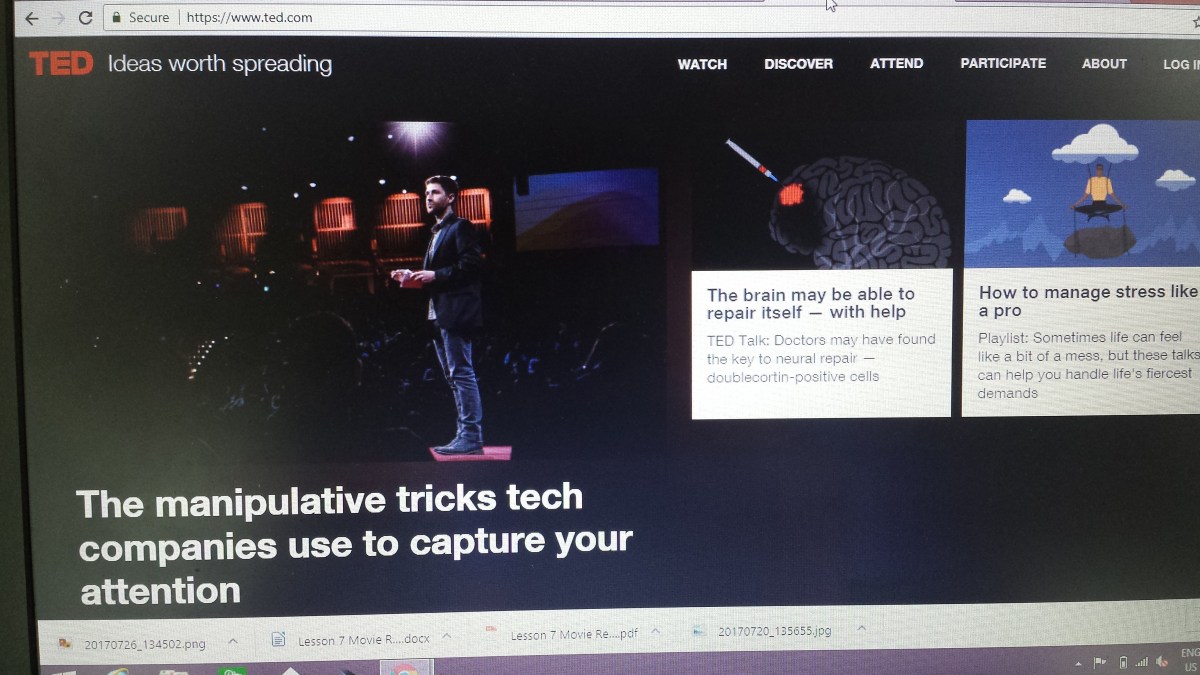
TED Talks: A Great Resource for Teachers

I have watched videos on TED Talks myself and it is a GREAT place to learn new things. However, only recently did I discover its nearly-unrivaled value in the classroom. With the culmination of marking copious amounts of movie reviews and having report cards ready for record deadlines this week, I have been in a bind for lesson planning time. Enter TED Talks. With a plethora of subject areas to choose from, this resource is a must-have!

There are two places you can find TED talks material. One is the main TED Talks website and the other is the TED Ed teacher resource platform.  While the former offers video footage on just about anything you are curious about, the latter has subject-specific videos with mini-lesson plans around each.

This week I ran to TED twice, and we are only on Wednesday! On Monday, I showed my students 2 video clips from the TED Ed platform, one titled “What makes things cool?” and the other, “Why do people join cults?”. I introduced each one by discussing the concepts of “cool” and “cults” to activate students’ knowledge. After watching each video clip, I discussed with my classes the major ideas presented in the video and then probed their understanding by pushing them to make connections with other things in their lives. Students were intrigued and receptive and I was satisfied with my lesson-delivery.

The second time I showed my students a video clip on the TED Talks website titled, “How megacities are changing the map of the world.” Since my students are transitioning into high school and Geography is a compulsory course, this was a great segue into the different kinds of Geography and how each affects our lives. I discussed major concepts with my students after showing them the video in a “debrief” session and then parceled them into groups armed with chart paper and markers to answer the question, How does Connectography affect our lives?. I required that they be specific in their answers and offer examples wherever possible. Despite the initial bombarding of new terms and complex syntax used by the presenter, my student found this video interesting and the idea-sharing phase of our class session proved this. Students came up with deep analytical reasoning that really surprised me!

This slideshow requires JavaScript.

The thing I like most about TED Talks/Ed resources is the amount of opportunity it allows for students to inform themselves and activate their critical-thinking skills. I am a huge pusher of “Think critically, kids!”, so this is quickly becoming my go-to resource even for days when I am preparing lesson plans in advance.

For those of you who have used this resource, let me know about your experience. I would love to hear about new ways to use it.


©booksnnooks.org All Rights Reserved
Championing Graphic Novels for Classroom Teaching

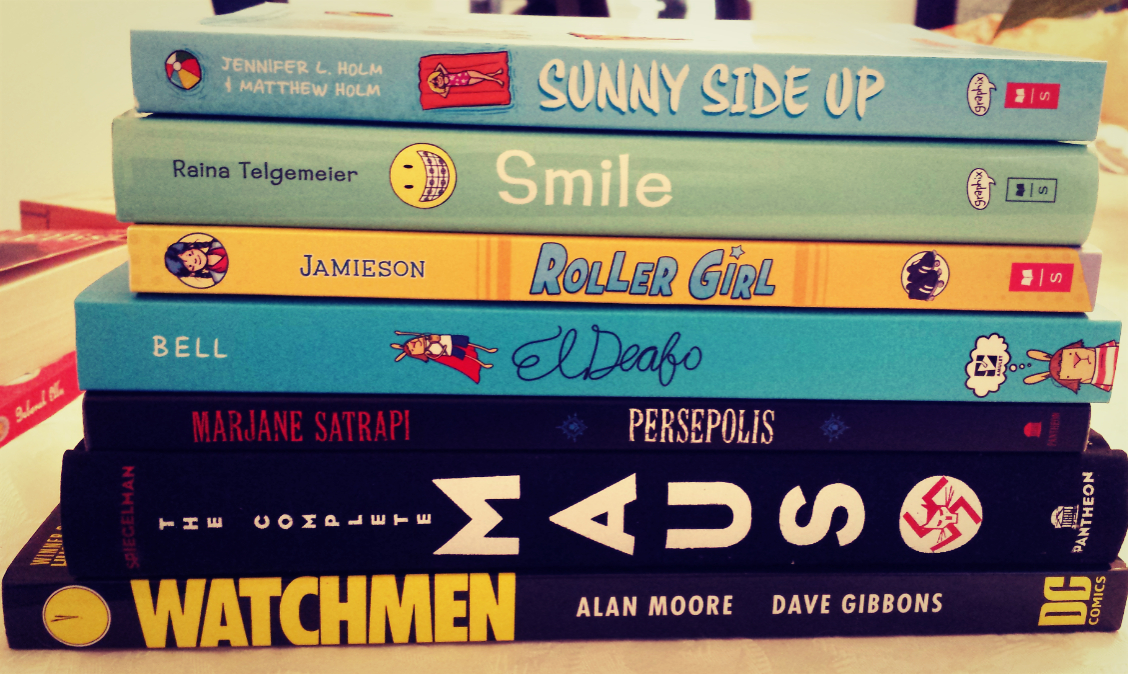
Some of my favourite graphic novels; great for teaching students Grades 4-12

As teachers, we like to revert to the tried-and-true classics when doing Novel Study Units, and teaching our students various bigger life themes. The likes of To Kill a Mockingbird, Inherit the Wind, The Great Gatsby, The Apprenticeship of Duddy Kravitz, Jane Eyre, The Importance of Being Ernest, Brave New World, 1984 and then of course those by the Great Bard, for the intermediate and senior grades. Trust me, I’ve done a good number of these in High School. And then there are the likes of Bridge to Terabithia, Freak the Mighty, Charlotte’s Web, Chronicles of Narnia for the junior grades.

Now, let me pose this question: Have you considered a graphic novel for your Novel Study Unit? I have talked to a lot of teachers, especially in the junior and intermediate grades, and they are incredibly distrusting of the graphic novel. It is viewed by many teachers as a medium of entertainment, and not learning, for their students. Granted, there are graphic novels out there that are created with the sole intent of entertaining, but a lot of incredibly clever graphic artists and writers, collaborate to produce thought-provoking and striking graphic novels.

I would like to make a case for the teaching of graphic novels in grades across the board. I believe they have much value to add to our students’ learning. First of all, graphic novels are not just about the pictures. They are about the relationship between text and image. They are about the meaning in between the panels and the way the characters are drawn and coloured. They are about what is omitted and what is included. They are about meaning and form at their very core. However, they are also incredibly accessible. Graphic novels have the power to engage students who are not willing readers of the traditional text. They have the know-how to capture this audience and potentially turn them into readers. Now, teachers, would that not be a cause for celebration?

Graphic novels further ignite creativity, they inject perspective and then offer other viewpoints contrasting with that first perspective. Art is introduced in an appealing way to students who might not necessarily find themselves drawn to it. The graphic novel has the unbridled power to marry different forms of expression to achieve greater meaning.

Several graphic novels written over the last few years have sought to take big risks and tackle radical topics. Sunny Side Up by the Holm brother and sister duo (Fear not, I shall review this one in time), El Deafo by Cece Bell, Persepolis by Marjane Satrapi, Maus by Art Spiegelman and Smile by Raina Telgemeier (a handful of my favourites) are some of the graphic novels that have burst out onto the scene and made an impact. From tackling big issues of substance abuse to identity and war in Iran, from physical disabilities to World Wars and the struggles of adolescence, these books, and others, have the power to change thinking. They have the power to begin passionate discussion among students. So, teachers, pray tell, do they not deserve a ranking among the greats? Just because they are “newer” and “different” does not make them unworthy of being entered into the canon of literature-teaching tools.

One of my personal favourites is Watchmen by Alan Moore. This masterpiece makes the movie look ridiculous because, within its pages, it houses depth of meaning and form. It catapults the reader into the story and pulls the narrative around that reader-creator relationship.

Graphic novels are not just quick books that you can read on a trip from Toronto to New York City. They are fast becoming vehicles in which to express explosive thought. So teachers, what say you? Give the graphic novel a chance?


©booksnnooks.org All Rights Reserved