Aaron Becker’s Journey: A True Picture Book

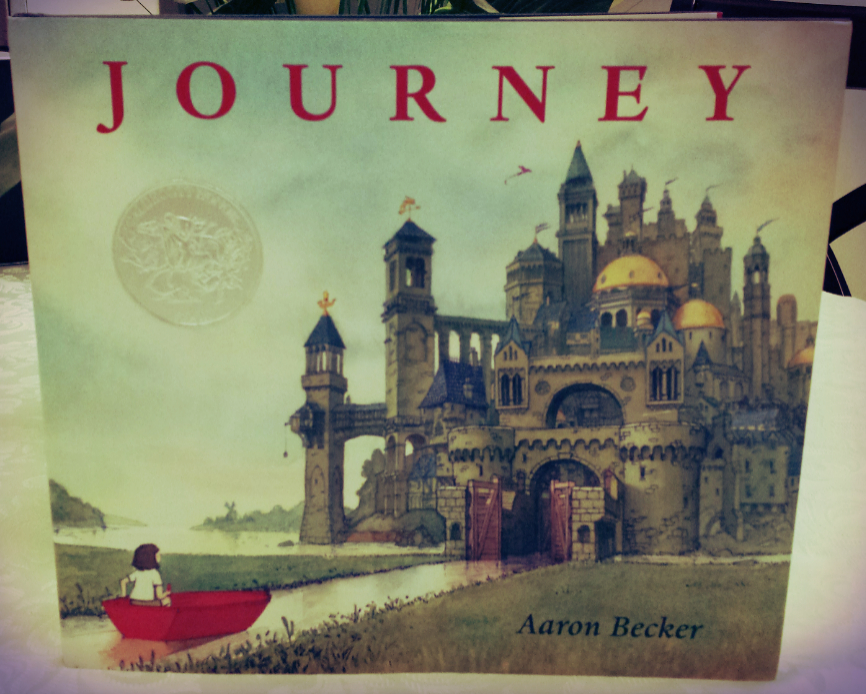
I was first introduced to Aaron Becker’s Journey while doing a teaching placement not too long ago. What I did not realize at first was how versatile this book would become, on not only an age level, but a conceptual and skill-teaching level as well. I have since read it to students at the primary and junior levels, and each time, this book has not failed to create a splash. Becker relinquishes the use of words to tell a story completely in the hands of a child’s imagination. He trusts our young readers, as we must, to make their own meaning out of this heartfelt tale.

I will intentionally not discuss the plot of this book, as I do want to create any skew toward a certain interpretation when the book provides for many. Suffice to say, this book is about a young girl who begins a journey and along the way, discovers much about herself and life.

Juxtaposing grayscale pictures with bold singular colour in the beginning, and then opening wide a world blossoming with colour as the book progresses, Becker unfolds a world that students can envelope themselves in. With magical crayons and castles, boats and hot air balloons, rescue missions and the king’s guards, this book will allow your students to draw the important messages of friendship, selflessness, generosity, imagination and compassion. The sensitively-coloured and poignantly-drawn illustrations provide your students with the opportunity to lose themselves in another world where they can tell you a story as it plays out in the turning  pages. For once, you will not be the one narrating, they will, and they will take much pleasure in making their own tale. The thing I love most about this book is that it allows for a variety of different levels of interpretation that your students can attach themselves to. It prods their critical-thinking and problem-solving skills, it allows them to use language to describe pictures, it helps them with recall and attention to fine detail, and at its best, it provides them with the opportunity to acknowledge the value of a variety of perspectives. It is especially great for those of your students who just do not like reading; a great place to start to show them that books can be fun and instructive, without the burden of a multitude of words.

Teachers, this book is well worth the investment, and a true gem that will prove timeless for your students each year.


©booksnnooks.org All Rights Reserved
Extending The Great Kapok Tree by Lynne Cherry

So, this time I have given it all away in my title. I will be writing about how The Great Kapok Tree by Lynne Cherry is a FABULOUS resource for teachers as a read-aloud, and how to extend this book in at least one (very fun) way.

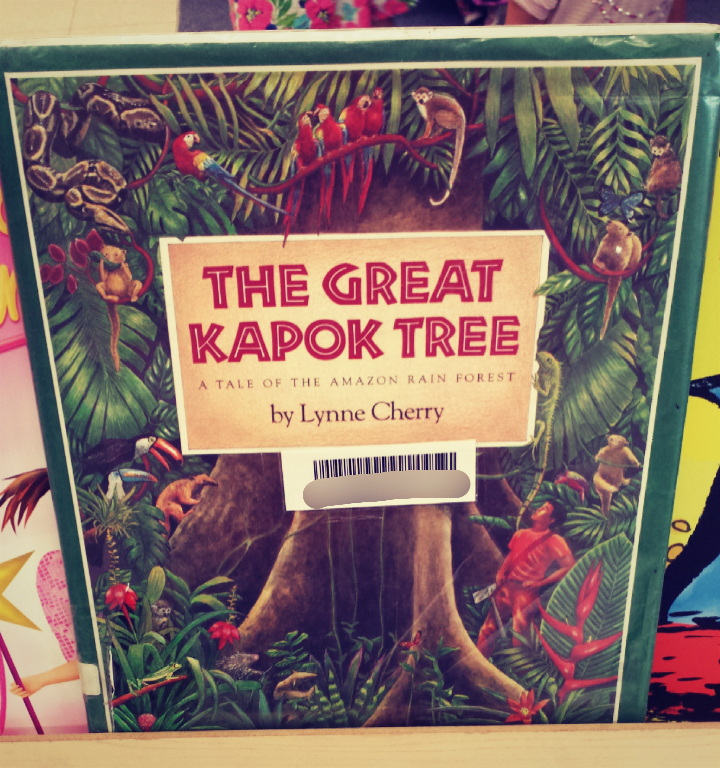
I have read this book several times now, and have developed a pattern for when to ask what questions and how to get the most out of it. Cherry has masterfully crafted a book where young children are walked through the process of recognizing the importance of nature, step-by-step. The book opens with GORGEOUS illustrations depicting the Amazon Rain Forest. Teachers, you can easily do an introductory lesson on geography, and get your students to look up where the Amazon Rain Forest is located, and develop a sense of the setting in this book.

The reason I like this book so much is because it breaks down the benefits of nature and the importance of preserving it, page by page. Students can also widen their knowledge of flora and fauna through the pictures of birds, animals and plants that they see. You see toucans and sloths, monkeys and anteaters, jaguars and macaws, and your students will LOVE identifying and learning about these animals.

Various concepts you can touch on briefly or extend in detail are: camouflaging, the role of trees in providing oxygen, the importance of preserving trees for future generations, the food chain, animal habitats etc. This book is a FANTASTIC jumping platform for other concepts that you want to introduce to your class. Typically, I have read this to grades 2 and 3, but this can be stretched to the lower junior grades as well, 4 and 5.

A great extension activity that we used to avail of the wonderful cross-curricular opportunities this book offers, was doing an art project with tissue paper. We used cut-up tissue paper in different tree-colours to make trees. I further encouraged my students to note down in one word or phrase, the importance of trees to emphasize the literacy component of their learning, and to help with summarizing skills.

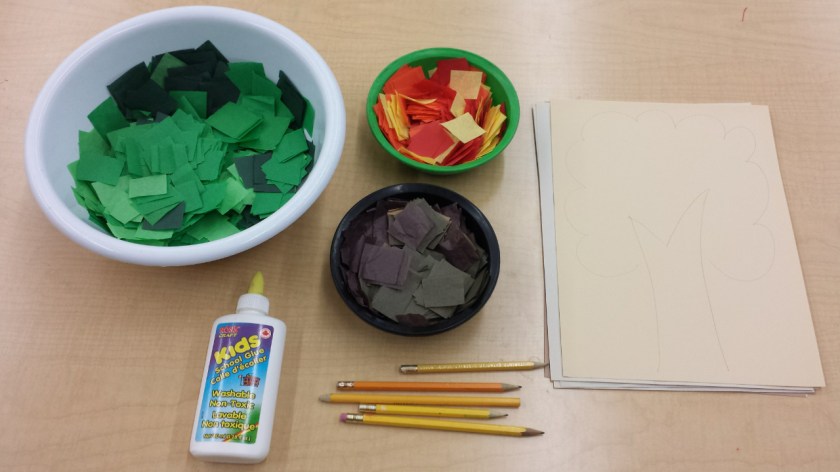
The following materials were used:

wp-1468460188165.jpeg
For this project you will need tissue paper of yellow, red and orange, and different shades of green and brown, cut up into neat little squares, glue, pencils and blank sheets of paper with tree outlines drawn on.

I took a video to best illustrate the process, as below:

And here are some finished products. Such artists the kids are!

This slideshow requires JavaScript.

So what are your waiting for? Go on! Give this INCREDIBLE book a read aloud and then do this COOL activity. You will convert even the most inattentive and hard-to-manage student in your class, as (s)he sits down quietly and completes this (almost) therapeutic project. Happy art-ing! And, you’re welcome.

©booksnnooks.org All Rights Reserved
Picture Book Spotlight: Educating Our Children about Homelessness

Homelessness is a growing concern in our society in North America. As Canadians we sign off on millions of dollars in relief aid to the needy in other countries, and as we should – because we are a generous lot and generosity helps make everyone a little richer, but what of the homeless in our own country? The poverty-stricken men and women, or worse still, children? No, to this problem we turn a blind eye, a deaf ear, we walk quicker. And I think that stems from a culture that is lacking in education around this concept of homelessness. What is homelessness? What does it look like? Whom does it affect? These are questions we need to ask ourselves before we as adults make quick judgments about homeless people we see, and then pass these judgments off to our children. Children feed off the exemplars in their lives. They practice what they see, not what is preached.

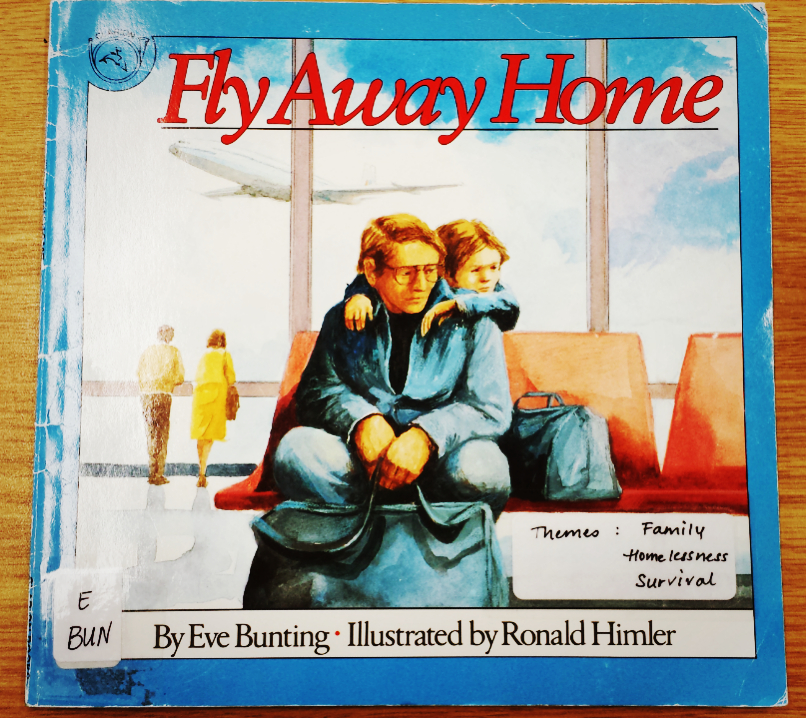
So, when I came across Fly Away Home by Eve Bunting, two things happened. For one, it broke my heart, and then, it provided me with an Aha! moment. I could use this book to teach my young students a little about what homelessness looks like! And so, I did a Read-Aloud using this book with students in Grades 1-3.

Told from the perspective of a 5 year-old boy who is homeless and lives in an airport with his father, this story is delivered with compassion and sensitivity. The facts are laid out for us to see. The day-to-day lives of the father and son, as they struggle to outwit airport security by blending into the travelling consortiums that hustle and bustle through the airport, are shown to us. The little boy learns a lot of wisdom at a young age, and this book nudges in a couple of really good metaphors to help understand the mindset of a homeless child better. Teachers, you can pause at various moments in the story and ask your students why the father and son are doing the things they are, or what certain things mean. Their answers will surprise you, and in turn you will be able to surprise them with yours. Among other themes that Bunting weaves into this delicate tale, are those of family and survival. The things you do to stay together and stay alive and well. There are sad moments to this story too, but there are moments of hope and positivity, where students can learn that people can still shine bright their candles of hope in the bleakest of situations. When you have finished reading this with your students, you will find they adorn a new-found appreciation for the homeless and their difficult lives. And in doing so, you will help to make them more sensitive to the aches of society around them.


©booksnnooks.org All Rights Reserved
 

“Words Are Not for Hurting”: Teaching Children to Be Kind with Their Words

“I don’t like you.”

“You talk funny.”

“Your hair looks weird.”

These days some children use their words to cause pain. They throw around harsh syllables strung together with absolute thoughtlessness. They are exposed to a barrage of media and other mediums that make them believe it is okay to spit out whatever they wish, without taking any responsibility for the consequences their words may have. They are not taught otherwise, so really, how can we blame them?

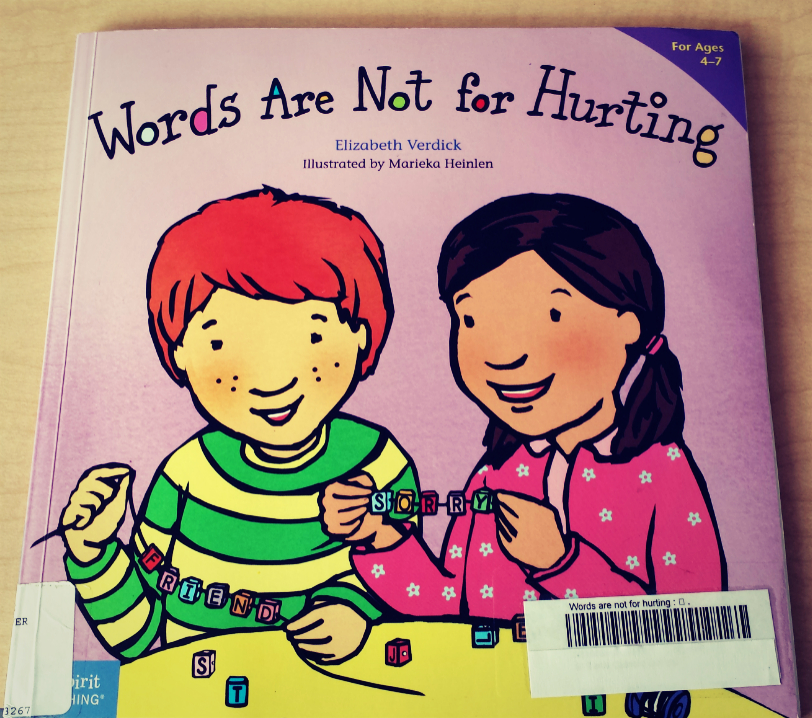
Words Are Not for Hurting by Elizabeth Verdick does a fantastic job of laying down the law around how to use words to help and not hurt. This book is essential in Kindergarten classes and homes of 4 year-olds everywhere. This culture of being rude and unkind willy-nilly is an epidemic that needs to be curbed. As teachers, often we are in very influential positions when it comes to how our students grow up. We can steer them towards being respectful and considerate, generous and tactful. And while it is important for students to learn the basics of Math and Science and Reading, it is more important for them to learn how to be good citizens of the world.

In her book, Verdick systematically charts out how words are formed, with letters, and then maps out what kinds of words there are, then seamlessly seguing into hurtful words versus kind words. She offers scenarios to explore feelings and play out different alternatives to addressing the pain caused by hurtful words. This book makes for a clever read-and-think-aloud. Students will pick up poignant details in the illustrations that display body language and facial expressions showing a range of emotions. They will bounce off ideas and deliver very clever and sensitively-thought-out reflections that will warm your heart, because really, there is goodness in all of us that just needs a firm foundation to build on.

So, add this book to your list of MUST-HAVE read-alouds, if you’re a kindergarten or even higher grade teacher. Sometimes, we all just need a little guidance to be a better version of ourselves.

© booksnnooks.org All Rights Reserved