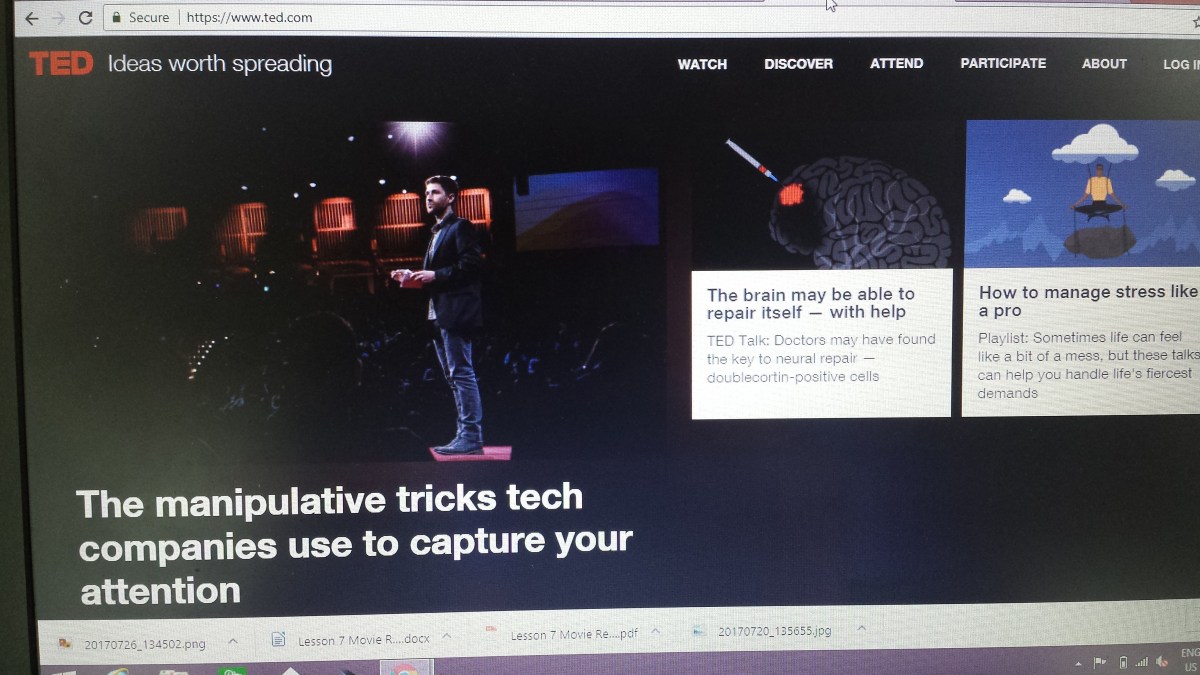
I have watched videos on TED Talks myself and it is a GREAT place to learn new things. However, only recently did I discover its nearly-unrivaled value in the classroom. With the culmination of marking copious amounts of movie reviews and having report cards ready for record deadlines this week, I have been in a bind for lesson planning time. Enter TED Talks. With a plethora of subject areas to choose from, this resource is a must-have!
There are two places you can find TED talks material. One is the main TED Talks website and the other is the TED Ed teacher resource platform. While the former offers video footage on just about anything you are curious about, the latter has subject-specific videos with mini-lesson plans around each.
This week I ran to TED twice, and we are only on Wednesday! On Monday, I showed my students 2 video clips from the TED Ed platform, one titled “What makes things cool?” and the other, “Why do people join cults?”. I introduced each one by discussing the concepts of “cool” and “cults” to activate students’ knowledge. After watching each video clip, I discussed with my classes the major ideas presented in the video and then probed their understanding by pushing them to make connections with other things in their lives. Students were intrigued and receptive and I was satisfied with my lesson-delivery.
The second time I showed my students a video clip on the TED Talks website titled, “How megacities are changing the map of the world.” Since my students are transitioning into high school and Geography is a compulsory course, this was a great segue into the different kinds of Geography and how each affects our lives. I discussed major concepts with my students after showing them the video in a “debrief” session and then parceled them into groups armed with chart paper and markers to answer the question, How does Connectography affect our lives?. I required that they be specific in their answers and offer examples wherever possible. Despite the initial bombarding of new terms and complex syntax used by the presenter, my student found this video interesting and the idea-sharing phase of our class session proved this. Students came up with deep analytical reasoning that really surprised me!
The thing I like most about TED Talks/Ed resources is the amount of opportunity it allows for students to inform themselves and activate their critical-thinking skills. I am a huge pusher of “Think critically, kids!”, so this is quickly becoming my go-to resource even for days when I am preparing lesson plans in advance.
For those of you who have used this resource, let me know about your experience. I would love to hear about new ways to use it.
©booksnnooks.org All Rights Reserved
 Books 'n' Nooks