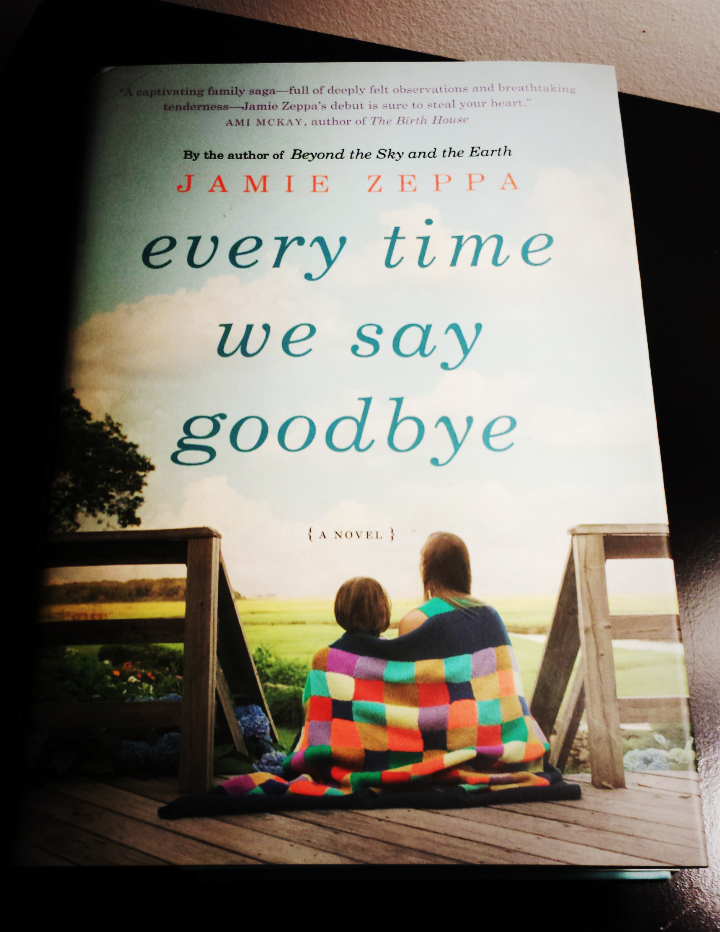
Jamie Zeppa Delights!

When I came across Jamie Zeppa’s novel, Every Time We Say Goodbye, I was intrigued. The story held promise, a tale of family, of relationships broken and lost, so I took a chance. Boy, did it delight!

A Canadian author, Zeppa weaves a narrative that unveils much depth to all the characters presented. Relationships are tested and the concept of love is fractured into an array of colours. Maternal love is poised in a precarious position, choices reveal character definitions and time spins everyone into different directions.

There are many things I enjoyed about this book, prime being the writing style. Zeppa has a flair for the poetic. She creates sentences with such nimble agility that the reader has no choice but to allow him/herself to be swept through this story. I breezed through this 342-pager in a mere 2 days and not because it was an easy read. Saying so might diminish the value and depth of the content, but it was a read that was not difficult to navigate. It was seamless, it flowed beautifully. It was heavy in emotional content, and at times I found myself having to tear away from my attachment to the characters by taking a break from the book. Zeppa creates a world where the reader, although an audience looking into the lives of the many characters, can feel a part of their lives.

The characters are well-considered and painted in rich colours, each manifesting human qualities that make them seem real. I couldn’t help but wonder if this story takes from some threads of Zeppa’s own life because she tells it with such authority on the subject of family, relationships, loss and love. This book is told from the perspective of four specific characters: Grace, Dawn, Laura and Dean. My heart was particularly wrenched by the character of Grace, a character rife with her own foibles and strengths. Grace is presented as a stoic character, the ‘acceptor’ of all action that takes place around her. At some times, the reader might even shrug Grace off as boneless and feel frustrated with her choices, but Zeppa leaves room for redemption as the ultimate test is presented to Grace’s character. The characters of Dean and Laura in many cases act as fillers for the narrative. However, Zeppa has taken much care to develop these characters and layer their lives with action, belief, thought and intense feelings. Dawn’s character is quite richly entrusted with different tiers.

And if one were to think that authors are good at writing from the perspective of just one or two age groups or a specific gender, Zeppa blows that assumption to smithereens. She tells this gripping story from the perspective of a little girl, a teenage boy, a middle-aged woman and the elderly. Every character, no matter how much ‘line-time’ he/she is allotted, is developed into a complete person. Adding quirks and packing in detail in necessary places and sometimes unexpected but welcome ones, Zeppa hooks you into this world of a family struggling to connect on so many different levels.

Zeppa touches on a variety of themes with a few as her front-runners. She deals with the theme of Mental Illness quite well. Dexterously and with much sensitivity, she paints the experience of depression for the reader, instead of throwing out a label and colouring the reader’s perspective from the very beginning. In doing so, she brings much-needed awareness to depression and elicits an empathy and understanding for those who suffer from the same. As well, the theme of Motherhood really jumps off the pages in this book because Zeppa does such a phenomenal job of portraying it from so many different angles. With Mother’s Day just around the corner, mothers and their adult children everywhere will appreciate the messages of maternal bonds, sacrifice and most importantly love that Zeppa has to offer.

I would recommend this if you’re into the themes of mental illness, family, maternal bonds, relationship struggles, loss, sacrifice and love, just the everyday messiness of living. A poetic read that keeps you hooked around the suspense-filled turns until the unveiling at the end, this book is well worth the time. If you happen to read Every Time We Say Goodbye, be sure to drop a line letting me know what you thought of the same!

Happy Mother’s Day to all you lovely moms out there!

©booksnnooks.org All Rights Reserved
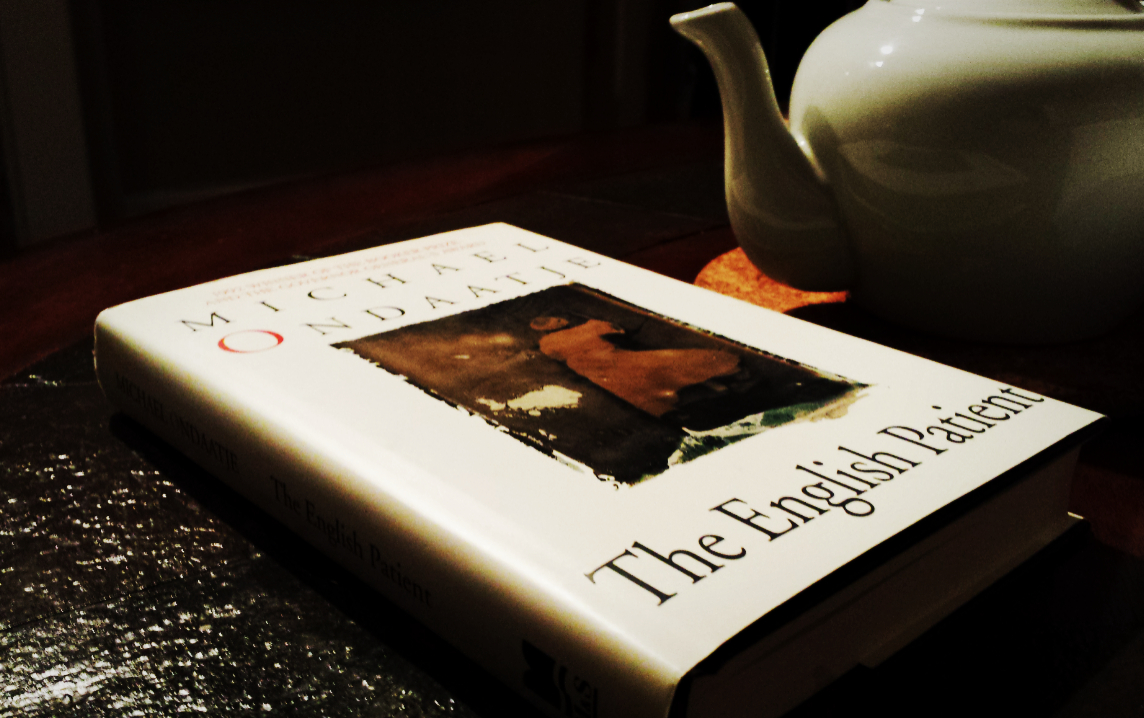
Michael Ondaatje’s The English Patient

Rating: 3.5/5.0

The English Patient was not specifically one of those book that I planned to read and finally got around to. I just happened to come upon it on one of my second-hand bookstore adventures. This one is a cute little hole in the wall along Kingston Road at the Beaches in Toronto called The Great Escape Book Store. Canadian author Michael Ondaatje was a familiar enough name, but the book I had not heard of before. So, I paid the requisite “got it for a steal!” price and tucked it away on my shelf for a later read. When I finally got around to it, I was mildly pleased that I had picked it up.

This book  opens in a villa in Italy during the final legs of World War II. Our leading lady is Hana, a Canadian nurse, our leading man it would seem, her English patient. Hana spends her days tending to her patient who is severely burned and confined to a bed. A quarter of the way through this book, Hana is joined by a friend of her father’s, David Caravaggio, a Canadian thief, and about a half of the way into the book, a British sapper for the Allied Forces, Kip (Kirpal Singh). The foursome make a very odd troupe of companions living day-to-day in a mine-infested village.

Ondaatje begins with poetic nuances that captivate the poet within you. He makes fluid the most unnatural comparisons, making you conceded to the validity of his comparisons. His words flow like an elixir of beauty in our brain chemicals. The first third of the book follows through with patchworks of history and fiction loosely following each other, as if chronology and order are the furthest from his mind, his mind caught in a rhapsody of poetic euphoria, of sensual imagery so seductive you are moved to your baser desires for beauty and wonder. There is the dry second third that you will find yourself braving because of an expectation that the final third will be a delivery of enormous mental engagement, and you will not be disappointed. Ondaatje holds his reader captive and then releases the flood of the story, the climax and the suspense, the enigma that is the Enlgish patient and the periphery that are Caravaggio, Hana and Kip.

Being a novice reader of Ondaatje, I was impressed with his level of detail around the intricacies of making and disarming bombs and the life of a Sapper in World War II (a sapper being a mechanical engineer that detected and disarmed bombs, something new I learned as well) among other things. His attention to detail and his ability to weave poetry into his metaphors are indeed praise-worthy. I particularly enjoyed how he appealed to all of my senses in the setup of his metaphors. The final third of the book really opens up to reveal a magnetic storyline that the first two halves have been building towards. At this point the English patient is the enigma that the reader discovers to be more than meets the eye. Hana and Kip revel in their own story as if the rest of the world were suspended in the balance. Caravaggio is the addition to the tale, as if an afterthought necessary to only move along the action so it does not seem too clichéd when Hana or Kip do it.

However, it is not all praise for The English Patient, because the organization of events wracks up a little confusion in its attempt to offer the reader the opportunity to feel intrigued. The second third of the book, as I called “dry” before, made the work wanting in the consistency of aspired greatness. It was a struggle to forge through this section, but as with all my reading, I am committed to finish once I begin, and again with this one I did. Despite winning the Booker Prize and the Governor General’s Award in 1992, I couldn’t find myself agreeing with the respective panels that came to these award decisions. Nevertheless, The English Patient was still a worthwhile read.

©booksnnooks.org All Rights Reserved


The Deborah Ellis Installments (Part I): The Breadwinner Trilogy

Deborah Ellis is a renowned Canadian author who has written a number of books with a lens to promoting awareness about the plight of marginalized children in war-stricken countries. Her fiction and non-fiction are sensitively crafted to present the reality faced by many of these innocents.

In possibly her most famous books, The Breadwinner series, Ellis paints a picture of the life of women in war-torn Afghanistan. This entire series showcases an especially strong cast of female characters that will leave you feeling like you know them personally. Teachers, having worked in a library for a year, I have seen this series being read with great vigour by junior students. Granted these books might appeal more to your female students because the protagonists are mostly female, I do think there is great value in making it part of your teaching, as it allows your male students to understand and appreciate the hardships faced by many children and women in places like Afghanistan.

There are 4 books in the Breadwinner Series:

The Breadwinner

Parvana’s Journey

Mud City

My Name is Parvana

Today, I will speak to the first 3 as they follow closely in chronological order, and can be taught together over the course of a couple of months, if you so choose.

In The Breadwinner, we meet our leading girl, Parvana. She is bursting with energy and opinions, and is not the kind to bend over backward for anyone. Right away we get the sense that this strong young lady is built to tackle much. And much, she does. She is chosen to be the breadwinner of her family when the Taliban enforces bans on women leaving their home without a male companion. With Parvana’s father imprisoned for no fault of his own, her mother and siblings rely on her ability to dress up as a boy and go out into the market to continue her father’s job. Parvana is sharp and kind. She has a conscience that shines through her stubbornness. We understand as an audience that this is reality for a lot of Aghani girls. And at the young age of 11, Parvana must shoulder a lot of the responsibility if she is to help her family survive. Teachers, your students can view this first book through the lens of how the family structure is impacted by war.

In the second book, Parvana’s Journey, Parvana is reunited with her father, but separated from her mother and the rest of her siblings. The book opens with her at her father’s grave, and goes back at points in time to describe the short journey they took together to find her mother and siblings, before his mind and body gave out. For the remainder of the book, we follow Parvana on a harrowing journey as she must use both her cunning and strength to stay alive. This strong young girl has matured significantly since the last time we saw her, but she retains some of her best qualities, like her compassion. With this compassion, she makes and keeps a handful of friends. Teachers, your students can add to their understanding of the interactions of strangers in a war-torn country, and how the youngest of the population must fight for survival.

In the third book, Mud City, we reconnect with Parvana’s friend, Shauzia, whom we have met in the first book. Shauzia has ended up helping out at a Widow’s Compound on the border with Pakistan, but despite being clever and useful, she wants to venture beyond the grounds of the compound and start her own life. She is convinced that if she can reach the nearest city across the border in Pakistan, Peshawar, she can earn a living and then go on to have her own life and do great things. Shauzia does succeed in getting out of the Widow’s Compound, but life in the big city of Peshawar is not everything she bargained for. There is not much work to be had, and going hungry is just in addition to struggling to stay safe and alive. Teachers, this one will offer a bit of perspective on the internal world of an Afghani child, specifically a girl. It will allow your students to draw connections with their own hopes and ambitions, and those of Afghani children. It will also help them see that despite these hopes and ambitions, the contrasts in circumstances and opportunities is what makes achieving both possibly easier for them, and harder for their Afghani counterparts. This book offers teachings in different perspectives, gratitude and hard work.

Teachers, this entire trilogy is a great way to teach your students a bit of geography when you talk about Afghanistan and its location in the world, with reference to other countries such as Pakistan. Students can make connections to other countries they know of in the region. It can further offer the opportunity to delve into social studies as you discuss the government structure of then Taliban-led Afghanistan, and today’s present government. You can also use this to make comparisons with our own Canadian government, or other relevant governments.

The first three books in the series are great for grades 4-6 and offer a range of cross-curricular opportunities because of their versatility.

Stay tuned for a follow-up post where I will discuss the final book in the series, My Name is Parvana.


©booksnnooks.org All Rights Reserved


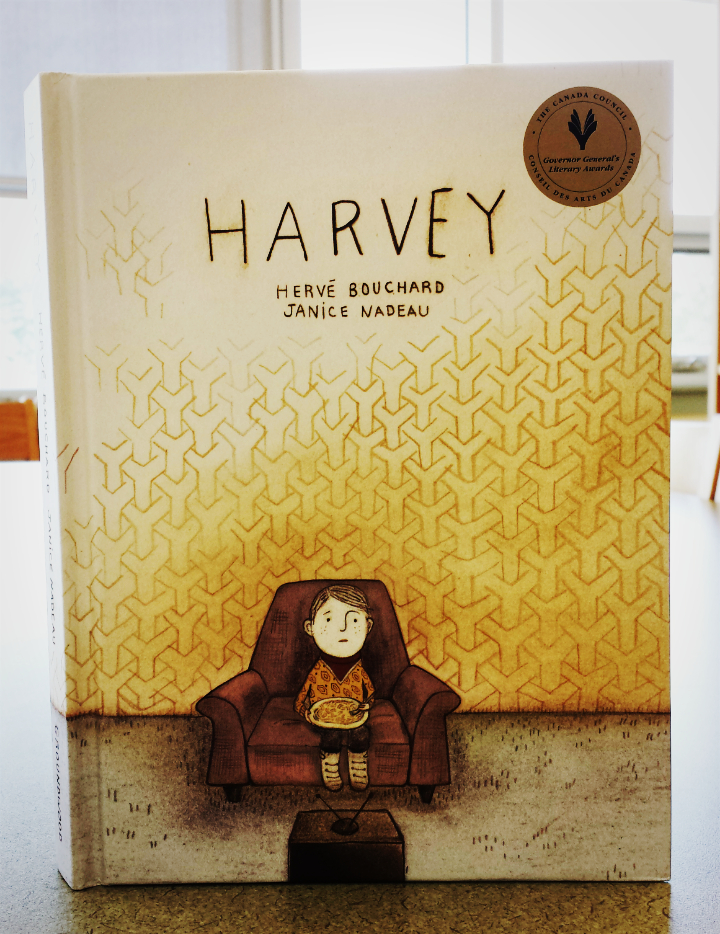
Harvey: A Simple, Yet Artistic, Account of Loss and Grief

Rating: 5/5

Let me begin with a warning that today’s blog discusses a concept that makes many of us grimace with pain. Death. Five letters that can quite literally shatter our lives. When I came across this book by Hervé Bouchard and Janice Nadeau, I was both deeply moved and in awe.

Harvey, written by Hervé Bouchard and illustrated by Janice Nadeau is a project that truly synchronizes illustration with text. And with that segue, I will begin with the technical elements that make this book a gem to own. When I think about categorizing this book, I am unsure whether it falls within the realm of picture book, it is a bit too long for that, graphic novel, while it does have graphic illustrations and real-time dialogue(minus the speech bubbles) it is missing the characteristic panel-structure of graphic novels, or junior novel, the subject matter and the textual length and level seem to offer signs of this. I then came to the conclusion that it really is all 3: picture book with a hint of graphic novel and junior novel.

Now, the subject matter focuses on the death of our main character, Harvey’s, father. Harvey and his brother, Cantin, live in Quebec, and on their way home from school one Spring day, find an ambulance and a crowd of people outside their home. A stretcher holding a blanketed figure is brought out of their house with their mother wailing behind. Then, a key set of events is set off in slow motion as our writer and illustrator quite dexterously capture the grief inherent in loss. A child often processes the loss around death differently than an adult. And while the stages of grief are similar for more or less all of us, children often are left confused and filling in the  gaps that a loved one’s demise has created. There is the knowledge of loss, but pieces of  life seem to move out of kilter, with a child having to struggle to return to some semblance of normalcy. Harvey processes his loss in a very practical matter. He lays out the facts and then follows through on what must be done to deal with his father’s death. His younger brother, Cantin, however, takes a different route when dealing with his loss. His reaction is more emotive. Harvey is the older one of the two and perhaps this difference in reaction is in part due to age and maturity. I would argue though that loss affects us all differently depending on our different personalities. The matter-of-fact text that Bouchard uses to explain the progression of events gnaws at your mind and heart. Nadeau is exceptionally  clever with her use of colours and lines and spaces. She employs darker, smudged-out, and consistently  faded and ragged colours to convey the heaviness of loss. A “grayness”, both of feeling and colour, hover over throughout the book. I don’t normally tout the illustrator of the picture books I review, but that is usually because the text stands out more to me. In this book, Nadeau’s illustrations take the cake. She is superbly talented in conveying the gravity of emotion and state of mind that someone dealing with loss encounters. And it is this talent of hers that I believe renders this book a masterpiece.

Winner of the Governor General’s Literary Award, this book is a gentle reminder of death looming in lives. It offers a raw interpretation of loss suffered by a child and in doing so, makes us as adults more keenly aware of how we can better support our young ones through such a difficult process.


© booksnnooks.org All Rights Reserved
 

The Munsch on a Lesson in Selflessness

No really, who doesn’t love Robert Munsch? Robert Munsch is one of those timeless Canadian authors who makes me proud to be Canadian. His books are always based on real-life people, and every now and then, amidst the hilarity and the true-to-form made-up sounds, there is a moral. Cue entry of this book, easily one of my favourites from the Munsch.

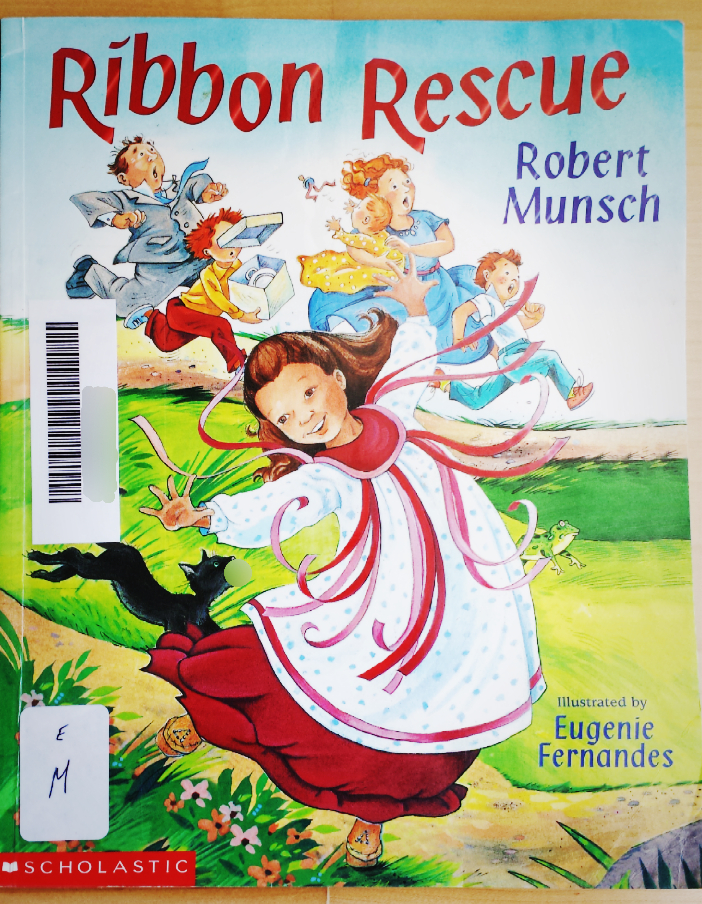
Ribbon Rescue by Robert Munsch is one of those books that leads readers on a journey to discover their inner selflessness. Based on a character who is of Indigenous origin, this book really gives voice to the culture of our Indigenous brothers and sisters in a light-hearted and compassionate way. It is true, a lot of books written by, or based on, Indigenous characters tend to be heavier, with sadder, and often horrific, undertones. While that entire breadth of literature is essential for our Canadian Literary Canon, to ingrain in our minds the requisite components of our Canadian history, Robert Munsch goes off on a lighter tangent to showcase the grace and kindness of this beautiful culture.

Our main character, Jillian, is a young girl who dons a traditional Ribbon Dress and throughout the story, she selflessly offers ribbons to different people who cross her path and seem to need them. Eventually, she is left with nothing and this puts her at a disadvantage, but is her selflessness enough to overcome that disadvantage?

Munsch weaves a compassionate story-line that allows parents and teachers alike to pose questions to young learners about what Jillian is doing. Teachers, your young students might describe Jillian as “kind”, and “nice”, and “sweet”, but herein lies a fantastic opportunity to teach them how to exercise the kinder and selfless side of their everyday selves. This picture book is ideal for a bedtime story or read-aloud with children aged 4-8, and offers plenty of invaluable teachable moments. So pick up a copy of Ribbon Rescue today, and like me, you’ll discover how much young readers (and YOU) will love it!


© booksnnooks.org All Rights Reserved

Michael Wade: Making Readers out of Non-Believers

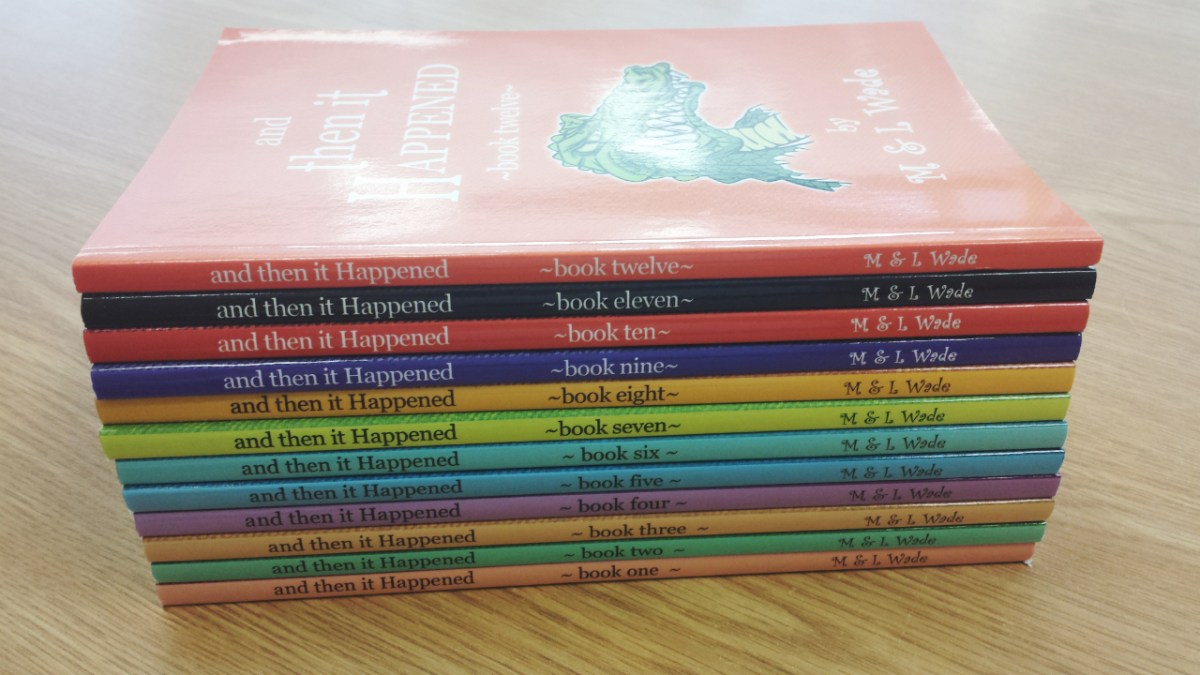
And then it happened… is a Canadian Adventure Series taking young readers by storm! The books are full of imaginative ploys that pull in our mischievous side and leave us chuckling heartily.

Author, Michael Wade, came in for a visit today, and what a lot of people don’t know, is that being a writer is Mr. Wade’s second career. What he did before is something you will find out if you invite him to your school, but let’s just say that it isn’t at all what you might expect. What a fantastic time our students had! The students could barely sit still as he talked about his writing and his life experiences, infusing laughter into every single narrated event. For those of you who have not seen Mr. Wade before, he is quite a bit different than what one might imagine a writer to be. And that is where his central message of “Anyone can be a writer” rings poignant. Mr. Wade showed our students that writers are not people who always dress a certain way or enjoy only reading all the time. They are not people who rarely leave their home and find being around other people exhausting. And even though a couple of these things might ring true for some writers, a lot of writers share just one thing above all else, in common: their meticulousness with reworking their writing to achieve the best possible draft. Mr. Wade stressed on the importance of the power of words. He showed students that words can be used in signs to affect people’s behaviour, that they can be used to teach and even communicate powerful ideas. He showed them that anybody really, is capable of doing this, as long as he/she works hard at the rewrite process.

Now, I have read a lot of Mr. Wade’s stories – they are brilliant! Each one is well-thought-out with a plot that trots along with purpose until the main event is revealed; the And then it happened portion. Students remain riveted in their seats and often, even their breathing is inaudible as they hold their breaths to avoid missing the climax of the story. Mr. Wade’s stories are not just a great way to engage a lot of our young boys who are not specifically drawn to reading, but also our young girls who thrive on the adventures of kids their own age. His books are chapter books, and best suited for grades 3-6, with room for those of you teachers or children with strong readers in grade 2. What I like best about Mr. Wade is that he makes his books accessible to his audience. He uses ordinary words to turn everyday events into moments sparking with excitement and humour. And children love both of these!

So, if you have a selection of Mr. Wade’s books on your shelf, begin a read-aloud with your class for starters, then, sit back and watch the rest of that selection fly off the shelf! You’ll make readers out of non-believers!

© booksnnooks.org All Rights Reserved