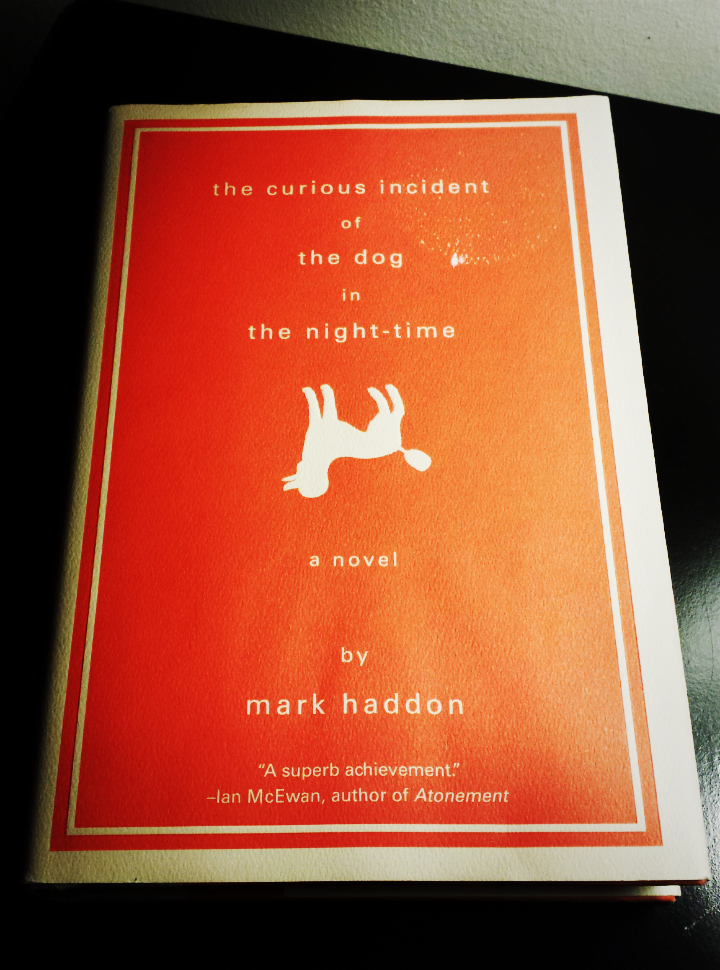
The Curious Incident of the Dog in the Night-time is a charmer!

For those of you who have first-hand experience with Autism Spectrum Disorder and Asperger Syndrome, this book will be a welcome read.

Mark Haddon delves into the mind of an individual with Asperger Syndrome, and this 15-year old displays all the signs of a Savant. The story is charming in that the Savant character of Christopher narrates with such bare-boned honesty and hilarity. Haddon cleverly uses the dual perspectives inherent in journal writing as well as writing a piece of non-fiction to convey the workings of Christopher’s mind. He does so with such clarity that the reader is able to appreciate how people with Asperger and Autism are different from, but also the same as what our society might view as the “norm”.

This book is also a touching tale of family relationships and the hardships that come with dealing with stress, developmental disabilities and mental illness. The characters are painted as real people with a plethora of flaws, but also endearing qualities that allow them to redeem themselves.

What really struck me about this book was Haddon’s ability to capture the concept of emotions in Christopher. Haddon gives physical and literal descriptions of Christopher’s emotional roller coaster ride. This is a sophisticated attempt by Haddon to help his audience understand that people with Autism and Asperger Syndrome are not completely bereft of feeling emotion, even if they are unable to express their emotions in socially-recognizable ways. I also appreciated that Haddon left the interpretation of the physical descriptions to his audience’s intellectual abilities, proving that he is not only a clever writer who is able to convey complex concepts, but one who trusts his readers’ ability to understand those concepts for themselves.

For teachers who are looking for ways to bring components of inclusivity into the classroom, this book is a well-written and easy-to-follow account of what it means to have a developmental disability like Asperger Syndrome. For many students who do not understand the nature of this Syndrome, this is as close to a science class as they can get while having a lot of fun. I would recommend this for junior classes (Grades 4-6) and structure the reading of this as a Book Talk to spark critical-thinking skills and allow for student-directed informal discussions.

Further, in Christopher’s mother, Haddon uses the opportunity to touch on what it means to live with a Mental Illness. While this should not be used as the complete manual for understanding mental illnesses, it is certainly a good place to begin a conversation around this fast-growing illness that is crushing many in our society. Teachers, this book will ignite a lot of very profound conversations in your classroom! If you do decide to use this in the classroom, please get in touch and I will help with ideas for how to implement the same.

Happy Reading!

©booksnnooks.org All Rights Reserved
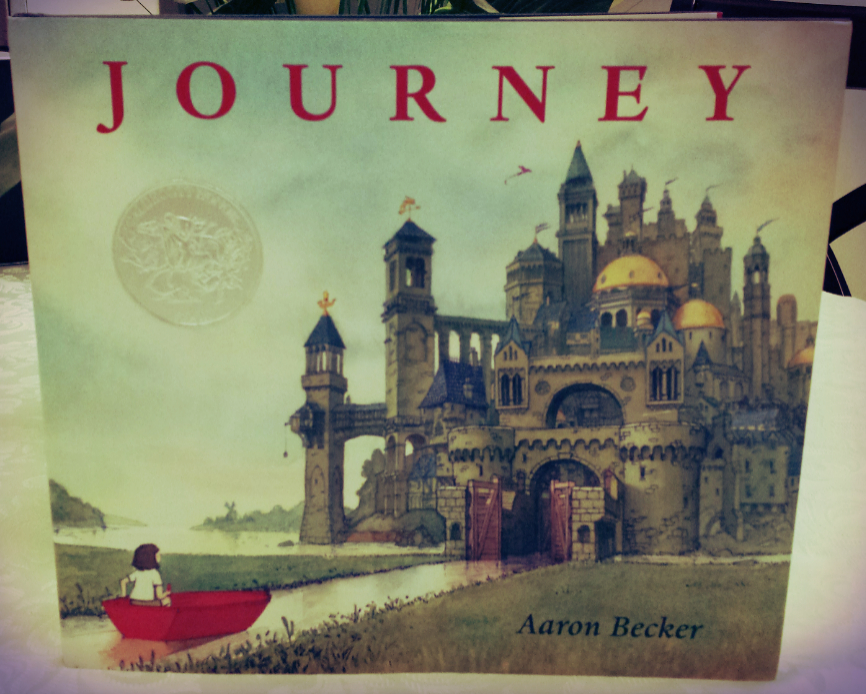
 

Aaron Becker’s Journey: A True Picture Book

I was first introduced to Aaron Becker’s Journey while doing a teaching placement not too long ago. What I did not realize at first was how versatile this book would become, on not only an age level, but a conceptual and skill-teaching level as well. I have since read it to students at the primary and junior levels, and each time, this book has not failed to create a splash. Becker relinquishes the use of words to tell a story completely in the hands of a child’s imagination. He trusts our young readers, as we must, to make their own meaning out of this heartfelt tale.

I will intentionally not discuss the plot of this book, as I do want to create any skew toward a certain interpretation when the book provides for many. Suffice to say, this book is about a young girl who begins a journey and along the way, discovers much about herself and life.

Juxtaposing grayscale pictures with bold singular colour in the beginning, and then opening wide a world blossoming with colour as the book progresses, Becker unfolds a world that students can envelope themselves in. With magical crayons and castles, boats and hot air balloons, rescue missions and the king’s guards, this book will allow your students to draw the important messages of friendship, selflessness, generosity, imagination and compassion. The sensitively-coloured and poignantly-drawn illustrations provide your students with the opportunity to lose themselves in another world where they can tell you a story as it plays out in the turning  pages. For once, you will not be the one narrating, they will, and they will take much pleasure in making their own tale. The thing I love most about this book is that it allows for a variety of different levels of interpretation that your students can attach themselves to. It prods their critical-thinking and problem-solving skills, it allows them to use language to describe pictures, it helps them with recall and attention to fine detail, and at its best, it provides them with the opportunity to acknowledge the value of a variety of perspectives. It is especially great for those of your students who just do not like reading; a great place to start to show them that books can be fun and instructive, without the burden of a multitude of words.

Teachers, this book is well worth the investment, and a true gem that will prove timeless for your students each year.


©booksnnooks.org All Rights Reserved

Sunny Side Up: A MUST-TEACH for Junior Grades

Dear Teachers,

Now, some of you might have begun to take heed of your students’ growing interest in graphic novels. I wrote a piece on August 3rd, 2016, here, detailing why graphic novels should be used in classroom teaching.

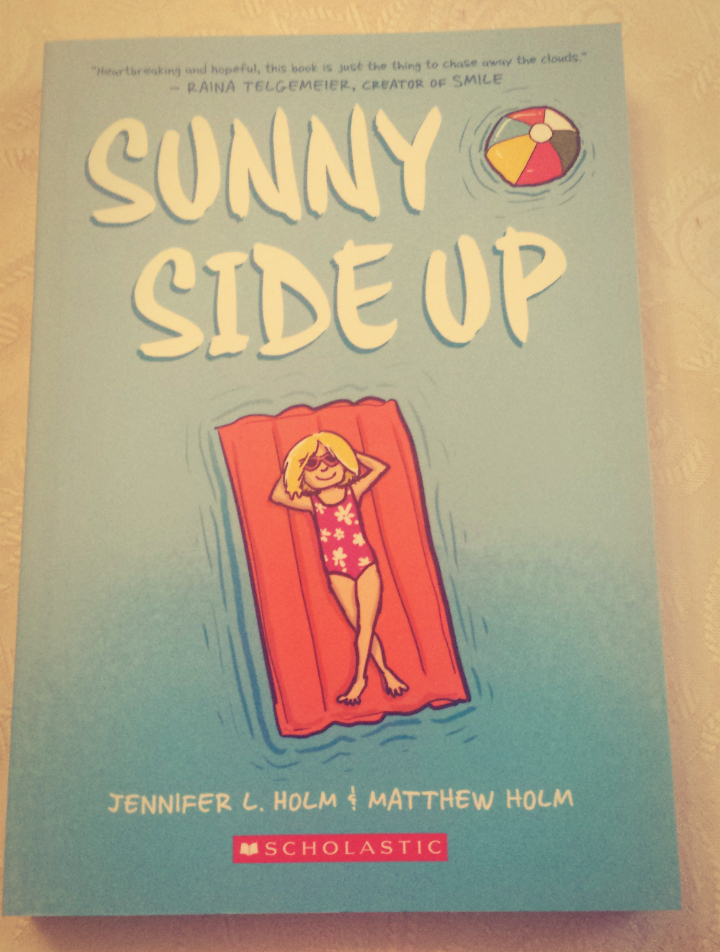
Today, I would like to talk about one of my favourite graphic novels for your junior grades: Sunny Side Up by Jennifer L. Holm & Matthew Holm. This very well-done novel tells the heartfelt tale of 10-year old Sunny Lewin, who goes to spend some of the summer of 1976 with her grandfather in Florida. Young Sunny has been sent away by her parents not as punishment, but as protection and distraction. Sunny’s grandpa lives in a retirement community and his idea of fun is not quite the same as young Sunny’s. Still, Sunny shows great maturity in doing her best to make the most of it. This graphic novel is told with great sensitivity from a child’s perspective. A child who is dealing with a lot in her life. With flashbacks to earlier points in time, little by little the readers become aware that Sunny has been sent to live with her grandfather while her parents help her older brother deal with his substance abuse. With thoughtfully constructed artwork, the Holm brother-and-sister duo showcase the sibling bond shared between Sunny and her older brother and how his substance abuse affects her life. Teachers, this is a great way to get your students talking about an issue that they might either have no awareness of, or be dealing with on a daily basis. Sunny’s resilience throughout the book is a poignant point that deserves discussion. How does a 10-year old learn to navigate these dark corners of life, and often by herself? The story builds on Sunny’s relationship with her grandfather, someone whom she loves very much, and her role at 10-years old as his keeper. Sunny tries to keep her grandfather in check about his smoking problem, and she plays along while he lies to her, until at one dramatic moment in the book, she loses her nerve. Here we see how this young child, with all of her 10 years, has roughed out life to arrive at a juncture where she will no longer tolerate being treated like a child, because as she proves, she has grown up enough to understand how reality works.

Teachers, your students can do various things with this graphic novel because it is so very versatile. You can dip quite easily into the arts and explore language through that lens, while at the same time fulfilling grade-specific expectations across different curriculum.

With a setting ground in the 1970s, your students can chart important moments in history from the 1970s and work their way forward, they can talk about ways in which the artist uses frames and panels and gutters and speech bubbles, and other graphic novel techniques to convey meaning, you can delve into psychology and the background of substance abuse and how it affects the person who is dealing with it, and his/her family. This book is teeming with things to teach your students, and the best part is, it comes in a form that doesn’t pose a hard sell! Your students will be so excited to jump right into the pages, you will only have to say when!

Teachers, if you are looking for resources to start a unit on this book, please visit my Teachers Pay Teachers account: Cross-Curricular Ideas when teaching Sunny Side Up


©booksnnooks.org All Rights Reserved

Back to School: First Day Jitters!

For a lot of us Canadians, school begins next week. And yes, teachers everywhere are hunkering down for 10 months of a lot of work. And it is no far-fetched notion that the first day gives a lot of us returning to school (staff and students alike) the jitters, which is why First Day Jitters by Julie Danneberg is a fantastic book to read to your students K-3.

The author and illustrator, Judy Love, are very clever with the big reveal at the end of the book where we find out that the person with the jitters about her first day at a new school is a grown woman, a full-fledged teacher. This book provides a platform for discussion about your students’ feelings around their first day of school. Questions such as “How do you feel about going to a new school?” “What are some ways that you could help someone who is new?” are a great place to start. These questions can seek to calm down students who are nervous about their first day of school, and help other students who are not, become more empathetic to their experiences. It further raises a lot of other themes such as facing your fears, being confident in yourself, welcoming new people. And it has the added advantage of being funny! Your students will love the illustrations, dear teachers, and they will find it hilarious that their teachers’ feelings are not so different from their own.

Parents, this would also be a great way for you to prepare your little one for his/her first day (back) at school. To know that his/her teachers experience a similar struggle will allow your child to be a bit less worried about what to expect on his/her first day.

I know I tout a lot of books as must-have when I review them, but I usually review books that I think are particularly helpful or poignant. It is no surprise then, that I declare this book an absolute MUST-HAVE!

Happy preparing for the first day of school, dear teachers, students and parents!


©booksnnooks.org All Rights Reserved
 

Picture Book Spotlight: The Name Jar

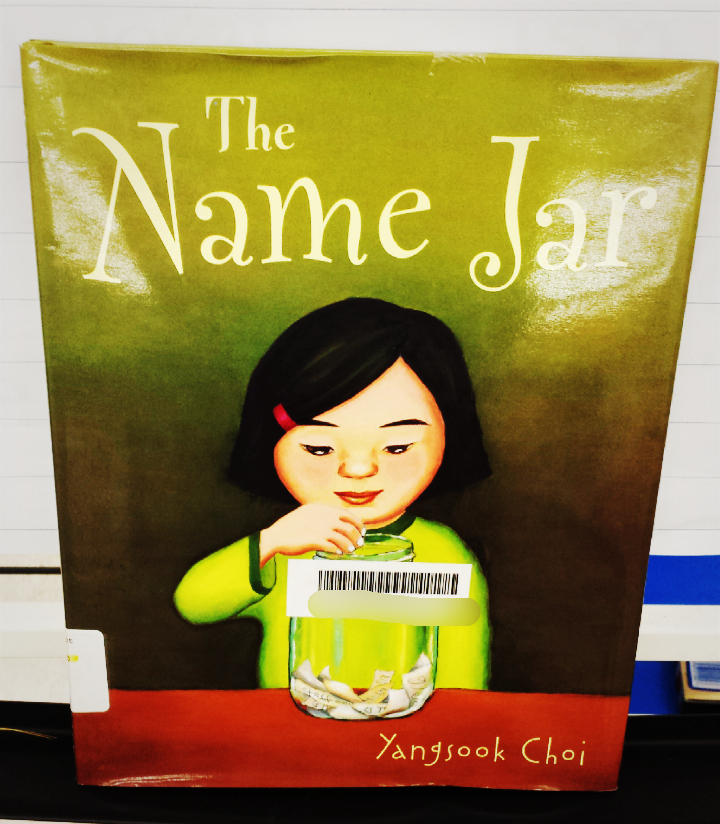
I should probably start this post by saying that this book is a certain gem. What a wonderful concept Yangsook Choi has weaved into the fantastic vehicle of a children’s book! This book opens with a young girl making a long journey that will change her life. Unhei comes from Korea to America, and to a new school. Before she gets to her new school, kids on her bus begin to tease her about her name. How will she possibly get through the first day of school?

Choi weaves a compassionate and thoughtful cast of characters in this book. The Korean tradition is briefly touched upon, and a young child’s love of her native land is showcased with generosity of character. Unhei goes to school and decides she will not reveal her name to her fellow classmates, saying that she hasn’t picked one yet. She does not want to risk being bullied again. Her classmates, in helpful form, put together a Name Jar for her, with suggestions for what name she could pick. All except Joey. Joey takes some extra time to get to know Unhei, and the story thumps along to its heart-warming end.

This book delves into cultural identity and what it means for people to uproot themselves from familiar cultures and assimilate into new ones. It especially focuses on the struggle young children face, and the bullying that oftentimes ensues. It measures the weight of a name and what it means for every individual. It is also a warm narrative of what happens when you can find your identity in the country you came from, and the one you now call home.

Teachers, set mostly in a school, this book provides the perfect backdrop from broaching the conversation around cultural identity, bullying, family, self-identity, and what it means to be who you are. This books is also versatile in his accessibility. It can be read aloud to students from grades 1 – 6.

As an Extension Activity, you can do a Name Jar Activity with your students where you invite them to ask parents and/or guardians about how they got their names. Each student can then write his/her name and the reason for being given that name on a piece of paper, and slip it into a jar at the start of class the next day. Circle Sharing Time can be utilized to give each child the opportunity to pick a piece of paper out of the jar and the teacher can read out the contents of the paper. Such an activity would allow a better awareness of the identities and lifestyles of their peers, for each student.It can also be a great opportunity to help sow the seeds of respect, if their leaves are not already flourishing.


©booksnnooks.org All Rights Reserved

Extending The Great Kapok Tree by Lynne Cherry

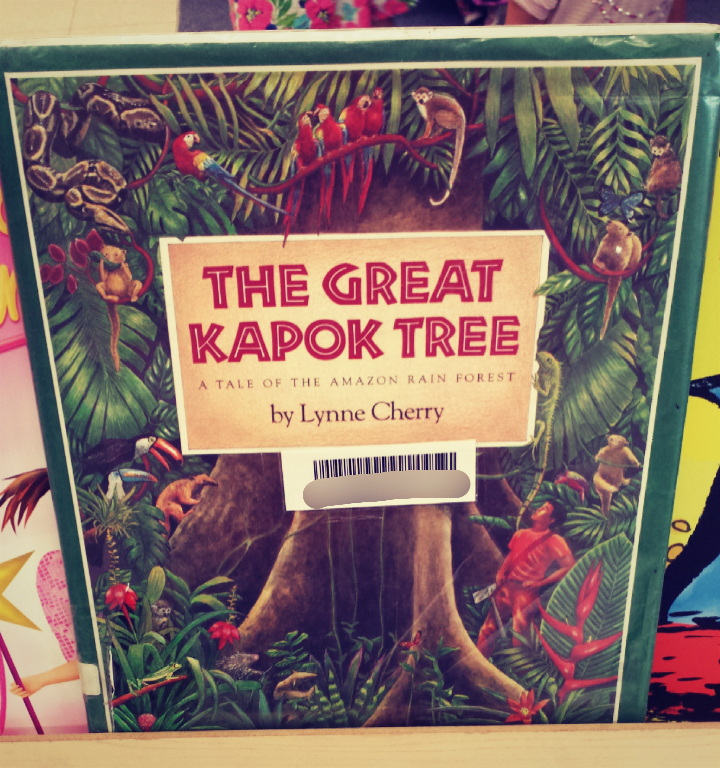
So, this time I have given it all away in my title. I will be writing about how The Great Kapok Tree by Lynne Cherry is a FABULOUS resource for teachers as a read-aloud, and how to extend this book in at least one (very fun) way.

I have read this book several times now, and have developed a pattern for when to ask what questions and how to get the most out of it. Cherry has masterfully crafted a book where young children are walked through the process of recognizing the importance of nature, step-by-step. The book opens with GORGEOUS illustrations depicting the Amazon Rain Forest. Teachers, you can easily do an introductory lesson on geography, and get your students to look up where the Amazon Rain Forest is located, and develop a sense of the setting in this book.

The reason I like this book so much is because it breaks down the benefits of nature and the importance of preserving it, page by page. Students can also widen their knowledge of flora and fauna through the pictures of birds, animals and plants that they see. You see toucans and sloths, monkeys and anteaters, jaguars and macaws, and your students will LOVE identifying and learning about these animals.

Various concepts you can touch on briefly or extend in detail are: camouflaging, the role of trees in providing oxygen, the importance of preserving trees for future generations, the food chain, animal habitats etc. This book is a FANTASTIC jumping platform for other concepts that you want to introduce to your class. Typically, I have read this to grades 2 and 3, but this can be stretched to the lower junior grades as well, 4 and 5.

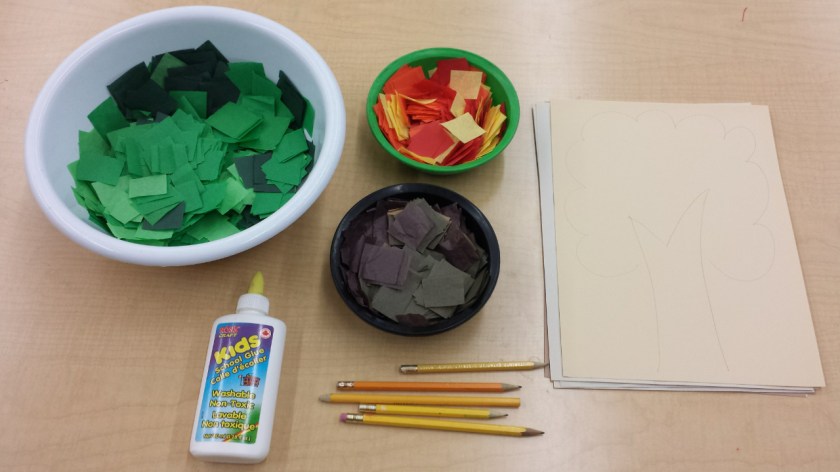
A great extension activity that we used to avail of the wonderful cross-curricular opportunities this book offers, was doing an art project with tissue paper. We used cut-up tissue paper in different tree-colours to make trees. I further encouraged my students to note down in one word or phrase, the importance of trees to emphasize the literacy component of their learning, and to help with summarizing skills.

The following materials were used:

wp-1468460188165.jpeg
For this project you will need tissue paper of yellow, red and orange, and different shades of green and brown, cut up into neat little squares, glue, pencils and blank sheets of paper with tree outlines drawn on.

I took a video to best illustrate the process, as below:

And here are some finished products. Such artists the kids are!

This slideshow requires JavaScript.

So what are your waiting for? Go on! Give this INCREDIBLE book a read aloud and then do this COOL activity. You will convert even the most inattentive and hard-to-manage student in your class, as (s)he sits down quietly and completes this (almost) therapeutic project. Happy art-ing! And, you’re welcome.

©booksnnooks.org All Rights Reserved
The Polacco Series: Gratitude

Some of you, and maybe a lot of teachers, might be familiar with the name Patricia Polacco. As educators, I think her books are essential components of our libraries. Polacco is a truly gifted author, who uses her life experiences and cultural heritage to write immensely touching books that, if you were being honest with yourself, border on a “tear-jerker”. Not only is this very talented author a moving writer, she illustrates her books with emotional sketches and tugging colours. I have done countless read-alouds with my students where we discuss her choice of colour for specific artwork, coming to the conclusion that like her words, her drawings are also bursting with meaning.

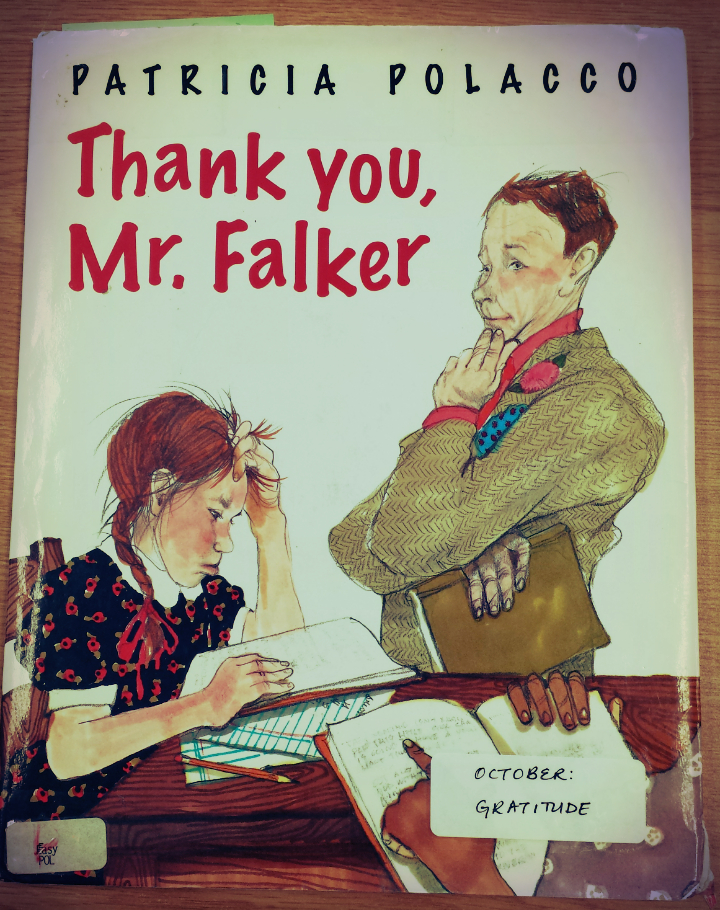
One of my favourite books from Polacco is the ADORED Thank you, Mr. Falker

This book weaves a heart-rending story of a young girl, Trisha, who faces challenges in her learning. She has dyslexia, and none of the teaching staff at her school are able to pick this up. This challenge makes our young protagonist a target for name-calling and bullying. And, unlike other children, when Trisha welcomes the chance to move to another city and start over at a new school, her hopes are met with despair, as she painfully navigates yet another school system stuffed with bullies and teaching staff who do not seem to care. Until of course she meets Mr. Falker. Mr. Falker, like a lot of teachers these days who get into teaching despite its hardships, is the teacher who makes a difference in this girl’s life. He takes a gamble on her and his gamble pays off, leading to a moment, brilliantly narrated with emotion, that changes Trisha’s life forever. Based on a true story, this narrative is packed with feel-goods.

Perfect for  grades 3-6, and abounding in themes of gratitude, compassion, bullying awareness, self-confidence issues in children, learning challenges and their effects, this book should really be read to every child out there. If nothing else, it lets children know that they are not alone in their struggles, and that they can rely on that one teacher to make a difference in their lives.


©booksnnooks.org All Rights Reserved
Making an Eternal Case for the Printed Word

The printed word, such as a hard copy book, is not a gem that is appreciated by all. My fellow book-lovers, you will understand when I talk about the absolute euphoria I feel when I open a new shipment from Chapters and Indigo to find beautiful hard copies of some of my favourite titles.

Now, commercial giants, and those looking to create new and inventive technology have, over the last decade or so, tried to reinvent the way we read. And, while I have no real dual to enact with the Kobo or the Kindle or the other what-have-yous out there, I feel it is completely necessary that I champion the printed word as the best invention ever. Yes, I will concede that e-books are able to make accessible reading in ways we could not have imagined before, such as what do I do when the lights go out and it’s dark and I still want to read? Cue headlines: Order is restored with My New Kobo Amidst a Frenzy of No Electricity! Or, Kindle Solves Space Issues: Every Title I Ever Wanted in One Compact Device! Now, while these reasons are all great to catapult stories into the 21st century, and let’s not forget, make millions of dollars, there is something to be said about a plain and simple paperback or hardcover that you house on a shelf. Never mind the intoxicating smell of a brand new book, or, for those of us more sentimental readers, the concreteness of the page to flip back and forth, the option to pen down your thoughts and ideas in the margins for someone else to find a few years from whence you last held the book. Never mind all of these. Imagine now if you will, a society where all is destroyed. Where human beings remain, but all the inventions and luxuries that make our lives easier are demolished because of war or natural disasters. Now, imagine that the only thing left behind is a large edifice stocked with some of the world’s best books. Such is a world created by Jeanne DuPrau in her City of Ember Series. Jeanne skillfully brings front and centre the problem of a world with no electricity or technological invention with which to learn or communicate. Instead, our merry band of characters finds a way to pull themselves out of a slump of human intellectual degradation by, in various ways, using the printed word. Be it letters passed between people, or journals left behind for the new blood to read, or just books about space and electricity, the printed word is an invention that helps to bring back a generation groping in the dark for evolution.

In his book, It’s a Book, Lane Smith illustrates with candour and cheekiness, the merits of a book. He juxtaposes the characteristics of a book with the mobile devices of our current lives, and through it, showcases the simple, yet everlasting quality of the printed word. Maybe Smith happened upon this idea in an attempt to leave behind a memoir of the printed word should it ever fall into an abyss of non-existence, but I don’t think such will ever be the case. Not merely because as human beings we are a sentimental lot, but because there is sheer practicality inherent in prolonging the lineage of hard copy books everywhere. Hard copy books are a way for generations to communicate with each other. They are a way to reach beyond the dead and continue with the evolution of our species in the absence of the inventors of scientific, literary and other advancements. They are a way to learn new things to further our own minds and a means of finding connections to each other regardless of barriers in race, intelligence, creed, or gender. They are doors to new worlds that we may never visit. They are sanity-keepers for those of us who enjoy unwinding with a good book. They are worlds to escape to when our lives get messy and too hard to live.

Working in the school system, I have seen and heard of initiatives to move toward a more Learning Commons way of education. And while marrying technology with books is great, some administrators have the wrong idea when they champion only laptops and iPads over books on shelves. Not all students have access to laptops and iPads beyond the school grounds, but every child can, and should, have access to a book from the school or public library.

The printed word will never go out of style, and so pushing toward a paperless world where we undervalue the contribution of the hard copy book is not the wisest course of action. Technology will advance, and maybe someday be completely obliterated because of a man-made or natural calamity. Maybe a universal blackout will wipe out all means for us to communicate with each other via our mobile devices. Either way, the printed word, hard copy books will remain permanent means of education and communication and wonder.


© booksnnooks.org All Rights Reserved
 

The Munsch on a Lesson in Selflessness

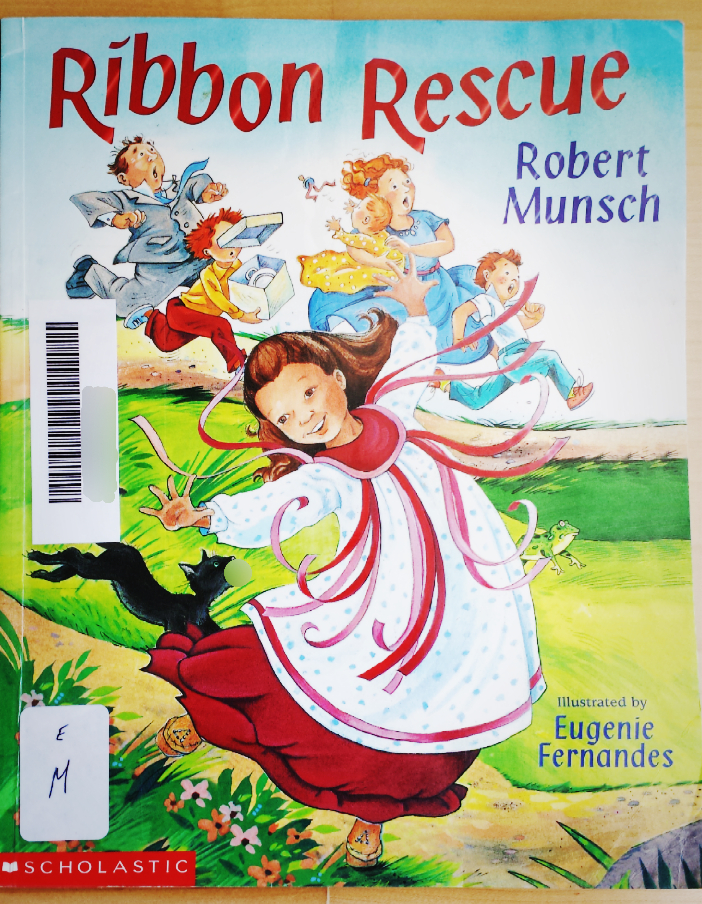
No really, who doesn’t love Robert Munsch? Robert Munsch is one of those timeless Canadian authors who makes me proud to be Canadian. His books are always based on real-life people, and every now and then, amidst the hilarity and the true-to-form made-up sounds, there is a moral. Cue entry of this book, easily one of my favourites from the Munsch.

Ribbon Rescue by Robert Munsch is one of those books that leads readers on a journey to discover their inner selflessness. Based on a character who is of Indigenous origin, this book really gives voice to the culture of our Indigenous brothers and sisters in a light-hearted and compassionate way. It is true, a lot of books written by, or based on, Indigenous characters tend to be heavier, with sadder, and often horrific, undertones. While that entire breadth of literature is essential for our Canadian Literary Canon, to ingrain in our minds the requisite components of our Canadian history, Robert Munsch goes off on a lighter tangent to showcase the grace and kindness of this beautiful culture.

Our main character, Jillian, is a young girl who dons a traditional Ribbon Dress and throughout the story, she selflessly offers ribbons to different people who cross her path and seem to need them. Eventually, she is left with nothing and this puts her at a disadvantage, but is her selflessness enough to overcome that disadvantage?

Munsch weaves a compassionate story-line that allows parents and teachers alike to pose questions to young learners about what Jillian is doing. Teachers, your young students might describe Jillian as “kind”, and “nice”, and “sweet”, but herein lies a fantastic opportunity to teach them how to exercise the kinder and selfless side of their everyday selves. This picture book is ideal for a bedtime story or read-aloud with children aged 4-8, and offers plenty of invaluable teachable moments. So pick up a copy of Ribbon Rescue today, and like me, you’ll discover how much young readers (and YOU) will love it!


© booksnnooks.org All Rights Reserved
Picture Book Spotlight: Educating Our Children about Homelessness

Homelessness is a growing concern in our society in North America. As Canadians we sign off on millions of dollars in relief aid to the needy in other countries, and as we should – because we are a generous lot and generosity helps make everyone a little richer, but what of the homeless in our own country? The poverty-stricken men and women, or worse still, children? No, to this problem we turn a blind eye, a deaf ear, we walk quicker. And I think that stems from a culture that is lacking in education around this concept of homelessness. What is homelessness? What does it look like? Whom does it affect? These are questions we need to ask ourselves before we as adults make quick judgments about homeless people we see, and then pass these judgments off to our children. Children feed off the exemplars in their lives. They practice what they see, not what is preached.

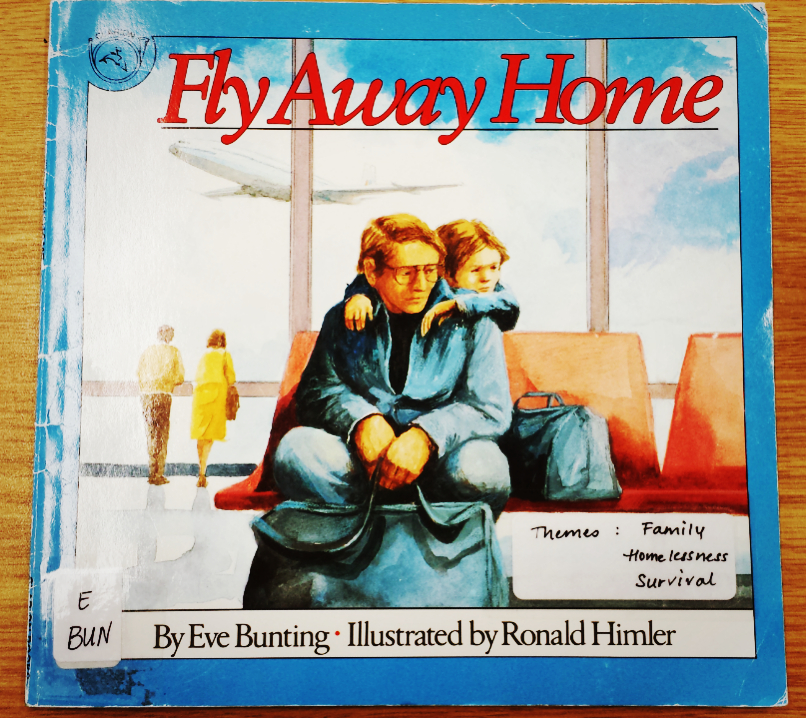
So, when I came across Fly Away Home by Eve Bunting, two things happened. For one, it broke my heart, and then, it provided me with an Aha! moment. I could use this book to teach my young students a little about what homelessness looks like! And so, I did a Read-Aloud using this book with students in Grades 1-3.

Told from the perspective of a 5 year-old boy who is homeless and lives in an airport with his father, this story is delivered with compassion and sensitivity. The facts are laid out for us to see. The day-to-day lives of the father and son, as they struggle to outwit airport security by blending into the travelling consortiums that hustle and bustle through the airport, are shown to us. The little boy learns a lot of wisdom at a young age, and this book nudges in a couple of really good metaphors to help understand the mindset of a homeless child better. Teachers, you can pause at various moments in the story and ask your students why the father and son are doing the things they are, or what certain things mean. Their answers will surprise you, and in turn you will be able to surprise them with yours. Among other themes that Bunting weaves into this delicate tale, are those of family and survival. The things you do to stay together and stay alive and well. There are sad moments to this story too, but there are moments of hope and positivity, where students can learn that people can still shine bright their candles of hope in the bleakest of situations. When you have finished reading this with your students, you will find they adorn a new-found appreciation for the homeless and their difficult lives. And in doing so, you will help to make them more sensitive to the aches of society around them.


©booksnnooks.org All Rights Reserved