Atwood’s The Handmaid’s Tale

Margaret Atwood is my favourite author. I have yet to come across another writer capable of dethroning her genius. The Handmaid’s Tale has always been on my to-read shelf, but life has constantly gotten in the way of this endeavour. When AMC debuted its series with the same name, based on the book, I knew I had to take it off my to-read shelf and start reading it. I want to watch the show (it has Alexis Bledel in it!) and in my chronology of life events, watching shows are always preceded by reading books.

This book is unlike Atwood’s later work, The Blind Assassin being one of her masterpieces. It infuses strong elements of dystopian fiction that paint a very bleak and often terrifying setting for the characters. A setting that is geographically the United States of America, specifically, the State of Maine, this book follows Offred as she tries to make sense of her present circumstances.

The writing style wasn’t to my taste in this one. I would use the word “excessive” to describe it without being too unkind. The phrases are often clichéd, and seem as though they are struggling to fit into a paragraph but cannot because their edges cause friction, thus making them stand out. Having said this, I am going to go ahead and contradict myself at least in part by noting that the language is very graphic and successfully showcases the chaos that ensues in a dystopia.

Atwood is one of those intelligent authors who despite being so brilliant, respects her audience’s ability to possess a similar intelligence, and in doing so leaves room for us to draw connections and reach expected conclusions necessary for the flow of her narrative. This is one of her earliest works that I have read, and in it I see this trust of her audience just starting to develop. Unlike a lot of authors, Atwood does not patronize her readers by explaining everything.

In the character of Offred I found a young woman who seems confused and unsure of how to tread forward. Perhaps Atwood structures her novel around this lack of certainty because by its very nature a dystopia generates chaos, even if it tries to maintain structure. Offred’s character is layered with weaknesses and perhaps she needs to be weak in order to remain a puppet in the dictatorship she finds herself. She presents with actions that lead the reader to pin hopes on her ability to be a dissenter and overcome the dystopia, but Atwood does not make it clear that Offred will have that opportunity.

In the character of Moira, Atwood starts off with a brazen woman who some readers may argue carries the entire weight of redemption, but Atwood’s narratives are saddled with the shadow of reality. This is not a fairy tale.

Women’s rights is a major theme as is the bigger question around what lengths are excusable when trying to maintain the propagation of mankind. Power is indubitably analyzed from several angles and characters’ actions and emotions are dissected to reveal much about human nature. This book on the whole takes a magnifying lens to the relationship between fear and power.

The ending of this dystopian tale feels hokey, the historical notes at the end don’t do much for the narrative as a whole, and I suspect they were an attempt by Atwood to add some closure to her tale after leaving us on a dissatisfying cliffhanger. To that end, the ending left me feeling cheated. Atwood creates this dystopian society with such complexity, constructing details to support various levels of function, and the ending felt so “loose” that the entire novel seems to fray a bit because of it.

Still, this novel is not completely without merit. Atwood layers incredible detail which could only stem from deep research, and dexterously conveys the workings and horrors of a dystopian society. I also enjoyed the attention to detail in the references Atwood makes to other cultural groups and the different events that shaped society over the 20th century.

I remain convinced of Atwood’s genius but The Handmaid’s Tale left me disappointed and wanting. While the writing style fell short of perfection and the ending could have been stronger, I would definitely recommend this book. It may be a biased recommendation because I love Atwood’s work and who she is as a person, but this book does much to open our eyes to a dystopian culture so horrifying but at the same time so incredibly real. It is a staunch lesson in what happens when fanatics are given power by ordinary men and women who are frozen by fear.

As I read this book written in 1985, I was mortified by the connections I kept making to our present-day dystopia and the sheer anarchy that ensues when thousands stand idle as a brute force is handed unmitigated power. Atwood has an untouchable talent for asking some of the hardest questions and making you overturn your previous perceptions. Not as brilliant as her later work, but still worth the read.

©booksnnooks.org All Rights Reserved
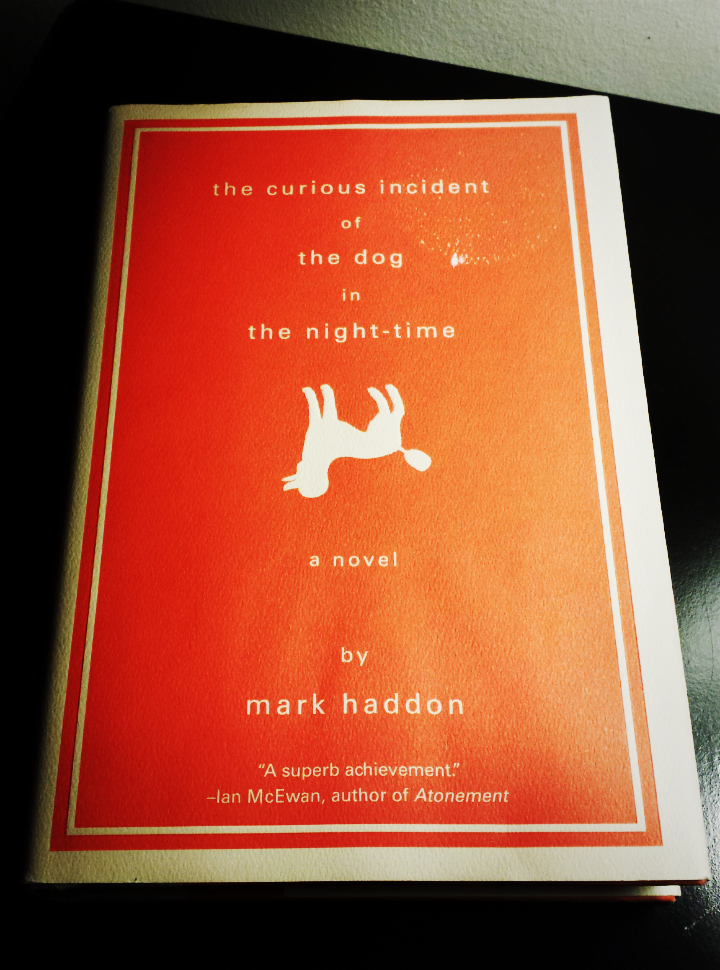
 

The Curious Incident of the Dog in the Night-time is a charmer!

For those of you who have first-hand experience with Autism Spectrum Disorder and Asperger Syndrome, this book will be a welcome read.

Mark Haddon delves into the mind of an individual with Asperger Syndrome, and this 15-year old displays all the signs of a Savant. The story is charming in that the Savant character of Christopher narrates with such bare-boned honesty and hilarity. Haddon cleverly uses the dual perspectives inherent in journal writing as well as writing a piece of non-fiction to convey the workings of Christopher’s mind. He does so with such clarity that the reader is able to appreciate how people with Asperger and Autism are different from, but also the same as what our society might view as the “norm”.

This book is also a touching tale of family relationships and the hardships that come with dealing with stress, developmental disabilities and mental illness. The characters are painted as real people with a plethora of flaws, but also endearing qualities that allow them to redeem themselves.

What really struck me about this book was Haddon’s ability to capture the concept of emotions in Christopher. Haddon gives physical and literal descriptions of Christopher’s emotional roller coaster ride. This is a sophisticated attempt by Haddon to help his audience understand that people with Autism and Asperger Syndrome are not completely bereft of feeling emotion, even if they are unable to express their emotions in socially-recognizable ways. I also appreciated that Haddon left the interpretation of the physical descriptions to his audience’s intellectual abilities, proving that he is not only a clever writer who is able to convey complex concepts, but one who trusts his readers’ ability to understand those concepts for themselves.

For teachers who are looking for ways to bring components of inclusivity into the classroom, this book is a well-written and easy-to-follow account of what it means to have a developmental disability like Asperger Syndrome. For many students who do not understand the nature of this Syndrome, this is as close to a science class as they can get while having a lot of fun. I would recommend this for junior classes (Grades 4-6) and structure the reading of this as a Book Talk to spark critical-thinking skills and allow for student-directed informal discussions.

Further, in Christopher’s mother, Haddon uses the opportunity to touch on what it means to live with a Mental Illness. While this should not be used as the complete manual for understanding mental illnesses, it is certainly a good place to begin a conversation around this fast-growing illness that is crushing many in our society. Teachers, this book will ignite a lot of very profound conversations in your classroom! If you do decide to use this in the classroom, please get in touch and I will help with ideas for how to implement the same.

Happy Reading!

©booksnnooks.org All Rights Reserved


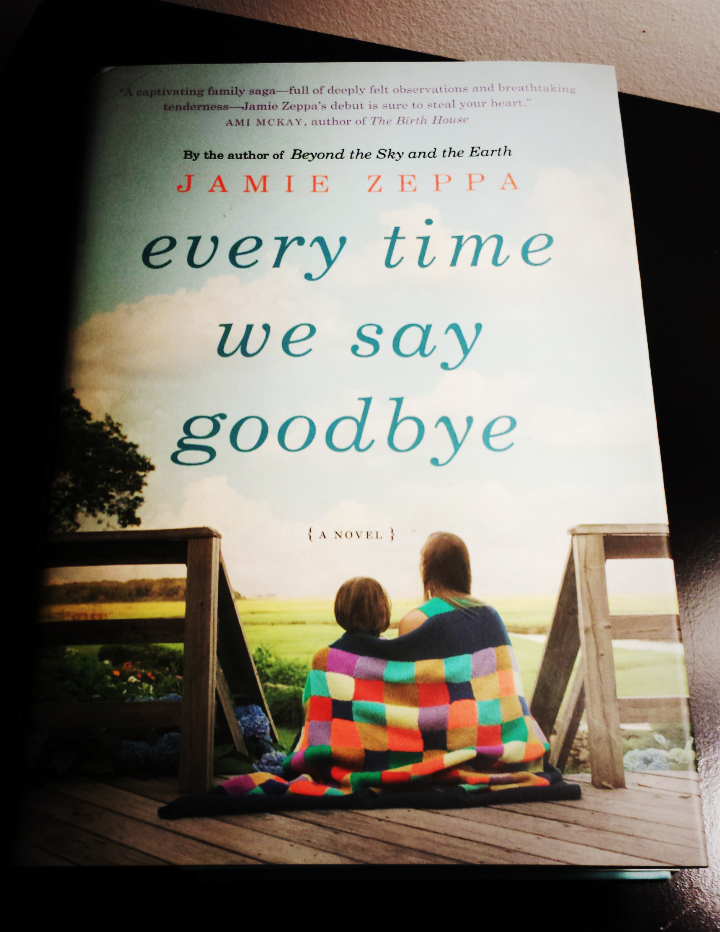
Jamie Zeppa Delights!

When I came across Jamie Zeppa’s novel, Every Time We Say Goodbye, I was intrigued. The story held promise, a tale of family, of relationships broken and lost, so I took a chance. Boy, did it delight!

A Canadian author, Zeppa weaves a narrative that unveils much depth to all the characters presented. Relationships are tested and the concept of love is fractured into an array of colours. Maternal love is poised in a precarious position, choices reveal character definitions and time spins everyone into different directions.

There are many things I enjoyed about this book, prime being the writing style. Zeppa has a flair for the poetic. She creates sentences with such nimble agility that the reader has no choice but to allow him/herself to be swept through this story. I breezed through this 342-pager in a mere 2 days and not because it was an easy read. Saying so might diminish the value and depth of the content, but it was a read that was not difficult to navigate. It was seamless, it flowed beautifully. It was heavy in emotional content, and at times I found myself having to tear away from my attachment to the characters by taking a break from the book. Zeppa creates a world where the reader, although an audience looking into the lives of the many characters, can feel a part of their lives.

The characters are well-considered and painted in rich colours, each manifesting human qualities that make them seem real. I couldn’t help but wonder if this story takes from some threads of Zeppa’s own life because she tells it with such authority on the subject of family, relationships, loss and love. This book is told from the perspective of four specific characters: Grace, Dawn, Laura and Dean. My heart was particularly wrenched by the character of Grace, a character rife with her own foibles and strengths. Grace is presented as a stoic character, the ‘acceptor’ of all action that takes place around her. At some times, the reader might even shrug Grace off as boneless and feel frustrated with her choices, but Zeppa leaves room for redemption as the ultimate test is presented to Grace’s character. The characters of Dean and Laura in many cases act as fillers for the narrative. However, Zeppa has taken much care to develop these characters and layer their lives with action, belief, thought and intense feelings. Dawn’s character is quite richly entrusted with different tiers.

And if one were to think that authors are good at writing from the perspective of just one or two age groups or a specific gender, Zeppa blows that assumption to smithereens. She tells this gripping story from the perspective of a little girl, a teenage boy, a middle-aged woman and the elderly. Every character, no matter how much ‘line-time’ he/she is allotted, is developed into a complete person. Adding quirks and packing in detail in necessary places and sometimes unexpected but welcome ones, Zeppa hooks you into this world of a family struggling to connect on so many different levels.

Zeppa touches on a variety of themes with a few as her front-runners. She deals with the theme of Mental Illness quite well. Dexterously and with much sensitivity, she paints the experience of depression for the reader, instead of throwing out a label and colouring the reader’s perspective from the very beginning. In doing so, she brings much-needed awareness to depression and elicits an empathy and understanding for those who suffer from the same. As well, the theme of Motherhood really jumps off the pages in this book because Zeppa does such a phenomenal job of portraying it from so many different angles. With Mother’s Day just around the corner, mothers and their adult children everywhere will appreciate the messages of maternal bonds, sacrifice and most importantly love that Zeppa has to offer.

I would recommend this if you’re into the themes of mental illness, family, maternal bonds, relationship struggles, loss, sacrifice and love, just the everyday messiness of living. A poetic read that keeps you hooked around the suspense-filled turns until the unveiling at the end, this book is well worth the time. If you happen to read Every Time We Say Goodbye, be sure to drop a line letting me know what you thought of the same!

Happy Mother’s Day to all you lovely moms out there!

©booksnnooks.org All Rights Reserved

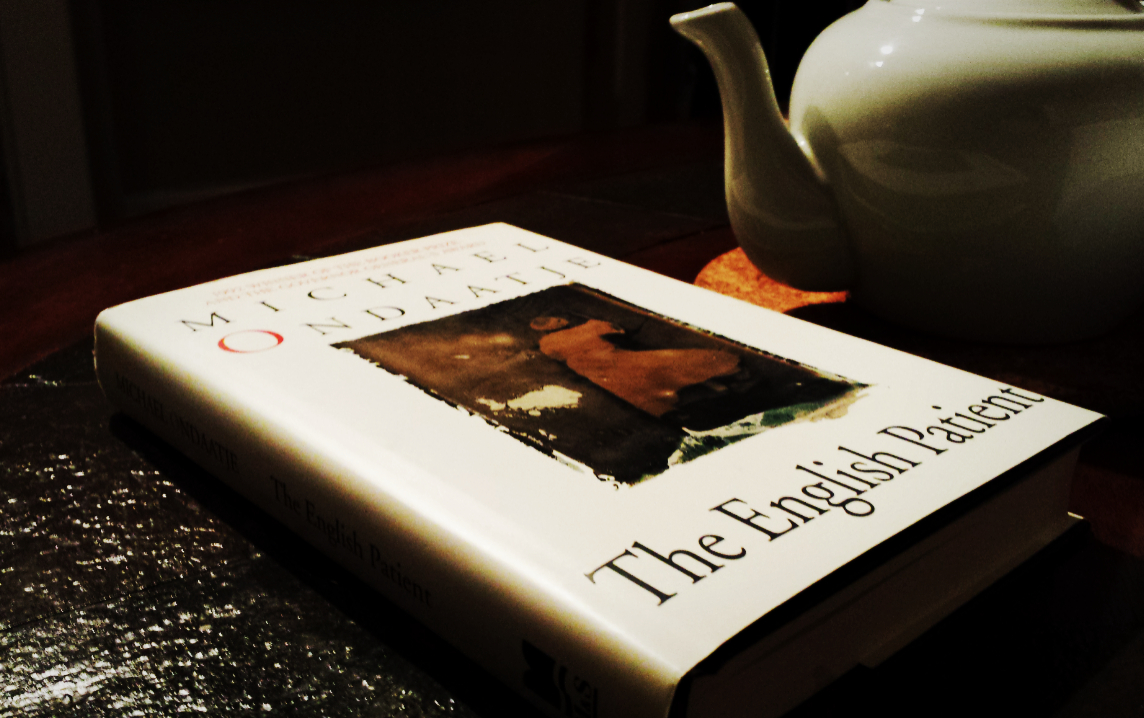
Michael Ondaatje’s The English Patient

Rating: 3.5/5.0

The English Patient was not specifically one of those book that I planned to read and finally got around to. I just happened to come upon it on one of my second-hand bookstore adventures. This one is a cute little hole in the wall along Kingston Road at the Beaches in Toronto called The Great Escape Book Store. Canadian author Michael Ondaatje was a familiar enough name, but the book I had not heard of before. So, I paid the requisite “got it for a steal!” price and tucked it away on my shelf for a later read. When I finally got around to it, I was mildly pleased that I had picked it up.

This book  opens in a villa in Italy during the final legs of World War II. Our leading lady is Hana, a Canadian nurse, our leading man it would seem, her English patient. Hana spends her days tending to her patient who is severely burned and confined to a bed. A quarter of the way through this book, Hana is joined by a friend of her father’s, David Caravaggio, a Canadian thief, and about a half of the way into the book, a British sapper for the Allied Forces, Kip (Kirpal Singh). The foursome make a very odd troupe of companions living day-to-day in a mine-infested village.

Ondaatje begins with poetic nuances that captivate the poet within you. He makes fluid the most unnatural comparisons, making you conceded to the validity of his comparisons. His words flow like an elixir of beauty in our brain chemicals. The first third of the book follows through with patchworks of history and fiction loosely following each other, as if chronology and order are the furthest from his mind, his mind caught in a rhapsody of poetic euphoria, of sensual imagery so seductive you are moved to your baser desires for beauty and wonder. There is the dry second third that you will find yourself braving because of an expectation that the final third will be a delivery of enormous mental engagement, and you will not be disappointed. Ondaatje holds his reader captive and then releases the flood of the story, the climax and the suspense, the enigma that is the Enlgish patient and the periphery that are Caravaggio, Hana and Kip.

Being a novice reader of Ondaatje, I was impressed with his level of detail around the intricacies of making and disarming bombs and the life of a Sapper in World War II (a sapper being a mechanical engineer that detected and disarmed bombs, something new I learned as well) among other things. His attention to detail and his ability to weave poetry into his metaphors are indeed praise-worthy. I particularly enjoyed how he appealed to all of my senses in the setup of his metaphors. The final third of the book really opens up to reveal a magnetic storyline that the first two halves have been building towards. At this point the English patient is the enigma that the reader discovers to be more than meets the eye. Hana and Kip revel in their own story as if the rest of the world were suspended in the balance. Caravaggio is the addition to the tale, as if an afterthought necessary to only move along the action so it does not seem too clichéd when Hana or Kip do it.

However, it is not all praise for The English Patient, because the organization of events wracks up a little confusion in its attempt to offer the reader the opportunity to feel intrigued. The second third of the book, as I called “dry” before, made the work wanting in the consistency of aspired greatness. It was a struggle to forge through this section, but as with all my reading, I am committed to finish once I begin, and again with this one I did. Despite winning the Booker Prize and the Governor General’s Award in 1992, I couldn’t find myself agreeing with the respective panels that came to these award decisions. Nevertheless, The English Patient was still a worthwhile read.

©booksnnooks.org All Rights Reserved


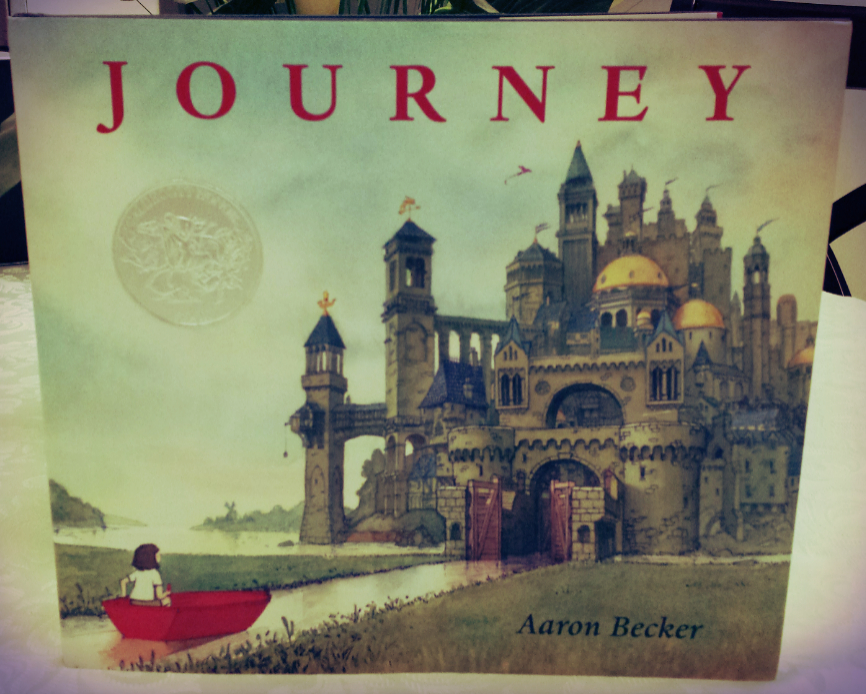
Aaron Becker’s Journey: A True Picture Book

I was first introduced to Aaron Becker’s Journey while doing a teaching placement not too long ago. What I did not realize at first was how versatile this book would become, on not only an age level, but a conceptual and skill-teaching level as well. I have since read it to students at the primary and junior levels, and each time, this book has not failed to create a splash. Becker relinquishes the use of words to tell a story completely in the hands of a child’s imagination. He trusts our young readers, as we must, to make their own meaning out of this heartfelt tale.

I will intentionally not discuss the plot of this book, as I do want to create any skew toward a certain interpretation when the book provides for many. Suffice to say, this book is about a young girl who begins a journey and along the way, discovers much about herself and life.

Juxtaposing grayscale pictures with bold singular colour in the beginning, and then opening wide a world blossoming with colour as the book progresses, Becker unfolds a world that students can envelope themselves in. With magical crayons and castles, boats and hot air balloons, rescue missions and the king’s guards, this book will allow your students to draw the important messages of friendship, selflessness, generosity, imagination and compassion. The sensitively-coloured and poignantly-drawn illustrations provide your students with the opportunity to lose themselves in another world where they can tell you a story as it plays out in the turning  pages. For once, you will not be the one narrating, they will, and they will take much pleasure in making their own tale. The thing I love most about this book is that it allows for a variety of different levels of interpretation that your students can attach themselves to. It prods their critical-thinking and problem-solving skills, it allows them to use language to describe pictures, it helps them with recall and attention to fine detail, and at its best, it provides them with the opportunity to acknowledge the value of a variety of perspectives. It is especially great for those of your students who just do not like reading; a great place to start to show them that books can be fun and instructive, without the burden of a multitude of words.

Teachers, this book is well worth the investment, and a true gem that will prove timeless for your students each year.


©booksnnooks.org All Rights Reserved
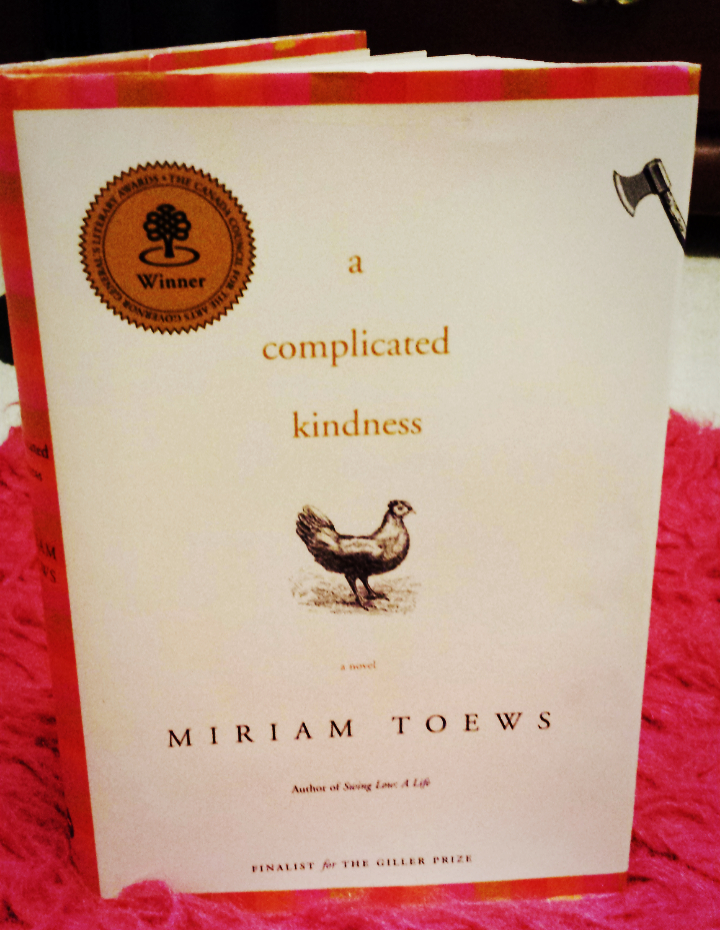
Miriam Teows’ A Complicated Kindness

Rating: 4.7/5.0

Earlier this Spring I began reading A Complicated Kindness by renowned Canadian author, Miriam Teows. This book, at first, was a dry read; I could not commit. Still, I know the value of seeing a book to the end, and so I held on. About 110 pages in, that payoff began. I started to feel a kinship with the main character, Nomi Nickel, an understanding that often life can just be a straight line to nowhere when you feel trapped and devoid of options.

Set in the Mennonite town of East Village in Ontario, on the border with the United States, Teows paints the picture of a bleak and exhausted town with not much to go on but the constant threat of eternal damnation. Nomi is a rebellious and pondering teenager on the brink of graduating high school, if she can just get a final paper written to the satisfaction of her teacher. Plagued by the abandonment by her mother and older sister, and the responsibility of caring for her father, Nomi wanders around town playing out the internal dialogue of her mind. With several short and clipped sentences, Teows admits us into the corners of Nomi’s mind where her pain and curiosity, her harsh realizations and kinder self reside. Nomi is not a character prone to over-exaggeration, and truly there is nothing about this book that reverts to the dramatic. Teows presents the reader with the bare bones of life in a Mennonite village, and one could elucidate that this is a book taken from  a few chapters of Teows’ own life growing up in a Mennonite town.

Nomi stumbles aimlessly through her days in her quiet village where people are brimming with frustration and anxiety at being denied and limited in their living. We see the slow disintegration of her family, juxtaposed with her developing self identity despite the losses that accumulate in her life.

Teows is very sensitive in her construction of Nomi’s thoughts, concerns, fears and valuables in life. Nomi is just a regular girl in need of a family she can rely on, and with whom she can share her love. This girl may be perceived as devoid of emotion and unable to get her act together, but the love within her comes through in her defense of her best friend, Lids, in her compassion toward the little neighbour girl whose little whims she is forever indulging in just to make happy, in her ability to see her mother and sister as still parts of her and forgive them for abandoning her, and in her unconditional, unwavering and soft love for her father. Her strength peeks through in her ability to let go of the wrongs heaved at her by various people in the town, and despite the tumult inside her, to hold steady and still find a way to take care of herself. This is not just a coming-of-age story as it has been hailed since it made its debut in 2004, but this story settles its heels into what it means to be human. It explores our desires and fears, our weaknesses and strengths, the things that can break us and the love that helps us stand up again. It is a compassionate portrait of a young girl brave enough to build a hope out of an inferno of lost innocence.

And again, like a lot of books I review, I would say this is one for your reading line-up, because truly, Miriam Teows is brilliant.


©booksnnooks.org All Rights Reserved
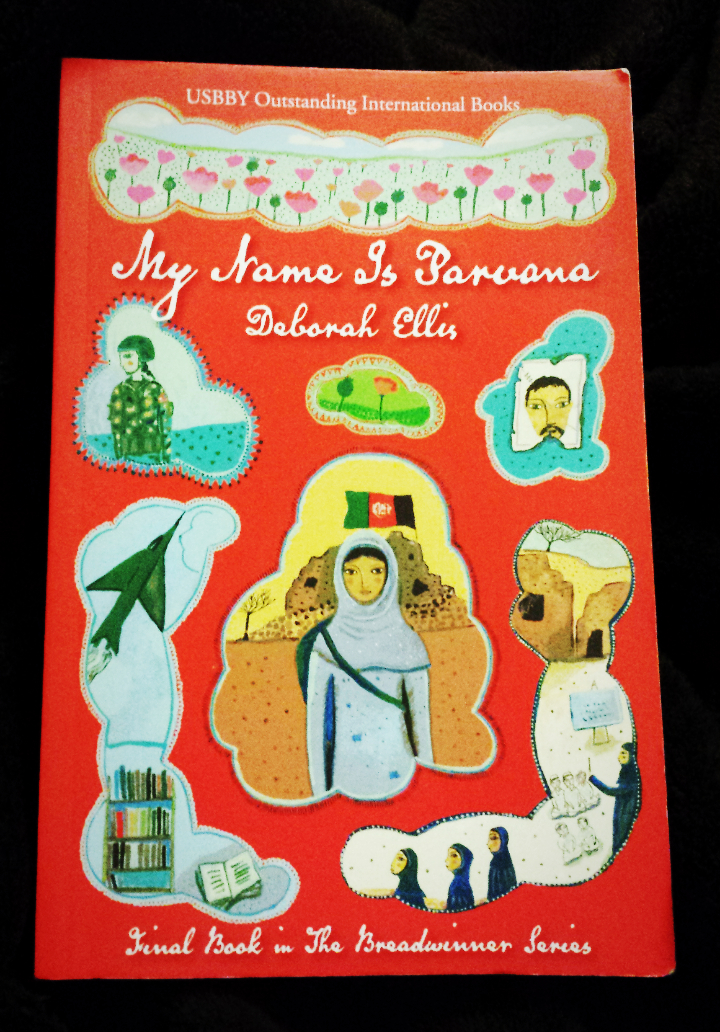
The Deborah Ellis Installments (Part II): My Name is Parvana

As promised, here is Book#4 in the Breadwinner Series, My Name is Parvana by Deborah Ellis.

In this last book, we meet an older Parvana. She is 15-years old now, and has been through more heartbreaking tragedy. When the story opens, Parvana is in prison. She has been captured by American soldiers, while wandering through a bombed-out school site. As we follow Parvana through her ordeal in prison, the story jumps back into the past to fill in the gaps with what has transpired since we last met her. Ellis does a fantastic job of superimposing the past on the present. Parvana is no longer the feisty young girl with a quick tongue. No, now she holds her tongue to create a deafening silence when questioned by the American soldiers. Over and over and over and over again. Yes, Parvana has matured. And logically so, because she has lost more, and made more difficult and selfless choices. Her innocence is replaced with shrewdness and air-tight resolve. If she was strong when we were first introduced to her, she possess mammoth strength now. If, as readers, we admired her courage and smarts in the beginning, we will love her for these now. Ellis reaches into the soul of Parvana’s character and brings her to life. She makes her feel like a real person. And therein lies a huge portion of Ellis’ talent; her ability to make her characters come to life. It is no wonder we feel a closeness to them. Ellis does a great justice connecting her audience to children around the world who have no voice to fight for themselves. In this series, and finally, in this book, Ellis gives them all a voice. Especially through Parvana’s silence while she is in prison, we see the grace and bravery with which this young girl operates.

Teachers, your students can compare Parvana’s life to their own. They can make connections and then draw contrasts. They also get to understand a bit about how things work in military prisons in areas of war. This book can even be done with older grades (intermediates – 7 & 8) as a stand-alone with a thorough backstory provided. Students can jump into the psychology behind scare tactics and how prisoners are treated in war-torn countries, even if they are innocent, and even if they are children. You can use this as an opportunity to talk about bigger concepts in their basic form, such as different types of governments and their structures, democracy, justice and injustice, the effects of perception on belief. Your students can further see hope and sacrifice at one of their bests through the many sacrifices made by different characters, and the hope kept alive by others.

Teachers, you can also talk about the Canadian Women for Women in Afghanistan Organization and their not-for-profit endeavours to improve the lives of women in war-ridden countries such as Afghanistan. Deborah Ellis is a true genius at her work, and she has the passion to make her work endearing and relatable.

So, even if you don’t actually end up teaching this last book, you yourself will find it a worthwhile read. To say it is an eyeopener would be too much of a cliché.


©booksnnooks.org All Rights Reserved
 

Back to School: First Day Jitters!

For a lot of us Canadians, school begins next week. And yes, teachers everywhere are hunkering down for 10 months of a lot of work. And it is no far-fetched notion that the first day gives a lot of us returning to school (staff and students alike) the jitters, which is why First Day Jitters by Julie Danneberg is a fantastic book to read to your students K-3.

The author and illustrator, Judy Love, are very clever with the big reveal at the end of the book where we find out that the person with the jitters about her first day at a new school is a grown woman, a full-fledged teacher. This book provides a platform for discussion about your students’ feelings around their first day of school. Questions such as “How do you feel about going to a new school?” “What are some ways that you could help someone who is new?” are a great place to start. These questions can seek to calm down students who are nervous about their first day of school, and help other students who are not, become more empathetic to their experiences. It further raises a lot of other themes such as facing your fears, being confident in yourself, welcoming new people. And it has the added advantage of being funny! Your students will love the illustrations, dear teachers, and they will find it hilarious that their teachers’ feelings are not so different from their own.

Parents, this would also be a great way for you to prepare your little one for his/her first day (back) at school. To know that his/her teachers experience a similar struggle will allow your child to be a bit less worried about what to expect on his/her first day.

I know I tout a lot of books as must-have when I review them, but I usually review books that I think are particularly helpful or poignant. It is no surprise then, that I declare this book an absolute MUST-HAVE!

Happy preparing for the first day of school, dear teachers, students and parents!


©booksnnooks.org All Rights Reserved
 

Judging a Book by its Cover

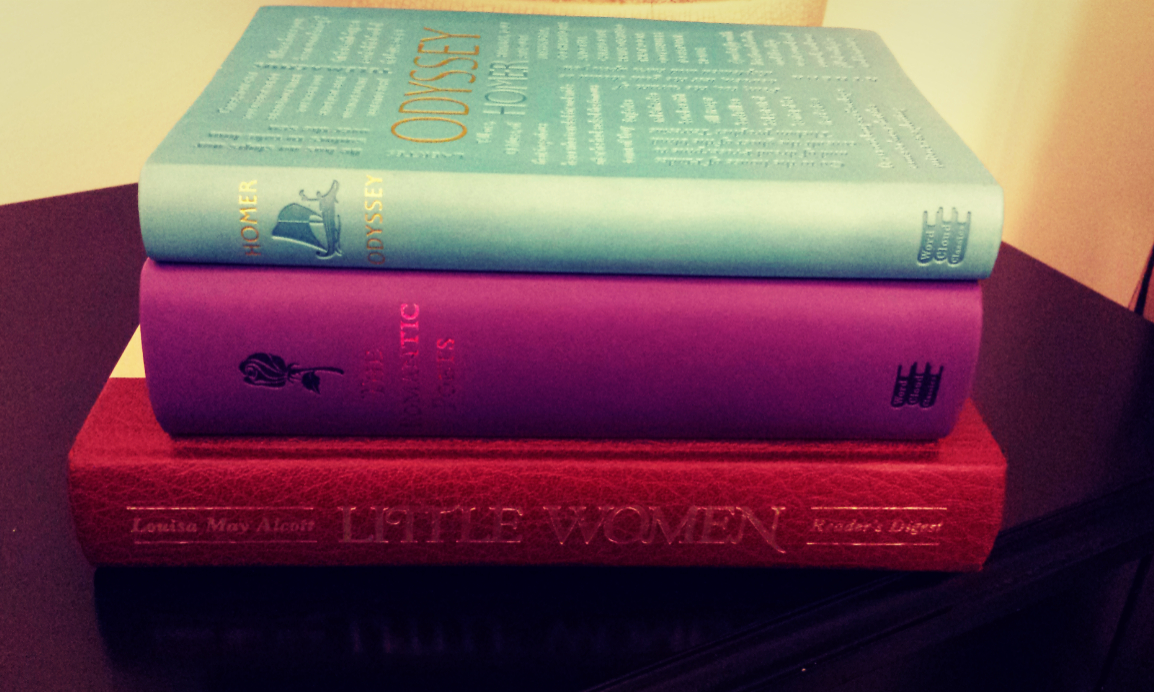
Whoever said you shouldn’t judge a book by its cover obviously didn’t appreciate the beauty in the cover of a book.

As a book lover, I must confess that each time I am browsing through titles I would like to buy, my eye is always drawn to the prettiest, the most sophisticated or classic-looking, the one with the most character!

Sure, there is infinitely more in the textual material that is found within the book, but why should one not enjoy the prettiness of the cover?

I for one gravitate toward the hardcovers more than the paperbacks. Expense be damned. Book-collecting is an art. And having books on your shelf that you can be proud to look at or touch is something of a dream for a book lover. I dream of hardcovers bound by a trained hand, with gold embossing. I dream of books carefully fashioned in the early 1900s, with thoughtful cover art. I dream of leather-backed books with a texture that is the doorway to the wonder of what lies within. Yes, the stuff of today is modern and sleek and easy to carry around (unless you are lugging around an 800-pager), but am I the only one nostalgic for a more unique copy that avid readers before my time enjoyed?


©booksnnooks.org All Rights Reserved

Championing Graphic Novels for Classroom Teaching

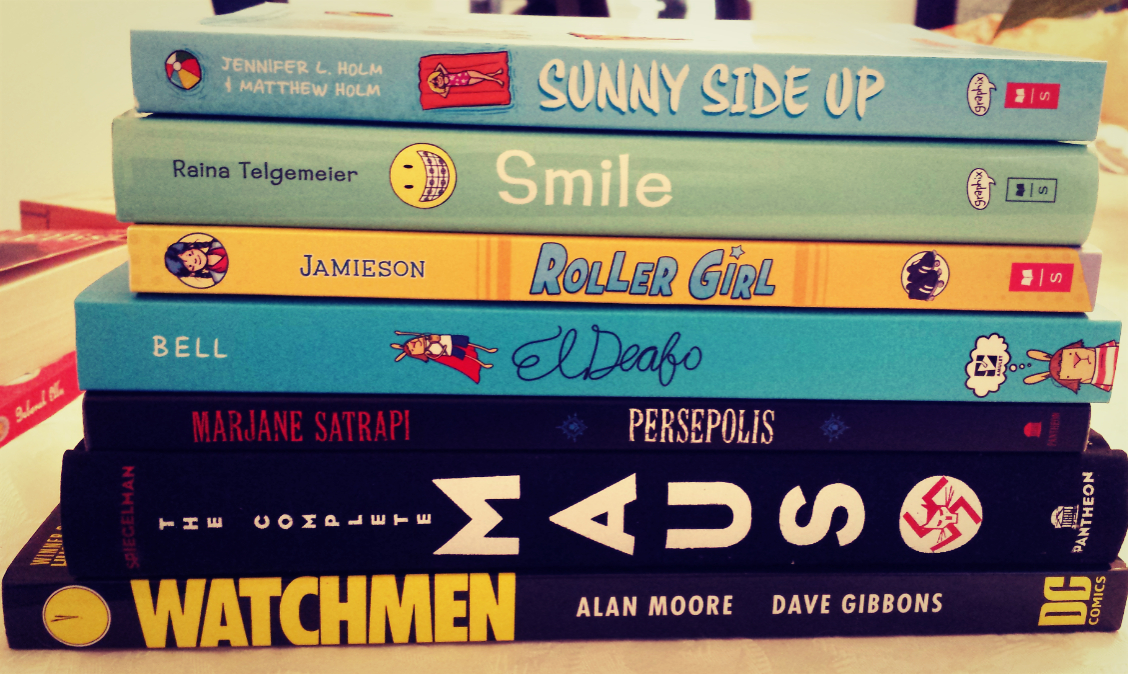
Some of my favourite graphic novels; great for teaching students Grades 4-12

As teachers, we like to revert to the tried-and-true classics when doing Novel Study Units, and teaching our students various bigger life themes. The likes of To Kill a Mockingbird, Inherit the Wind, The Great Gatsby, The Apprenticeship of Duddy Kravitz, Jane Eyre, The Importance of Being Ernest, Brave New World, 1984 and then of course those by the Great Bard, for the intermediate and senior grades. Trust me, I’ve done a good number of these in High School. And then there are the likes of Bridge to Terabithia, Freak the Mighty, Charlotte’s Web, Chronicles of Narnia for the junior grades.

Now, let me pose this question: Have you considered a graphic novel for your Novel Study Unit? I have talked to a lot of teachers, especially in the junior and intermediate grades, and they are incredibly distrusting of the graphic novel. It is viewed by many teachers as a medium of entertainment, and not learning, for their students. Granted, there are graphic novels out there that are created with the sole intent of entertaining, but a lot of incredibly clever graphic artists and writers, collaborate to produce thought-provoking and striking graphic novels.

I would like to make a case for the teaching of graphic novels in grades across the board. I believe they have much value to add to our students’ learning. First of all, graphic novels are not just about the pictures. They are about the relationship between text and image. They are about the meaning in between the panels and the way the characters are drawn and coloured. They are about what is omitted and what is included. They are about meaning and form at their very core. However, they are also incredibly accessible. Graphic novels have the power to engage students who are not willing readers of the traditional text. They have the know-how to capture this audience and potentially turn them into readers. Now, teachers, would that not be a cause for celebration?

Graphic novels further ignite creativity, they inject perspective and then offer other viewpoints contrasting with that first perspective. Art is introduced in an appealing way to students who might not necessarily find themselves drawn to it. The graphic novel has the unbridled power to marry different forms of expression to achieve greater meaning.

Several graphic novels written over the last few years have sought to take big risks and tackle radical topics. Sunny Side Up by the Holm brother and sister duo (Fear not, I shall review this one in time), El Deafo by Cece Bell, Persepolis by Marjane Satrapi, Maus by Art Spiegelman and Smile by Raina Telgemeier (a handful of my favourites) are some of the graphic novels that have burst out onto the scene and made an impact. From tackling big issues of substance abuse to identity and war in Iran, from physical disabilities to World Wars and the struggles of adolescence, these books, and others, have the power to change thinking. They have the power to begin passionate discussion among students. So, teachers, pray tell, do they not deserve a ranking among the greats? Just because they are “newer” and “different” does not make them unworthy of being entered into the canon of literature-teaching tools.

One of my personal favourites is Watchmen by Alan Moore. This masterpiece makes the movie look ridiculous because, within its pages, it houses depth of meaning and form. It catapults the reader into the story and pulls the narrative around that reader-creator relationship.

Graphic novels are not just quick books that you can read on a trip from Toronto to New York City. They are fast becoming vehicles in which to express explosive thought. So teachers, what say you? Give the graphic novel a chance?


©booksnnooks.org All Rights Reserved