Making Thanksgiving Cards (A How-To for Teachers)

Thanksgiving is around the corner for us here in Canada, and teachers, stepping off my post from yesterday, I decided to do Thanksgiving cards as an art activity with my junior class today. These are really easy to make and students can dedicate these to whomever they wish. Teachers, the dedication process can be a mini-lesson in the writing component of language. You can have them write out rough drafts of their inside greetings, and then peer-edit before they transfer them on as good copies to their cards.

Detailed below are the materials needed, and the process that was followed to make the cards.

Materials:

wp-1475604152875.jpeg

  1. Googly Eyes
  2. Cardstock (I use the Reflections brand that can be found at Michael’s Craft Stores)
  3. Coloured Markers or Sharpies
  4. Scissors and Glue sticks
  5. Turkey and maple leaf templates
  6. Square cut-outs (of appropriate size) of orange, yellow and green cardstock (you can substitute with construction paper if you prefer)

Process: 

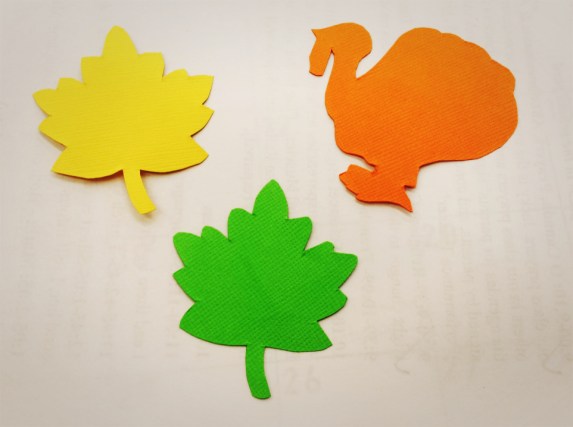
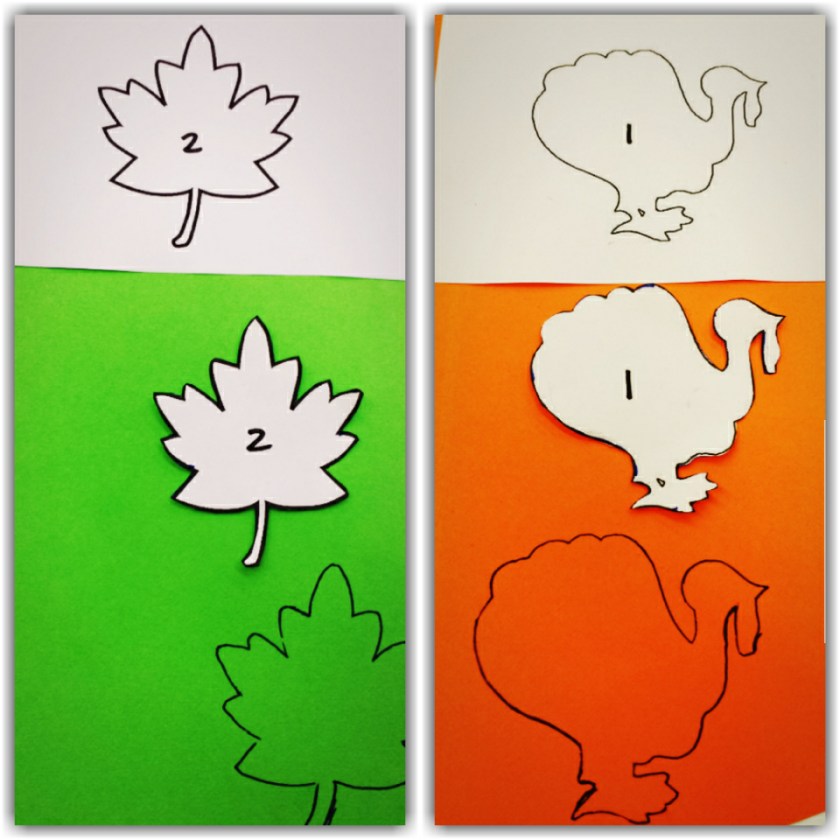
#1 Cut out the turkey and maple leaf templates, using them, trace (onto the side of the coloured paper opposite to the one that will be facing the top when stuck on the card) onto appropriate coloured paper and then cut those out too . Write 1 in the turkey template so your students know they have to cut out only ONE turkey (in orange), and 2 in the maple leaf template so they know they have to cut out TWO maple leaps (yellow and green). Teachers, for those of you who own a Cricut cutting machine, you can pre-cut turkeys and maple leafs for your students. However, the cutting process helps them to be part of the card-making from scratch.

wp-1475604445471.jpeg

wp-1475604239586.jpeg

#2 Once the pieces are cut out, use a dark-coloured marker (black, brown, gold) to draw details onto the maple leaf and turkey cutouts. Add googly eyes and paste all 3 cutouts onto the front face of the card. Use markers to colour in a border and write in HAPPY THANKSGIVING!.

wp-1475604206264.jpeg

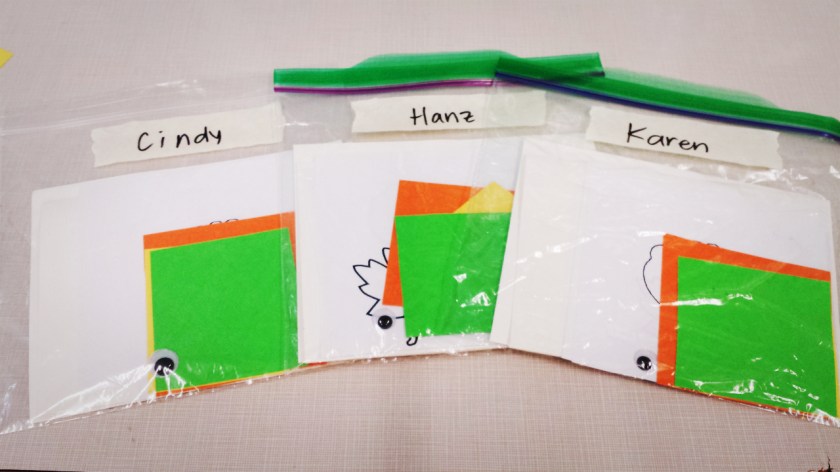
Teachers, if any of your student are away, be sure to make little art packets for them to make their cards when they return:

wp-1475603690530.jpeg

There you have it, a very simple way to get your students into the spirit of Thanksgiving, while fulfilling curriculum expectations (specifically around ART). And on that note, HAPPY THANKSGIVING, CANADA!

©booksnnooks.org All Rights Reserved

Daily Gratitude: Ideas for Teachers

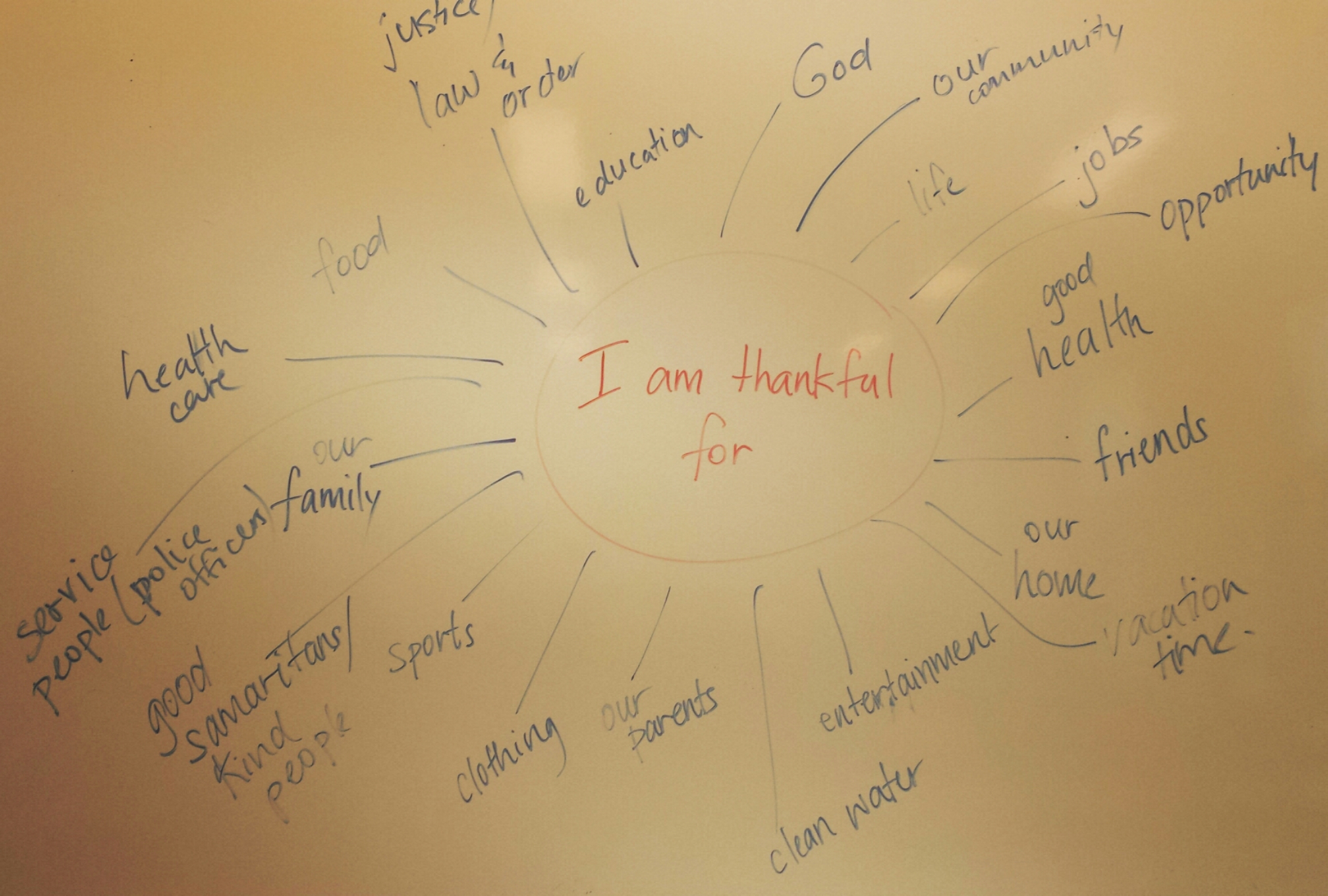
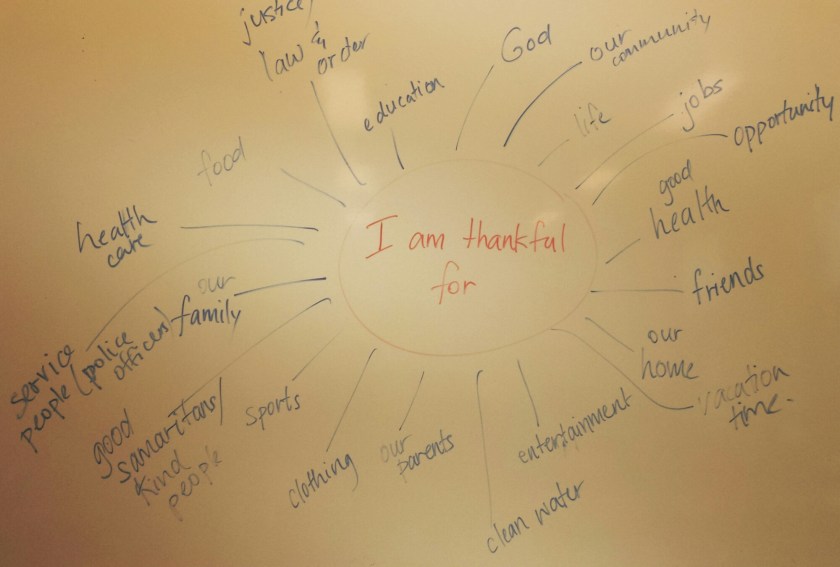
So, this month schools in the Catholic Board celebrate the virtue of Gratitude. Personally, I think it is a good idea to inculcate in our younger generation the concept of being thankful every day, however, having an entire month dedicated to this virtue is a good start. Today, I had the pleasure of leading a junior class to dig deep and find out what they were thankful for. This is what we came up with:
image

Initially, students threw out the tried-and-true: food, family, home, clothing, but then they began to really think about the concept of gratitude, and came up with being thankful for kind people and opportunities in life and our healthcare system(even if it isn’t perfect). This brainstorming session was done to help students prepare for a thanksgiving prayer they were to write. And while this is a great way to get your students thinking about what they are grateful for, it is not the only thing. Below, I have outlined some other ways to carry out activities to promote a spirit of gratitude in your students.

Other Ways to Incorporate the Spirit of Gratitude in Your Class:

#1 The “I am thankful for…” Display Board (Individual)

Set up a display board in one area of your classroom. Give it the title, “I am thankful for…” Each week, as a combined cross-curricular activity of art and writing (appropriate for all grades K-12), have each one of your students draw and colour and then elaborate (in writing – a sentence or just a word for the younger grades) on something they were thankful for that week. This activity can be done on the Friday so students have plenty of time during the week to think about what they can use. Remind students constantly during the week, if opportunities arise where they could be grateful for something, and have them bank these for later. Since artwork will have a weekly turnaround, have students make their own “I am thankful for…” folders (simple cream-coloured duo-tangs that they can decorate for an additional art activity). All work, once it is taken down from the display board, can be added to their individual folders for a keepsake of what they were thankful for that particular year. This could serve as a reminder when things are particularly rough in their lives and they are searching for positivity to get them through.

#2 Thank You Cards (Individual)

These are a practical and thoughtful way to reach out to others in the community and say a special thank you. Once a month (and this could be done in lieu of contributing to the display board idea above one week, if you choose to also do that), have students make THANK YOU cards. Each month they have to choose someone different whom they can say thank you to. Brainstorm with them different people in their lives they should be grateful to (parents, grandparents, siblings, other relatives, janitors, secretaries, principals, teachers, school crossing guard, their family physician, firefighters, police officers etc.). You could also have all the students make THANK YOU cards for different community helpers and then mail the cards to them, or drop them off if they are close enough. This activity also has the added advantage of serving as a dual art and language project and is appropriate for any grade from K to 12.

#3 Thank You Movie (Group Work)

This activity would best be suited for grades 5 and up, and would combine elements of multi-media, language, drama, art and so on. Students can create a movie choosing 5 (or fewer) different people in their lives that they are grateful for. They would then have to act out the roles these people play in their lives (students would have to agree as a group who these people will be – e.g. they would be parents in general and not specifically one student’s parents). They would film their enacting of these people’s roles in their lives and then combine technology elements (use iMovie, MovieMaker or other editing software they might be comfortable with) to add reasons why they are grateful for these people. Remind students to be respectful and thoughtful in their creations. Provide examples by repeating the above brainstorming activity as a class. Give students graphic organizers to record some of the ideas being brainstormed as a class. Allow them creative license to provide whatever twist on this project that they would like. Typically, allowing them a few weeks to put this together would be ideal.

And teachers, really, the sky’s the limit when it comes to teaching your students the virtue of gratitude. Let’s face it, we are educating quite an entitled lot these days, and a little bit of time taken to teach them valuable life lessons, would go a long way.


©booksnnooks.org All Rights Reserved


Hold onto Your Hat! Olympic Wreaths Just in!

To wrap up our theme of Olympic Games this week (and with the Olympics ending on Sunday), I had my students make Olympic Wreaths in class. I came upon a picture of this online, and found it to be an easy and fun activity that even my staff had fun doing!

Making Olympic Wreaths:

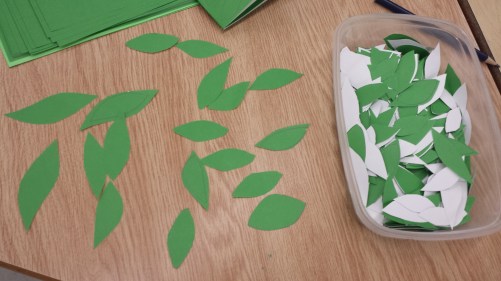
1. You will need sheets of green construction paper, paper plates (white or green) and a pair of scissors. All of these materials can be bought from the Dollar Store.

20160816_101525.jpg

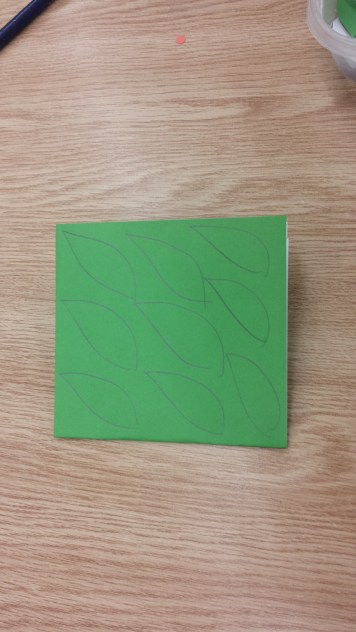
2. Take a sheet of the green construction paper and fold it twice so you end up with a small square.

3. Draw leaves on the green surface of the folded construction paper, filling it up as much as possible.

20160816_101619.jpg

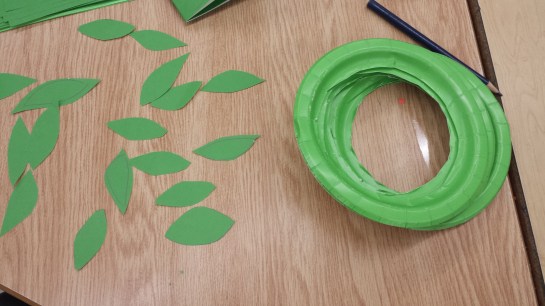
4. Cut out the leaves and store them in a (plastic) container.

20160816_101727.jpg

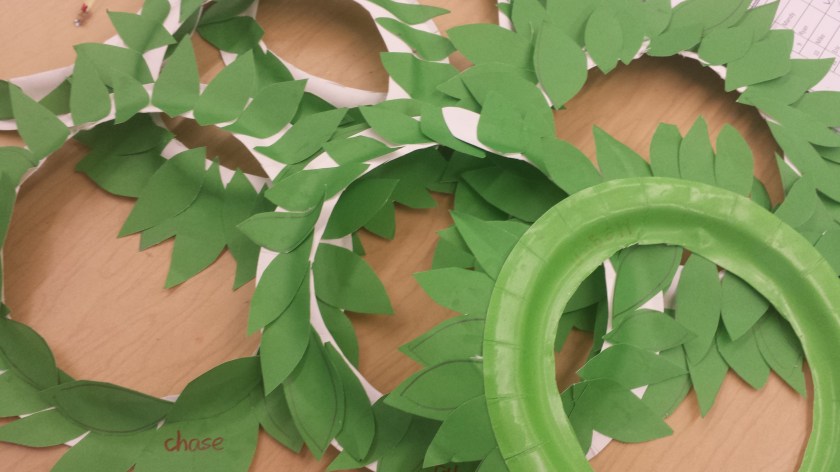
5. Take your paper plates and cut out the insides. Hold onto these insides for later.

20160816_101737.jpg

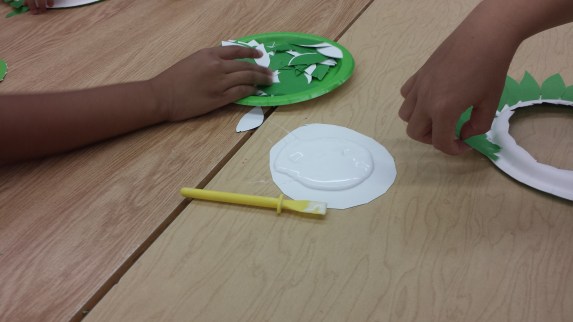
6. Put liquid glue onto the insides of the cut-out paper plates and leave one on each table for students to use.

20160816_112337.jpg

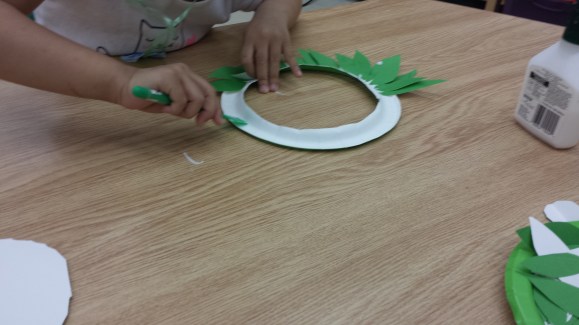
7. If available, use flat-nibbed utensils for spreading (other alternatives: Popsicle sticks or dip leaves directly) the glue onto the plate and gluing the leaves one by one.

20160816_112818.jpg

8. Glue leaves in one direction, or both, alternating every few leaves to achieve desired pattern.

9. When wreaths are ready, make sure to write each student’s name in marker. And, enjoy!

20160816_133303.jpg


©booksnnooks.org All Rights Reserved
 

The Olympic Games: Galvanizing toward Unity

So, I have been thinking about this since the Olympics began last week. I always seem to be particularly moved by the stories and the struggles of the athletes when they start, and specifically patriotic towards my Canada. I realized the Olympics are a great way to unite the people of a country, and even strangers from other lands through the shared experience of watching an athlete through his/her journey. From watching that person struggle and then achieve their greatest dream, or not. There is a common journey that the viewer and the athlete go through at specific moments of these games, and this is what seeks to unite us as fans of the Olympics.

Having found an art activity online, my teaching staff and I decided we would recreate that unity with art for our students.We used the Olympic symbol of the 5 coloured and interlocked rings to teach our students the value of the unifying power of the games.

We painted students’ hands with one of each of the 5 colours of the rings (black, red, yellow, blue and green), and had them put their hand prints onto blank sheets of paper, as below:

Then, we collected our students hand prints in different colours and cut them out separately. This was done for ease of making out final product. We figured that we could have more control over the potential messes that would be caused, if each child did his/her hand print separately.

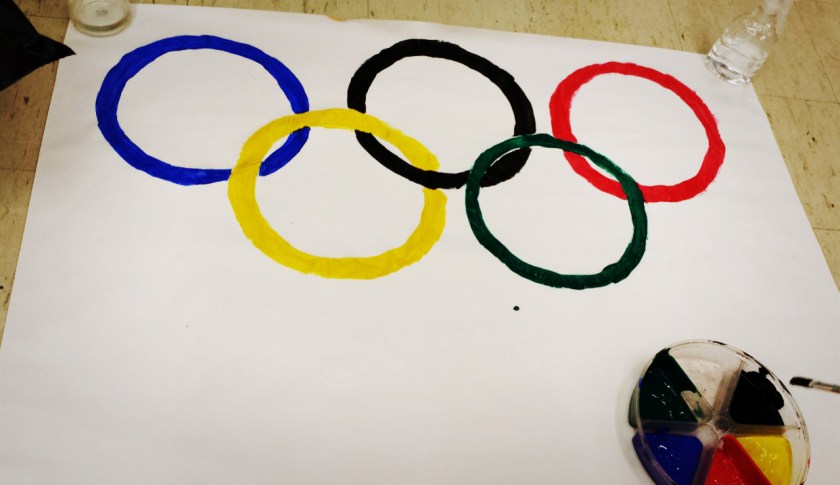
Then, the teaching staff got on our hands and knees and painted a large sheet of white paper, as below. Now, this can also be done on a white sheet, or a large white canvas.

wp-1470952456317.jpeg

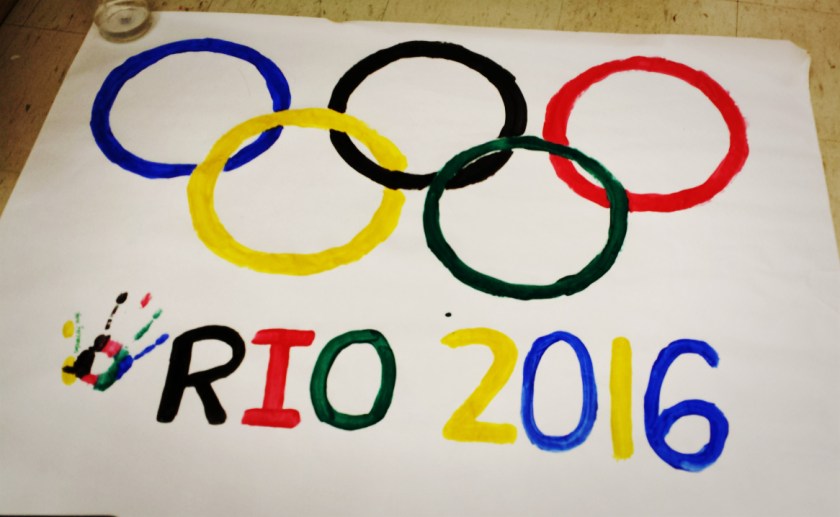
We decided, we, the teaching staff, would also include our hand prints, and since we were an odd number, one of our teachers made a hand print of 5 different colours that was included ahead of “Rio”, below.

wp-1470952500534.jpeg

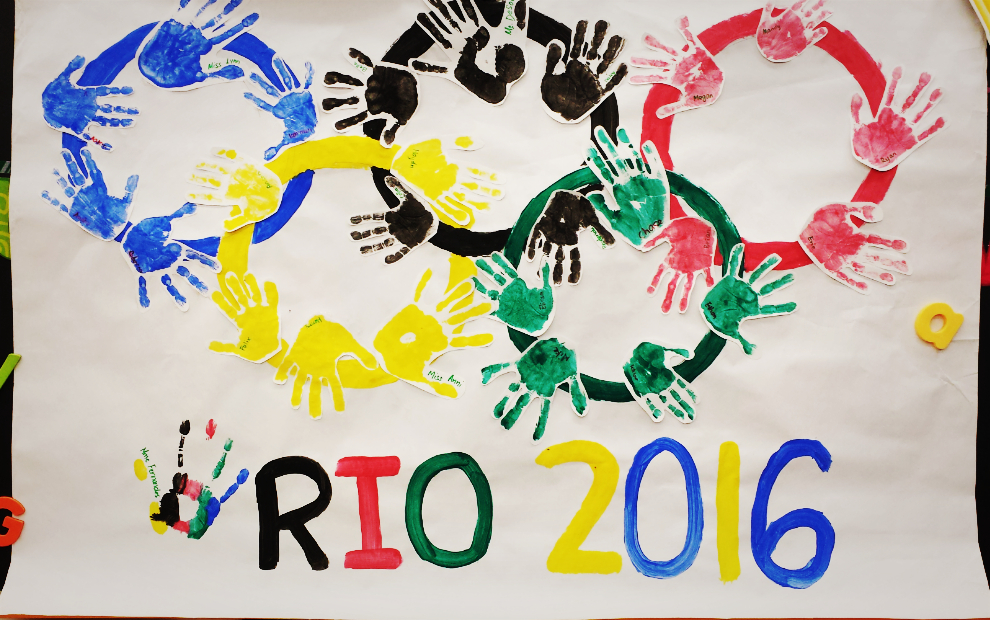
The final product came together when we glued all the coloured hand prints onto the respective coloured rings.

image

This activity focused on not just the theme of the Olympic Games but a way to show our students the unity inherent in sharing common experiences. A shared experience like living in the same country, speaking the same language and living similar lifestyles despite, (as is the case in Canada) being a very multicultural fabric of people. Over the past week, our students have learned about the different countries participating in the games, and how to identify their respective flags. A tall feat for a lot of our 3 – 5 age range.

And that is the power of these games. Not just to go forth and be the best you can after you have trained and trained for years, but also to galvanize peoples toward a common experience where they can relate to each other, even if it is for a few weeks every 4th summer.


©booksnnooks.org All Rights Reserved