TED Talks: A Great Resource for Teachers

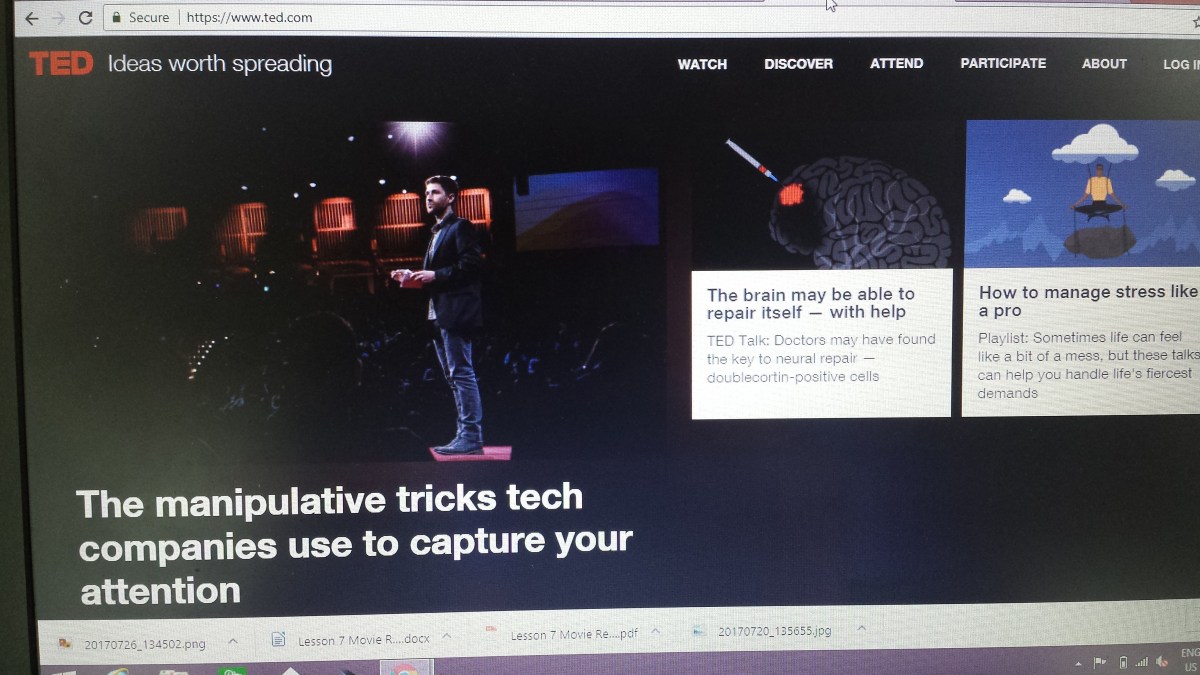
I have watched videos on TED Talks myself and it is a GREAT place to learn new things. However, only recently did I discover its nearly-unrivaled value in the classroom. With the culmination of marking copious amounts of movie reviews and having report cards ready for record deadlines this week, I have been in a bind for lesson planning time. Enter TED Talks. With a plethora of subject areas to choose from, this resource is a must-have!

There are two places you can find TED talks material. One is the main TED Talks website and the other is the TED Ed teacher resource platform.  While the former offers video footage on just about anything you are curious about, the latter has subject-specific videos with mini-lesson plans around each.

This week I ran to TED twice, and we are only on Wednesday! On Monday, I showed my students 2 video clips from the TED Ed platform, one titled “What makes things cool?” and the other, “Why do people join cults?”. I introduced each one by discussing the concepts of “cool” and “cults” to activate students’ knowledge. After watching each video clip, I discussed with my classes the major ideas presented in the video and then probed their understanding by pushing them to make connections with other things in their lives. Students were intrigued and receptive and I was satisfied with my lesson-delivery.

The second time I showed my students a video clip on the TED Talks website titled, “How megacities are changing the map of the world.” Since my students are transitioning into high school and Geography is a compulsory course, this was a great segue into the different kinds of Geography and how each affects our lives. I discussed major concepts with my students after showing them the video in a “debrief” session and then parceled them into groups armed with chart paper and markers to answer the question, How does Connectography affect our lives?. I required that they be specific in their answers and offer examples wherever possible. Despite the initial bombarding of new terms and complex syntax used by the presenter, my student found this video interesting and the idea-sharing phase of our class session proved this. Students came up with deep analytical reasoning that really surprised me!

This slideshow requires JavaScript.

The thing I like most about TED Talks/Ed resources is the amount of opportunity it allows for students to inform themselves and activate their critical-thinking skills. I am a huge pusher of “Think critically, kids!”, so this is quickly becoming my go-to resource even for days when I am preparing lesson plans in advance.

For those of you who have used this resource, let me know about your experience. I would love to hear about new ways to use it.


©booksnnooks.org All Rights Reserved
Teaching Grammar in High School

Have you ever tried marking essays with really bad grammar, syntax and non-existent punctuation? No? Right, you’re not an English teacher. For those of you who are, or at any point have to labour through the ordeal of marking any kind of writing that is painful to look at, let alone grade, you will (I am certain) agree with me when I say that grammar, nay, good grammar, is an essential ingredient to good writing. So what do you do when you have a class full of high school students who do not, I repeat, DO NOT know their grammar? Well, you teach them of course! (I mean the clue is in your title! ;))

Teaching grammar in high school is tedious, boring, daunting and let’s face it, just plain scary, but you gotta do whatchu gotta do, right? (Yes, I cringed as I typed out that line in slang). So, how do you make it fun? You use Kahoot! End of story.

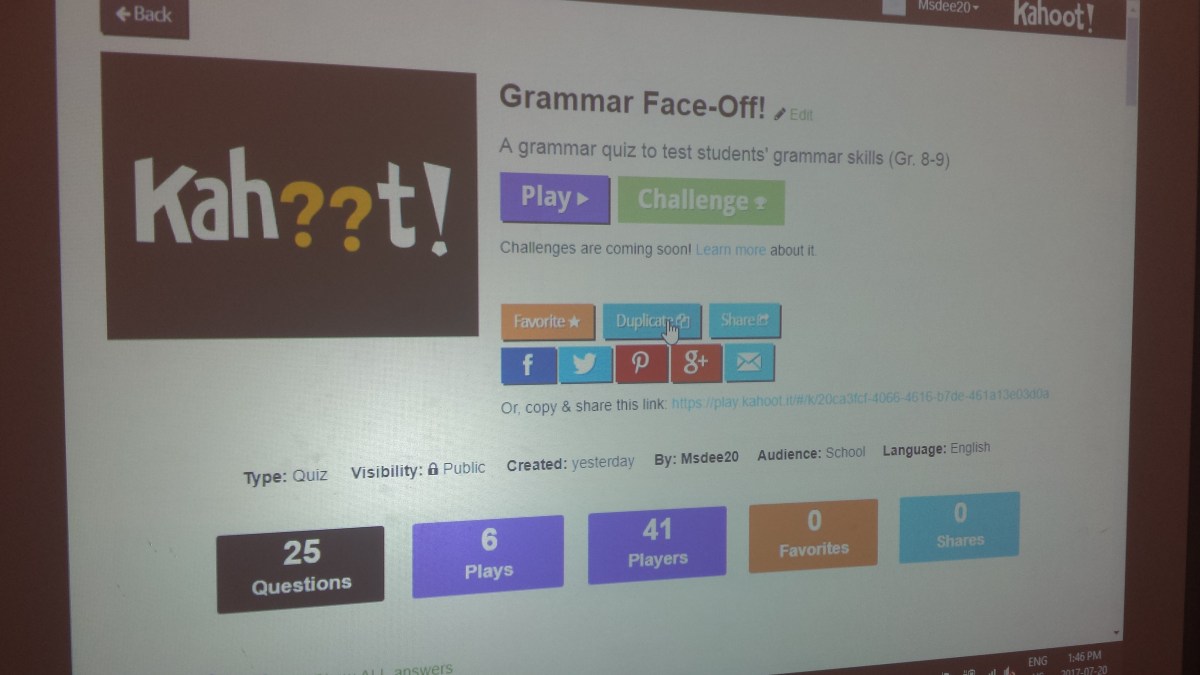
Here is a link to a Kahoot! presentation I created with 25 questions that cover punctuation, grammar and sentence structure: Grammar Face-Off Kahoot! Game

This Kahoot! can work as a diagnostic at the beginning of your course to determine where students are in their grammar, or as a review class where they play the game and you stop after each question to review concepts or teach them (because many of them will have never heard of a gerund or an infinitive phrase. Really? We have those in the English language?). You can choose to play this game individually with each student answering on his/her own mobile device, or do as I did where I grouped them into teams and made them play against each other. I found this to be a more fun approach because they were competitive and participated really well!

The game itself took about 35 minutes to get through and I rounded off my class with a prepared grammar package for each student that I found online. You can use any grammar worksheets and put them into a package depending on the writing abilities of your students.

So there you are, a simple lesson to help make learning grammar fun for your students. And the best part is, you can create an ongoing competition with Grammar Face-Offs once every week. Teams can accumulate points for a final big reward of your choice at the end of the school year (I would include GRAMMAR CHAMP certificates as part of their reward ;)). By taking the time to teach your students proper grammar, you not only invest in their quality of writing, you help groom them into becoming more effective communicators (a necessary life-skill). So there! You are doing your job and making a difference in the world. Well done, you!

©booksnnooks.org All Rights Reserved

Soul Surfer: A Great Teaching Tool!

When the story of teenage surfer, Bethany Hamilton broke around the world, people everywhere stiffened with fear at the fate of the young girl. A true miracle-story, Bethany fought her way back to life and success. Soul Surfer, by director Sean McNamara does justice to Hamilton’s epic journey. Released in 2011, and with a very Christian-focused lens on Bethany ‘s journey, this film takes a hard look at the role of faith during times of adversity. I showed it to my high school English class and they were riveted.

I found this to be a great teaching tool because it allowed students to learn very important themes around faith, family, love, compassion, perseverance, disability, hardships and overcoming those hardships.

Award-winning AnnaSophia Robb stars as Bethany Hamilton, with Dennis Quaid and Helen Hunt in the role of her parents. Essentially a star-studded cast, Carrie Underwood and Loraine Nicholson round off the line-up. The Most actors do a solid job of making their characters come alive and displaying individual foibles and strengths. Robb was a particularly convincing Bethany Hamilton with her tear-jerking reactions to Bethany’s challenges. This movie connected with my students on several personal levels and it was this connection that allowed me to extend the learning into a writing activity (a movie review).

The special effects were quite well done with the surfing stunts and underwater scenes offering viewing depth and clarity.

Teachers, for those of you who would like to show this movie to your intermediate students (it is best suited for the 12-15 year age group), I have attached a Soul Surfer Movie Review Instruction Sheet that you can modify for their writing activity. Along with the instructional sheet it would be worthwhile for you to include a rubric of your choosing as well as a movie review that you think is of a high caliber.

After marking close to a 100 movie reviews, I found this to be a great tool (the movie and the ensuing review) because it helped start the conversation around good writing (including the proper use of grammar, syntax and punctuation – please refer to my previous post, Teaching Grammar in High School). As a diagnostic it worked rather well in identifying which of my students were strong writers and which ones would need more help and in what areas. Since this was a film that everyone enjoyed because they were able to connect to it, it was the perfect conduit for developing writing skills.

Additionally, Soul Surfer worked really well to reinforce goal-setting, a lesson that I did earlier in the summer with my classes. My students were able to see someone in a seemingly impossible situation encounter multiple failures and finally [SPOILER ALERT] succeed.

Available on Netflix, Soul Surfer is a feel-good movie perfect for a girls’ night in, or with the family. As a teaching tool it works even better because larger life-lessons can be had. Teachers, try it and if  you do, please share  your experiences in the comments below.


©booksnnooks.org All Rights Reserved


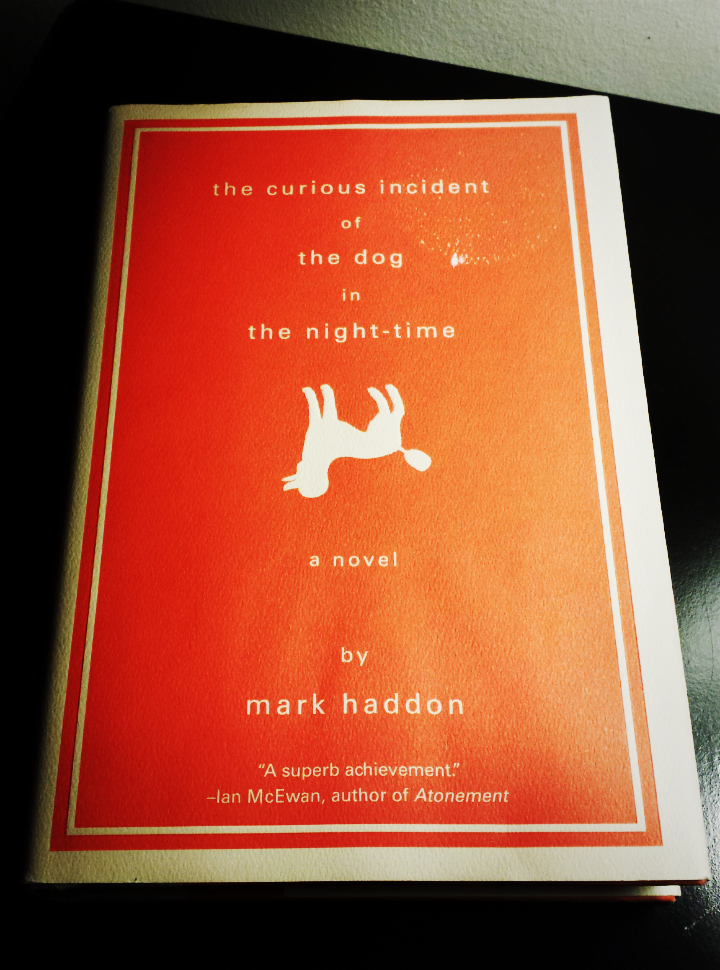
The Curious Incident of the Dog in the Night-time is a charmer!

For those of you who have first-hand experience with Autism Spectrum Disorder and Asperger Syndrome, this book will be a welcome read.

Mark Haddon delves into the mind of an individual with Asperger Syndrome, and this 15-year old displays all the signs of a Savant. The story is charming in that the Savant character of Christopher narrates with such bare-boned honesty and hilarity. Haddon cleverly uses the dual perspectives inherent in journal writing as well as writing a piece of non-fiction to convey the workings of Christopher’s mind. He does so with such clarity that the reader is able to appreciate how people with Asperger and Autism are different from, but also the same as what our society might view as the “norm”.

This book is also a touching tale of family relationships and the hardships that come with dealing with stress, developmental disabilities and mental illness. The characters are painted as real people with a plethora of flaws, but also endearing qualities that allow them to redeem themselves.

What really struck me about this book was Haddon’s ability to capture the concept of emotions in Christopher. Haddon gives physical and literal descriptions of Christopher’s emotional roller coaster ride. This is a sophisticated attempt by Haddon to help his audience understand that people with Autism and Asperger Syndrome are not completely bereft of feeling emotion, even if they are unable to express their emotions in socially-recognizable ways. I also appreciated that Haddon left the interpretation of the physical descriptions to his audience’s intellectual abilities, proving that he is not only a clever writer who is able to convey complex concepts, but one who trusts his readers’ ability to understand those concepts for themselves.

For teachers who are looking for ways to bring components of inclusivity into the classroom, this book is a well-written and easy-to-follow account of what it means to have a developmental disability like Asperger Syndrome. For many students who do not understand the nature of this Syndrome, this is as close to a science class as they can get while having a lot of fun. I would recommend this for junior classes (Grades 4-6) and structure the reading of this as a Book Talk to spark critical-thinking skills and allow for student-directed informal discussions.

Further, in Christopher’s mother, Haddon uses the opportunity to touch on what it means to live with a Mental Illness. While this should not be used as the complete manual for understanding mental illnesses, it is certainly a good place to begin a conversation around this fast-growing illness that is crushing many in our society. Teachers, this book will ignite a lot of very profound conversations in your classroom! If you do decide to use this in the classroom, please get in touch and I will help with ideas for how to implement the same.

Happy Reading!

©booksnnooks.org All Rights Reserved
 

Kahoot! – A FANTASTIC Teaching Tool!


Now and then I come across a fantastic teaching tool that not only works wonders for delivering my teaching material, but also resonates well with my students. Enter Kahoot! A truly phenomenal teaching tool that is both user-friendly and fun. Kahoot! offers a way to create interactive games for your class where you can conduct a survey (collect data), do an exam or test review or just test your students (for Summative review).

Here’s how Kahoot! works (I will write about the options I chose, and there are many!):

*Fellow teachers who are visual and auditory learners, don’t fret! Here’s a link to a youtube tutorial (NOT mine) that shows you how to use Kahoot! Kahoot Tutorial

  1. Create a teacher account at https://getkahoot.com/
  2. Create a game (choose from 4 options according to the needs of your subject – QUIZ, JUMBLE, DISCUSSION or SURVEY). I chose QUIZ.
  3. Type in the title for your quiz. As you can see from the screenshot above, I chose “Is This a Family?” for my Grade 12 University Family Studies Class where we explored and discussed students’ perceptions around the structure of a family.
  4. Type in a description of the quiz right below the title.
  5. Choose for your quiz to be available to EVERYONE so that your students can seamlessly log in later (I shall get to that shortly).
  6. Credit any sources and add a cover image or video as you see fit.
  7. From the drop-down menu choose SCHOOL as your audience.
  8. Click the OK, GO green button on the top right-hand side of your screen.
  9. When on the next page you can click the “+” sign and populate your quiz with as many questions as you would like.
  10. For each question, choose the time limit (how long that question will remain on screen while your students submit their answers).
  11. You may choose to award points or not.
  12. Put in the necessary answers. At least 2 are required. If it is a TRUE or FALSE question, you can leave the 3rd and 4th answer options blank. If it is a MULTIPLE CHOICE question, populate all fields. I used “YES” and “NO” as my options because my students only had to decide whether the scenario was representative of a family or not.
  13. Credit any sources for each question and click NEXT (green button on top right-hand corner).
  14. Add as many questions as you like.
  15. When you are satisfied with your questions, click SAVE.
  16. You will see a message that says “Saved and Published!”
  17. You can then choose to PREVIEW, SHARE, PLAY or EDIT your quiz.

When you are ready to PLAY with your class:

  1. Simply log in with your information.
  2. Click MY KAHOOTS from the black tab on the top of the screen, towards the left.
  3. Choose the Kahoot you want to play and click PLAY.
  4. Once your Kahoot is loaded, click the CLASSIC option which will allow all your students to participate on their mobile devices. Students simply have to download the app and you can get them to do this while you set up.
  5. Your next screen will have a PIN# which your students will put into their phones when prompted (*Note, the PIN# will change each time you play the Kahoot). After inputting the PIN#, each student will have to create a nickname and once they do, they will show up on your screen as having entered the game. Once all your students have entered (it shows the total number of players on the screen as they enter, and you can keep track based on how many students are in your class), you can click START and begin your quiz!

If you aren’t already convinced about the GREAT APPLICATIONS of this teaching tool, let me elaborate:

  1. This is a FANTASTIC way to begin conversations about bigger concepts that you want to share with your students.
  2. It allows for interaction in real-time and helps you as the teacher provide immediate feedback.
  3. Students can think on their feet and comment on peers’ responses beginning a rich and deep dialogue that can add to their bank of ideas.
  4. Kahoot! can be used for virtually ANY subject area at the Intermediate and Senior levels, and I specify Intermediate and Senior because it is this age group that usually has their own mobile devices. Want to review for a Math test? Go to Kahoot! Want to conduct a survey on student’s perceptions of the legal system for a Law course? Go to Kahoot! Maybe you want to just do a 2 Truths and a Lie Icebreaker for the first class. Go to Kahoot! This teaching tool affords you so much flexibility, where you go with it is really dependent on how creative you want to be.
  5. There are a lot of Public Kahoots too that are free to use if you are looking for inspiration or just something quick and easy to use for class.
  6. And the BEST THING about this? It allows students to use their mobile phones in the classroom, thus incorporating technology in a responsible and effective way. Plus, they’ll just love you for it!

If you do use Kahoot!, drop a comment below and share  your experience! Happy Kahooting!

©booksnnooks.org All Rights Reserved

 

Mustang: A Must-See That Will Touch Your Soul

To all my faithful readers, I apologize for the writing hiatus. I blame it on a new job that I have only just gotten around to balancing with blogging. All the same, I am excited to drop my two cents on a film I recently watched! =)

This was another suggestion from my close friend and up-and-coming filmmaker, and what a beauty indeed! Mustang is a Turkish film that opens in a remote village in Turkey. It focuses its lens on the youngest of 5 sisters as the opening credits come to a halt. Young Lale is saddened by the departure of her favourite teacher. Her sisters try to comfort her and together, the five of them embark on an innocent and free-spirited romp on the beach. When they return home later that day, their grandmother is furious and begins hitting them one by one. Their crime? Hanging out with boys “indecently”, credit of a no-good and snitch-of-a-neighbour. The five girls are then cloistered like nuns and in Lale’s words, put through a “wife factory”. So begins this story that will both make your heart soar and devastate you all in the same breath.

Spanning themes of family, loyalty, sisterhood, bravery, abuse, love, freedom and captivity among several others, this film is a piece of artwork on its own. A layperson on film-making, I was still able to appreciate the beautiful angles that were shot, the exquisite song choices and the phenomenal acting by each of the 5 sisters: Sonay, Selma, Ece, Nur and Lale.

Director, Denis Gamze Erguven takes the viewer on a journey that is haunting in its likeness to our lives. As a woman, but also a free spirit, several aspects of this movie resonated with me on so many levels. These sisters are brave and unapologetic of who they are as people. They walk out into the world fiercely and love tenderly and openly. They trust but trust too with reason. They are clever in their attempts to attain their freedom and unwavering in their loyalty towards one another. As someone who shares a close bond with her siblings, this movie brought me to tears and is easily a fantastic movie for sisters who might be looking for a movie to bond over.

I can’t help but think of the applications this film can have to a classroom setting as well. With its strong focus on womanhood and the fight to be oneself in a world that stifles our spirits because of doctrines that are outdated and ignorant, this film poses big real-world discussion questions for courses at the high school level such as English, Family Studies, Social Sciences (particularly Psychology and Sociology), Women’s Studies, Cultural Studies and so on. It is also a fantastic eye-opener into the lives of women in remote places all across the world. An opportunity to see them as one with us, women of the West, an opportunity to feel the thirst of their spirits and the hunger in their bravery for a better life that they alone control.

I will not say more about this film (trust me I could!), mostly because I view this to be that piece of artwork in a gallery that is best viewed and not described. Therefore, whoever you are, wherever you are, this film will change you. Watch it.

©booksnnooks.org All Rights Reserved

In Need of a Quick and Easy Remembrance Day Activity?

I was in a crunch for activities to keep my today’s class of grade 2s and 3s occupied, and they were rising on the decibel scale really fast. So, I pulled this tried-and-true solution out of my bag of tricks and got them settled for an entire 30 minutes (I can hear teachers everywhere breathing sighs of relief)!

I wrote the following on the board since tomorrow is Remebrance Day, and handed out lined sheets of paper. I told students to use the letters to make as many words as they could. I made sure to provide examples with the class contributing, packaged it as a challenge of who would find the most words in a half hour, and kicked back.

Then, this happened.

This slideshow requires JavaScript.


I hadn’t thought about this activity too much with regard to its actual ability to teach students a lot, but today, with students taking the initiative to use dictionaries, I realized it provides a myriad of applications. For one, students were writing words and then looking for rhyming words to increase their word count, others learned new words with the help of their dictionaries. Still others saw patterns in the words and built up steadily on them (e.g. an, ran, bran).

This simple activity can be applied any day of the week or just for special occasions. You can also choose to do it once a week to allow your students the chance to stretch their linguistic brains. And this is applicable across the grades because all you have to do is increase or decrease the complexity of the word to adjust for knowledge levels. Yes, fellow teachers, there are those rare moments when teaching is a cinch!


©booksnnooks.org All Rights Reserved

Making Thanksgiving Cards (A How-To for Teachers)

Thanksgiving is around the corner for us here in Canada, and teachers, stepping off my post from yesterday, I decided to do Thanksgiving cards as an art activity with my junior class today. These are really easy to make and students can dedicate these to whomever they wish. Teachers, the dedication process can be a mini-lesson in the writing component of language. You can have them write out rough drafts of their inside greetings, and then peer-edit before they transfer them on as good copies to their cards.

Detailed below are the materials needed, and the process that was followed to make the cards.

Materials:

wp-1475604152875.jpeg

  1. Googly Eyes
  2. Cardstock (I use the Reflections brand that can be found at Michael’s Craft Stores)
  3. Coloured Markers or Sharpies
  4. Scissors and Glue sticks
  5. Turkey and maple leaf templates
  6. Square cut-outs (of appropriate size) of orange, yellow and green cardstock (you can substitute with construction paper if you prefer)

Process: 

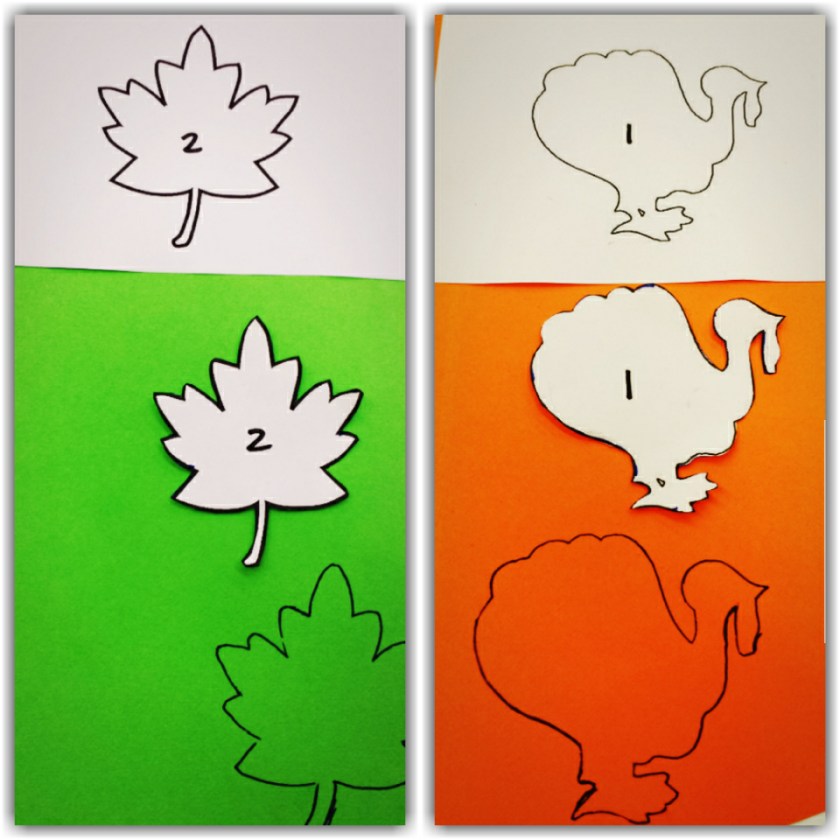
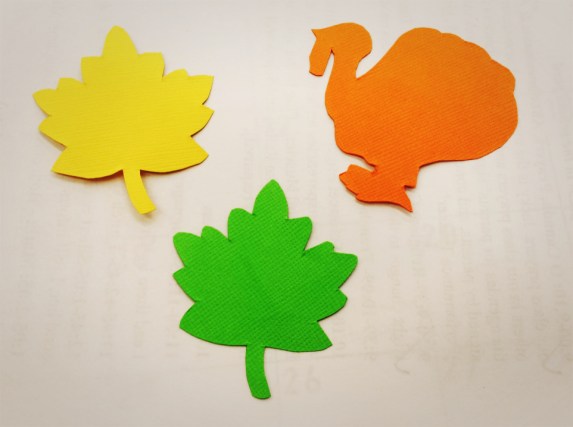
#1 Cut out the turkey and maple leaf templates, using them, trace (onto the side of the coloured paper opposite to the one that will be facing the top when stuck on the card) onto appropriate coloured paper and then cut those out too . Write 1 in the turkey template so your students know they have to cut out only ONE turkey (in orange), and 2 in the maple leaf template so they know they have to cut out TWO maple leaps (yellow and green). Teachers, for those of you who own a Cricut cutting machine, you can pre-cut turkeys and maple leafs for your students. However, the cutting process helps them to be part of the card-making from scratch.

wp-1475604445471.jpeg

wp-1475604239586.jpeg

#2 Once the pieces are cut out, use a dark-coloured marker (black, brown, gold) to draw details onto the maple leaf and turkey cutouts. Add googly eyes and paste all 3 cutouts onto the front face of the card. Use markers to colour in a border and write in HAPPY THANKSGIVING!.

wp-1475604206264.jpeg

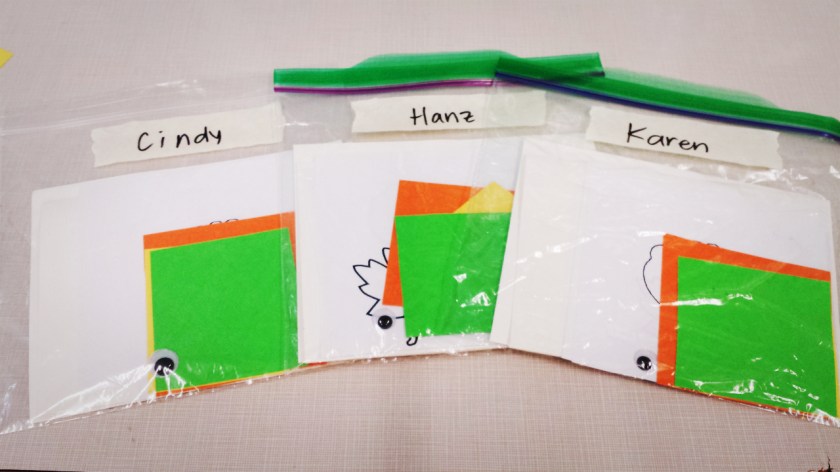
Teachers, if any of your student are away, be sure to make little art packets for them to make their cards when they return:

wp-1475603690530.jpeg

There you have it, a very simple way to get your students into the spirit of Thanksgiving, while fulfilling curriculum expectations (specifically around ART). And on that note, HAPPY THANKSGIVING, CANADA!

©booksnnooks.org All Rights Reserved

Daily Gratitude: Ideas for Teachers

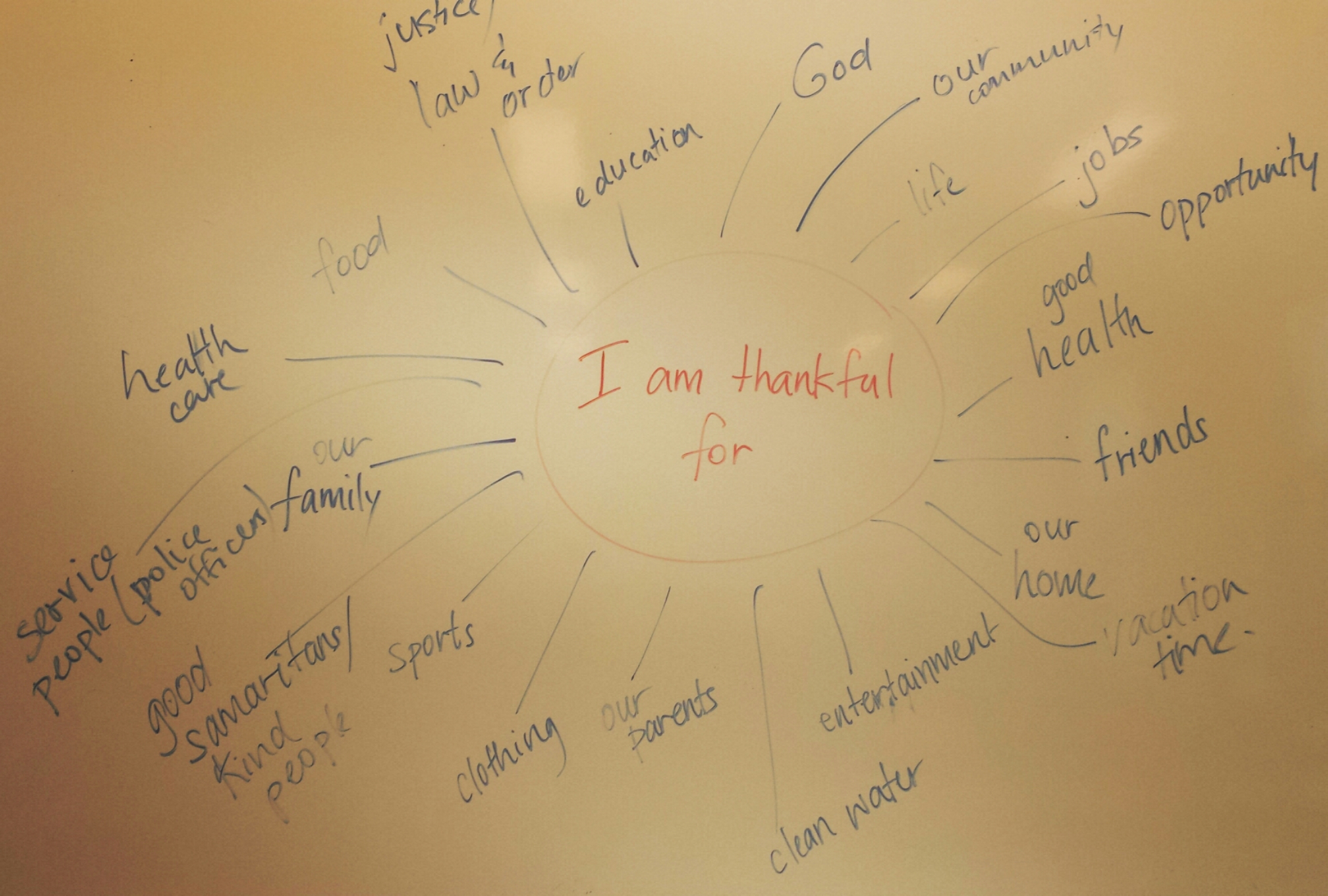
So, this month schools in the Catholic Board celebrate the virtue of Gratitude. Personally, I think it is a good idea to inculcate in our younger generation the concept of being thankful every day, however, having an entire month dedicated to this virtue is a good start. Today, I had the pleasure of leading a junior class to dig deep and find out what they were thankful for. This is what we came up with:

image

Initially, students threw out the tried-and-true: food, family, home, clothing, but then they began to really think about the concept of gratitude, and came up with being thankful for kind people and opportunities in life and our healthcare system(even if it isn’t perfect). This brainstorming session was done to help students prepare for a thanksgiving prayer they were to write. And while this is a great way to get your students thinking about what they are grateful for, it is not the only thing. Below, I have outlined some other ways to carry out activities to promote a spirit of gratitude in your students.

Other Ways to Incorporate the Spirit of Gratitude in Your Class:

#1 The “I am thankful for…” Display Board (Individual)

Set up a display board in one area of your classroom. Give it the title, “I am thankful for…” Each week, as a combined cross-curricular activity of art and writing (appropriate for all grades K-12), have each one of your students draw and colour and then elaborate (in writing – a sentence or just a word for the younger grades) on something they were thankful for that week. This activity can be done on the Friday so students have plenty of time during the week to think about what they can use. Remind students constantly during the week, if opportunities arise where they could be grateful for something, and have them bank these for later. Since artwork will have a weekly turnaround, have students make their own “I am thankful for…” folders (simple cream-coloured duo-tangs that they can decorate for an additional art activity). All work, once it is taken down from the display board, can be added to their individual folders for a keepsake of what they were thankful for that particular year. This could serve as a reminder when things are particularly rough in their lives and they are searching for positivity to get them through.

#2 Thank You Cards (Individual)

These are a practical and thoughtful way to reach out to others in the community and say a special thank you. Once a month (and this could be done in lieu of contributing to the display board idea above one week, if you choose to also do that), have students make THANK YOU cards. Each month they have to choose someone different whom they can say thank you to. Brainstorm with them different people in their lives they should be grateful to (parents, grandparents, siblings, other relatives, janitors, secretaries, principals, teachers, school crossing guard, their family physician, firefighters, police officers etc.). You could also have all the students make THANK YOU cards for different community helpers and then mail the cards to them, or drop them off if they are close enough. This activity also has the added advantage of serving as a dual art and language project and is appropriate for any grade from K to 12.

#3 Thank You Movie (Group Work)

This activity would best be suited for grades 5 and up, and would combine elements of multi-media, language, drama, art and so on. Students can create a movie choosing 5 (or fewer) different people in their lives that they are grateful for. They would then have to act out the roles these people play in their lives (students would have to agree as a group who these people will be – e.g. they would be parents in general and not specifically one student’s parents). They would film their enacting of these people’s roles in their lives and then combine technology elements (use iMovie, MovieMaker or other editing software they might be comfortable with) to add reasons why they are grateful for these people. Remind students to be respectful and thoughtful in their creations. Provide examples by repeating the above brainstorming activity as a class. Give students graphic organizers to record some of the ideas being brainstormed as a class. Allow them creative license to provide whatever twist on this project that they would like. Typically, allowing them a few weeks to put this together would be ideal.

And teachers, really, the sky’s the limit when it comes to teaching your students the virtue of gratitude. Let’s face it, we are educating quite an entitled lot these days, and a little bit of time taken to teach them valuable life lessons, would go a long way.


©booksnnooks.org All Rights Reserved


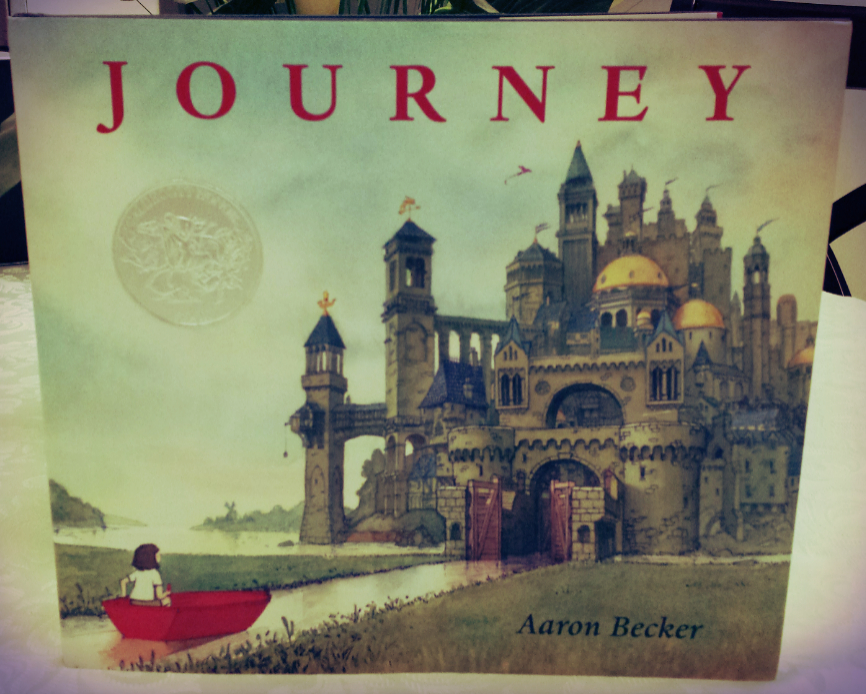
Aaron Becker’s Journey: A True Picture Book

I was first introduced to Aaron Becker’s Journey while doing a teaching placement not too long ago. What I did not realize at first was how versatile this book would become, on not only an age level, but a conceptual and skill-teaching level as well. I have since read it to students at the primary and junior levels, and each time, this book has not failed to create a splash. Becker relinquishes the use of words to tell a story completely in the hands of a child’s imagination. He trusts our young readers, as we must, to make their own meaning out of this heartfelt tale.

I will intentionally not discuss the plot of this book, as I do want to create any skew toward a certain interpretation when the book provides for many. Suffice to say, this book is about a young girl who begins a journey and along the way, discovers much about herself and life.

Juxtaposing grayscale pictures with bold singular colour in the beginning, and then opening wide a world blossoming with colour as the book progresses, Becker unfolds a world that students can envelope themselves in. With magical crayons and castles, boats and hot air balloons, rescue missions and the king’s guards, this book will allow your students to draw the important messages of friendship, selflessness, generosity, imagination and compassion. The sensitively-coloured and poignantly-drawn illustrations provide your students with the opportunity to lose themselves in another world where they can tell you a story as it plays out in the turning  pages. For once, you will not be the one narrating, they will, and they will take much pleasure in making their own tale. The thing I love most about this book is that it allows for a variety of different levels of interpretation that your students can attach themselves to. It prods their critical-thinking and problem-solving skills, it allows them to use language to describe pictures, it helps them with recall and attention to fine detail, and at its best, it provides them with the opportunity to acknowledge the value of a variety of perspectives. It is especially great for those of your students who just do not like reading; a great place to start to show them that books can be fun and instructive, without the burden of a multitude of words.

Teachers, this book is well worth the investment, and a true gem that will prove timeless for your students each year.


©booksnnooks.org All Rights Reserved