So, Trevor…

I am a fan of Trevor Noah. Who isn’t? Well, maybe Donald Trump.

Anyway, I read his book Born a Crime this week. Not sure how I managed it, being a teacher in a pandemic era, but I did, mostly out of sheer desperation. I needed an escape from the never-ending prep.

So, Trevor…well, I had high expectations coming into this reading. I mean, the man is hilarious and incredibly clever, so why wouldn’t I? Verdict? He did not disappoint.

Trevor (and I only use his first name, because I follow him so closely, I feel like I know him) is masterful in his ability to coherently weave a narrative. There is none of the frou-frou that many an author might succumb to. He tells it like it is and then…next chapter.

This book is organized into chapters that bounce around a bit chronologically, but make sense through the larger narrative of the life-telling that Trevor engages in. Perhaps the two things that stood out to me the most were his no-bs bit and his raw account of life growing up in South Africa. I mean you’ve heard the word “apartheid” bandied about right? I have too. I know about apartheid, mostly that it was bad and that Nelson Mandela had something to do with it going out of style (I wax sarcastic here), but Trevor shocks the conscience in his “Meh, that’s just the way it was” kind-of way. He does not lament the suffering he encountered, or the injustices heaved upon his people, the black people, the coloured people of South Africa. No, he merely presents the facts, saves the commentary for a few high-adrenaline moments and then ping-pongs back and forth between philosophical and really real.

Why should you read this book? Because, you have no excuse not to. It paints a stark picture of racism, of colonialism and of white privilege at the cost of black lives. You should read it because everyone has a moral responsibility to educate themselves about that which they know nothing of, but that which they must know of because it affects society and their neighbour.

If you are a teacher reading this, your students should read this book too. There is a version of the book that is adapted for young readers as well. If your students are grade 7 and up, this is a book that is both badass, because Trevor gets up to real badass sh*t, and painfully relevant. I mean, toss out the To Kill a Mockingbirds and the Great Gatsbys (both really good books if you’re asking), because their time is done. It’s time we allow our students to see themselves in the books they read. It’s time we properly educate them about what goes on in other countries so when they encounter differences, they choose to understand, not differentiate.

Read Born a Crime, and then maybe drop a comment with your take on it?

Cheers.
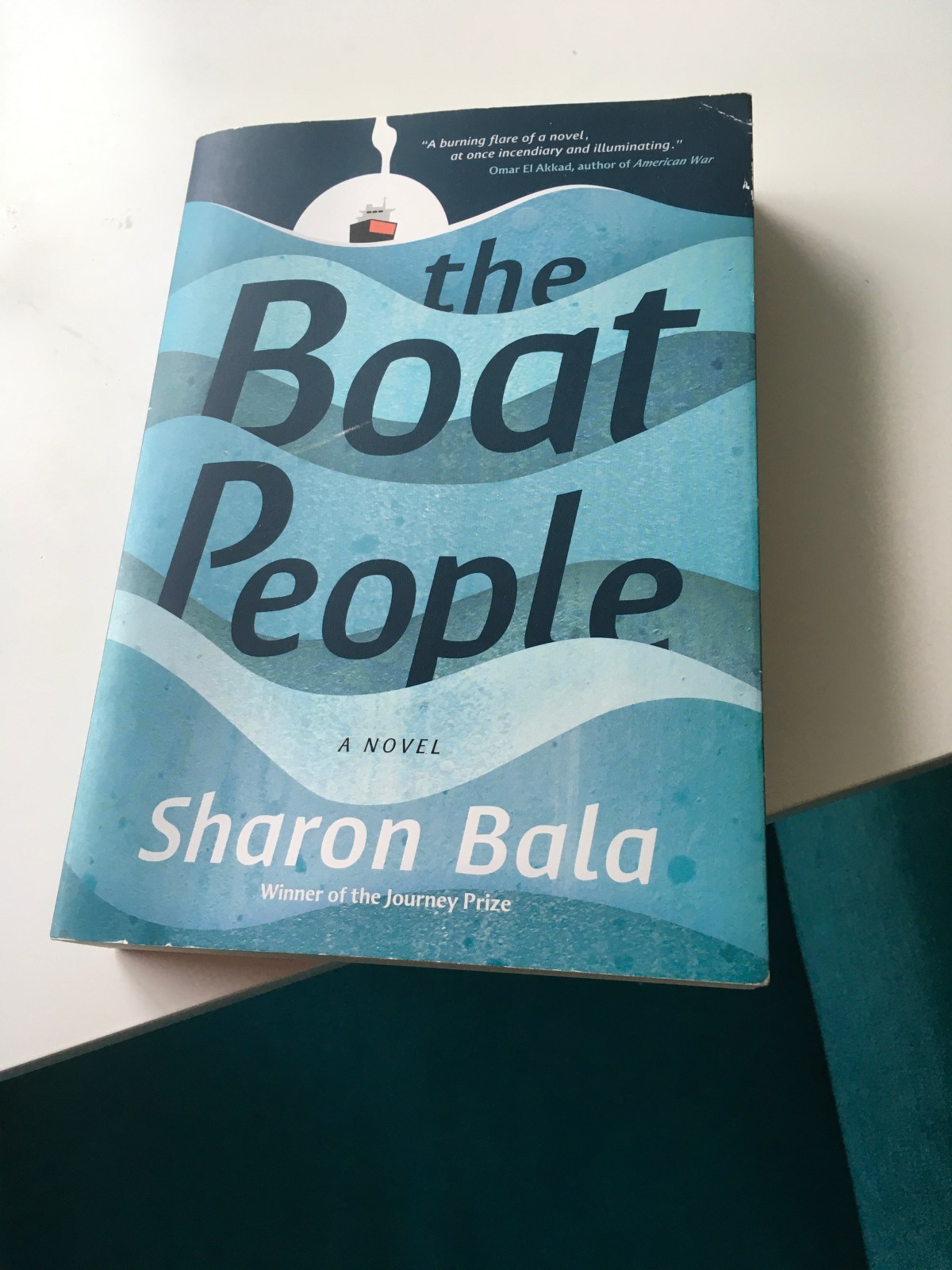
Sharon Bala’s The Boat People

Let me begin by saying that when this book was among the five shortlisted for Canada Reads in 2018, I was ALL in. I bought it and expectantly looked forward to reading it. I wanted to love it two years ago, and I still wanted to love it when I excitedly picked it off my bookshelf a few weeks ago. Except, I did not.

It was not all bad news though, so let me begin with:

What I did enjoy AbOUt this book:

  1. The history. Bala takes a very important moment in history (really only 10 years ago when you think about it) and engraves it into the public conscious with this book. The arrival of a cargo ship full of Sri Lankan asylum seekers on the coast of British Columbia in the summer of 2010, is the perfect backdrop for a narrative that shakes the makeup of what it means to be human and survive in a world dogged by cruelty, personal agendas, the preservation of the status quo and sheer selfishness.
  2. The moral dilemma. Characters present with moral dilemmas in this story, and sometimes, when these conflicts are thoroughly explored, they are gripping, poignant and heart-tugging. They are relatable. Bala takes me on a journey sometimes where I get a privileged insider’s look into the mind of a refugee claimant. Here, the conflicting moral sinews are palpable. I feel them tugging in all directions.
  3. Some characters. The character of Mahindan gripped me from the start. I was ravenous to learn more about him, his history, his thoughts and emotions, his fears and struggles. I also felt drawn to Priya’s Uncle and her father and would have liked to know more about each. Their stories were rife with suffering and moral conundrums and humanity. And these really got me going!
  4. The imagery. Sometimes, Bala surprised me with such vivid imagery that I was sure I was there. I shivered with anxiety as I imagined myself in war-torn Sri Lanka, in a camp with a young child to protect. Her descriptions were always rich, dripping with information about Sri Lankan culture and history and geography.

But then, there were the reasons I could not bring myself to love what I was reading…

What I did not enjoy about this book:

  1. The writing style. Bala is a clever writer, but I am not sure how well this translates to all aspects of her storytelling. Her writing style waxed pedantic sometimes, belaboring points that made me feel like she didn’t trust in her reader to connect the dots. In other places, her writing took on a split-personality, providing piece-meal information, so as a reader I felt I was suspending myself in improbability, and making leaps that lacked some of the logic to work.
  2. Other characters. While there were a handful of characters that I loved in this book, there were other characters that I could not bring myself to care about. Grace Nakamura was one. No matter what she did, and she did precious little, I felt her presence in the novel to be intrusive. It was almost like she was an after-thought. And characters like Priya and Charlika and Mr. Gigowaz, where they could have been critical, they fell apart when their literary mettle was tested. They were too flimsy to hold at the centre. I felt little of substance was present in their construction. Where their voices could have been loud and strong, they were muted and docile, quick to step into the shadows and disappear.
  3. Too many racial injustice tangents. I wish Bala had focused her novel on the Sri Lankan asylum seekers’ stories and not muddied this book with history about the racial injustice towards our Japanese brothers and sisters during World War II in Canada. I felt like, in doing so, each was not allowed to have its own weight, not allowed to showcase the full extent of what the victims suffered. I get that Bala was trying to offer another perspective on our deep-seated conflict with racial prejudice and injustice in Canada, but focusing on one would have done the issue and her story more justice.
  4. Other moral dilemmas. There are other times in this novel when moral dilemmas are presented as trifle. In these scenarios, they fall flat. They feel diminished, and as a reader, I felt disappointed.
  5. The ending. I am sorry, but I hated the ending. I felt cheated, like I had been strung along with my compassion and concern for the character of Mahindan only to be let down by indecision.

For all my whinging as a reader, I would absolutely recommend this book. At the very least, I was able to learn about, understand and appreciate the context of the Sri Lankan Civil War and the struggles of stateless people who flee for a better future with zero certainty and absolute desperation. Which then brings me to my next point.

While I struggled with specific aspects of this book, as a teacher, I would recommend that it be used in schools to teach our young people about the various waves of migration and accompanying racism here in Canada (and there are many such stories). We don’t teach enough literature by Canadian authors, and Sharon Bala deserves a place in this slow-growing canon. This would be a book that allows many minority students in Canada to see themselves in what they are learning in school, thus creating avenues for the construction of their student voices. Its themes are critical to our Canadian social and moral landscape, to our psyche as a multicultural country, to our TRUE education in the acceptance of all. Sitting at 388 pages, this would be a book geared toward Enriched or Advanced Placement elementary classes or high school students. There are discussion questions at the end of the novel that make for interesting dialogue about a lot of the themes within, so using these in an informally-styled book talk is one way to get students excited about this book.

If you read this book yourself or decide to use it in the classroom, drop me a line with your thoughts. If you decide on the latter and need help compiling resources on how to go about using it effectively as a teaching resource, get in touch! Here’s a starter resource that has been made available by curio.ca, a CBC affiliate: https://media.curio.ca/filer_public/f4/a4/f4a4275e-4ebe-4487-b9b6-d71a757bd379/cr18bgboatpeople.pdf

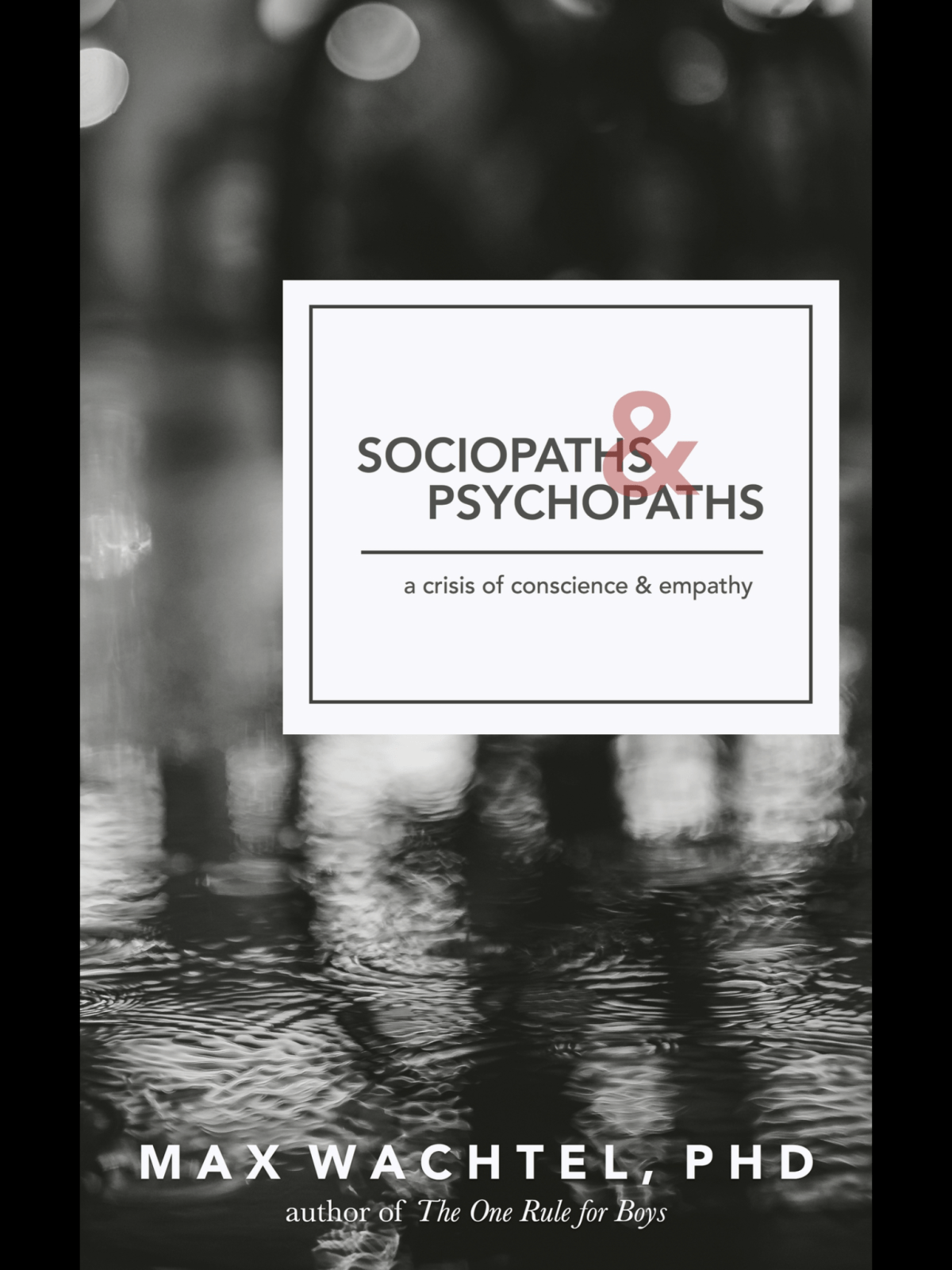
Wachtel on the Who, What, Why and How of the Psychopath.

As a Social Science teacher, I am always looking for books that allow me to discover more about, and understand the social sciences in nuanced ways. This becomes particularly helpful when answering questions that my students have about various concepts like: What is the difference between positive and negative punishment? What was Freud thinking when he came up with the Oedipus and Electra complexes (complexi?)? Or, my personal favourite: What are the precise differences between a sociopath and a psychopath, Ms.? Good question, let me look that up…

Enter, Dr. Maximillian (Max) Wachtel’s succinct and concise research and analysis on the sociopath and psychopath: a short book titled, Sociopaths & Psychopaths: a crisis of conscience and empathy. A forensic psychologist who has interviewed a plethora of criminals for various court cases, Wachtel makes the research (precious little and none of it in any way definitive) accessible to readers of all strokes. You don’t need to have a PhD in Psychology to understand what he is saying. As a teacher, I appreciated the language he used to break down the most important concepts around this intriguing branch of psychology. Enriched with information from various sources (Wachtel has clearly done ample research, evidenced by the 80+ resources he has cited at the end of his book), Wachtel adds an extra layer of appeal for readers by introducing this subject from different angles, he throws in a bit of philosophy, the law, neuroscience. At turns cheeky, serious and cringingly (is that a word?) funny, Wachtel makes you feel smarter while somehow managing to entertain you (this is like EVERY teacher’s job description; yes I took down some tips!). He covers the amygdala (one of my favourite parts of the brain!), the concept of free will and morality, of having a conscience or being amoral, the DSM-5 (that fancy book that psychologists use as A tool – it is one of many – to diagnose mental disorders in patients), and so much more with such ease. I feel like a bit of an expert on the topic myself, off I go to write a book about it…

In all seriousness, if you are in any way interested in learning more about sociopaths and psychopaths (and don’t pretend you aren’t; I know you’ve binge-watched nearly every show on Netflix with a deranged character as the lead), give this quick and comprehensive read a try. I finished this book in two sittings, in about an hour and a half (I was taking notes for a project I am working on, so it took a bit longer). Fellow Social Science teachers, this book might be of particular interest to you, especially if you decide to do a lesson on Antisocial Personality Disorder (Sociopaths and Psychopaths technically fall into this category). You can also encourage your senior students to read it themselves if they are interested in the topic. Happy reading, and let me know what you think!

Atwood’s The Handmaid’s Tale

Margaret Atwood is my favourite author. I have yet to come across another writer capable of dethroning her genius. The Handmaid’s Tale has always been on my to-read shelf, but life has constantly gotten in the way of this endeavour. When AMC debuted its series with the same name, based on the book, I knew I had to take it off my to-read shelf and start reading it. I want to watch the show (it has Alexis Bledel in it!) and in my chronology of life events, watching shows are always preceded by reading books.

This book is unlike Atwood’s later work, The Blind Assassin being one of her masterpieces. It infuses strong elements of dystopian fiction that paint a very bleak and often terrifying setting for the characters. A setting that is geographically the United States of America, specifically, the State of Maine, this book follows Offred as she tries to make sense of her present circumstances.

The writing style wasn’t to my taste in this one. I would use the word “excessive” to describe it without being too unkind. The phrases are often clichéd, and seem as though they are struggling to fit into a paragraph but cannot because their edges cause friction, thus making them stand out. Having said this, I am going to go ahead and contradict myself at least in part by noting that the language is very graphic and successfully showcases the chaos that ensues in a dystopia.

Atwood is one of those intelligent authors who despite being so brilliant, respects her audience’s ability to possess a similar intelligence, and in doing so leaves room for us to draw connections and reach expected conclusions necessary for the flow of her narrative. This is one of her earliest works that I have read, and in it I see this trust of her audience just starting to develop. Unlike a lot of authors, Atwood does not patronize her readers by explaining everything.

In the character of Offred I found a young woman who seems confused and unsure of how to tread forward. Perhaps Atwood structures her novel around this lack of certainty because by its very nature a dystopia generates chaos, even if it tries to maintain structure. Offred’s character is layered with weaknesses and perhaps she needs to be weak in order to remain a puppet in the dictatorship she finds herself. She presents with actions that lead the reader to pin hopes on her ability to be a dissenter and overcome the dystopia, but Atwood does not make it clear that Offred will have that opportunity.

In the character of Moira, Atwood starts off with a brazen woman who some readers may argue carries the entire weight of redemption, but Atwood’s narratives are saddled with the shadow of reality. This is not a fairy tale.

Women’s rights is a major theme as is the bigger question around what lengths are excusable when trying to maintain the propagation of mankind. Power is indubitably analyzed from several angles and characters’ actions and emotions are dissected to reveal much about human nature. This book on the whole takes a magnifying lens to the relationship between fear and power.

The ending of this dystopian tale feels hokey, the historical notes at the end don’t do much for the narrative as a whole, and I suspect they were an attempt by Atwood to add some closure to her tale after leaving us on a dissatisfying cliffhanger. To that end, the ending left me feeling cheated. Atwood creates this dystopian society with such complexity, constructing details to support various levels of function, and the ending felt so “loose” that the entire novel seems to fray a bit because of it.

Still, this novel is not completely without merit. Atwood layers incredible detail which could only stem from deep research, and dexterously conveys the workings and horrors of a dystopian society. I also enjoyed the attention to detail in the references Atwood makes to other cultural groups and the different events that shaped society over the 20th century.

I remain convinced of Atwood’s genius but The Handmaid’s Tale left me disappointed and wanting. While the writing style fell short of perfection and the ending could have been stronger, I would definitely recommend this book. It may be a biased recommendation because I love Atwood’s work and who she is as a person, but this book does much to open our eyes to a dystopian culture so horrifying but at the same time so incredibly real. It is a staunch lesson in what happens when fanatics are given power by ordinary men and women who are frozen by fear.

As I read this book written in 1985, I was mortified by the connections I kept making to our present-day dystopia and the sheer anarchy that ensues when thousands stand idle as a brute force is handed unmitigated power. Atwood has an untouchable talent for asking some of the hardest questions and making you overturn your previous perceptions. Not as brilliant as her later work, but still worth the read.

©booksnnooks.org All Rights Reserved


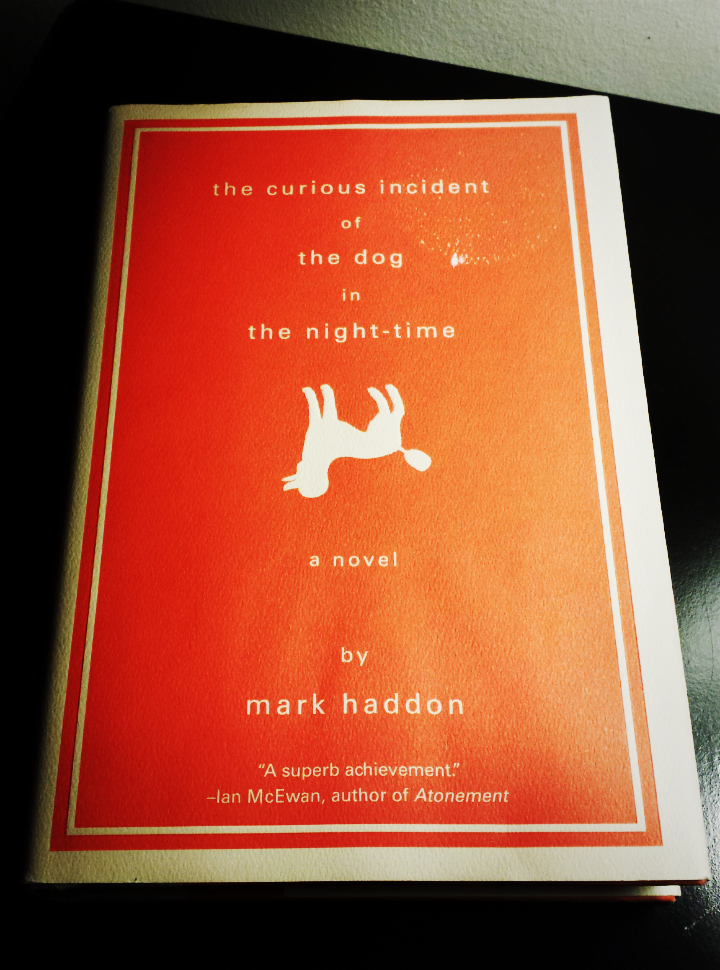
The Curious Incident of the Dog in the Night-time is a charmer!

For those of you who have first-hand experience with Autism Spectrum Disorder and Asperger Syndrome, this book will be a welcome read.

Mark Haddon delves into the mind of an individual with Asperger Syndrome, and this 15-year old displays all the signs of a Savant. The story is charming in that the Savant character of Christopher narrates with such bare-boned honesty and hilarity. Haddon cleverly uses the dual perspectives inherent in journal writing as well as writing a piece of non-fiction to convey the workings of Christopher’s mind. He does so with such clarity that the reader is able to appreciate how people with Asperger and Autism are different from, but also the same as what our society might view as the “norm”.

This book is also a touching tale of family relationships and the hardships that come with dealing with stress, developmental disabilities and mental illness. The characters are painted as real people with a plethora of flaws, but also endearing qualities that allow them to redeem themselves.

What really struck me about this book was Haddon’s ability to capture the concept of emotions in Christopher. Haddon gives physical and literal descriptions of Christopher’s emotional roller coaster ride. This is a sophisticated attempt by Haddon to help his audience understand that people with Autism and Asperger Syndrome are not completely bereft of feeling emotion, even if they are unable to express their emotions in socially-recognizable ways. I also appreciated that Haddon left the interpretation of the physical descriptions to his audience’s intellectual abilities, proving that he is not only a clever writer who is able to convey complex concepts, but one who trusts his readers’ ability to understand those concepts for themselves.

For teachers who are looking for ways to bring components of inclusivity into the classroom, this book is a well-written and easy-to-follow account of what it means to have a developmental disability like Asperger Syndrome. For many students who do not understand the nature of this Syndrome, this is as close to a science class as they can get while having a lot of fun. I would recommend this for junior classes (Grades 4-6) and structure the reading of this as a Book Talk to spark critical-thinking skills and allow for student-directed informal discussions.

Further, in Christopher’s mother, Haddon uses the opportunity to touch on what it means to live with a Mental Illness. While this should not be used as the complete manual for understanding mental illnesses, it is certainly a good place to begin a conversation around this fast-growing illness that is crushing many in our society. Teachers, this book will ignite a lot of very profound conversations in your classroom! If you do decide to use this in the classroom, please get in touch and I will help with ideas for how to implement the same.

Happy Reading!

©booksnnooks.org All Rights Reserved


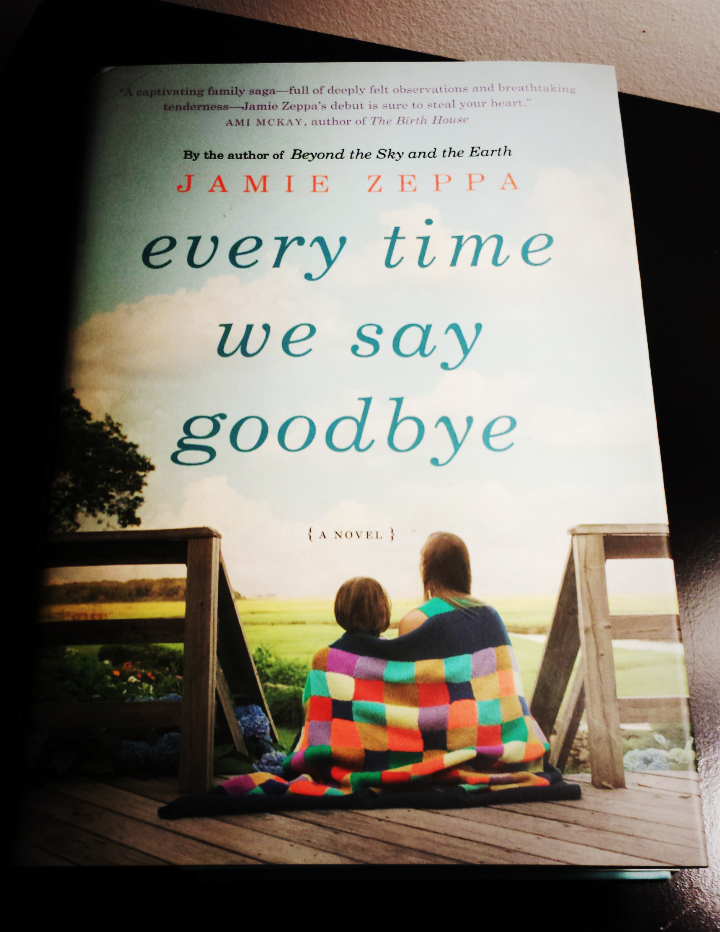
Jamie Zeppa Delights!

When I came across Jamie Zeppa’s novel, Every Time We Say Goodbye, I was intrigued. The story held promise, a tale of family, of relationships broken and lost, so I took a chance. Boy, did it delight!

A Canadian author, Zeppa weaves a narrative that unveils much depth to all the characters presented. Relationships are tested and the concept of love is fractured into an array of colours. Maternal love is poised in a precarious position, choices reveal character definitions and time spins everyone into different directions.

There are many things I enjoyed about this book, prime being the writing style. Zeppa has a flair for the poetic. She creates sentences with such nimble agility that the reader has no choice but to allow him/herself to be swept through this story. I breezed through this 342-pager in a mere 2 days and not because it was an easy read. Saying so might diminish the value and depth of the content, but it was a read that was not difficult to navigate. It was seamless, it flowed beautifully. It was heavy in emotional content, and at times I found myself having to tear away from my attachment to the characters by taking a break from the book. Zeppa creates a world where the reader, although an audience looking into the lives of the many characters, can feel a part of their lives.

The characters are well-considered and painted in rich colours, each manifesting human qualities that make them seem real. I couldn’t help but wonder if this story takes from some threads of Zeppa’s own life because she tells it with such authority on the subject of family, relationships, loss and love. This book is told from the perspective of four specific characters: Grace, Dawn, Laura and Dean. My heart was particularly wrenched by the character of Grace, a character rife with her own foibles and strengths. Grace is presented as a stoic character, the ‘acceptor’ of all action that takes place around her. At some times, the reader might even shrug Grace off as boneless and feel frustrated with her choices, but Zeppa leaves room for redemption as the ultimate test is presented to Grace’s character. The characters of Dean and Laura in many cases act as fillers for the narrative. However, Zeppa has taken much care to develop these characters and layer their lives with action, belief, thought and intense feelings. Dawn’s character is quite richly entrusted with different tiers.

And if one were to think that authors are good at writing from the perspective of just one or two age groups or a specific gender, Zeppa blows that assumption to smithereens. She tells this gripping story from the perspective of a little girl, a teenage boy, a middle-aged woman and the elderly. Every character, no matter how much ‘line-time’ he/she is allotted, is developed into a complete person. Adding quirks and packing in detail in necessary places and sometimes unexpected but welcome ones, Zeppa hooks you into this world of a family struggling to connect on so many different levels.

Zeppa touches on a variety of themes with a few as her front-runners. She deals with the theme of Mental Illness quite well. Dexterously and with much sensitivity, she paints the experience of depression for the reader, instead of throwing out a label and colouring the reader’s perspective from the very beginning. In doing so, she brings much-needed awareness to depression and elicits an empathy and understanding for those who suffer from the same. As well, the theme of Motherhood really jumps off the pages in this book because Zeppa does such a phenomenal job of portraying it from so many different angles. With Mother’s Day just around the corner, mothers and their adult children everywhere will appreciate the messages of maternal bonds, sacrifice and most importantly love that Zeppa has to offer.

I would recommend this if you’re into the themes of mental illness, family, maternal bonds, relationship struggles, loss, sacrifice and love, just the everyday messiness of living. A poetic read that keeps you hooked around the suspense-filled turns until the unveiling at the end, this book is well worth the time. If you happen to read Every Time We Say Goodbye, be sure to drop a line letting me know what you thought of the same!

Happy Mother’s Day to all you lovely moms out there!

©booksnnooks.org All Rights Reserved

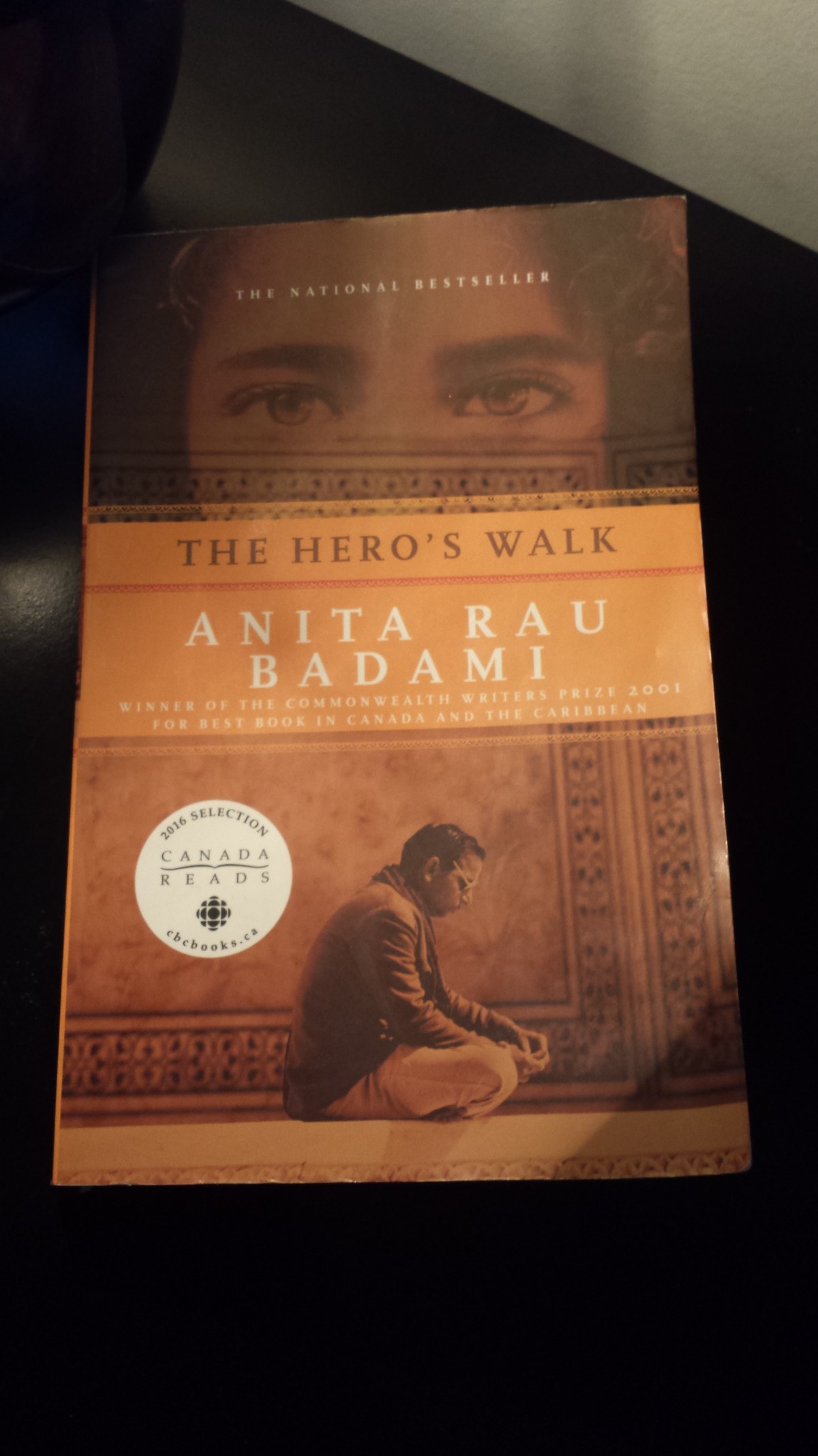
A Canada Reads Read You NEED to Read: The Hero’s Walk

Rating: 5.0/5.0
It has been a while since I have reviewed a book on here. Reading has been a bit low on the list of things to do lately, but I finally got around to reading The Hero’s Walk, a finalist on CBC’s Canada Reads list for 2016.

When I attended Canada Reads last year and watched the panel of Canadian celebrities passionately champion their respective novels, I honed in on 3 books I knew I was going to enjoy. I have already featured 2 on my blog (Bone & Bread and Birdie). The Hero’s Walk by Anita Rau Badami was last on my list and without further ado, here it is!

Badami opens her 359-pager on a hot July morning in a village in India,

“In a few hours the heat would hang over the town in long, wet sheets, puddle behind people’s knees, in their armpits and in the hollows of their necks, and drip down their foreheads. Sweaty thighs would stick to chairs and make rude sucking sounds when contact was broken.”

I am usually hooked onto a book within the first 2 pages. Once I get past that and if I am struggling to read it, I never will. Badami though is an expert at her craft. She carefully constructs her words into ropes that tug at you ever so gently and suck you right into her world of regret, guilt, anger, resentment, longing, pain, loss, misunderstanding and the tiniest flicker of hope. She is masterful in her creation of characters that are so well-developed that they could easily be people in your life. With her scintillating metaphors, she captures your imagination on so many different levels and provides you with a wholistic picture that appeals to you through a variety of senses. Badami is a snake-charmer of sorts with her poetic language subtly creeping up on you and making you marvel at the dexterity of her mind and hand in conveying a beautiful language of her own. Her metaphors and similes are exquisite delicacies waiting to be devoured! Not only is the plot of her book a field rich in fodder, her language is so beautifully carved out as well.

Badami knows how to create in her reader a sympathy for all her characters, even the most hated of them. The emotional ride is quite an intense one and there were times I had tears streaming down my face and I had to put the book down for later to keep from becoming too emotionally-overwhelmed. I was thoroughly impressed by Badami’s ability to take on perspectives of people from different cultures and ages and pull it all off.

Predominantly based in India with a few pages lightly brushing through Vancouver in Canada, this book exposes Indian culture and lifestyle bare. Badami makes no bones about the conditions that people in this village have to contend with. You are equally shocked, disgusted and in awe of how life operates.

Canadian actor, Vinay Virmani who passionately argued for The Hero’s Walk to win last year promised that he would work on making this book into a major motion picture. I hope Mr. Virmani is hard at work on fulfilling said promise because I for one cannot wait to watch it! I don’t usually give my books a full rating, but this one deserves it.

©booksnnooks.org All Rights Reserved

Joel Osteen’s Think Better Live Better: Hope in 207 Pages

Rating: 5.0/5.0

Joel Osteen is a well-known name in religious Christian circles. This man has an extensive media persona and for all the right reasons. With the pseudo-miracle workers that prey on people’s vulnerabilities, it is easy enough to lump Joel Osteen into the same category, but this man actually spreads valuable messages. I have watched him on T.V. and read his books and my deduction is simply this, he actually cares about making a positive difference in the lives of the people he hopes to touch.

I recently read his latest book, Think Better Live Better that came out this Fall (2016), and if anyone should need testament of how a book can change your life, I would call into admittance this one. The thing that strikes me most about this book is the humility inherent in Osteen’s writing. He is obviously a man of much influence, but he still writes to his readers as one of God’s humble servants, with respect, kindness and gentleness. It is this tone that will render the readers most set in their ways more than willing to let him in to change them for the better. This book brims with positivism, and it is not just the kind that throws a bunch of feel-good sayings in your face and then scampers off the page. No, Osteen goes beyond that to offer real-life examples and opportunities for you to apply his teachings. He doesn’t heap it all into a few hundred pages. He breaks it down into little lessons that will get you thinking about how you can apply them to your life with the turn of each page. He repeats his positive messages over and over again and finds clever ways to connect his teachings, weaving in powerful and often poignant real-life stories.

Bursting with words of hope, faith, charity, kindness, and truly uplifting stories, Osteen’s genuine desire to help, to reach out and enable people shines through and makes you want to take stock of your own life and rise up to meet your divine destiny. This book is not exclusive to the religious or followers of only Christianity or even fans of Osteen. No, this book is for anyone who has lost themselves, lost hope or faith or lost the will to try harder. This is for those people who need someone to believe in them so they can straighten up and forge ahead to fulfill all they were meant to. In an age where we have become more aware about how to live healthy lifestyles, tapping into meatless diets and better fitness levels, there is something to be said for nourishing your emotional and spiritual selves. There is something to be said about the necessity for hope, and this book is literally hope in 207 pages. This book helped me navigate a dark time in my own life, and with each page I read I felt my own hope beginning to grow into its former self. If you are looking to love yourself again and to live a more fulfilled life where you can then leave a positive legacy, this would be my recommended go-to. If you do get around to reading it, I would love to hear what you thought!

©booksnnooks.org All Rights Reserved

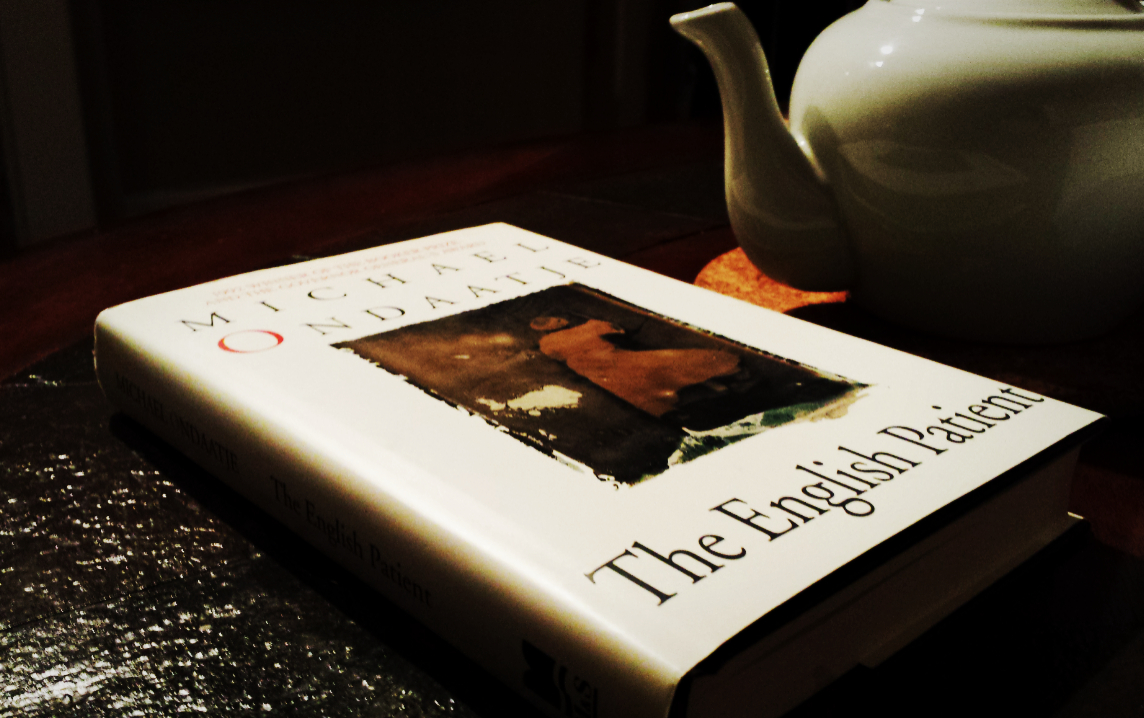
Michael Ondaatje’s The English Patient

Rating: 3.5/5.0

The English Patient was not specifically one of those book that I planned to read and finally got around to. I just happened to come upon it on one of my second-hand bookstore adventures. This one is a cute little hole in the wall along Kingston Road at the Beaches in Toronto called The Great Escape Book Store. Canadian author Michael Ondaatje was a familiar enough name, but the book I had not heard of before. So, I paid the requisite “got it for a steal!” price and tucked it away on my shelf for a later read. When I finally got around to it, I was mildly pleased that I had picked it up.

This book  opens in a villa in Italy during the final legs of World War II. Our leading lady is Hana, a Canadian nurse, our leading man it would seem, her English patient. Hana spends her days tending to her patient who is severely burned and confined to a bed. A quarter of the way through this book, Hana is joined by a friend of her father’s, David Caravaggio, a Canadian thief, and about a half of the way into the book, a British sapper for the Allied Forces, Kip (Kirpal Singh). The foursome make a very odd troupe of companions living day-to-day in a mine-infested village.

Ondaatje begins with poetic nuances that captivate the poet within you. He makes fluid the most unnatural comparisons, making you conceded to the validity of his comparisons. His words flow like an elixir of beauty in our brain chemicals. The first third of the book follows through with patchworks of history and fiction loosely following each other, as if chronology and order are the furthest from his mind, his mind caught in a rhapsody of poetic euphoria, of sensual imagery so seductive you are moved to your baser desires for beauty and wonder. There is the dry second third that you will find yourself braving because of an expectation that the final third will be a delivery of enormous mental engagement, and you will not be disappointed. Ondaatje holds his reader captive and then releases the flood of the story, the climax and the suspense, the enigma that is the Enlgish patient and the periphery that are Caravaggio, Hana and Kip.

Being a novice reader of Ondaatje, I was impressed with his level of detail around the intricacies of making and disarming bombs and the life of a Sapper in World War II (a sapper being a mechanical engineer that detected and disarmed bombs, something new I learned as well) among other things. His attention to detail and his ability to weave poetry into his metaphors are indeed praise-worthy. I particularly enjoyed how he appealed to all of my senses in the setup of his metaphors. The final third of the book really opens up to reveal a magnetic storyline that the first two halves have been building towards. At this point the English patient is the enigma that the reader discovers to be more than meets the eye. Hana and Kip revel in their own story as if the rest of the world were suspended in the balance. Caravaggio is the addition to the tale, as if an afterthought necessary to only move along the action so it does not seem too clichéd when Hana or Kip do it.

However, it is not all praise for The English Patient, because the organization of events wracks up a little confusion in its attempt to offer the reader the opportunity to feel intrigued. The second third of the book, as I called “dry” before, made the work wanting in the consistency of aspired greatness. It was a struggle to forge through this section, but as with all my reading, I am committed to finish once I begin, and again with this one I did. Despite winning the Booker Prize and the Governor General’s Award in 1992, I couldn’t find myself agreeing with the respective panels that came to these award decisions. Nevertheless, The English Patient was still a worthwhile read.

©booksnnooks.org All Rights Reserved


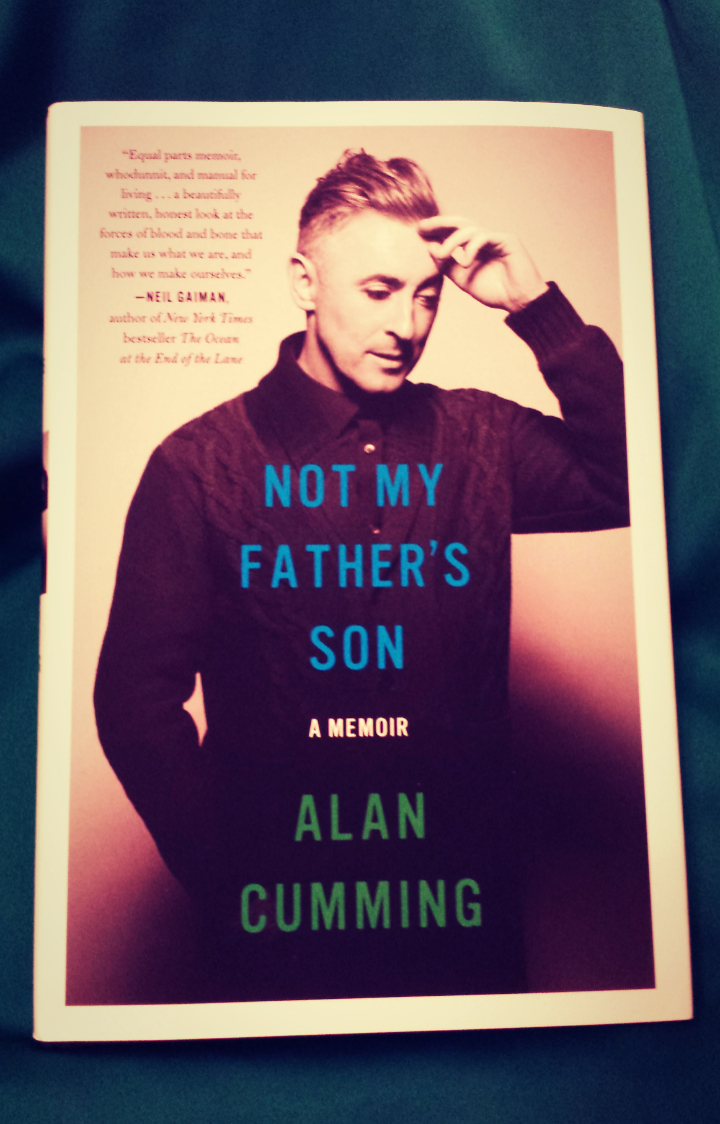
A Memoir by Alan Cumming

I have been a fan of Scotsman, Alan Cumming since the first time I saw him on The Good Wife. His character, Eli Gold, is endearing and a hoot, a combination that Cumming exudes (as I found out) in reality. When I chanced upon his memoir, Not My Father’s Son, I was curious to learn another dimension of him from the one the T.V. world provided. With a flair for the dramatic, perhaps equal parts natural and spurred on by his background in theatre (he has played some fascinating roles!), Cumming narrates some very tense moments in his life.

There were more things I liked about this book than I thought I would. For one, Cumming is an undeniable virtuoso at the way he tweaks language to convey different thoughts. His writing style is more poetry than one might expect, and I was drawn to the way he describes mundane moments and everyday feelings with such creative aplomb. My lexicon was stretched reading words and sentences spun at different geometric angles to think about life patterns in a myriad of ways. Through his writing style, Cumming delivers not just his attraction to the dramatic, but other bits of his personality that you are likely to fall in love with. He is a challenger of the conventional at every turn, and not just with his words, but more so with the minutiae of his actions.

Another reason I liked this book was because Cumming is very candid in his evaluations of his life. I wanted to hug the man as I read his words! Cumming is never bitter, never malicious in his retelling of the pain he suffered as a child. He is loving, kind, and even understanding of his father’s inflicted pain on him, all the while being brave and unaccepting of future attempts to be hurt.

Perhaps the only mild criticism I have of this book is that it read more as an introspection and inspection, than with much attention to its having a readership. At times I found Cumming to be ruminating in things when I willed him to move on. At these moments, I felt a bit ‘stuck’ in my reading and agitated at not being allowed to make inferences of my own. However, I realize that this is a memoir and therefore an expression of Cumming’s rather painful journey to achieving healing, and an audience was not a priority in its making. As a writer myself (a novice one at that), I recognize this need to write for expression and healing. In the same vein, Cumming chose to share his writing on a larger scale to needle out the stigma around suffering the shame and life-destroying effects of domestic violence, as he says “Writing this book and knowing it will be discussed around the world is in some way insurance for me that my story will never be thought of as commonplace, never acceptable…”. And yes, I know that in seeing the other side of the coin, my criticism invalidates itself.

This book provides poignant insights into issues of domestic violence, child abuse, mental health and the effects of war on a person’s psyche. Cumming’s larger-than-life personality is magnetic, and his sentences are poised to capture your every sense.

This book review also (like Shania’s autobiography) does not get a rating, because it is not writing for me to chalk up to a score. If you are a fan of Alan Cumming though, I reckon you’re already looking for a way to get your hands on this book. It will make you love the man even more.

©booksnnooks.org All Rights Reserved