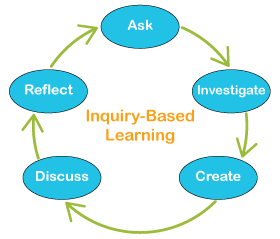
Why Inquiry-Based Learning?

Inquiry-Based Learning is a BIG component of student learning. It begins in Kindergarten and then carries through as much as possible, all through a student’s life. The idea is that when a student is able to engage in activities where they themselves can begin thinking about the problems and solutions to the scenarios inherent in those activities, their learning is more effective.

inquiry based learning blog
Source: Google Images

The above model begins with the child asking him/herself or the teacher a question. An investigation is carried out whereby the child creates a product to explore that question. A discussion is held with a peer during imaginative play or with oneself as the child plays alone, to be able to answer that question. The reflective process then follows right away where the child begins to look at his/her design and refine it if necessary for added understanding.

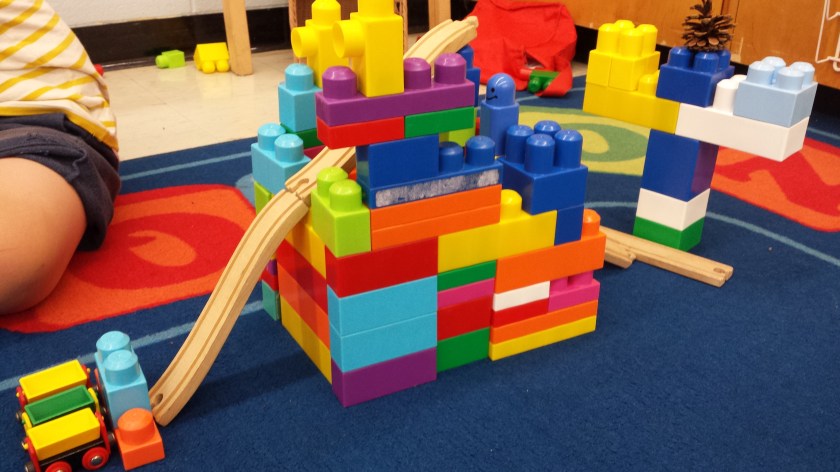
As part of our classes this summer, my teaching partners and I make sure to provide our students with ample time to explore different manipulative toys, such as LEGO and other building materials, to help with our students’ inquiry-based learning. Below are some creations made by our students aged 4-8:

This slideshow requires JavaScript.


20160808_133506.jpg


©booksnnooks.org All Rights Reserved

Charlie Newton: Hitchcock’s Female pièce de résistance

On a Hitchcock roll here.

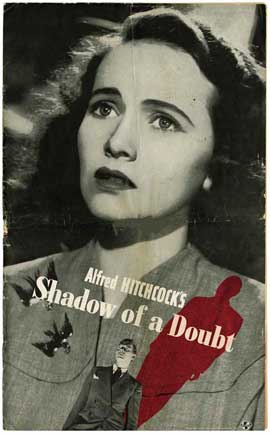
His 1943 Shadow of a Doubt was a psychological cocktail that I indulged in this weekend. I have watched  a handful  of movies from the 1940s, and not many of them showcase a particularly strong female. The leading ladies are abuzz with character (quite possibly just hysterics) in most cases, but tend toward the demure and genteel when push comes to shove.

Not so for Teresa Wright’s character of Charlotte “Charlie” Newton. The movie opens with a zoom-in of a window of a room in the neighbourhood of a town. A man is being chased by a pair of men. The scene cuts to a young girl on a bed, philosophizing about life and the sheer lack-lustre-ness of it all. This is  young Charlie who is named after her maternal Uncle, Charles “Charlie” Oakley. Charles Oakley is the man on the run, but from what? He sends a telegram to his sister saying he is coming for a visit. His sister, ever the naive and doting-on-all-she-loves woman, is thrilled to be reconnected with her brother.

Charles arrives and Charlie’s mood is lifted. Only briefly. She soon catches whiff of something sinister cooking within her uncle. As characters thither about in their roles of sister and husband and friend and detective, Charlie is paying the keenest of attention to her uncle and his odd behaviour. There is a murderer of widows on the run in her country. Is he her uncle?

This Film Noir is marked by moments of psychological twisting as Charlie is first painted as a potential love interest of Charles Oakley’s. The subliminal acts of holding her close and slipping a ring (which is a gift) on her finger border on the verge of incest. However, just when you become uncomfortable with the notion of an uncle being interested in his niece and vice-versa, a love interest for Charlie is introduced, and Charlie herself steps up her game.

She goes from doting niece to shrewd sleuth. She battles numerous dangerous situations and comes out alive. She is portrayed as protector of her mother and family, fiercely determined to venture into uncertainty just so she can uncover the truth. She threatens her uncle with death, and is quite adept at handling herself with grace and coy around men interested in her wit and charm and beauty. Charlie Newton is easily one of Hitchcock’s best leading characters. She has spunk, determination, smarts and grace. And all this packed into a classy slim-waisted dress on heels. It is important also to note the symbolism behind Charlie’s name. She is given the nickname of a boy, but she posses all the wherewithal of a respectable woman. She is portrayed as a character with many angles, all quite fascinating. Further, she is named after her uncle, but she is presented as an alternate “good” version of his character. All this, not bad for an early 1940s leading lady. Hitchcock has proven yet again that he was a master at making a movie that comprises varying levels of psychologically-acute layers, while injecting social issues of the times.

Teresa Wright, for her part, juxtaposes quite well her expressions of fear with grit and ability. Her character walks right into traps in the name of respect and obligation, but walks right back out when she is confronted with someone wanting to take advantage of her perceived vulnerability.

This movie utilizes dark and light to balance quite nicely the themes of crime committed by a man whose heart is ashen with his diabolical thoughts, and a young lady on the brink of womanhood who is bursting with life and wisdom and adventure.

Hats off Hitchcock, this one was spectacular.


©booksnnooks.org All Rights Reserved

Hitchcock’s Rope: Philosophical and Gripping

My fascination with Alfred Hitchcock began years ago when I was little and would watch his movies with my parents. I have to admit, at the time, I didn’t grasp a lot of what was being enacted before my eyes, but now in my young adulthood, I am revisiting Hitchcock’s movies, and I have got to say, his genius is still relevant today.

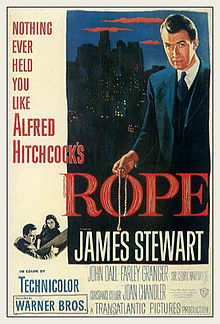
I recently watched the movie, Rope. This 1948 film stars my favourite actor from that generation, James Stewart. Now, if you’re thinking that name rings a bell, you have likely seen him in the holiday classic, It’s a Wonderful Life. James is a superbly talented actor and a timeless one at that, but that is for another day and another blog post.

This movie opens with two of our lead characters, Bernard and Philip, strangling their friend, David, to death. The romantic philosophy of being superior beings collaborating in the masterful art of murder is touted as their raison d’etre, and their reason for committing this heinous act. This philosophy as we learn, has been first espoused by Nietzsche and taught by their college professor, Rupert (James Stewart). The duo then proceed to hold a dinner to “celebrate” this “achievement”. As the guests arrive, we see a very different aftermath play out with the two characters. Bernard is presented as the callous and charismatic psychopath, and Philip is really losing his  marbles with guilt. Enter their college professor, Rupert,  and the evening’s events begin to unravel themselves.

As is his signature trademark, Hitchcock very dexterously incorporates subtle angles in his filming that seek to foreshadow what is to come. The symbolism inherent in the various acts carried out by the characters in this movie, is exceptional. In one scene (AND SPOILER ALERT), Bernard is packaging a collection of First Edition books for the dead man’s father to take home, and he uses the same rope he killed his son with, to tie the books together.

I particularly enjoyed this movie because it got me thinking about society and the hierarchy of beings when it comes  to differentiating between superior and inferior. We see this as a recurring trend today with killings the world over, perpetrated by those holding twisted versions of concepts surrounding race or religion or gender. Friedrich Nietzsche’s Ubermensch or “Superman” philosophy is at the heart of this idea, where he essentially tosses out the concept of Godly values, in favour of an alternative system of values created by those who view themselves as superior to their fellow human beings. Bernard is that character in Rope. With his inflated sense of self, he rests content in the fact that he has carried out the perfect artistic venture to prove his superiority. However, as the movie hurtles towards its inevitable conclusion, all is not what it seems.


©booksnnooks.org All Rights Reserved

Miles Teller: The Essential Ingredient for Today’s Rom Coms

So, if you haven’t heard of Miles Teller, shame on you.

No really, are you not a romantic comedy fan? Do you live under a shoe (rocks are overrated)? Do you not have Netflix?

I have to confess. I have fallen for Miles Teller since I saw my first movie with him, Two Night Stand. This movie, featuring a strong female character, showcased a sincere and quirky Miles Teller in the Quintessential Rom Com. Except, his rom coms are clever. They have the edge of sharp wit, sarcasm and an extra dose of delightful eye-candy. They are your run-of-the-mill boy meets girl, falls in love with girl, stumbles into climactic conflict, and barrels toward a happy ending type. However, Miles packs on a lot of charm. He reminds me of a younger version of John Cusack. John Cusack, also a HUGE favourite of mine, possesses a very similar sense of sharp wit and sarcasm AND eye-candy. Don’t judge me, I like my eye-candy. As a result, I think Miles Teller should be an essential component of Romantic Comedies going forward. I mean sure, add the odd Zac Efron or whatchumacallhim, but keep the classic basic, Hollywood.

In Teller’s case, the roles in his movies seem to be written for him. And it is no wonder that they are quite similar. Now, maybe a case can be made that he is only great for such roles as those in That Awkward Moment, Spectacular Now and Get a Job (I am on a Miles Teller Marathon), however, admit you must, that he is great at them. Personally, I would rather a Master of one trade than a Jack of all.


©booksnnooks.org All Rights Reserved

Championing Graphic Novels for Classroom Teaching

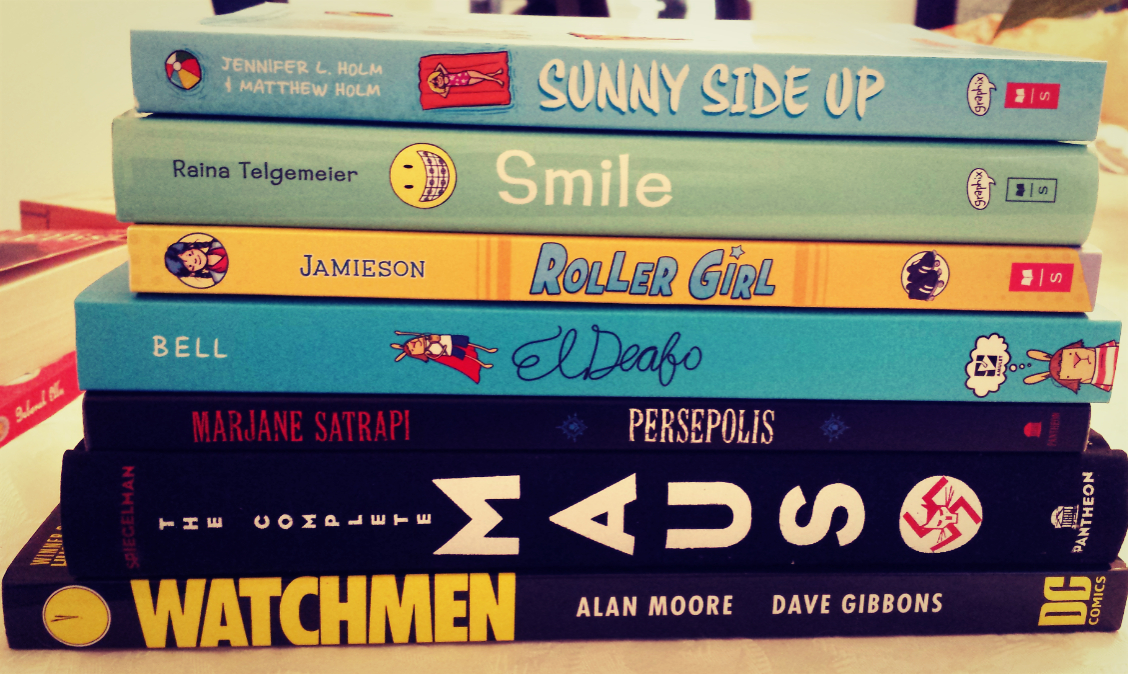
Some of my favourite graphic novels; great for teaching students Grades 4-12

As teachers, we like to revert to the tried-and-true classics when doing Novel Study Units, and teaching our students various bigger life themes. The likes of To Kill a Mockingbird, Inherit the Wind, The Great Gatsby, The Apprenticeship of Duddy Kravitz, Jane Eyre, The Importance of Being Ernest, Brave New World, 1984 and then of course those by the Great Bard, for the intermediate and senior grades. Trust me, I’ve done a good number of these in High School. And then there are the likes of Bridge to Terabithia, Freak the Mighty, Charlotte’s Web, Chronicles of Narnia for the junior grades.

Now, let me pose this question: Have you considered a graphic novel for your Novel Study Unit? I have talked to a lot of teachers, especially in the junior and intermediate grades, and they are incredibly distrusting of the graphic novel. It is viewed by many teachers as a medium of entertainment, and not learning, for their students. Granted, there are graphic novels out there that are created with the sole intent of entertaining, but a lot of incredibly clever graphic artists and writers, collaborate to produce thought-provoking and striking graphic novels.

I would like to make a case for the teaching of graphic novels in grades across the board. I believe they have much value to add to our students’ learning. First of all, graphic novels are not just about the pictures. They are about the relationship between text and image. They are about the meaning in between the panels and the way the characters are drawn and coloured. They are about what is omitted and what is included. They are about meaning and form at their very core. However, they are also incredibly accessible. Graphic novels have the power to engage students who are not willing readers of the traditional text. They have the know-how to capture this audience and potentially turn them into readers. Now, teachers, would that not be a cause for celebration?

Graphic novels further ignite creativity, they inject perspective and then offer other viewpoints contrasting with that first perspective. Art is introduced in an appealing way to students who might not necessarily find themselves drawn to it. The graphic novel has the unbridled power to marry different forms of expression to achieve greater meaning.

Several graphic novels written over the last few years have sought to take big risks and tackle radical topics. Sunny Side Up by the Holm brother and sister duo (Fear not, I shall review this one in time), El Deafo by Cece Bell, Persepolis by Marjane Satrapi, Maus by Art Spiegelman and Smile by Raina Telgemeier (a handful of my favourites) are some of the graphic novels that have burst out onto the scene and made an impact. From tackling big issues of substance abuse to identity and war in Iran, from physical disabilities to World Wars and the struggles of adolescence, these books, and others, have the power to change thinking. They have the power to begin passionate discussion among students. So, teachers, pray tell, do they not deserve a ranking among the greats? Just because they are “newer” and “different” does not make them unworthy of being entered into the canon of literature-teaching tools.

One of my personal favourites is Watchmen by Alan Moore. This masterpiece makes the movie look ridiculous because, within its pages, it houses depth of meaning and form. It catapults the reader into the story and pulls the narrative around that reader-creator relationship.

Graphic novels are not just quick books that you can read on a trip from Toronto to New York City. They are fast becoming vehicles in which to express explosive thought. So teachers, what say you? Give the graphic novel a chance?


©booksnnooks.org All Rights Reserved
 

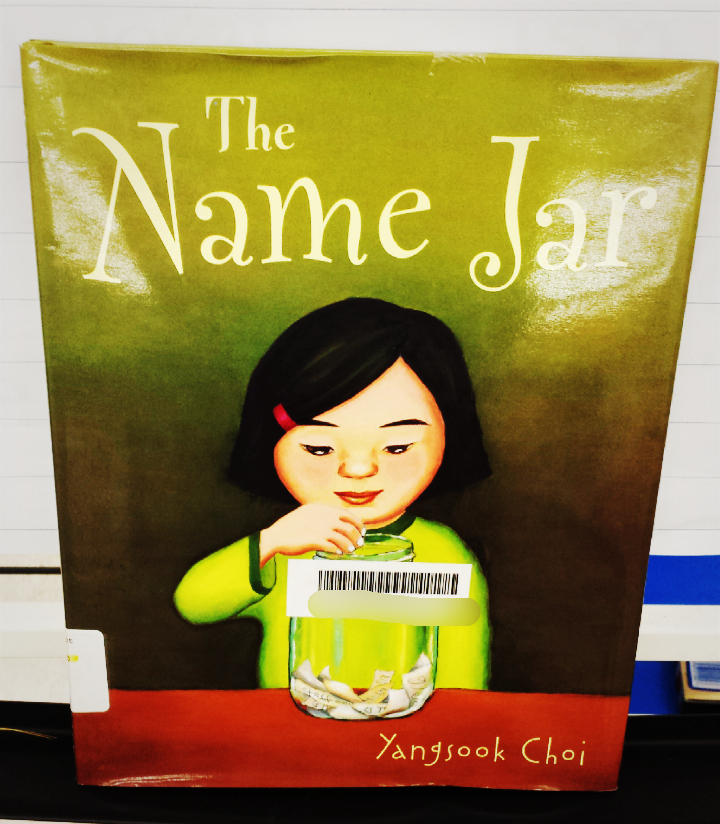
Picture Book Spotlight: The Name Jar

I should probably start this post by saying that this book is a certain gem. What a wonderful concept Yangsook Choi has weaved into the fantastic vehicle of a children’s book! This book opens with a young girl making a long journey that will change her life. Unhei comes from Korea to America, and to a new school. Before she gets to her new school, kids on her bus begin to tease her about her name. How will she possibly get through the first day of school?

Choi weaves a compassionate and thoughtful cast of characters in this book. The Korean tradition is briefly touched upon, and a young child’s love of her native land is showcased with generosity of character. Unhei goes to school and decides she will not reveal her name to her fellow classmates, saying that she hasn’t picked one yet. She does not want to risk being bullied again. Her classmates, in helpful form, put together a Name Jar for her, with suggestions for what name she could pick. All except Joey. Joey takes some extra time to get to know Unhei, and the story thumps along to its heart-warming end.

This book delves into cultural identity and what it means for people to uproot themselves from familiar cultures and assimilate into new ones. It especially focuses on the struggle young children face, and the bullying that oftentimes ensues. It measures the weight of a name and what it means for every individual. It is also a warm narrative of what happens when you can find your identity in the country you came from, and the one you now call home.

Teachers, set mostly in a school, this book provides the perfect backdrop from broaching the conversation around cultural identity, bullying, family, self-identity, and what it means to be who you are. This books is also versatile in his accessibility. It can be read aloud to students from grades 1 – 6.

As an Extension Activity, you can do a Name Jar Activity with your students where you invite them to ask parents and/or guardians about how they got their names. Each student can then write his/her name and the reason for being given that name on a piece of paper, and slip it into a jar at the start of class the next day. Circle Sharing Time can be utilized to give each child the opportunity to pick a piece of paper out of the jar and the teacher can read out the contents of the paper. Such an activity would allow a better awareness of the identities and lifestyles of their peers, for each student.It can also be a great opportunity to help sow the seeds of respect, if their leaves are not already flourishing.


©booksnnooks.org All Rights Reserved

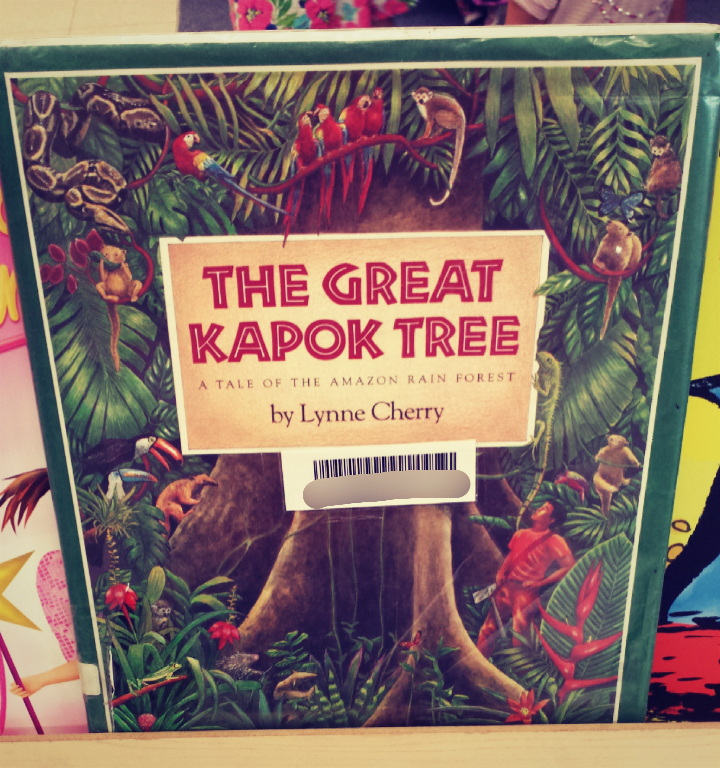
Extending The Great Kapok Tree by Lynne Cherry

So, this time I have given it all away in my title. I will be writing about how The Great Kapok Tree by Lynne Cherry is a FABULOUS resource for teachers as a read-aloud, and how to extend this book in at least one (very fun) way.

I have read this book several times now, and have developed a pattern for when to ask what questions and how to get the most out of it. Cherry has masterfully crafted a book where young children are walked through the process of recognizing the importance of nature, step-by-step. The book opens with GORGEOUS illustrations depicting the Amazon Rain Forest. Teachers, you can easily do an introductory lesson on geography, and get your students to look up where the Amazon Rain Forest is located, and develop a sense of the setting in this book.

The reason I like this book so much is because it breaks down the benefits of nature and the importance of preserving it, page by page. Students can also widen their knowledge of flora and fauna through the pictures of birds, animals and plants that they see. You see toucans and sloths, monkeys and anteaters, jaguars and macaws, and your students will LOVE identifying and learning about these animals.

Various concepts you can touch on briefly or extend in detail are: camouflaging, the role of trees in providing oxygen, the importance of preserving trees for future generations, the food chain, animal habitats etc. This book is a FANTASTIC jumping platform for other concepts that you want to introduce to your class. Typically, I have read this to grades 2 and 3, but this can be stretched to the lower junior grades as well, 4 and 5.

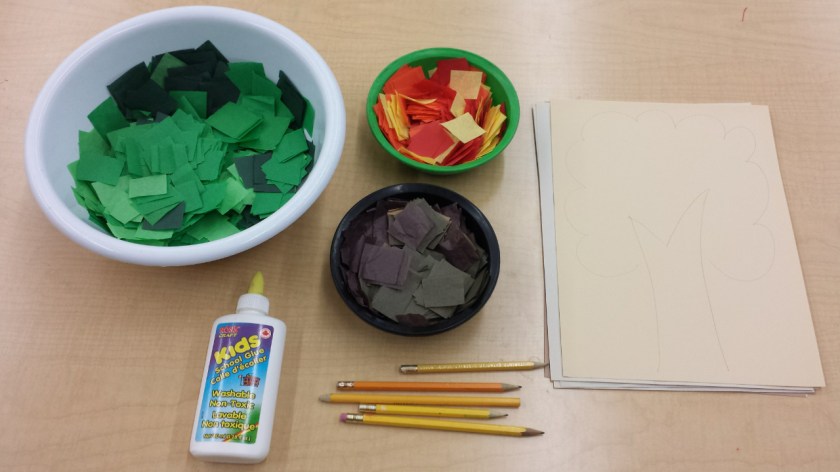
A great extension activity that we used to avail of the wonderful cross-curricular opportunities this book offers, was doing an art project with tissue paper. We used cut-up tissue paper in different tree-colours to make trees. I further encouraged my students to note down in one word or phrase, the importance of trees to emphasize the literacy component of their learning, and to help with summarizing skills.

The following materials were used:

wp-1468460188165.jpeg
For this project you will need tissue paper of yellow, red and orange, and different shades of green and brown, cut up into neat little squares, glue, pencils and blank sheets of paper with tree outlines drawn on.

I took a video to best illustrate the process, as below:

And here are some finished products. Such artists the kids are!

This slideshow requires JavaScript.

So what are your waiting for? Go on! Give this INCREDIBLE book a read aloud and then do this COOL activity. You will convert even the most inattentive and hard-to-manage student in your class, as (s)he sits down quietly and completes this (almost) therapeutic project. Happy art-ing! And, you’re welcome.

©booksnnooks.org All Rights Reserved

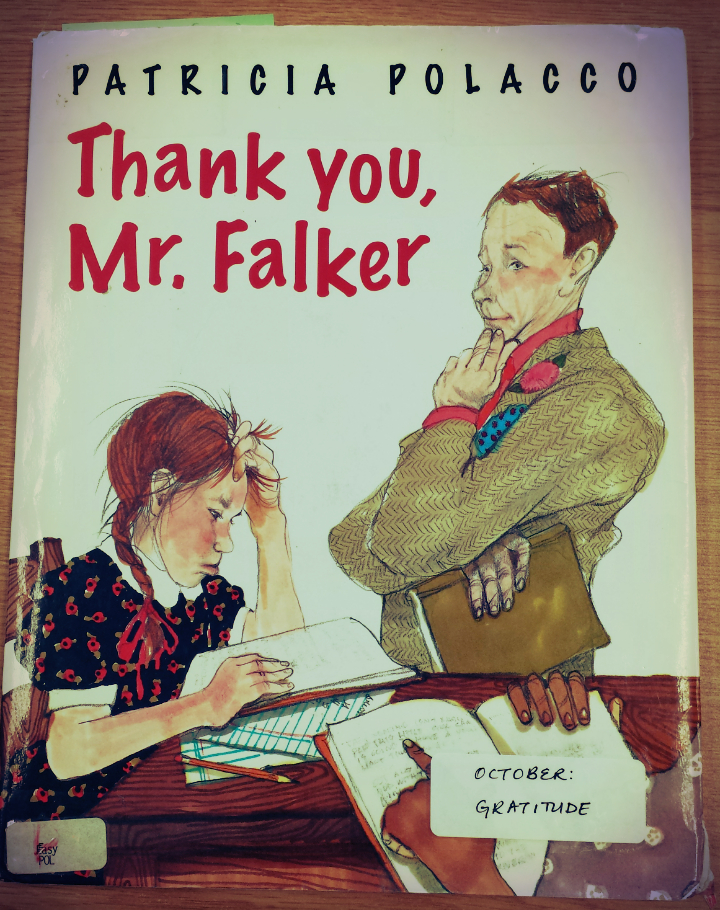
The Polacco Series: Gratitude

Some of you, and maybe a lot of teachers, might be familiar with the name Patricia Polacco. As educators, I think her books are essential components of our libraries. Polacco is a truly gifted author, who uses her life experiences and cultural heritage to write immensely touching books that, if you were being honest with yourself, border on a “tear-jerker”. Not only is this very talented author a moving writer, she illustrates her books with emotional sketches and tugging colours. I have done countless read-alouds with my students where we discuss her choice of colour for specific artwork, coming to the conclusion that like her words, her drawings are also bursting with meaning.

One of my favourite books from Polacco is the ADORED Thank you, Mr. Falker

This book weaves a heart-rending story of a young girl, Trisha, who faces challenges in her learning. She has dyslexia, and none of the teaching staff at her school are able to pick this up. This challenge makes our young protagonist a target for name-calling and bullying. And, unlike other children, when Trisha welcomes the chance to move to another city and start over at a new school, her hopes are met with despair, as she painfully navigates yet another school system stuffed with bullies and teaching staff who do not seem to care. Until of course she meets Mr. Falker. Mr. Falker, like a lot of teachers these days who get into teaching despite its hardships, is the teacher who makes a difference in this girl’s life. He takes a gamble on her and his gamble pays off, leading to a moment, brilliantly narrated with emotion, that changes Trisha’s life forever. Based on a true story, this narrative is packed with feel-goods.

Perfect for  grades 3-6, and abounding in themes of gratitude, compassion, bullying awareness, self-confidence issues in children, learning challenges and their effects, this book should really be read to every child out there. If nothing else, it lets children know that they are not alone in their struggles, and that they can rely on that one teacher to make a difference in their lives.


©booksnnooks.org All Rights Reserved

The Constructivist Approach to Teaching

Recently, I have subtly introduced a perforated silence here on Books ‘n’ Nooks and not so much as intentionally as I would like. The reason is more the commonplace cross of our current world where we are afflicted with a “lack of time”.

Either way, I would like to briefly touch upon an important concept I have become very interested in, and one that I believe seeks to inform and consequently, improve, teaching.

Constructivism can be defined in many ways. One may use the Latin origin to break it down into meaning-inducing fragments of the whole, or one might simply elucidate on the notions that spring into consciousness on mention of the word.

Think for a moment what meaning you might derive from “Constructivism” (Yes, this is the teacher in me calling into action inquiry-based learning).

Constructivism is a way to teach whereby students are allowed agency over their own learning; they are given the opportunity to direct their learning by building new experiences, while simultaneously drawing on their past ones. A teacher’s role in all of this still remains crucial, because unlike the cut-and-dry approach of student-centered learning, the value of an expert, namely the teacher, is honoured. Teachers are tasked with “guiding” the student’s knowledge by providing opportunities for students to discover their worlds and make and build on their own experiences. They are to help students develop and hone their problem-solving, inferencing, critical-thinking and meaning-making skills to achieve a cohesive framework for how to learn.

Students become active and motivated participants in their learning and the teachers act as their guides through this process, functioning as the Yodas of a student’s life.

Now, I could elaborate and confuse you with more complex interpretations of Constructivism, and punctuate this blog heavily with academic jargon, but everyone knows that as teachers, we always appreciate the most accessible methods of learning. So, think of Constructivism as the work of a Scientist or an Artist or a Pioneer. There is a lot of theory, a lot of testing and finally a conclusion, an understanding for how it works. And in the end, isn’t that the crux of life?


©booksnnooks.org All Rights Reserved
George Leigh Mallory: The First to Summit Everest?

Rating 4/5

George Leigh Mallory

For most of you, that name does not ring a bell (Unless you’re a mountaineering enthusiast of course, or just a rare brainiac). You are however, in all likelihood, familiar with the names of Edmund Hillary, a mountaineer from New Zealand, and Tenzing Norgay, a Nepalese Sherpa who made the journey with Hillary, the first 2 climbers to conquer the summit of Mount Everest in 1953. Little is known about the brave man, George Leigh Mallory, who in 1924, led the 3rd expedition from England to reach the summit of Everest. Mallory and his climbing partner, Andrew “Sandy” Irvine disappeared in June 1924, and whether they reached the summit or not has been a cause for much speculation since they disappeared 92 years ago.

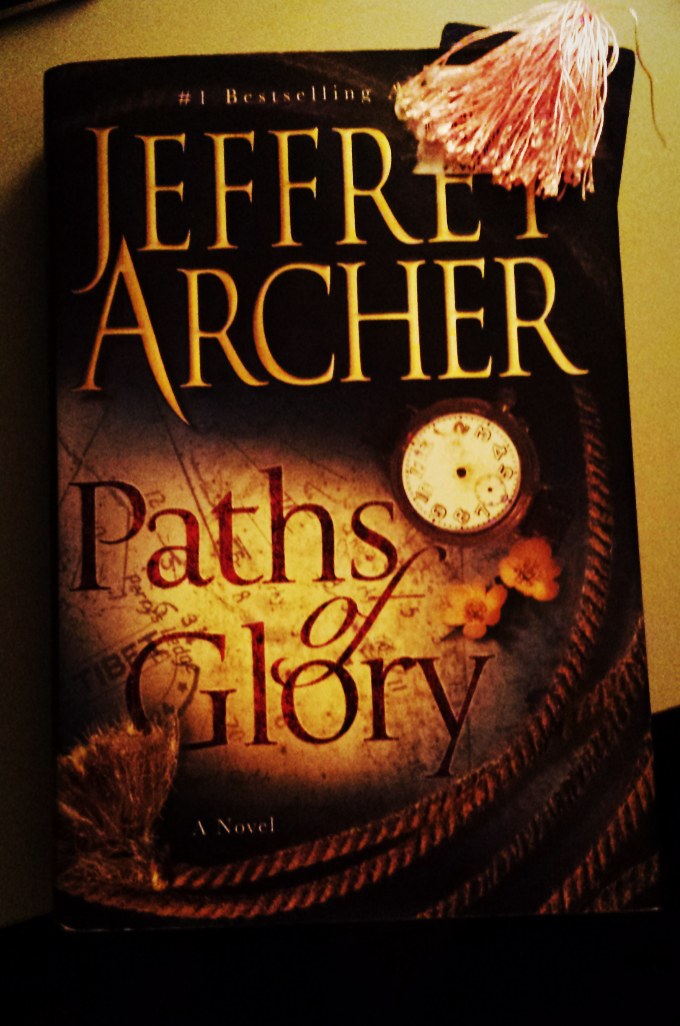
Jeffrey Archer, a former British politician, has written a page-turner with George Leigh Mallory as the charismatic Protagonist, titled, Paths of Glory. Mallory is positioned as a devil-may-care gentleman who seems to scale the most domineering mountaintops with little regard for failure. Although Archer’s writing style leaves for something to be desired, he has a flair for fluffing up the facts to deliver tones of adventure,  and creating dramatic hooks that leave you hanging and hungering for the end. And while the world has yet to  find out whether George Mallory and Sandy Irvine reached the summit in 1924, Archer ends his narrative having taken a side. The facts that have been uncovered over the years are presented with much pzazz to deliver a cast of characters who are true to their roles and remain, to the very end, very convincing. Mallory’s family and friends are constructed as integral characters to the story, and Archer shows a lot of respect to Mallory’s Expedition team and his beloved wife, Ruth Mallory.

The relationship between Ruth and George Mallory provides for much heightened drama as it weaves together a roller-coaster of emotions that take the reader on the journey of a wife longing for her husband, and a man torn by the ache to be with his family and the relentless desire to achieve his ambition.

This was an adventure that spear-headed my need to research more about the 1924 Expedition to Everest, and George Mallory’s Life. There is much information out there, and most of it says the same thing, but George Mallory seems to exude a mystery and elicit desire to know what happened to him on his journey up the mountain. Mallory’s body was found in May of 1999, 75 years after he disappeared, by a team of American climbers. There is fascinating video footage shot by the team upon the discovery:  https://www.youtube.com/watch?v=UFr1KdY6aiw

And while Archer’s book is but one way to reconcile the mystery around the final moments of Mallory and Irvine, Archer leaves his readers with a feeling of awe, thoroughly honouring this fascinating and skilled mountaineer who tried to defy the limitations of his time, and conquer a giant.

If you’re looking for dexterity of writing style, this is not the book for you, but if you thrive on adventure and mystery, then this is a must-read.

©booksnnooks.org All Rights Reserved