Making Thanksgiving Cards (A How-To for Teachers)

Thanksgiving is around the corner for us here in Canada, and teachers, stepping off my post from yesterday, I decided to do Thanksgiving cards as an art activity with my junior class today. These are really easy to make and students can dedicate these to whomever they wish. Teachers, the dedication process can be a mini-lesson in the writing component of language. You can have them write out rough drafts of their inside greetings, and then peer-edit before they transfer them on as good copies to their cards.

Detailed below are the materials needed, and the process that was followed to make the cards.

Materials:

wp-1475604152875.jpeg

  1. Googly Eyes
  2. Cardstock (I use the Reflections brand that can be found at Michael’s Craft Stores)
  3. Coloured Markers or Sharpies
  4. Scissors and Glue sticks
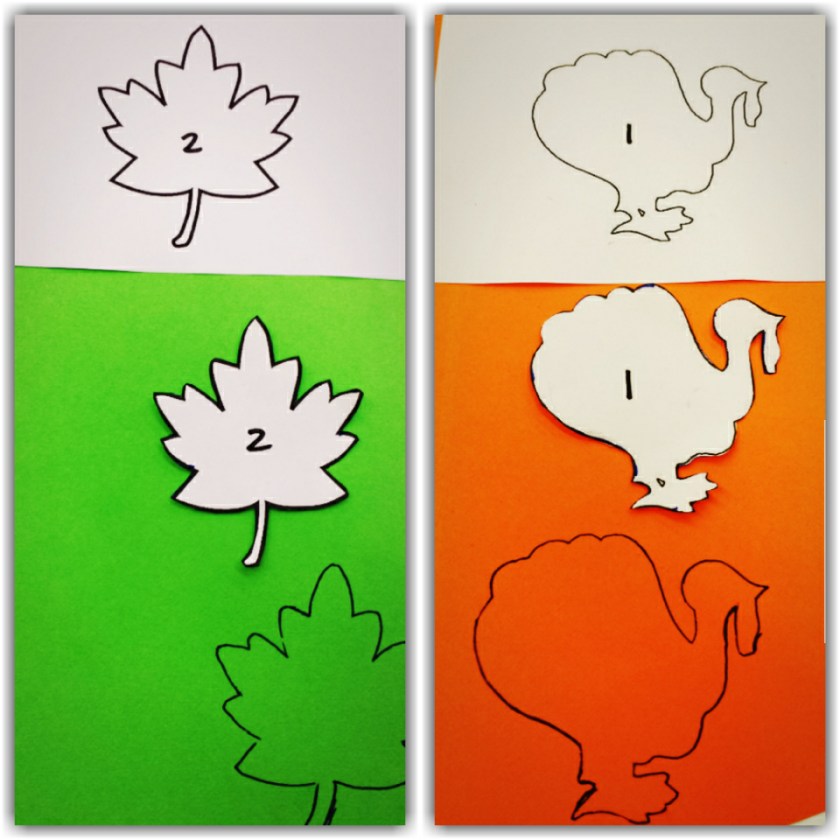
  5. Turkey and maple leaf templates
  6. Square cut-outs (of appropriate size) of orange, yellow and green cardstock (you can substitute with construction paper if you prefer)

Process: 

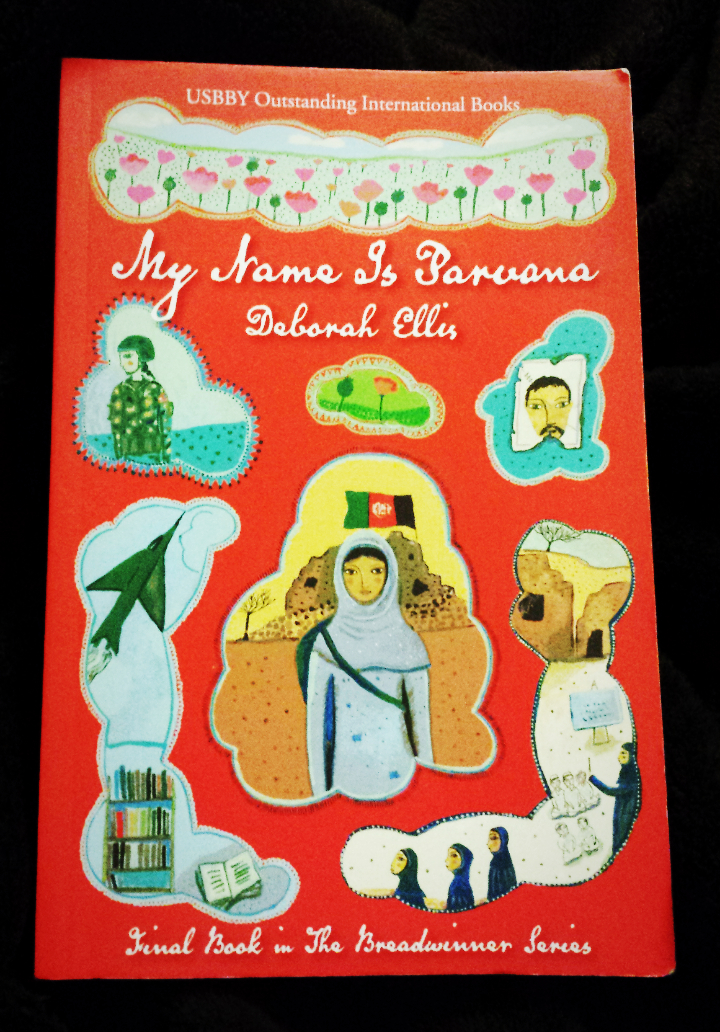
#1 Cut out the turkey and maple leaf templates, using them, trace (onto the side of the coloured paper opposite to the one that will be facing the top when stuck on the card) onto appropriate coloured paper and then cut those out too . Write 1 in the turkey template so your students know they have to cut out only ONE turkey (in orange), and 2 in the maple leaf template so they know they have to cut out TWO maple leaps (yellow and green). Teachers, for those of you who own a Cricut cutting machine, you can pre-cut turkeys and maple leafs for your students. However, the cutting process helps them to be part of the card-making from scratch.

wp-1475604445471.jpeg

wp-1475604239586.jpeg

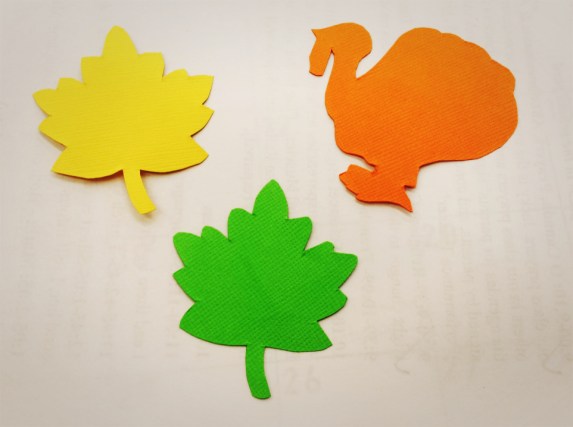
#2 Once the pieces are cut out, use a dark-coloured marker (black, brown, gold) to draw details onto the maple leaf and turkey cutouts. Add googly eyes and paste all 3 cutouts onto the front face of the card. Use markers to colour in a border and write in HAPPY THANKSGIVING!.

wp-1475604206264.jpeg

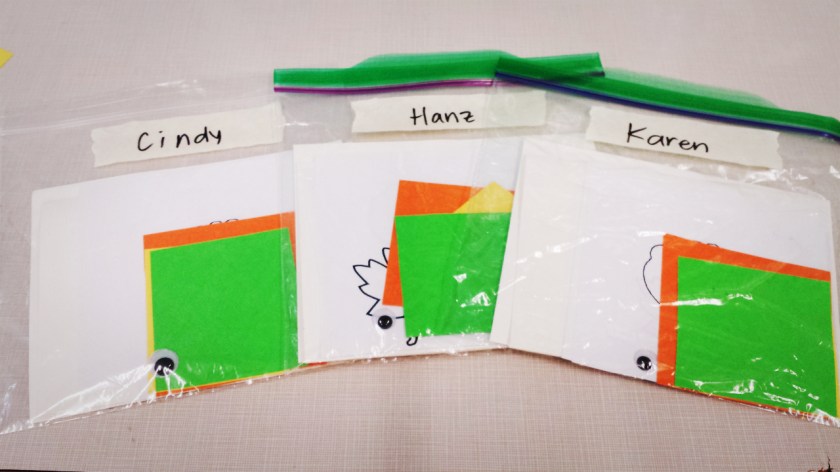
Teachers, if any of your student are away, be sure to make little art packets for them to make their cards when they return:

wp-1475603690530.jpeg

There you have it, a very simple way to get your students into the spirit of Thanksgiving, while fulfilling curriculum expectations (specifically around ART). And on that note, HAPPY THANKSGIVING, CANADA!

©booksnnooks.org All Rights Reserved

Daily Gratitude: Ideas for Teachers

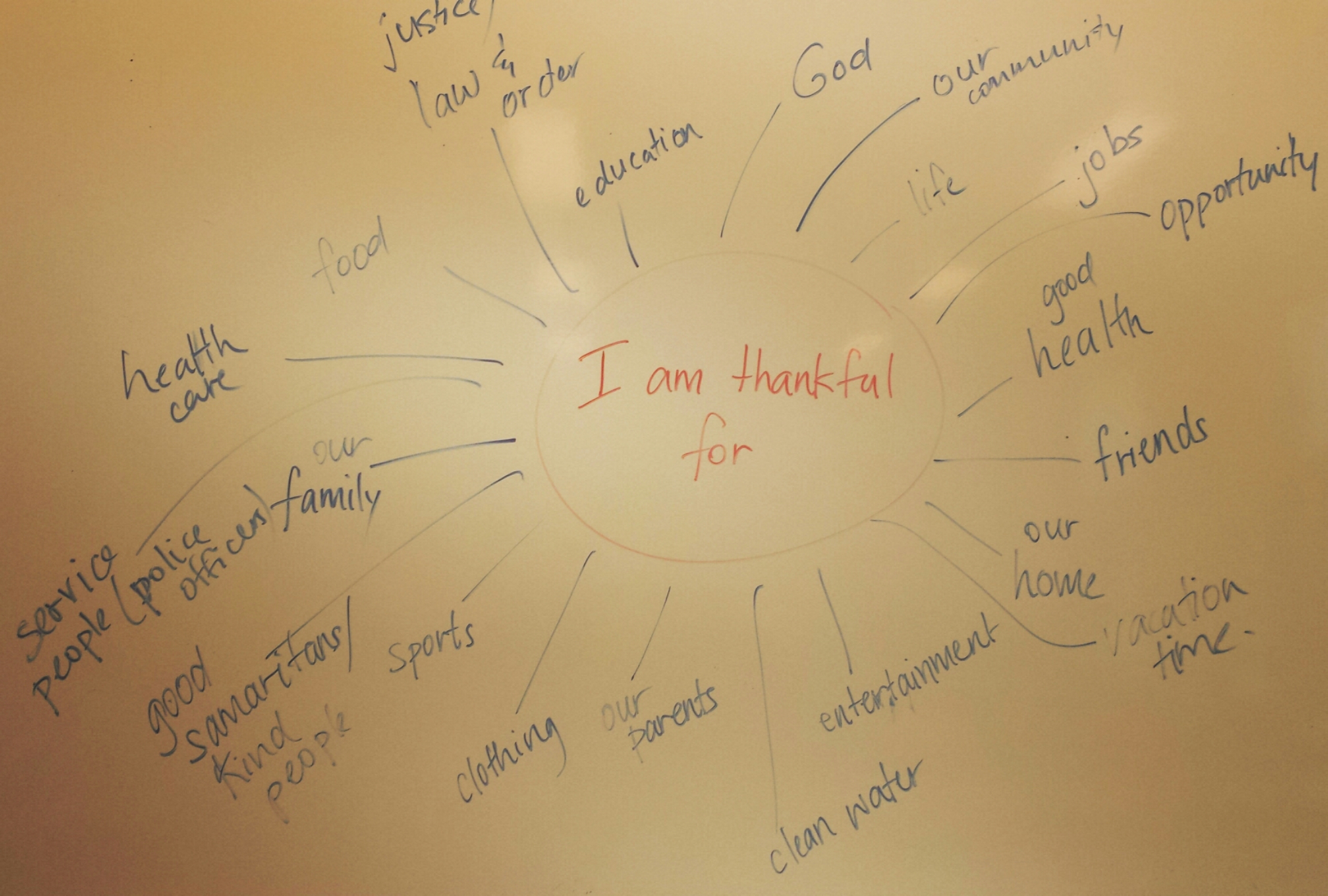
So, this month schools in the Catholic Board celebrate the virtue of Gratitude. Personally, I think it is a good idea to inculcate in our younger generation the concept of being thankful every day, however, having an entire month dedicated to this virtue is a good start. Today, I had the pleasure of leading a junior class to dig deep and find out what they were thankful for. This is what we came up with:

image

Initially, students threw out the tried-and-true: food, family, home, clothing, but then they began to really think about the concept of gratitude, and came up with being thankful for kind people and opportunities in life and our healthcare system(even if it isn’t perfect). This brainstorming session was done to help students prepare for a thanksgiving prayer they were to write. And while this is a great way to get your students thinking about what they are grateful for, it is not the only thing. Below, I have outlined some other ways to carry out activities to promote a spirit of gratitude in your students.

Other Ways to Incorporate the Spirit of Gratitude in Your Class:

#1 The “I am thankful for…” Display Board (Individual)

Set up a display board in one area of your classroom. Give it the title, “I am thankful for…” Each week, as a combined cross-curricular activity of art and writing (appropriate for all grades K-12), have each one of your students draw and colour and then elaborate (in writing – a sentence or just a word for the younger grades) on something they were thankful for that week. This activity can be done on the Friday so students have plenty of time during the week to think about what they can use. Remind students constantly during the week, if opportunities arise where they could be grateful for something, and have them bank these for later. Since artwork will have a weekly turnaround, have students make their own “I am thankful for…” folders (simple cream-coloured duo-tangs that they can decorate for an additional art activity). All work, once it is taken down from the display board, can be added to their individual folders for a keepsake of what they were thankful for that particular year. This could serve as a reminder when things are particularly rough in their lives and they are searching for positivity to get them through.

#2 Thank You Cards (Individual)

These are a practical and thoughtful way to reach out to others in the community and say a special thank you. Once a month (and this could be done in lieu of contributing to the display board idea above one week, if you choose to also do that), have students make THANK YOU cards. Each month they have to choose someone different whom they can say thank you to. Brainstorm with them different people in their lives they should be grateful to (parents, grandparents, siblings, other relatives, janitors, secretaries, principals, teachers, school crossing guard, their family physician, firefighters, police officers etc.). You could also have all the students make THANK YOU cards for different community helpers and then mail the cards to them, or drop them off if they are close enough. This activity also has the added advantage of serving as a dual art and language project and is appropriate for any grade from K to 12.

#3 Thank You Movie (Group Work)

This activity would best be suited for grades 5 and up, and would combine elements of multi-media, language, drama, art and so on. Students can create a movie choosing 5 (or fewer) different people in their lives that they are grateful for. They would then have to act out the roles these people play in their lives (students would have to agree as a group who these people will be – e.g. they would be parents in general and not specifically one student’s parents). They would film their enacting of these people’s roles in their lives and then combine technology elements (use iMovie, MovieMaker or other editing software they might be comfortable with) to add reasons why they are grateful for these people. Remind students to be respectful and thoughtful in their creations. Provide examples by repeating the above brainstorming activity as a class. Give students graphic organizers to record some of the ideas being brainstormed as a class. Allow them creative license to provide whatever twist on this project that they would like. Typically, allowing them a few weeks to put this together would be ideal.

And teachers, really, the sky’s the limit when it comes to teaching your students the virtue of gratitude. Let’s face it, we are educating quite an entitled lot these days, and a little bit of time taken to teach them valuable life lessons, would go a long way.


©booksnnooks.org All Rights Reserved


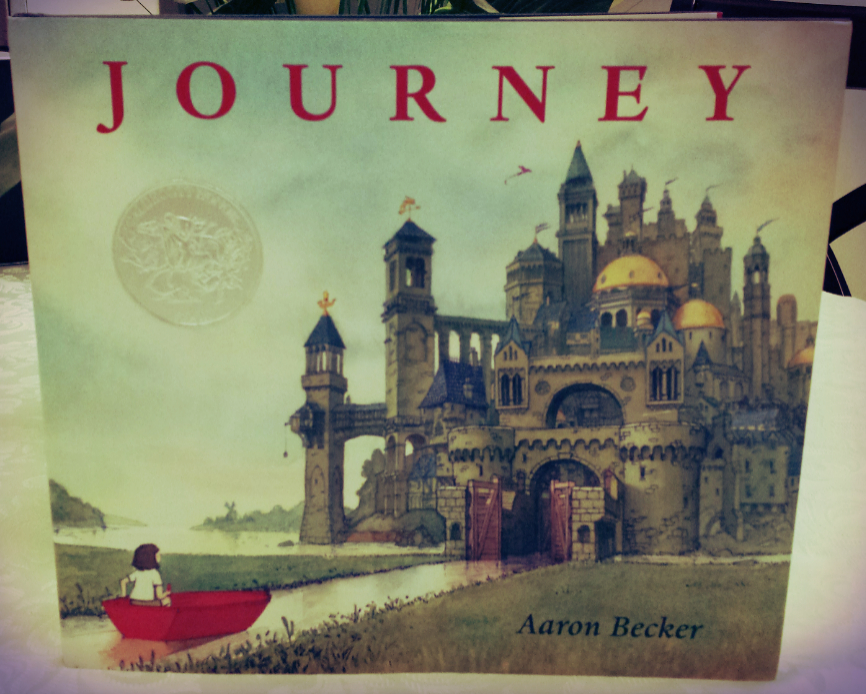
Aaron Becker’s Journey: A True Picture Book

I was first introduced to Aaron Becker’s Journey while doing a teaching placement not too long ago. What I did not realize at first was how versatile this book would become, on not only an age level, but a conceptual and skill-teaching level as well. I have since read it to students at the primary and junior levels, and each time, this book has not failed to create a splash. Becker relinquishes the use of words to tell a story completely in the hands of a child’s imagination. He trusts our young readers, as we must, to make their own meaning out of this heartfelt tale.

I will intentionally not discuss the plot of this book, as I do want to create any skew toward a certain interpretation when the book provides for many. Suffice to say, this book is about a young girl who begins a journey and along the way, discovers much about herself and life.

Juxtaposing grayscale pictures with bold singular colour in the beginning, and then opening wide a world blossoming with colour as the book progresses, Becker unfolds a world that students can envelope themselves in. With magical crayons and castles, boats and hot air balloons, rescue missions and the king’s guards, this book will allow your students to draw the important messages of friendship, selflessness, generosity, imagination and compassion. The sensitively-coloured and poignantly-drawn illustrations provide your students with the opportunity to lose themselves in another world where they can tell you a story as it plays out in the turning  pages. For once, you will not be the one narrating, they will, and they will take much pleasure in making their own tale. The thing I love most about this book is that it allows for a variety of different levels of interpretation that your students can attach themselves to. It prods their critical-thinking and problem-solving skills, it allows them to use language to describe pictures, it helps them with recall and attention to fine detail, and at its best, it provides them with the opportunity to acknowledge the value of a variety of perspectives. It is especially great for those of your students who just do not like reading; a great place to start to show them that books can be fun and instructive, without the burden of a multitude of words.

Teachers, this book is well worth the investment, and a true gem that will prove timeless for your students each year.


©booksnnooks.org All Rights Reserved
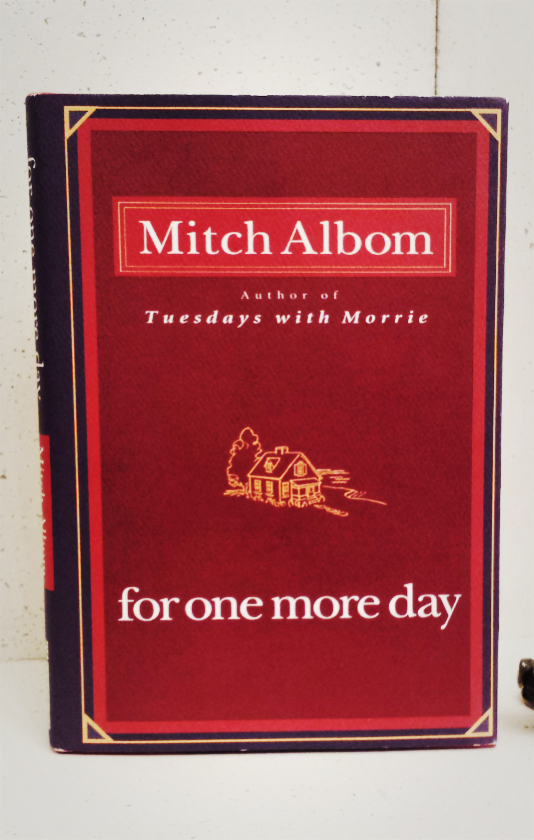
Mitch Albom’s For One More Day: Another Tear-Jerker

Rating: 5.0/5.0

I have read Mitch Albom before, I recall Tuesdays with Morrie and The Five People You Meet in Heaven, two of his more popular books, both as heart-tugging and tear-eliciting. For One More Day, however, furnished me with a new perspective. This is a book that reaches across the the divide between life and death and affords one man one more chance at reconciliation. It sinks into the heart of what it means to love someone unconditionally, and what it means to forgive yourself and another.

For One More Day is the story of a “cup of coffee” professional ball player and his strained relationship with his mother, his adoration of his father and the tumult of their lives as a family unit that fractures into pieces. Charles “Chick” Benetto is revealed to us in a baseball field where he shares his deepest secrets, his guilt, his fears, his joys, his pride and his shame.

Bared for us in this novel is the life of a mother, Chick’s  mother, detailed with absolute sensitivity by Albom, the life of a divorcée in the mid-60s in suburban America. We see firsthand how a woman must survive to preserve her sense of self, while shielding her children from a cruel world that is quick to judge and punish her for that which is not her fault. We see how people view a woman after her marriage falls apart, how the world judges her differently than her male counterpart potentially just as responsible for the failure of the marriage. We see how this woman saddles all her strength onto one horse and then barrels through life with all her strength intact. She is a force to be reckoned with at her best, and in her darkest times, she is still tender and loving and forgiving. She wants the best for her children, and like many mothers the world over, she will stop at nothing to achieve just that, even when they break her heart and shatter what she has put blood, sweat and tears into building for them. Such is the tenderness of a mother, such is her strength that the well-being of her children becomes the sole reason for her living. And many children, much to the chagrin of mothers everywhere, do not understand this, but they will, one day. To my own momma, who is inevitably smiling as she reads this (or tearing up first, and then smiling!), I love you, and I understand  you, and I appreciate you, even when it does not seem like it.

With eye-stinging scenarios where mother and son are afforded last moments hovering between life and death to say to each other what they could not say in life, Albom paints the seamless tale of a love that defies the end of a life to still reign strong. He paints with an experienced and swift wrist the picture of a man so weighed down by life that no redemption can seem to save him. And in much the same stroke, Albom paints the picture of a mother’s love that comes and cradles the brokenness of her child, and brings him back to a place where he can forgive himself. The tight rope between love and betrayal is tested, the fine line between selfishness and selflessness is frayed even more, the thin rays of hope that exist amidst a life of shame and guilt and bitterness and anger turn into blinding promise that saves even those of us who believe we are too wretched to be worthy of the saving. Through this book, dear reader, we understand the value of a second chance and the value of missed opportunities and lost time. We understand with absolute heaving weight, the value of life in its entirety and how loving people unconditionally can bridge barriers and heal even the most rotten of wounds.

For One More Day is a quick read, a few uninterrupted hours at most, but a read that will take you to a place where you will see the relationships in your own life with entirely new lenses. A place where you will appreciate that the time you have with the ones you love is always worth more than financial or career-related opportunities that can be taken away from you when this life ends. And even though this book deals with the running thread of death, it stays that hopelessness that many feel upon death’s arrival, and in its stead reveals the promise of times full of love to carry us through to whatever comes next. With all its brevity of a 197 pages, this book celebrates a mother’s untethered love, and a child’s need to be reminded of this to piece together his life.

Do yourself a favour, if your heart is closed to the ones you love or even if it is wide open, pick this book up, grab a handful of tissues and read. Sometimes, in the letting go, we are freed.


© booksnnooks.org All Rights Reserved

The Beauty in Being Strong

Lately, a lot of things have culminated in me rethinking the concept of beauty. People look for symmetry in a face, a glow in the eyes, a toned set of thighs, well-cared-for feet, a crisp voice, a smile, and call these things beautiful. And yes, individually and cumulatively, these things are all beautiful. Art is also beautiful, so is the kind interaction between strangers on a street corner. There is beauty in the darkness, in the crosses we carry, in the pain of our everyday lives. And then, there is beauty in being strong. And I don’t mean the physical strength that can be attained through persistent cardio and strength-training over weeks and months and years. No, the strength I have come to value as beautiful is a strength that wades through the messiness of life and still manages to be gracious and hold on.

Like a lot of people out there, I have unsung heroes and role models in my life. There are my father and mother – my ultimate heroes, among a handful of others comprising family and friends. There are a lot of people I look up to, for waging gracious war with the many battles in their lives, and coming out, albeit a bit beaten, still standing, at the end. These people are beautiful to me. It is in their strength that I find value in life, in being kind even when it is hard to do so, in being gracious when there is nothing remotely resembling grace about something or someone else.

There is beauty in silence when harsh words can be exchanged to fuel fires. There is beauty in this ability to exercise restraint; beauty in the strength it takes for that restraint. There is also beauty in being strong where you are able to care for yourself and be someone others can rely on. There is beauty in being strong enough to sacrifice for others. There is beauty in standing your ground when you believe in something, often meaning that you are standing alone. There is beauty in being strong enough to forgive someone who has shattered your heart and sense of self, intentionally or otherwise. And finally, there is beauty in being strong enough to recognize that you are weak as a human and need to reach out to Jesus (or whomever you pray to, if you do) or someone you trust, to ask for help.

Sure, the beauty of this world puts a great emphasis on that which is pleasing to the eye, but when we learn to value being strong as beautiful, we can free ourselves of the surface elements that leave many of us feeling quite empty.

Within the messiness of our lives lies the opportunity to be strong, and with that opportunity, we can find an unwavering beauty.


© booksnnooks.org All Rights Reserved

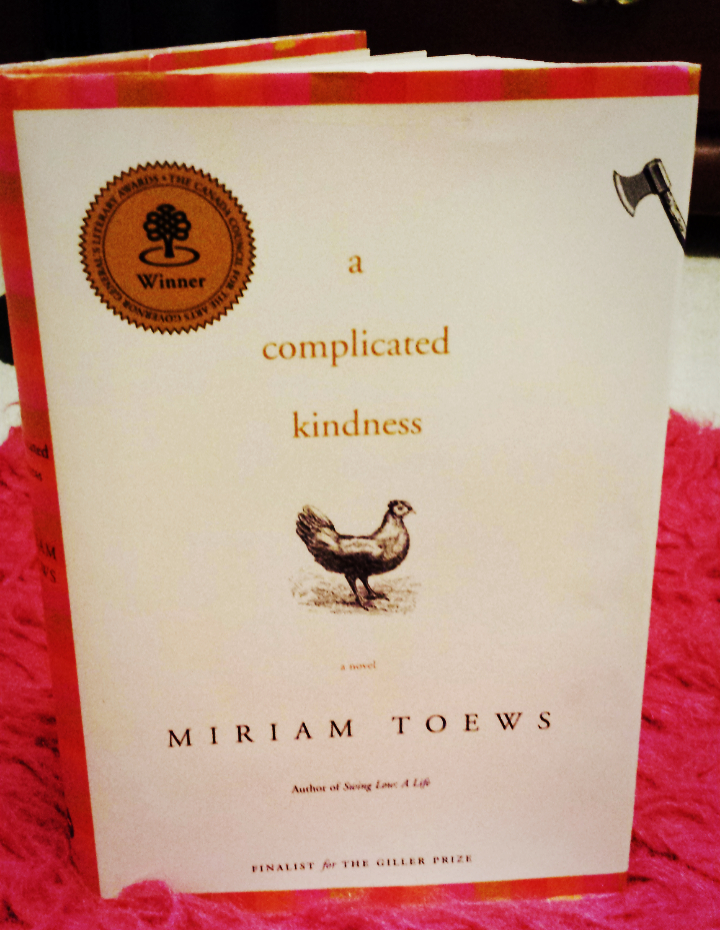
Miriam Teows’ A Complicated Kindness

Rating: 4.7/5.0

Earlier this Spring I began reading A Complicated Kindness by renowned Canadian author, Miriam Teows. This book, at first, was a dry read; I could not commit. Still, I know the value of seeing a book to the end, and so I held on. About 110 pages in, that payoff began. I started to feel a kinship with the main character, Nomi Nickel, an understanding that often life can just be a straight line to nowhere when you feel trapped and devoid of options.

Set in the Mennonite town of East Village in Ontario, on the border with the United States, Teows paints the picture of a bleak and exhausted town with not much to go on but the constant threat of eternal damnation. Nomi is a rebellious and pondering teenager on the brink of graduating high school, if she can just get a final paper written to the satisfaction of her teacher. Plagued by the abandonment by her mother and older sister, and the responsibility of caring for her father, Nomi wanders around town playing out the internal dialogue of her mind. With several short and clipped sentences, Teows admits us into the corners of Nomi’s mind where her pain and curiosity, her harsh realizations and kinder self reside. Nomi is not a character prone to over-exaggeration, and truly there is nothing about this book that reverts to the dramatic. Teows presents the reader with the bare bones of life in a Mennonite village, and one could elucidate that this is a book taken from  a few chapters of Teows’ own life growing up in a Mennonite town.

Nomi stumbles aimlessly through her days in her quiet village where people are brimming with frustration and anxiety at being denied and limited in their living. We see the slow disintegration of her family, juxtaposed with her developing self identity despite the losses that accumulate in her life.

Teows is very sensitive in her construction of Nomi’s thoughts, concerns, fears and valuables in life. Nomi is just a regular girl in need of a family she can rely on, and with whom she can share her love. This girl may be perceived as devoid of emotion and unable to get her act together, but the love within her comes through in her defense of her best friend, Lids, in her compassion toward the little neighbour girl whose little whims she is forever indulging in just to make happy, in her ability to see her mother and sister as still parts of her and forgive them for abandoning her, and in her unconditional, unwavering and soft love for her father. Her strength peeks through in her ability to let go of the wrongs heaved at her by various people in the town, and despite the tumult inside her, to hold steady and still find a way to take care of herself. This is not just a coming-of-age story as it has been hailed since it made its debut in 2004, but this story settles its heels into what it means to be human. It explores our desires and fears, our weaknesses and strengths, the things that can break us and the love that helps us stand up again. It is a compassionate portrait of a young girl brave enough to build a hope out of an inferno of lost innocence.

And again, like a lot of books I review, I would say this is one for your reading line-up, because truly, Miriam Teows is brilliant.


©booksnnooks.org All Rights Reserved
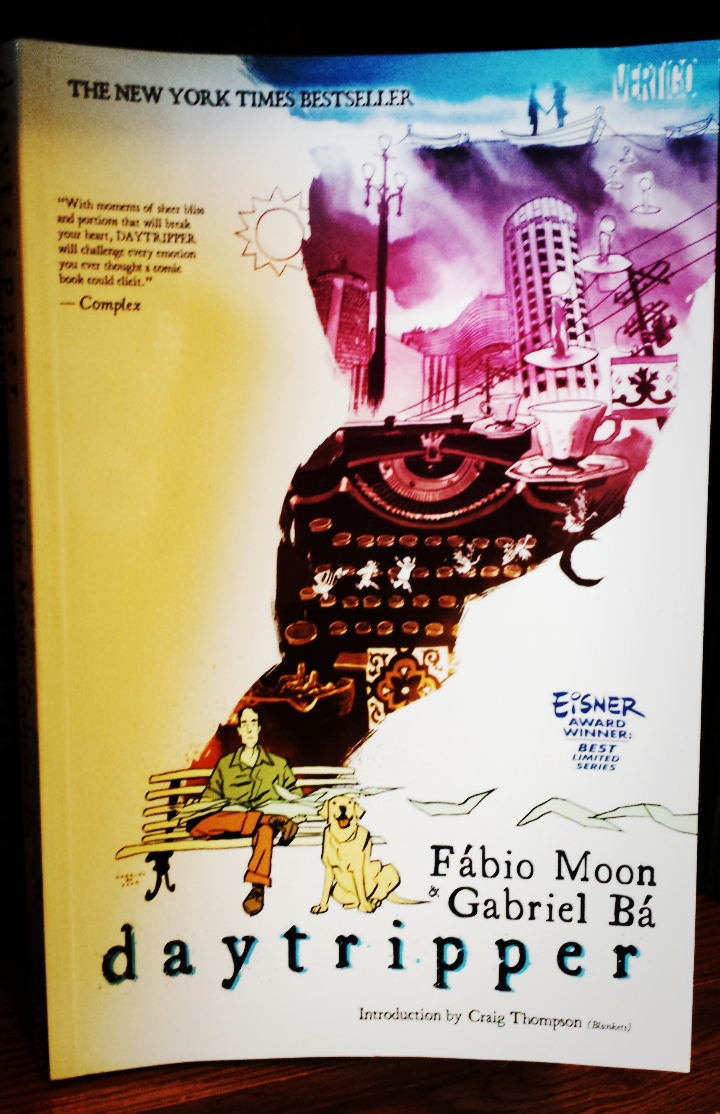
daytripper: A Graphic Novel

I am a fan of the graphic novel form. There is much, as I have addressed in previous posts about the graphic novel, to be learned from this relatively new way of combining writing and art. So, when a good friend recommended that I read daytripper by Fabio Moon and Gabriel Ba, I did not need much convincing.

Rating: 4.0/5.0

Set in Brazil, this story is structured in the past, present and future. It revolves around the life of Bras de Oliva Domingos. The novel is sectioned into chapters, each chapter a different year in Bras’ life, and each chapter ends with Bras’ death. Perhaps, this is a way to show the reader the different possibilities inherent in a life and how as easily as we can begin new things, these things can also come to unexpected ends.

When I began reading this graphic novel, I thought the situations too contrived, the dialogue and captions too scripted. Some things felt forced. However, I trudged on. I reasoned that maybe I was missing the point; putting too much emphasis on style and not enough on sentiment. Three-quarters of the way into the book, I realized I was gripped, and barreling toward the finish to conjure a stable understanding of the novel. I will admit that this book is very cleverly structured. Bras is presented at different points in his life, and with each new point, we are given a new perspective on who he is as a person and his relationship with the other characters in the book. Each chapter fills in pieces left open by the previous chapter, amounting to a big jigsaw puzzle that also requires the reader’s perspective and contemplation to come into a fully-formed picture.

What I most enjoyed about this book was the artwork. The artwork carries a depth that paints this story in a more ‘real’ light. The characters’ aches and sadness, their joys and misgivings, their weaknesses and baser natures, are exposed in gestures and expressions, all adroitly captured in stunning visuals.

Covering themes of family, death and the fragility of life, achieving dreams, lost dreams, the art of writing, being a writer, developing a sense of self, friendship, love, parenthood and all the messiness in between the day-to-day of our collective lives, this graphic novel does surely leave you thinking about the brevity of our existence and perhaps the purpose of our lives. Lovers leave, family members die, friends abandon, dreams fall through, crises take over and doubts creep into the mind, but love finds a way to blossom and leave a hope that pulls the characters through.

This book merits a few readings, and not just to better understand what the talented twin-brother duo of Fabio Moon and Gabriel Ba are trying to convey, but also just to admire the artwork and appreciate that life is lived with a better understanding, when presented with the concept of purpose and then finally, death.

If you’re up for something different, I would say, give daytripper a try.


©booksnnooks.org All Rights Reserved


TIFF 2016 – Rage (A Japanese Film)

This past weekend I had the opportunity to watch a Japanese movie called Rage by director, Sang-il Lee, at the Toronto International Film Festival. I didn’t know what to expect when I went to watch this movie with, and courtesy of a good friend, but I was moved. The director was present for the premier with two of the lead actors, Ken Watanabe and Aoi Miyazaki, and I must say this trio was a gracious and humurous bunch.

This movie opens with 3 seemingly different story lines taking place in three different places in Japan: Tokyo, Okinawa and Chiba. And no, there will be no spoilers, and this review will abound in brevity and vagueness, but this movie digs deep and uncovers the ugliness of our baser natures. It both terrorizes and horrifies you, all this without being a horror film.

Sang-il Lee has adapted this book by Shuichi Yoshida, and he has gone for the jugular with this one. He makes us bleed at our seams, exposing the evil that resides just below the surface and can buoy to the top at any time. Spanning concepts of trust, revenge, anger, fear, hatred, loneliness, sadness and fetal joy, Rage will leave you questioning what you are capable of when darkness sets into your veins. The characters hold nothing back. They sink their teeth into your emotions and paint you into a corner where you are forced to admit that there is evil lurking inside all of us. A formidable performance by the entire cast, and a dark masterpiece by Sang-il Lee.

I would hail this as a film to see at some point, because I think it allows us to see a more primal section of ourselves without the guilt of viewership.


©booksnnooks.org All Rights Reserved
 

The Deborah Ellis Installments (Part II): My Name is Parvana

As promised, here is Book#4 in the Breadwinner Series, My Name is Parvana by Deborah Ellis.

In this last book, we meet an older Parvana. She is 15-years old now, and has been through more heartbreaking tragedy. When the story opens, Parvana is in prison. She has been captured by American soldiers, while wandering through a bombed-out school site. As we follow Parvana through her ordeal in prison, the story jumps back into the past to fill in the gaps with what has transpired since we last met her. Ellis does a fantastic job of superimposing the past on the present. Parvana is no longer the feisty young girl with a quick tongue. No, now she holds her tongue to create a deafening silence when questioned by the American soldiers. Over and over and over and over again. Yes, Parvana has matured. And logically so, because she has lost more, and made more difficult and selfless choices. Her innocence is replaced with shrewdness and air-tight resolve. If she was strong when we were first introduced to her, she possess mammoth strength now. If, as readers, we admired her courage and smarts in the beginning, we will love her for these now. Ellis reaches into the soul of Parvana’s character and brings her to life. She makes her feel like a real person. And therein lies a huge portion of Ellis’ talent; her ability to make her characters come to life. It is no wonder we feel a closeness to them. Ellis does a great justice connecting her audience to children around the world who have no voice to fight for themselves. In this series, and finally, in this book, Ellis gives them all a voice. Especially through Parvana’s silence while she is in prison, we see the grace and bravery with which this young girl operates.

Teachers, your students can compare Parvana’s life to their own. They can make connections and then draw contrasts. They also get to understand a bit about how things work in military prisons in areas of war. This book can even be done with older grades (intermediates – 7 & 8) as a stand-alone with a thorough backstory provided. Students can jump into the psychology behind scare tactics and how prisoners are treated in war-torn countries, even if they are innocent, and even if they are children. You can use this as an opportunity to talk about bigger concepts in their basic form, such as different types of governments and their structures, democracy, justice and injustice, the effects of perception on belief. Your students can further see hope and sacrifice at one of their bests through the many sacrifices made by different characters, and the hope kept alive by others.

Teachers, you can also talk about the Canadian Women for Women in Afghanistan Organization and their not-for-profit endeavours to improve the lives of women in war-ridden countries such as Afghanistan. Deborah Ellis is a true genius at her work, and she has the passion to make her work endearing and relatable.

So, even if you don’t actually end up teaching this last book, you yourself will find it a worthwhile read. To say it is an eyeopener would be too much of a cliché.


©booksnnooks.org All Rights Reserved
 

The Deborah Ellis Installments (Part I): The Breadwinner Trilogy

Deborah Ellis is a renowned Canadian author who has written a number of books with a lens to promoting awareness about the plight of marginalized children in war-stricken countries. Her fiction and non-fiction are sensitively crafted to present the reality faced by many of these innocents.

In possibly her most famous books, The Breadwinner series, Ellis paints a picture of the life of women in war-torn Afghanistan. This entire series showcases an especially strong cast of female characters that will leave you feeling like you know them personally. Teachers, having worked in a library for a year, I have seen this series being read with great vigour by junior students. Granted these books might appeal more to your female students because the protagonists are mostly female, I do think there is great value in making it part of your teaching, as it allows your male students to understand and appreciate the hardships faced by many children and women in places like Afghanistan.

There are 4 books in the Breadwinner Series:

The Breadwinner

Parvana’s Journey

Mud City

My Name is Parvana

Today, I will speak to the first 3 as they follow closely in chronological order, and can be taught together over the course of a couple of months, if you so choose.

In The Breadwinner, we meet our leading girl, Parvana. She is bursting with energy and opinions, and is not the kind to bend over backward for anyone. Right away we get the sense that this strong young lady is built to tackle much. And much, she does. She is chosen to be the breadwinner of her family when the Taliban enforces bans on women leaving their home without a male companion. With Parvana’s father imprisoned for no fault of his own, her mother and siblings rely on her ability to dress up as a boy and go out into the market to continue her father’s job. Parvana is sharp and kind. She has a conscience that shines through her stubbornness. We understand as an audience that this is reality for a lot of Aghani girls. And at the young age of 11, Parvana must shoulder a lot of the responsibility if she is to help her family survive. Teachers, your students can view this first book through the lens of how the family structure is impacted by war.

In the second book, Parvana’s Journey, Parvana is reunited with her father, but separated from her mother and the rest of her siblings. The book opens with her at her father’s grave, and goes back at points in time to describe the short journey they took together to find her mother and siblings, before his mind and body gave out. For the remainder of the book, we follow Parvana on a harrowing journey as she must use both her cunning and strength to stay alive. This strong young girl has matured significantly since the last time we saw her, but she retains some of her best qualities, like her compassion. With this compassion, she makes and keeps a handful of friends. Teachers, your students can add to their understanding of the interactions of strangers in a war-torn country, and how the youngest of the population must fight for survival.

In the third book, Mud City, we reconnect with Parvana’s friend, Shauzia, whom we have met in the first book. Shauzia has ended up helping out at a Widow’s Compound on the border with Pakistan, but despite being clever and useful, she wants to venture beyond the grounds of the compound and start her own life. She is convinced that if she can reach the nearest city across the border in Pakistan, Peshawar, she can earn a living and then go on to have her own life and do great things. Shauzia does succeed in getting out of the Widow’s Compound, but life in the big city of Peshawar is not everything she bargained for. There is not much work to be had, and going hungry is just in addition to struggling to stay safe and alive. Teachers, this one will offer a bit of perspective on the internal world of an Afghani child, specifically a girl. It will allow your students to draw connections with their own hopes and ambitions, and those of Afghani children. It will also help them see that despite these hopes and ambitions, the contrasts in circumstances and opportunities is what makes achieving both possibly easier for them, and harder for their Afghani counterparts. This book offers teachings in different perspectives, gratitude and hard work.

Teachers, this entire trilogy is a great way to teach your students a bit of geography when you talk about Afghanistan and its location in the world, with reference to other countries such as Pakistan. Students can make connections to other countries they know of in the region. It can further offer the opportunity to delve into social studies as you discuss the government structure of then Taliban-led Afghanistan, and today’s present government. You can also use this to make comparisons with our own Canadian government, or other relevant governments.

The first three books in the series are great for grades 4-6 and offer a range of cross-curricular opportunities because of their versatility.

Stay tuned for a follow-up post where I will discuss the final book in the series, My Name is Parvana.


©booksnnooks.org All Rights Reserved