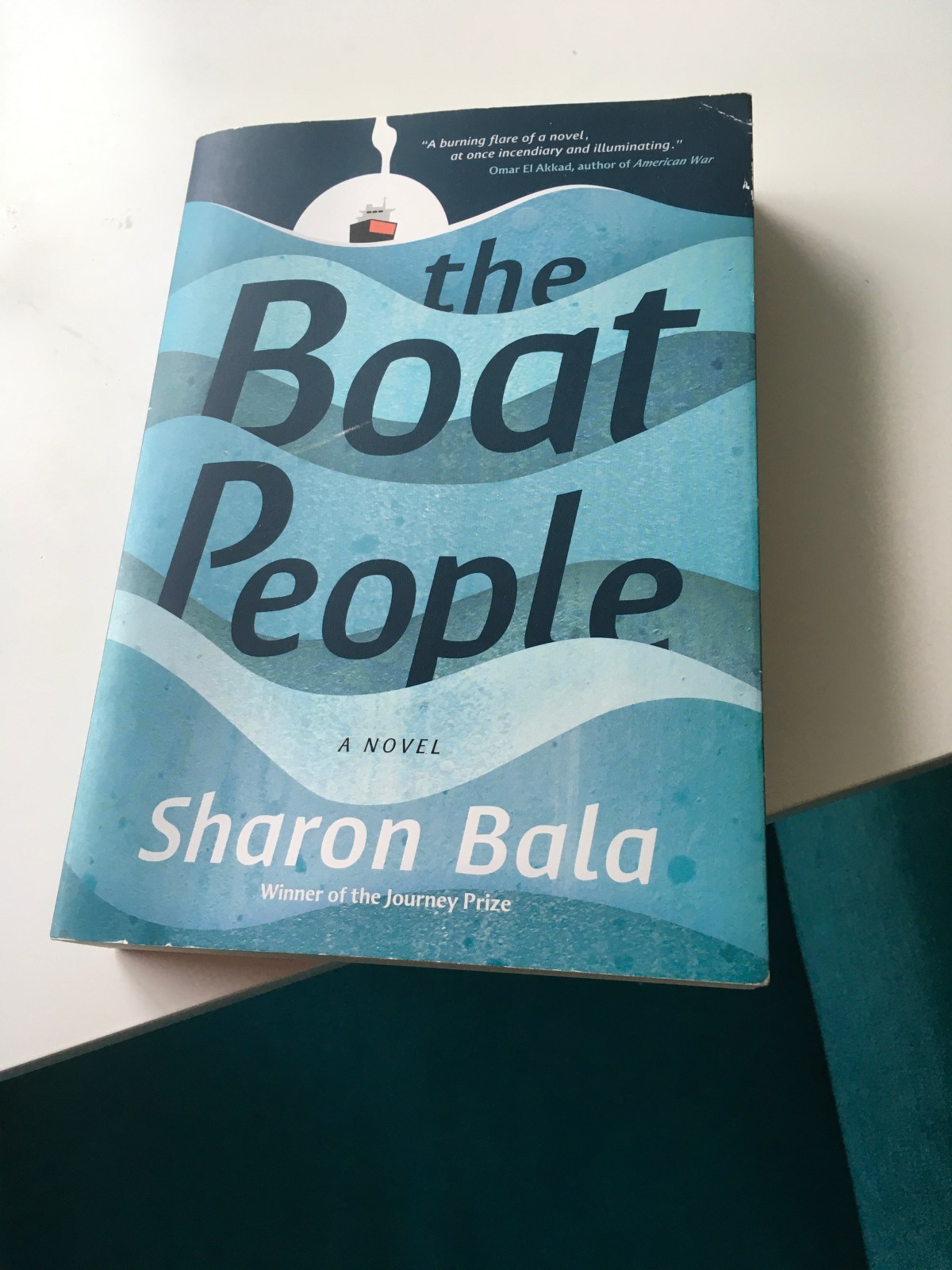
Let me begin by saying that when this book was among the five shortlisted for Canada Reads in 2018, I was ALL in. I bought it and expectantly looked forward to reading it. I wanted to love it two years ago, and I still wanted to love it when I excitedly picked it off my bookshelf a few weeks ago. Except, I did not.
It was not all bad news though, so let me begin with:
What I did enjoy AbOUt this book:
- The history. Bala takes a very important moment in history (really only 10 years ago when you think about it) and engraves it into the public conscious with this book. The arrival of a cargo ship full of Sri Lankan asylum seekers on the coast of British Columbia in the summer of 2010, is the perfect backdrop for a narrative that shakes the makeup of what it means to be human and survive in a world dogged by cruelty, personal agendas, the preservation of the status quo and sheer selfishness.
- The moral dilemma. Characters present with moral dilemmas in this story, and sometimes, when these conflicts are thoroughly explored, they are gripping, poignant and heart-tugging. They are relatable. Bala takes me on a journey sometimes where I get a privileged insider’s look into the mind of a refugee claimant. Here, the conflicting moral sinews are palpable. I feel them tugging in all directions.
- Some characters. The character of Mahindan gripped me from the start. I was ravenous to learn more about him, his history, his thoughts and emotions, his fears and struggles. I also felt drawn to Priya’s Uncle and her father and would have liked to know more about each. Their stories were rife with suffering and moral conundrums and humanity. And these really got me going!
- The imagery. Sometimes, Bala surprised me with such vivid imagery that I was sure I was there. I shivered with anxiety as I imagined myself in war-torn Sri Lanka, in a camp with a young child to protect. Her descriptions were always rich, dripping with information about Sri Lankan culture and history and geography.
But then, there were the reasons I could not bring myself to love what I was reading…
What I did not enjoy about this book:
- The writing style. Bala is a clever writer, but I am not sure how well this translates to all aspects of her storytelling. Her writing style waxed pedantic sometimes, belaboring points that made me feel like she didn’t trust in her reader to connect the dots. In other places, her writing took on a split-personality, providing piece-meal information, so as a reader I felt I was suspending myself in improbability, and making leaps that lacked some of the logic to work.
- Other characters. While there were a handful of characters that I loved in this book, there were other characters that I could not bring myself to care about. Grace Nakamura was one. No matter what she did, and she did precious little, I felt her presence in the novel to be intrusive. It was almost like she was an after-thought. And characters like Priya and Charlika and Mr. Gigowaz, where they could have been critical, they fell apart when their literary mettle was tested. They were too flimsy to hold at the centre. I felt little of substance was present in their construction. Where their voices could have been loud and strong, they were muted and docile, quick to step into the shadows and disappear.
- Too many racial injustice tangents. I wish Bala had focused her novel on the Sri Lankan asylum seekers’ stories and not muddied this book with history about the racial injustice towards our Japanese brothers and sisters during World War II in Canada. I felt like, in doing so, each was not allowed to have its own weight, not allowed to showcase the full extent of what the victims suffered. I get that Bala was trying to offer another perspective on our deep-seated conflict with racial prejudice and injustice in Canada, but focusing on one would have done the issue and her story more justice.
- Other moral dilemmas. There are other times in this novel when moral dilemmas are presented as trifle. In these scenarios, they fall flat. They feel diminished, and as a reader, I felt disappointed.
- The ending. I am sorry, but I hated the ending. I felt cheated, like I had been strung along with my compassion and concern for the character of Mahindan only to be let down by indecision.
For all my whinging as a reader, I would absolutely recommend this book. At the very least, I was able to learn about, understand and appreciate the context of the Sri Lankan Civil War and the struggles of stateless people who flee for a better future with zero certainty and absolute desperation. Which then brings me to my next point.
While I struggled with specific aspects of this book, as a teacher, I would recommend that it be used in schools to teach our young people about the various waves of migration and accompanying racism here in Canada (and there are many such stories). We don’t teach enough literature by Canadian authors, and Sharon Bala deserves a place in this slow-growing canon. This would be a book that allows many minority students in Canada to see themselves in what they are learning in school, thus creating avenues for the construction of their student voices. Its themes are critical to our Canadian social and moral landscape, to our psyche as a multicultural country, to our TRUE education in the acceptance of all. Sitting at 388 pages, this would be a book geared toward Enriched or Advanced Placement elementary classes or high school students. There are discussion questions at the end of the novel that make for interesting dialogue about a lot of the themes within, so using these in an informally-styled book talk is one way to get students excited about this book.
If you read this book yourself or decide to use it in the classroom, drop me a line with your thoughts. If you decide on the latter and need help compiling resources on how to go about using it effectively as a teaching resource, get in touch! Here’s a starter resource that has been made available by curio.ca, a CBC affiliate: https://media.curio.ca/filer_public/f4/a4/f4a4275e-4ebe-4487-b9b6-d71a757bd379/cr18bgboatpeople.pdf



 Books 'n' Nooks