Atwood’s The Handmaid’s Tale

Margaret Atwood is my favourite author. I have yet to come across another writer capable of dethroning her genius. The Handmaid’s Tale has always been on my to-read shelf, but life has constantly gotten in the way of this endeavour. When AMC debuted its series with the same name, based on the book, I knew I had to take it off my to-read shelf and start reading it. I want to watch the show (it has Alexis Bledel in it!) and in my chronology of life events, watching shows are always preceded by reading books.

This book is unlike Atwood’s later work, The Blind Assassin being one of her masterpieces. It infuses strong elements of dystopian fiction that paint a very bleak and often terrifying setting for the characters. A setting that is geographically the United States of America, specifically, the State of Maine, this book follows Offred as she tries to make sense of her present circumstances.

The writing style wasn’t to my taste in this one. I would use the word “excessive” to describe it without being too unkind. The phrases are often clichéd, and seem as though they are struggling to fit into a paragraph but cannot because their edges cause friction, thus making them stand out. Having said this, I am going to go ahead and contradict myself at least in part by noting that the language is very graphic and successfully showcases the chaos that ensues in a dystopia.

Atwood is one of those intelligent authors who despite being so brilliant, respects her audience’s ability to possess a similar intelligence, and in doing so leaves room for us to draw connections and reach expected conclusions necessary for the flow of her narrative. This is one of her earliest works that I have read, and in it I see this trust of her audience just starting to develop. Unlike a lot of authors, Atwood does not patronize her readers by explaining everything.

In the character of Offred I found a young woman who seems confused and unsure of how to tread forward. Perhaps Atwood structures her novel around this lack of certainty because by its very nature a dystopia generates chaos, even if it tries to maintain structure. Offred’s character is layered with weaknesses and perhaps she needs to be weak in order to remain a puppet in the dictatorship she finds herself. She presents with actions that lead the reader to pin hopes on her ability to be a dissenter and overcome the dystopia, but Atwood does not make it clear that Offred will have that opportunity.

In the character of Moira, Atwood starts off with a brazen woman who some readers may argue carries the entire weight of redemption, but Atwood’s narratives are saddled with the shadow of reality. This is not a fairy tale.

Women’s rights is a major theme as is the bigger question around what lengths are excusable when trying to maintain the propagation of mankind. Power is indubitably analyzed from several angles and characters’ actions and emotions are dissected to reveal much about human nature. This book on the whole takes a magnifying lens to the relationship between fear and power.

The ending of this dystopian tale feels hokey, the historical notes at the end don’t do much for the narrative as a whole, and I suspect they were an attempt by Atwood to add some closure to her tale after leaving us on a dissatisfying cliffhanger. To that end, the ending left me feeling cheated. Atwood creates this dystopian society with such complexity, constructing details to support various levels of function, and the ending felt so “loose” that the entire novel seems to fray a bit because of it.

Still, this novel is not completely without merit. Atwood layers incredible detail which could only stem from deep research, and dexterously conveys the workings and horrors of a dystopian society. I also enjoyed the attention to detail in the references Atwood makes to other cultural groups and the different events that shaped society over the 20th century.

I remain convinced of Atwood’s genius but The Handmaid’s Tale left me disappointed and wanting. While the writing style fell short of perfection and the ending could have been stronger, I would definitely recommend this book. It may be a biased recommendation because I love Atwood’s work and who she is as a person, but this book does much to open our eyes to a dystopian culture so horrifying but at the same time so incredibly real. It is a staunch lesson in what happens when fanatics are given power by ordinary men and women who are frozen by fear.

As I read this book written in 1985, I was mortified by the connections I kept making to our present-day dystopia and the sheer anarchy that ensues when thousands stand idle as a brute force is handed unmitigated power. Atwood has an untouchable talent for asking some of the hardest questions and making you overturn your previous perceptions. Not as brilliant as her later work, but still worth the read.

©booksnnooks.org All Rights Reserved
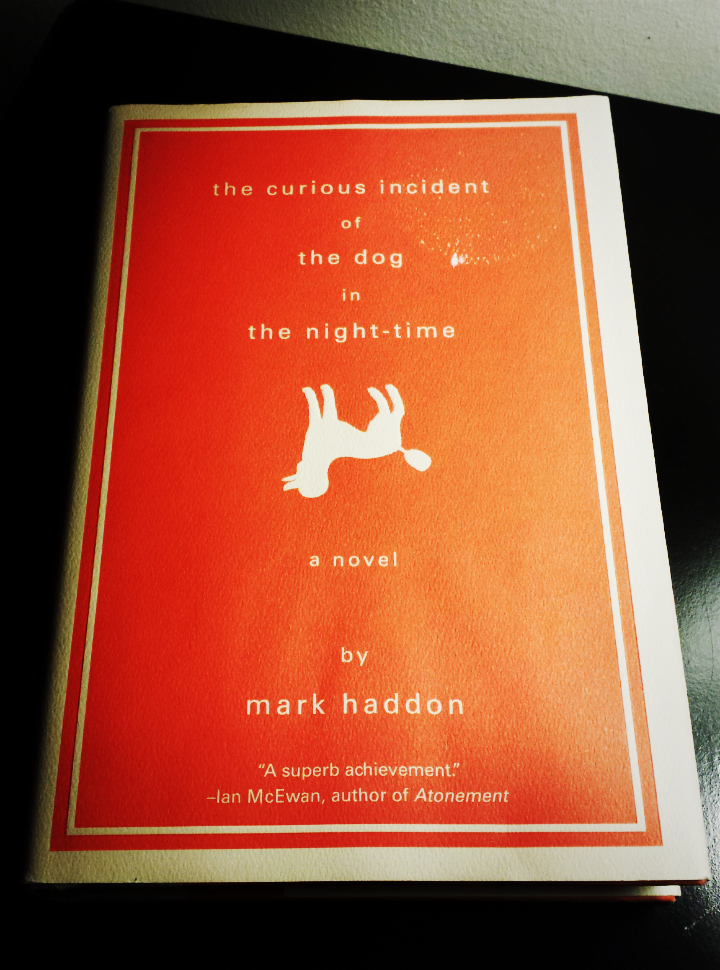
 

The Curious Incident of the Dog in the Night-time is a charmer!

For those of you who have first-hand experience with Autism Spectrum Disorder and Asperger Syndrome, this book will be a welcome read.

Mark Haddon delves into the mind of an individual with Asperger Syndrome, and this 15-year old displays all the signs of a Savant. The story is charming in that the Savant character of Christopher narrates with such bare-boned honesty and hilarity. Haddon cleverly uses the dual perspectives inherent in journal writing as well as writing a piece of non-fiction to convey the workings of Christopher’s mind. He does so with such clarity that the reader is able to appreciate how people with Asperger and Autism are different from, but also the same as what our society might view as the “norm”.

This book is also a touching tale of family relationships and the hardships that come with dealing with stress, developmental disabilities and mental illness. The characters are painted as real people with a plethora of flaws, but also endearing qualities that allow them to redeem themselves.

What really struck me about this book was Haddon’s ability to capture the concept of emotions in Christopher. Haddon gives physical and literal descriptions of Christopher’s emotional roller coaster ride. This is a sophisticated attempt by Haddon to help his audience understand that people with Autism and Asperger Syndrome are not completely bereft of feeling emotion, even if they are unable to express their emotions in socially-recognizable ways. I also appreciated that Haddon left the interpretation of the physical descriptions to his audience’s intellectual abilities, proving that he is not only a clever writer who is able to convey complex concepts, but one who trusts his readers’ ability to understand those concepts for themselves.

For teachers who are looking for ways to bring components of inclusivity into the classroom, this book is a well-written and easy-to-follow account of what it means to have a developmental disability like Asperger Syndrome. For many students who do not understand the nature of this Syndrome, this is as close to a science class as they can get while having a lot of fun. I would recommend this for junior classes (Grades 4-6) and structure the reading of this as a Book Talk to spark critical-thinking skills and allow for student-directed informal discussions.

Further, in Christopher’s mother, Haddon uses the opportunity to touch on what it means to live with a Mental Illness. While this should not be used as the complete manual for understanding mental illnesses, it is certainly a good place to begin a conversation around this fast-growing illness that is crushing many in our society. Teachers, this book will ignite a lot of very profound conversations in your classroom! If you do decide to use this in the classroom, please get in touch and I will help with ideas for how to implement the same.

Happy Reading!

©booksnnooks.org All Rights Reserved


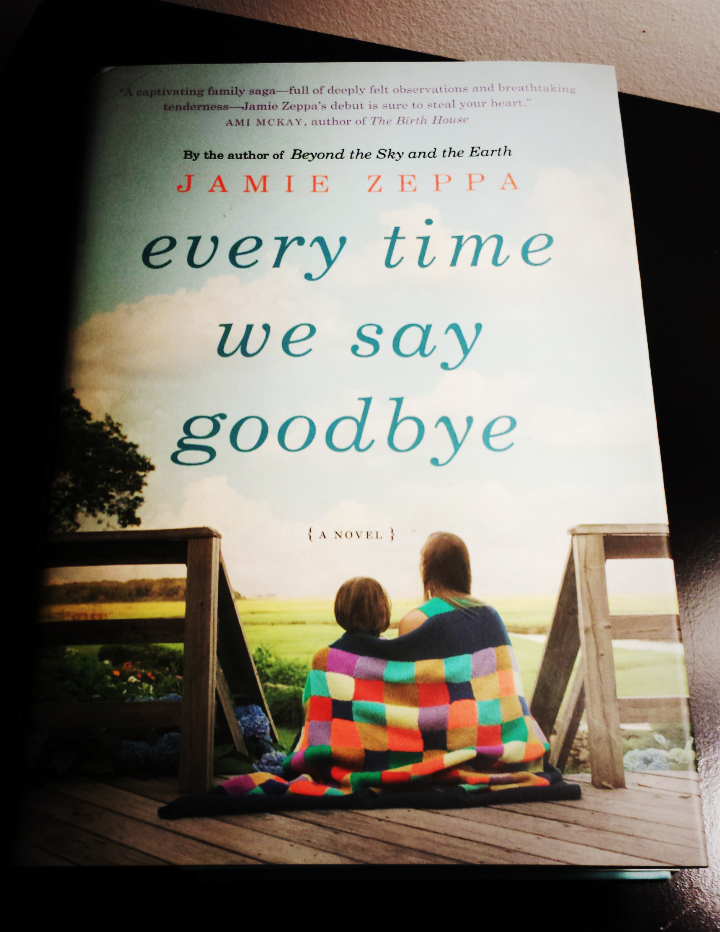
Jamie Zeppa Delights!

When I came across Jamie Zeppa’s novel, Every Time We Say Goodbye, I was intrigued. The story held promise, a tale of family, of relationships broken and lost, so I took a chance. Boy, did it delight!

A Canadian author, Zeppa weaves a narrative that unveils much depth to all the characters presented. Relationships are tested and the concept of love is fractured into an array of colours. Maternal love is poised in a precarious position, choices reveal character definitions and time spins everyone into different directions.

There are many things I enjoyed about this book, prime being the writing style. Zeppa has a flair for the poetic. She creates sentences with such nimble agility that the reader has no choice but to allow him/herself to be swept through this story. I breezed through this 342-pager in a mere 2 days and not because it was an easy read. Saying so might diminish the value and depth of the content, but it was a read that was not difficult to navigate. It was seamless, it flowed beautifully. It was heavy in emotional content, and at times I found myself having to tear away from my attachment to the characters by taking a break from the book. Zeppa creates a world where the reader, although an audience looking into the lives of the many characters, can feel a part of their lives.

The characters are well-considered and painted in rich colours, each manifesting human qualities that make them seem real. I couldn’t help but wonder if this story takes from some threads of Zeppa’s own life because she tells it with such authority on the subject of family, relationships, loss and love. This book is told from the perspective of four specific characters: Grace, Dawn, Laura and Dean. My heart was particularly wrenched by the character of Grace, a character rife with her own foibles and strengths. Grace is presented as a stoic character, the ‘acceptor’ of all action that takes place around her. At some times, the reader might even shrug Grace off as boneless and feel frustrated with her choices, but Zeppa leaves room for redemption as the ultimate test is presented to Grace’s character. The characters of Dean and Laura in many cases act as fillers for the narrative. However, Zeppa has taken much care to develop these characters and layer their lives with action, belief, thought and intense feelings. Dawn’s character is quite richly entrusted with different tiers.

And if one were to think that authors are good at writing from the perspective of just one or two age groups or a specific gender, Zeppa blows that assumption to smithereens. She tells this gripping story from the perspective of a little girl, a teenage boy, a middle-aged woman and the elderly. Every character, no matter how much ‘line-time’ he/she is allotted, is developed into a complete person. Adding quirks and packing in detail in necessary places and sometimes unexpected but welcome ones, Zeppa hooks you into this world of a family struggling to connect on so many different levels.

Zeppa touches on a variety of themes with a few as her front-runners. She deals with the theme of Mental Illness quite well. Dexterously and with much sensitivity, she paints the experience of depression for the reader, instead of throwing out a label and colouring the reader’s perspective from the very beginning. In doing so, she brings much-needed awareness to depression and elicits an empathy and understanding for those who suffer from the same. As well, the theme of Motherhood really jumps off the pages in this book because Zeppa does such a phenomenal job of portraying it from so many different angles. With Mother’s Day just around the corner, mothers and their adult children everywhere will appreciate the messages of maternal bonds, sacrifice and most importantly love that Zeppa has to offer.

I would recommend this if you’re into the themes of mental illness, family, maternal bonds, relationship struggles, loss, sacrifice and love, just the everyday messiness of living. A poetic read that keeps you hooked around the suspense-filled turns until the unveiling at the end, this book is well worth the time. If you happen to read Every Time We Say Goodbye, be sure to drop a line letting me know what you thought of the same!

Happy Mother’s Day to all you lovely moms out there!

©booksnnooks.org All Rights Reserved