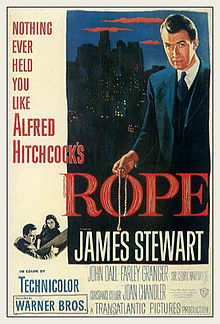
Hitchcock’s Rope: Philosophical and Gripping

My fascination with Alfred Hitchcock began years ago when I was little and would watch his movies with my parents. I have to admit, at the time, I didn’t grasp a lot of what was being enacted before my eyes, but now in my young adulthood, I am revisiting Hitchcock’s movies, and I have got to say, his genius is still relevant today.

I recently watched the movie, Rope. This 1948 film stars my favourite actor from that generation, James Stewart. Now, if you’re thinking that name rings a bell, you have likely seen him in the holiday classic, It’s a Wonderful Life. James is a superbly talented actor and a timeless one at that, but that is for another day and another blog post.

This movie opens with two of our lead characters, Bernard and Philip, strangling their friend, David, to death. The romantic philosophy of being superior beings collaborating in the masterful art of murder is touted as their raison d’etre, and their reason for committing this heinous act. This philosophy as we learn, has been first espoused by Nietzsche and taught by their college professor, Rupert (James Stewart). The duo then proceed to hold a dinner to “celebrate” this “achievement”. As the guests arrive, we see a very different aftermath play out with the two characters. Bernard is presented as the callous and charismatic psychopath, and Philip is really losing his  marbles with guilt. Enter their college professor, Rupert,  and the evening’s events begin to unravel themselves.

As is his signature trademark, Hitchcock very dexterously incorporates subtle angles in his filming that seek to foreshadow what is to come. The symbolism inherent in the various acts carried out by the characters in this movie, is exceptional. In one scene (AND SPOILER ALERT), Bernard is packaging a collection of First Edition books for the dead man’s father to take home, and he uses the same rope he killed his son with, to tie the books together.

I particularly enjoyed this movie because it got me thinking about society and the hierarchy of beings when it comes  to differentiating between superior and inferior. We see this as a recurring trend today with killings the world over, perpetrated by those holding twisted versions of concepts surrounding race or religion or gender. Friedrich Nietzsche’s Ubermensch or “Superman” philosophy is at the heart of this idea, where he essentially tosses out the concept of Godly values, in favour of an alternative system of values created by those who view themselves as superior to their fellow human beings. Bernard is that character in Rope. With his inflated sense of self, he rests content in the fact that he has carried out the perfect artistic venture to prove his superiority. However, as the movie hurtles towards its inevitable conclusion, all is not what it seems.


©booksnnooks.org All Rights Reserved

Miles Teller: The Essential Ingredient for Today’s Rom Coms

So, if you haven’t heard of Miles Teller, shame on you.

No really, are you not a romantic comedy fan? Do you live under a shoe (rocks are overrated)? Do you not have Netflix?

I have to confess. I have fallen for Miles Teller since I saw my first movie with him, Two Night Stand. This movie, featuring a strong female character, showcased a sincere and quirky Miles Teller in the Quintessential Rom Com. Except, his rom coms are clever. They have the edge of sharp wit, sarcasm and an extra dose of delightful eye-candy. They are your run-of-the-mill boy meets girl, falls in love with girl, stumbles into climactic conflict, and barrels toward a happy ending type. However, Miles packs on a lot of charm. He reminds me of a younger version of John Cusack. John Cusack, also a HUGE favourite of mine, possesses a very similar sense of sharp wit and sarcasm AND eye-candy. Don’t judge me, I like my eye-candy. As a result, I think Miles Teller should be an essential component of Romantic Comedies going forward. I mean sure, add the odd Zac Efron or whatchumacallhim, but keep the classic basic, Hollywood.

In Teller’s case, the roles in his movies seem to be written for him. And it is no wonder that they are quite similar. Now, maybe a case can be made that he is only great for such roles as those in That Awkward Moment, Spectacular Now and Get a Job (I am on a Miles Teller Marathon), however, admit you must, that he is great at them. Personally, I would rather a Master of one trade than a Jack of all.


©booksnnooks.org All Rights Reserved
Championing Graphic Novels for Classroom Teaching

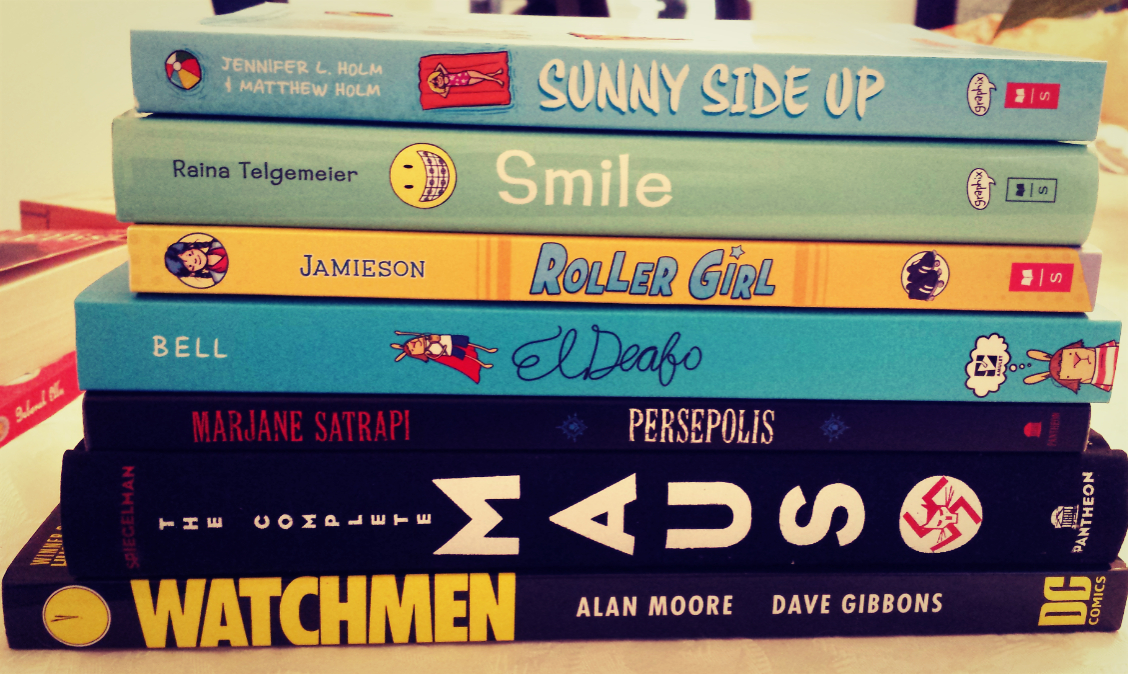
Some of my favourite graphic novels; great for teaching students Grades 4-12

As teachers, we like to revert to the tried-and-true classics when doing Novel Study Units, and teaching our students various bigger life themes. The likes of To Kill a Mockingbird, Inherit the Wind, The Great Gatsby, The Apprenticeship of Duddy Kravitz, Jane Eyre, The Importance of Being Ernest, Brave New World, 1984 and then of course those by the Great Bard, for the intermediate and senior grades. Trust me, I’ve done a good number of these in High School. And then there are the likes of Bridge to Terabithia, Freak the Mighty, Charlotte’s Web, Chronicles of Narnia for the junior grades.

Now, let me pose this question: Have you considered a graphic novel for your Novel Study Unit? I have talked to a lot of teachers, especially in the junior and intermediate grades, and they are incredibly distrusting of the graphic novel. It is viewed by many teachers as a medium of entertainment, and not learning, for their students. Granted, there are graphic novels out there that are created with the sole intent of entertaining, but a lot of incredibly clever graphic artists and writers, collaborate to produce thought-provoking and striking graphic novels.

I would like to make a case for the teaching of graphic novels in grades across the board. I believe they have much value to add to our students’ learning. First of all, graphic novels are not just about the pictures. They are about the relationship between text and image. They are about the meaning in between the panels and the way the characters are drawn and coloured. They are about what is omitted and what is included. They are about meaning and form at their very core. However, they are also incredibly accessible. Graphic novels have the power to engage students who are not willing readers of the traditional text. They have the know-how to capture this audience and potentially turn them into readers. Now, teachers, would that not be a cause for celebration?

Graphic novels further ignite creativity, they inject perspective and then offer other viewpoints contrasting with that first perspective. Art is introduced in an appealing way to students who might not necessarily find themselves drawn to it. The graphic novel has the unbridled power to marry different forms of expression to achieve greater meaning.

Several graphic novels written over the last few years have sought to take big risks and tackle radical topics. Sunny Side Up by the Holm brother and sister duo (Fear not, I shall review this one in time), El Deafo by Cece Bell, Persepolis by Marjane Satrapi, Maus by Art Spiegelman and Smile by Raina Telgemeier (a handful of my favourites) are some of the graphic novels that have burst out onto the scene and made an impact. From tackling big issues of substance abuse to identity and war in Iran, from physical disabilities to World Wars and the struggles of adolescence, these books, and others, have the power to change thinking. They have the power to begin passionate discussion among students. So, teachers, pray tell, do they not deserve a ranking among the greats? Just because they are “newer” and “different” does not make them unworthy of being entered into the canon of literature-teaching tools.

One of my personal favourites is Watchmen by Alan Moore. This masterpiece makes the movie look ridiculous because, within its pages, it houses depth of meaning and form. It catapults the reader into the story and pulls the narrative around that reader-creator relationship.

Graphic novels are not just quick books that you can read on a trip from Toronto to New York City. They are fast becoming vehicles in which to express explosive thought. So teachers, what say you? Give the graphic novel a chance?


©booksnnooks.org All Rights Reserved
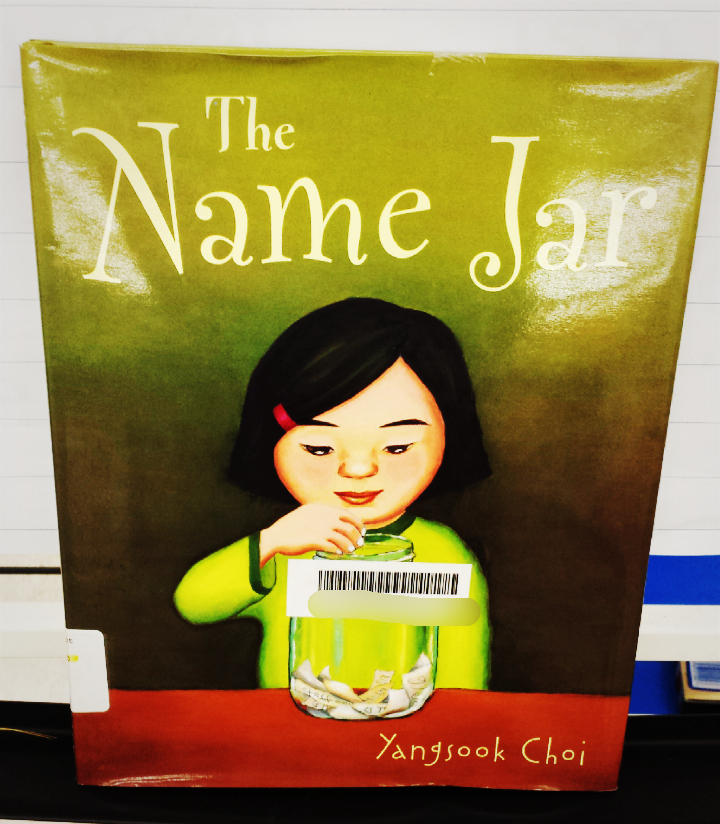
 

Picture Book Spotlight: The Name Jar

I should probably start this post by saying that this book is a certain gem. What a wonderful concept Yangsook Choi has weaved into the fantastic vehicle of a children’s book! This book opens with a young girl making a long journey that will change her life. Unhei comes from Korea to America, and to a new school. Before she gets to her new school, kids on her bus begin to tease her about her name. How will she possibly get through the first day of school?

Choi weaves a compassionate and thoughtful cast of characters in this book. The Korean tradition is briefly touched upon, and a young child’s love of her native land is showcased with generosity of character. Unhei goes to school and decides she will not reveal her name to her fellow classmates, saying that she hasn’t picked one yet. She does not want to risk being bullied again. Her classmates, in helpful form, put together a Name Jar for her, with suggestions for what name she could pick. All except Joey. Joey takes some extra time to get to know Unhei, and the story thumps along to its heart-warming end.

This book delves into cultural identity and what it means for people to uproot themselves from familiar cultures and assimilate into new ones. It especially focuses on the struggle young children face, and the bullying that oftentimes ensues. It measures the weight of a name and what it means for every individual. It is also a warm narrative of what happens when you can find your identity in the country you came from, and the one you now call home.

Teachers, set mostly in a school, this book provides the perfect backdrop from broaching the conversation around cultural identity, bullying, family, self-identity, and what it means to be who you are. This books is also versatile in his accessibility. It can be read aloud to students from grades 1 – 6.

As an Extension Activity, you can do a Name Jar Activity with your students where you invite them to ask parents and/or guardians about how they got their names. Each student can then write his/her name and the reason for being given that name on a piece of paper, and slip it into a jar at the start of class the next day. Circle Sharing Time can be utilized to give each child the opportunity to pick a piece of paper out of the jar and the teacher can read out the contents of the paper. Such an activity would allow a better awareness of the identities and lifestyles of their peers, for each student.It can also be a great opportunity to help sow the seeds of respect, if their leaves are not already flourishing.


©booksnnooks.org All Rights Reserved