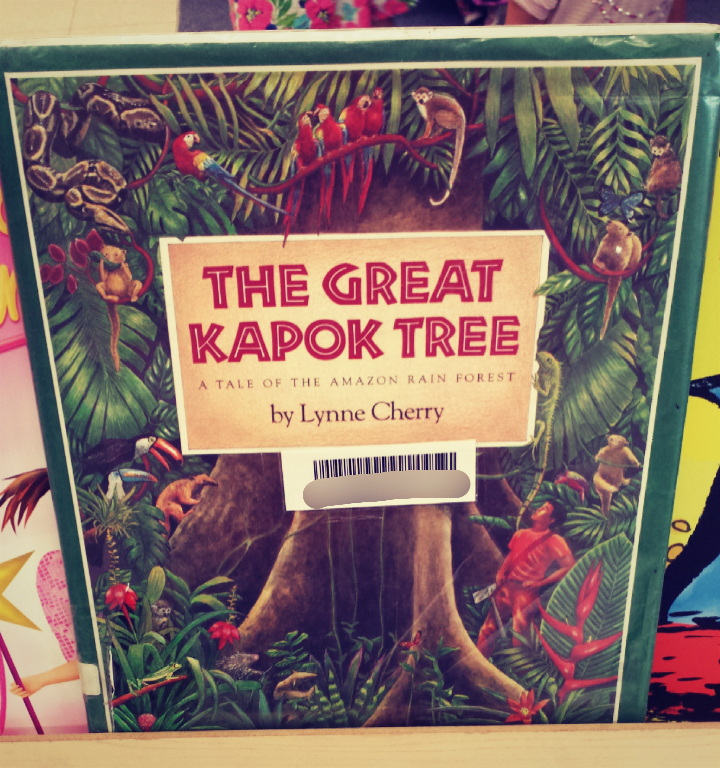
Extending The Great Kapok Tree by Lynne Cherry

So, this time I have given it all away in my title. I will be writing about how The Great Kapok Tree by Lynne Cherry is a FABULOUS resource for teachers as a read-aloud, and how to extend this book in at least one (very fun) way.

I have read this book several times now, and have developed a pattern for when to ask what questions and how to get the most out of it. Cherry has masterfully crafted a book where young children are walked through the process of recognizing the importance of nature, step-by-step. The book opens with GORGEOUS illustrations depicting the Amazon Rain Forest. Teachers, you can easily do an introductory lesson on geography, and get your students to look up where the Amazon Rain Forest is located, and develop a sense of the setting in this book.

The reason I like this book so much is because it breaks down the benefits of nature and the importance of preserving it, page by page. Students can also widen their knowledge of flora and fauna through the pictures of birds, animals and plants that they see. You see toucans and sloths, monkeys and anteaters, jaguars and macaws, and your students will LOVE identifying and learning about these animals.

Various concepts you can touch on briefly or extend in detail are: camouflaging, the role of trees in providing oxygen, the importance of preserving trees for future generations, the food chain, animal habitats etc. This book is a FANTASTIC jumping platform for other concepts that you want to introduce to your class. Typically, I have read this to grades 2 and 3, but this can be stretched to the lower junior grades as well, 4 and 5.

A great extension activity that we used to avail of the wonderful cross-curricular opportunities this book offers, was doing an art project with tissue paper. We used cut-up tissue paper in different tree-colours to make trees. I further encouraged my students to note down in one word or phrase, the importance of trees to emphasize the literacy component of their learning, and to help with summarizing skills.

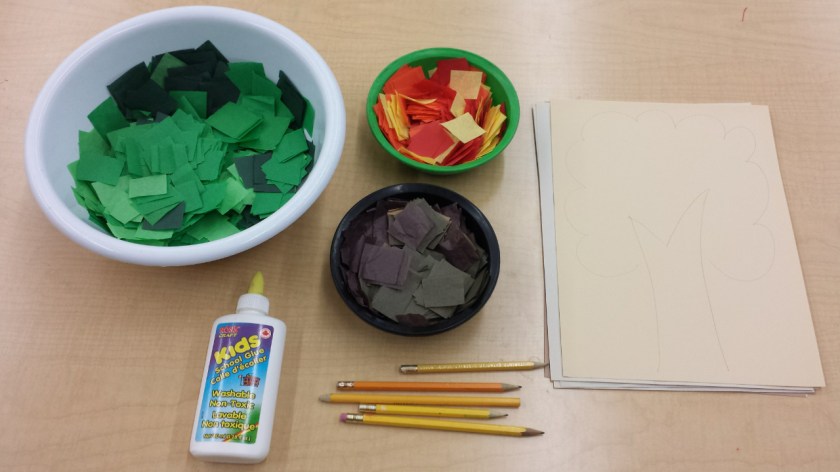
The following materials were used:
wp-1468460188165.jpeg
For this project you will need tissue paper of yellow, red and orange, and different shades of green and brown, cut up into neat little squares, glue, pencils and blank sheets of paper with tree outlines drawn on.

I took a video to best illustrate the process, as below:

And here are some finished products. Such artists the kids are!

This slideshow requires JavaScript.

So what are your waiting for? Go on! Give this INCREDIBLE book a read aloud and then do this COOL activity. You will convert even the most inattentive and hard-to-manage student in your class, as (s)he sits down quietly and completes this (almost) therapeutic project. Happy art-ing! And, you’re welcome.

©booksnnooks.org All Rights Reserved
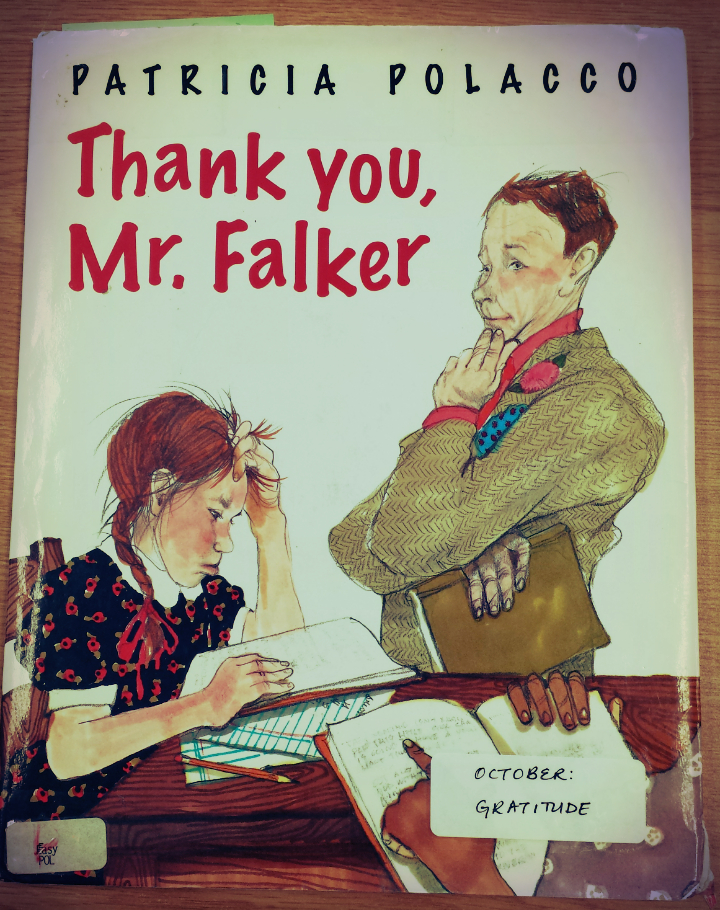
The Polacco Series: Gratitude

Some of you, and maybe a lot of teachers, might be familiar with the name Patricia Polacco. As educators, I think her books are essential components of our libraries. Polacco is a truly gifted author, who uses her life experiences and cultural heritage to write immensely touching books that, if you were being honest with yourself, border on a “tear-jerker”. Not only is this very talented author a moving writer, she illustrates her books with emotional sketches and tugging colours. I have done countless read-alouds with my students where we discuss her choice of colour for specific artwork, coming to the conclusion that like her words, her drawings are also bursting with meaning.

One of my favourite books from Polacco is the ADORED Thank you, Mr. Falker

This book weaves a heart-rending story of a young girl, Trisha, who faces challenges in her learning. She has dyslexia, and none of the teaching staff at her school are able to pick this up. This challenge makes our young protagonist a target for name-calling and bullying. And, unlike other children, when Trisha welcomes the chance to move to another city and start over at a new school, her hopes are met with despair, as she painfully navigates yet another school system stuffed with bullies and teaching staff who do not seem to care. Until of course she meets Mr. Falker. Mr. Falker, like a lot of teachers these days who get into teaching despite its hardships, is the teacher who makes a difference in this girl’s life. He takes a gamble on her and his gamble pays off, leading to a moment, brilliantly narrated with emotion, that changes Trisha’s life forever. Based on a true story, this narrative is packed with feel-goods.

Perfect for  grades 3-6, and abounding in themes of gratitude, compassion, bullying awareness, self-confidence issues in children, learning challenges and their effects, this book should really be read to every child out there. If nothing else, it lets children know that they are not alone in their struggles, and that they can rely on that one teacher to make a difference in their lives.


©booksnnooks.org All Rights Reserved
The Constructivist Approach to Teaching

Recently, I have subtly introduced a perforated silence here on Books ‘n’ Nooks and not so much as intentionally as I would like. The reason is more the commonplace cross of our current world where we are afflicted with a “lack of time”.

Either way, I would like to briefly touch upon an important concept I have become very interested in, and one that I believe seeks to inform and consequently, improve, teaching.

Constructivism can be defined in many ways. One may use the Latin origin to break it down into meaning-inducing fragments of the whole, or one might simply elucidate on the notions that spring into consciousness on mention of the word.

Think for a moment what meaning you might derive from “Constructivism” (Yes, this is the teacher in me calling into action inquiry-based learning).

Constructivism is a way to teach whereby students are allowed agency over their own learning; they are given the opportunity to direct their learning by building new experiences, while simultaneously drawing on their past ones. A teacher’s role in all of this still remains crucial, because unlike the cut-and-dry approach of student-centered learning, the value of an expert, namely the teacher, is honoured. Teachers are tasked with “guiding” the student’s knowledge by providing opportunities for students to discover their worlds and make and build on their own experiences. They are to help students develop and hone their problem-solving, inferencing, critical-thinking and meaning-making skills to achieve a cohesive framework for how to learn.

Students become active and motivated participants in their learning and the teachers act as their guides through this process, functioning as the Yodas of a student’s life.

Now, I could elaborate and confuse you with more complex interpretations of Constructivism, and punctuate this blog heavily with academic jargon, but everyone knows that as teachers, we always appreciate the most accessible methods of learning. So, think of Constructivism as the work of a Scientist or an Artist or a Pioneer. There is a lot of theory, a lot of testing and finally a conclusion, an understanding for how it works. And in the end, isn’t that the crux of life?


©booksnnooks.org All Rights Reserved

George Leigh Mallory: The First to Summit Everest?

Rating 4/5

George Leigh Mallory

For most of you, that name does not ring a bell (Unless you’re a mountaineering enthusiast of course, or just a rare brainiac). You are however, in all likelihood, familiar with the names of Edmund Hillary, a mountaineer from New Zealand, and Tenzing Norgay, a Nepalese Sherpa who made the journey with Hillary, the first 2 climbers to conquer the summit of Mount Everest in 1953. Little is known about the brave man, George Leigh Mallory, who in 1924, led the 3rd expedition from England to reach the summit of Everest. Mallory and his climbing partner, Andrew “Sandy” Irvine disappeared in June 1924, and whether they reached the summit or not has been a cause for much speculation since they disappeared 92 years ago.

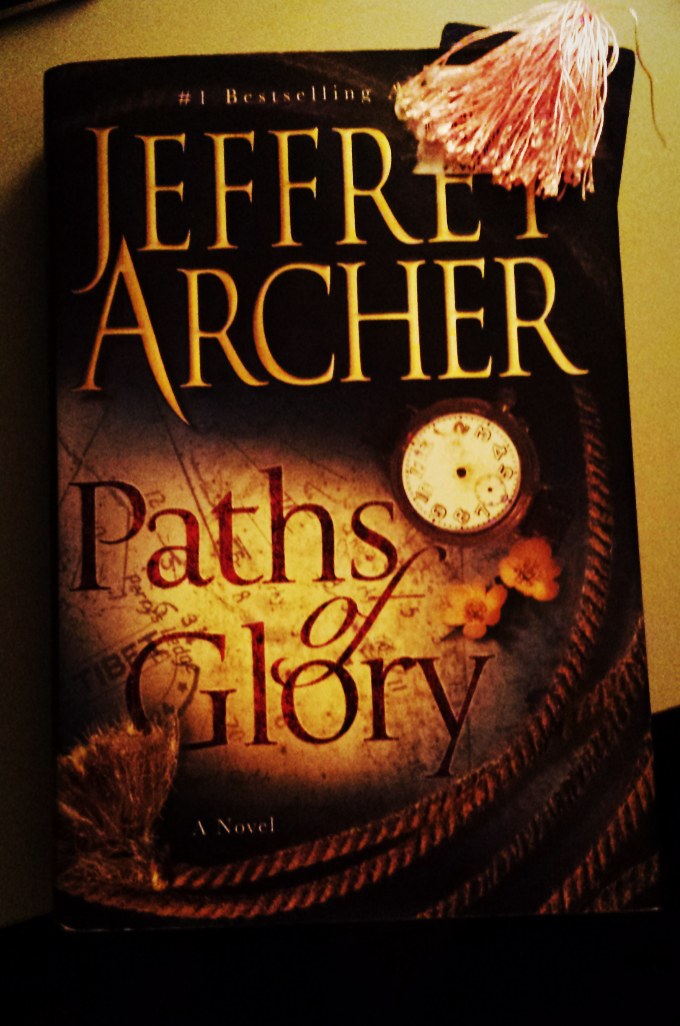
Jeffrey Archer, a former British politician, has written a page-turner with George Leigh Mallory as the charismatic Protagonist, titled, Paths of Glory. Mallory is positioned as a devil-may-care gentleman who seems to scale the most domineering mountaintops with little regard for failure. Although Archer’s writing style leaves for something to be desired, he has a flair for fluffing up the facts to deliver tones of adventure,  and creating dramatic hooks that leave you hanging and hungering for the end. And while the world has yet to  find out whether George Mallory and Sandy Irvine reached the summit in 1924, Archer ends his narrative having taken a side. The facts that have been uncovered over the years are presented with much pzazz to deliver a cast of characters who are true to their roles and remain, to the very end, very convincing. Mallory’s family and friends are constructed as integral characters to the story, and Archer shows a lot of respect to Mallory’s Expedition team and his beloved wife, Ruth Mallory.

The relationship between Ruth and George Mallory provides for much heightened drama as it weaves together a roller-coaster of emotions that take the reader on the journey of a wife longing for her husband, and a man torn by the ache to be with his family and the relentless desire to achieve his ambition.

This was an adventure that spear-headed my need to research more about the 1924 Expedition to Everest, and George Mallory’s Life. There is much information out there, and most of it says the same thing, but George Mallory seems to exude a mystery and elicit desire to know what happened to him on his journey up the mountain. Mallory’s body was found in May of 1999, 75 years after he disappeared, by a team of American climbers. There is fascinating video footage shot by the team upon the discovery:  https://www.youtube.com/watch?v=UFr1KdY6aiw

And while Archer’s book is but one way to reconcile the mystery around the final moments of Mallory and Irvine, Archer leaves his readers with a feeling of awe, thoroughly honouring this fascinating and skilled mountaineer who tried to defy the limitations of his time, and conquer a giant.

If you’re looking for dexterity of writing style, this is not the book for you, but if you thrive on adventure and mystery, then this is a must-read.

©booksnnooks.org All Rights Reserved